Haiphong History for Travelers: A Quick Timeline Summary
Looking for a Haiphong history for travelers summary you can read in ten minutes? Here it is in one line: Haiphong grew from a riverside settlement founded, according to legend, by the female general Le Chan, became the scene of three famous naval victories on the Bach Dang River, was the home region of the Mac dynasty, turned into French Indochina’s main northern port after 1874, survived heavy bombing in two wars and is now one of Vietnam’s biggest port cities. This guide walks through each era in order and tells you exactly where to see it today.
We are Haiphong Adventure, a local team that runs Haiphong tours for international visitors. We wrote this timeline because guests often ask for a quick history briefing before they explore. Dates below follow commonly cited Vietnamese sources, and where historians disagree or the story is a legend, we say so.
Haiphong History at a Glance
If you only have a minute, this table gives you the big picture. Each row links to a section further down.
| Period | What happened | Where to see it today |
|---|---|---|
| 1st century AD (legend) | Le Chan founds the An Bien settlement | Le Chan statue, Nghe temple |
| 938, 981, 1288 | Three naval victories on the Bach Dang River | Bach Dang stakes relic site, Thuy Nguyen |
| 10th to 18th century | Pagodas, communal houses and the Mac dynasty | Du Hang Pagoda, Hang Kenh communal house, Duong Kinh |
| 1874 to 1954 | French port and colonial city | Opera House, Museum, Post Office, Cau Quay |
| 1946 to 1975 | Two wars, bombing and liberation | Haiphong Museum, Cat Ba Hospital Cave, Cannon Fort |
| 1986 to today | Reform, industry and a new deep-water port | Tan Vu – Lach Huyen bridge, modern waterfront |
Opening hours and entrance rules at heritage sites change from time to time, so treat practical details here as reference only (updated November 2026).
Legendary Beginnings With Le Chan
Every local history of Haiphong starts with Le Chan. According to tradition, she was a woman from the delta who fled to the coast in the first century AD, cleared land near the mouth of the Cam River and founded a settlement called An Bien. She later joined the Trung Sisters in their uprising against Chinese Han rule and became one of their generals.
Historians treat many details as legend, but her importance to the city is very real. Locals regard her as the founder of Haiphong, a whole district carries her name and several temples honor her.
Where to See It
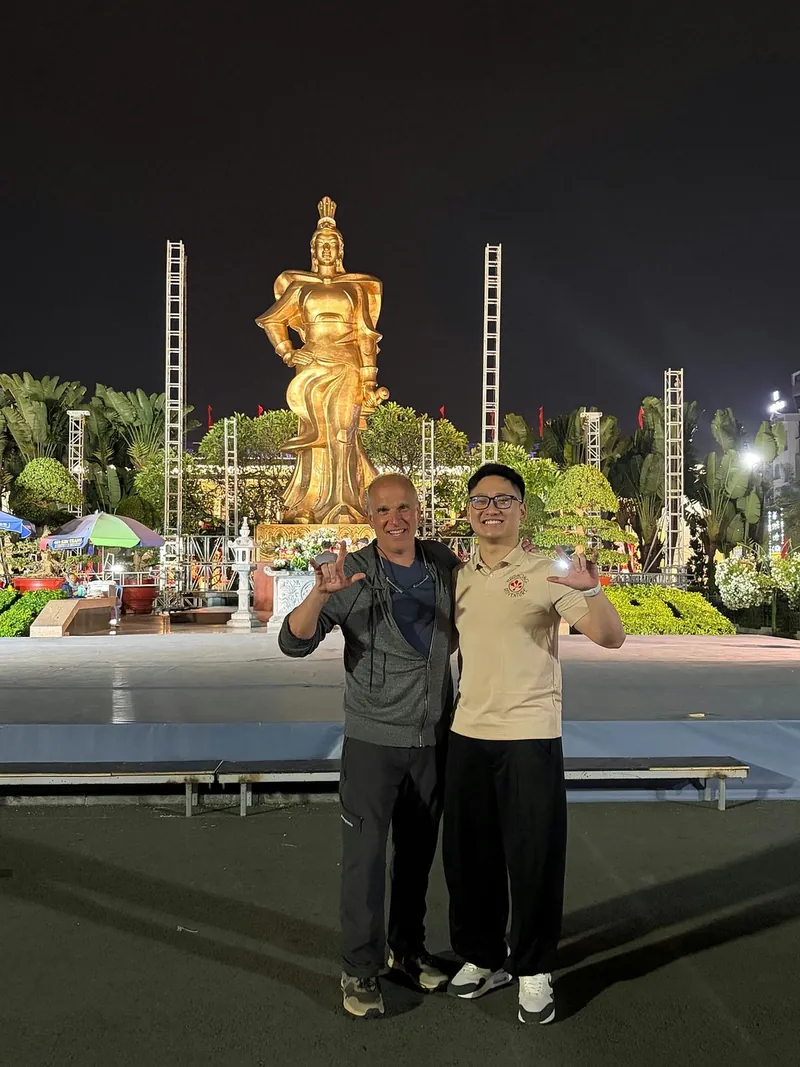
- Le Chan statue square: a large golden statue in the city center, beautifully lit in the evening.
- Nghe temple: a small, much-loved temple dedicated to her, set in a busy street area.
- Hang Kenh communal house: local villagers also worship Le Chan here as a guardian spirit.
Short on time? Le Chan’s story takes ten minutes at the statue, and it gives every other site on your trip a starting point.
The Bach Dang River Victories
The Bach Dang River, on the northern edge of today’s Haiphong, is one of the most important places in Vietnamese history. Three times, invading fleets were defeated here using the river’s strong tides.
- 938: Ngo Quyen planted iron-tipped wooden stakes in the riverbed. At high tide the stakes were hidden, and when the tide fell the enemy ships were trapped and destroyed. The victory ended about a thousand years of Chinese rule.
- 981: Le Hoan turned back an invasion from the Song dynasty in the same area.
- 1288: Tran Hung Dao repeated the stake trap against the Mongol Yuan fleet, one of the most celebrated victories in Asian naval history.
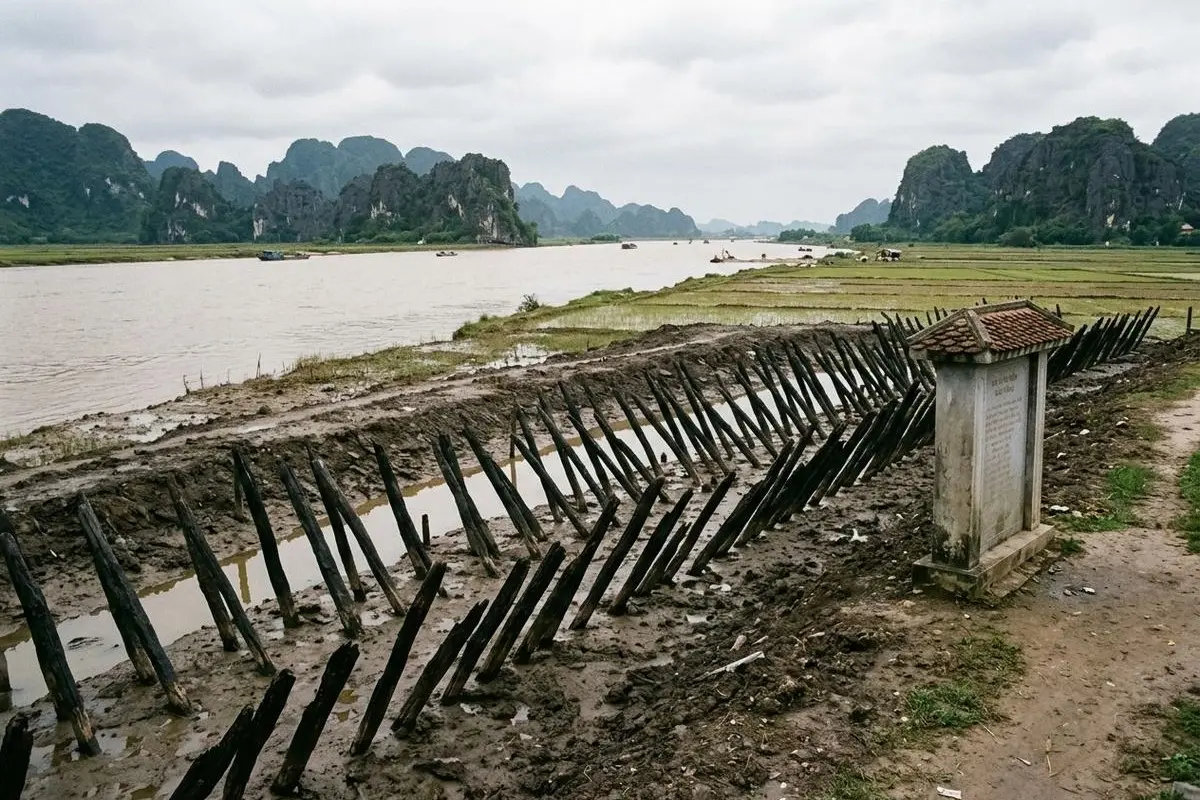
Today the relic area in Thuy Nguyen, across the Cam River from the center, has a memorial, statues and displays of stakes found by archaeologists. It is a half day trip, best combined with a countryside ride. For the full story of the battles, read our guide to the historical significance of the Bach Dang River site.
>>> Legend Of Victory On Bach Dang River Stories
Pagodas, Communal Houses and Village Life
Between the great battles, the region was a patchwork of farming and fishing villages. Each village had a pagoda for Buddhist worship and a communal house, called a dinh, where villagers honored a guardian spirit and held meetings and festivals. Many of these buildings survive inside the modern city.
Du Hang Pagoda
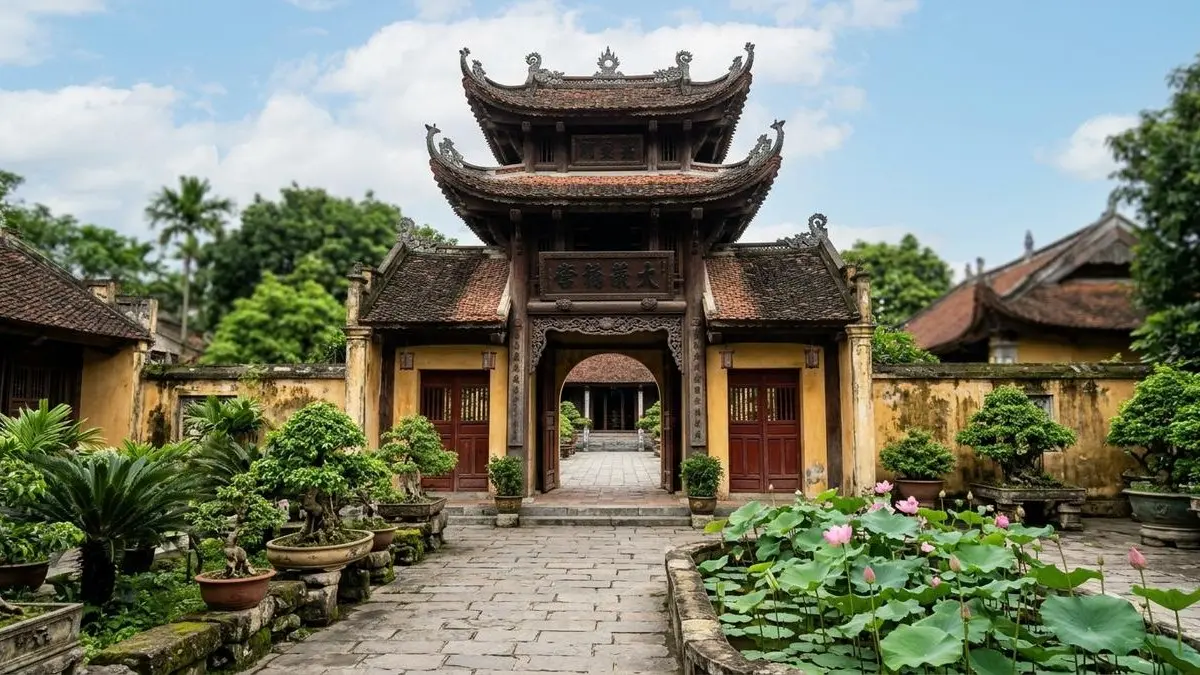
Du Hang is one of the oldest and best known pagodas in Haiphong. Its origins are usually traced back about a thousand years, although the buildings you see have been restored many times. Look for the three-entrance gate, the stone stupas and the carved wooden halls.
Hang Kenh Communal House
Hang Kenh is famous for its wood carving. Hundreds of dragons twist across the beams and pillars, carved in a style typical of northern Vietnam’s late pre-colonial period. It is one of the finest examples of a dinh in the north and a short ride from the center.
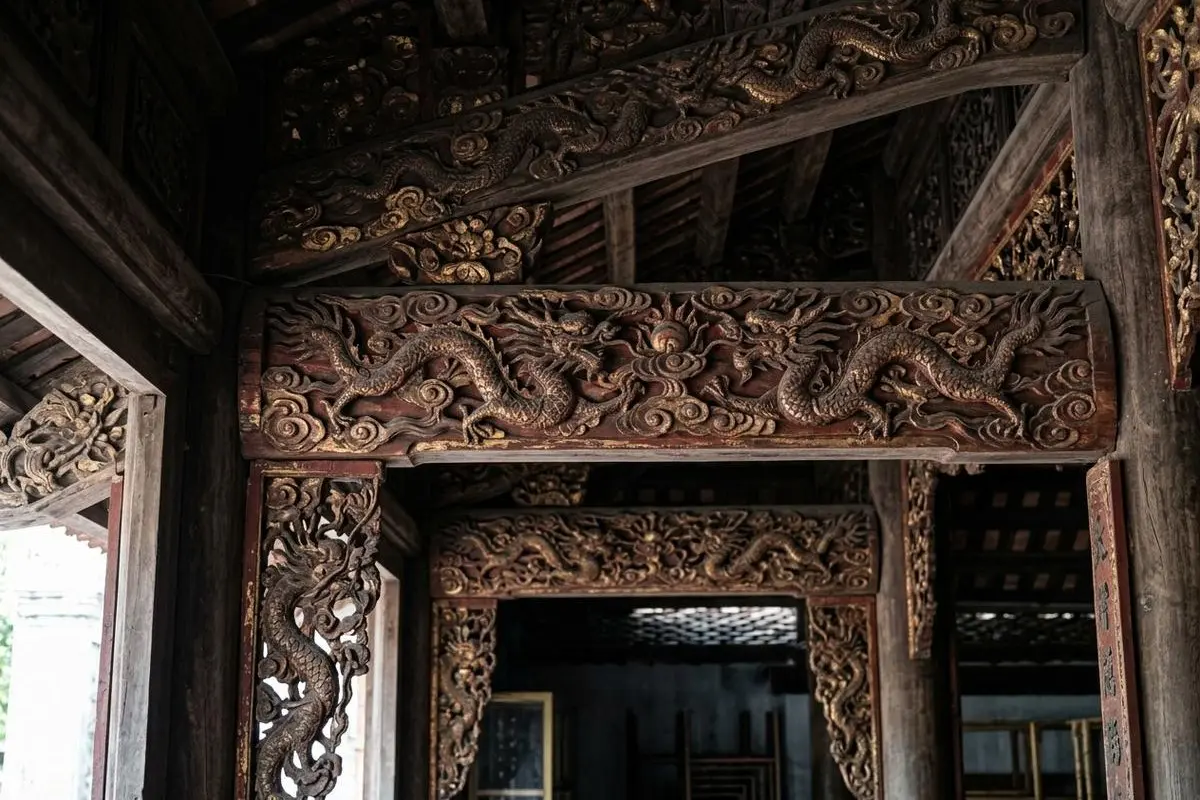
To understand what you are looking at, our guide to Hang Kenh communal house history and heritage explains the symbols and the festival calendar.
>>> Carving Art At Hang Kenh Communal House Guide
The Mac Dynasty and Duong Kinh
Haiphong also produced a royal family. Mac Dang Dung, who seized the throne in 1527 and founded the Mac dynasty, came from Co Trai village in the south of today’s Haiphong. The Mac built a second capital in his home region, called Duong Kinh, and the area grew as a trading and cultural center.
The Mac period was short and turbulent, but it left its name on the map. The modern Duong Kinh district takes its name from that old capital, and local temples still honor the Mac kings. It is a niche stop, best for travelers who already know the main sights.
Why It Matters for Visitors
The Mac story explains why Haiphong was more than a fishing coast before the French arrived. Ports, markets and craft villages already linked the region to the rest of the delta, which is one reason the French later chose it for their northern harbor.
From Coastal Post to French Port
The name Hai Phong is usually explained as a shortened form of a nineteenth century coastal defense office set up by the Nguyen court to guard the river mouth. The real turning point came after 1874, when a treaty opened the port to French trade. The French built docks, warehouses and a settlement on the marshy land along the Cam River, and Haiphong was formally established as a city in 1888.
Over the next decades it became the main port of northern French Indochina. Goods from Hanoi and the delta, and even from southern China by rail, passed through its quays. Canals were dug, swamps drained and a new grid of streets laid out.
Colonial Landmarks You Can Still See
- Haiphong Opera House: a neoclassical theater completed in the early twentieth century, still in use today.
- Haiphong Museum: a deep red colonial building on Dien Bien Phu Street with galleries on local history.
- City Post Office: a long yellow building that still sells stamps.
- Cau Quay swing bridge: an old iron bridge linked to the railway era.
- Tree-lined boulevards: the red flamboyant trees planted along them gave Haiphong its nickname.
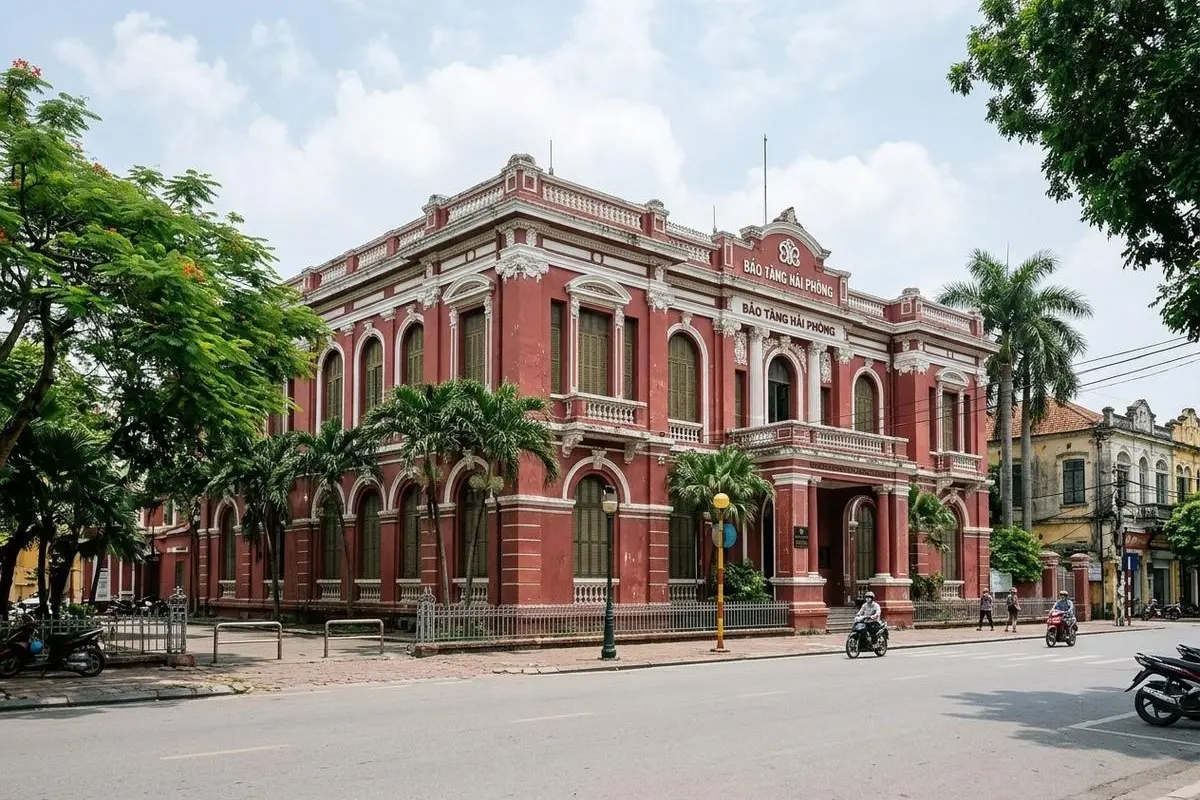
You can walk past most of these buildings in a couple of hours. Our Haiphong colonial buildings map puts them in a simple loop, and the article on why Haiphong is called the city of red flamboyant flowers covers the story behind the trees.
Recommended tour

See the colonial streets, old pagodas and markets with a local guide who shares the stories behind them, with classic Haiphong food stops on the way.
From $79 per person
War, Bombing and Liberation
Haiphong’s strategic port made it a target in the twentieth century. In late November 1946, a French naval bombardment of the city caused heavy civilian losses and is widely seen as one of the events that started the First Indochina War. After the 1954 Geneva Accords, French troops withdrew, and Haiphong marks 13 May 1955 as its liberation day.
During the American war, Haiphong was the main entry point for supplies to the north. The port and its surroundings were bombed many times, and in 1972 the harbor was mined. Local people dug shelters, moved factories and kept the port working where they could.
Wartime Sites Near Haiphong
- Haiphong Museum: covers the wars from a local point of view.
- Hospital Cave, Cat Ba Island: a secret hospital built inside a mountain during the war.
- Cannon Fort, Cat Ba Island: hilltop gun emplacements and trenches with sea views.
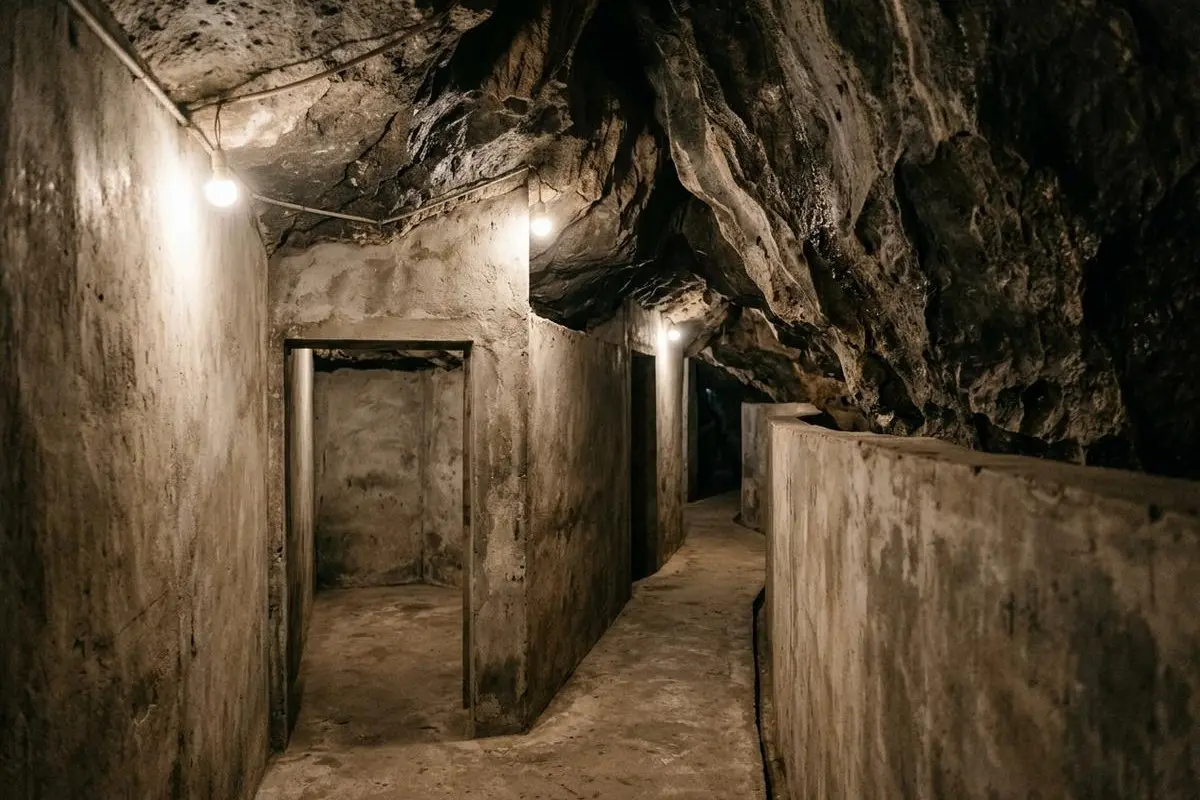
Combine both Cat Ba sites in one day. Our Cannon Fort Cat Ba trail guide covers the walk, the views and what to bring.
Modern Haiphong After Doi Moi
After the Doi Moi economic reforms of 1986, Haiphong reinvented itself as an industrial and logistics hub. Industrial zones, shipyards and new roads appeared, and the city became one of Vietnam’s centrally governed municipalities alongside Hanoi, Ho Chi Minh City, Da Nang and Can Tho.
Big projects changed the coastline. The Tan Vu – Lach Huyen sea bridge opened in 2017 to serve the new Lach Huyen deep-water port, and the same road now speeds up the trip to Cat Ba. In 2025, as part of Vietnam’s administrative reform, Haiphong merged with neighboring Hai Duong province, making the city much larger on the map.

For travelers, the modern city means good roads, an international airport at Cat Bi and quick links to Cat Ba and Lan Ha Bay, while the old center keeps its colonial charm.
How to Use This Timeline on Your Trip
History is easier to remember when you see it in order. Here is how we suggest turning this summary into a plan.
Half Day in the Center
- Start at Haiphong Museum for the overview.
- Walk to the Opera House, the City Post Office and the Le Chan statue.
- Finish at Cau Quay in the evening.
Full Heritage Day
- Morning at Du Hang Pagoda and Hang Kenh communal house.
- Lunch of banh da cua near the old market area.
- Afternoon at the Bach Dang River relic site in Thuy Nguyen.
Add a Cat Ba Day
- Cross the sea bridge to Cat Ba.
- Visit Hospital Cave and Cannon Fort.
- End with sunset over Lan Ha Bay.
Prefer a ready-made plan? Our Haiphong trip itinerary for history buffs lays out a step-by-step route with timings.
>>> Historical Stories From My Haiphong Walking Tour
Tips for Visiting Haiphong’s Historical Sites
- Dress modestly at pagodas, temples and communal houses, with shoulders and knees covered.
- Go early to avoid midday heat and tour groups, especially from May to September.
- Carry small cash for entrance fees, donations and parking.
- Check festival days, since temples get very busy on the 1st and 15th of each lunar month.
- Ask before photographing people inside worship halls.
- Hire a local guide if you want the stories, as many signs are in Vietnamese only.
For a wider list of places, see our guide to temples and pagodas in Haiphong.
>>> Haiphong French Colonial Architecture Worth Seeing
Frequently Asked Questions
How old is Haiphong?
The settlement is traditionally dated to the first century AD, when Le Chan is said to have founded An Bien. As a modern city, Haiphong was formally established in 1888 during the French period.
What is Haiphong most famous for in history?
The Bach Dang River victories of 938, 981 and 1288 are the most famous events. Haiphong is also known as the main French port of northern Vietnam and a key supply port during the wars of the twentieth century.
Where is the best place to learn Haiphong history quickly?
Haiphong Museum on Dien Bien Phu Street is the best single stop. Pair it with a walk around the Opera House and Le Chan statue for a two hour introduction.
Is one day enough to see Haiphong’s history?
One day covers the center, the main pagoda and Hang Kenh. Add a second day for the Bach Dang River relic site or Cat Ba’s wartime sites.
Do I need a guide for historical sites in Haiphong?
No, but it helps. Many signs are only in Vietnamese, and a guide can explain the legends, the symbols in the carvings and the local stories you would otherwise miss.
Bring Haiphong’s Story to Life
This Haiphong history summary shows how one city connects a founding legend, three river battles, a royal dynasty, a French port and a modern logistics hub. Seeing those layers in person, from the stakes of Bach Dang to the colonial Opera House, makes your trip far richer than a quick stopover. Haiphong Adventure plans history walks, countryside rides and Cat Ba days for international travelers. Browse our Haiphong tours or message us with your dates and interests.
Contact Haiphong Adventure
- WhatsApp, Viber, WeChat: +84(0)934.555.001
- KakaoTalk, Line ID: haiphongadventure