Historical Stories From My Haiphong Walking Tour
Haiphong is not a city that shouts about its past. Its history hides in faded yellow facades, in the names of streets and in the stories older residents tell over a glass of iced tea. A haiphong walking tour is the best way to find those stories, because on foot you slow down enough to notice the details: a carved balcony, an old shop sign, a shrine tucked between two houses.
In this article, the Haiphong Adventure team shares the historical stories we tell most often on our walks around the centre, from the legendary general who founded the first settlement to the French-era buildings and the port that shaped the city. At the end you will find a simple route, practical tips and answers to common questions.
Why History Is Best Discovered On A Haiphong Walking Tour
Many of Haiphong’s historic sites sit within a short walk of each other around the Opera House and the Tam Bac river. Walking lets you link them together into one story, rather than seeing them as separate stops from a car window.
On foot you can also step into small alleys, read old inscriptions, chat with shop owners and pause whenever something catches your eye. A local guide fills in the background, explaining not only what a building is, but what it has meant to the people who live around it.
If you prefer to explore on your own first, our list of free things to do in Haiphong includes several of the places mentioned below.
The Story Of Le Chan, Founder Of The First Settlement
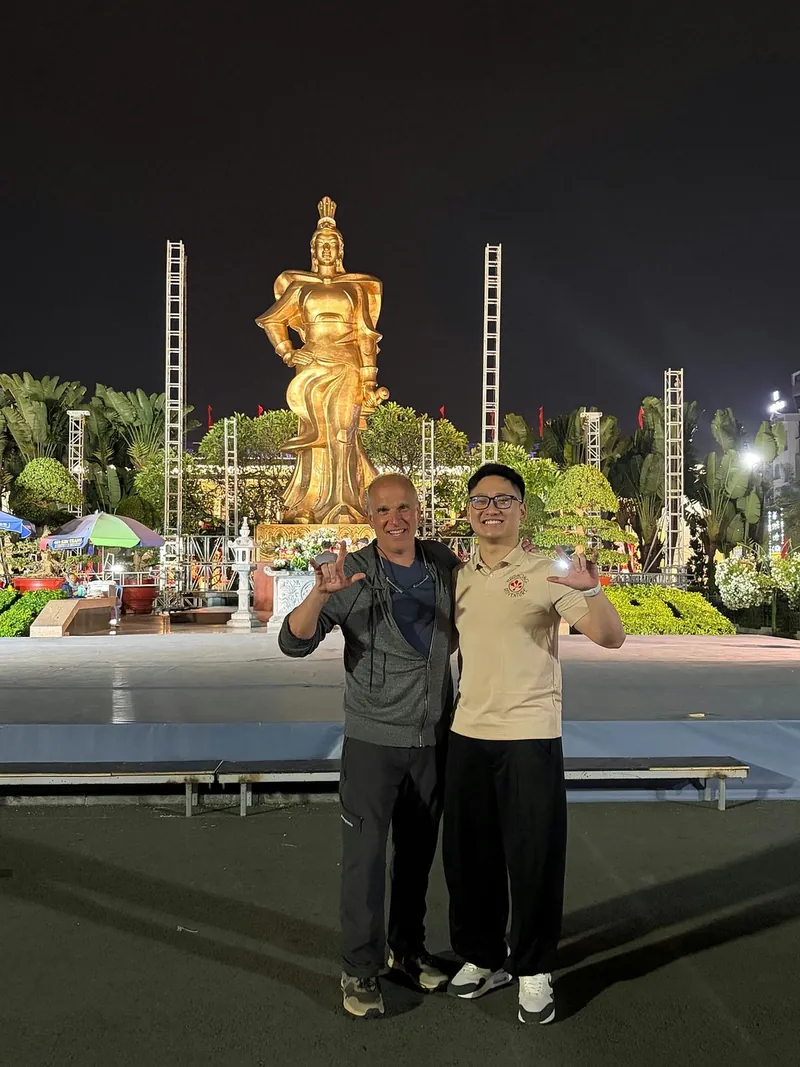
Every walk we lead begins with a woman. Le Chan was a female general who fought alongside the Trung Sisters against foreign rule in the first century. According to local tradition, she founded a coastal village called An Bien, which people in Haiphong regard as the very first seed of their city.
Today her golden statue stands in a wide square near the Opera House, looking out over the city centre. In the evening the square fills with families, skateboarders and couples, and it is a good place to start a walk as the heat of the day fades.
When we tell her story, guests are often surprised that a port city known for trade and industry traces its roots to a woman warrior. For locals, she is a symbol of courage and of Haiphong’s independent spirit.
>>> Cultural Things To Do In Haiphong You Must Try
From Fishing Village To Great Port
For centuries the area around Haiphong was a land of rivers, fishing villages and rice fields. Its location near the mouths of several rivers and close to the sea made it strategically important long before it became a city.
Not far from the modern centre flows the Bach Dang River, the scene of famous battles in Vietnamese history where defenders used wooden stakes hidden under the water to defeat invading fleets. These stories are taught in every Vietnamese school, and guides love to share them with visitors who ask where the city’s proud character comes from.
In the late nineteenth century, the French developed Haiphong into a major port for northern Vietnam. Wharves, warehouses, railway lines and administrative buildings appeared along the Cam River. The city grew quickly as workers and traders arrived from the countryside and from abroad, and the port remains at the heart of Haiphong’s economy today.
Recommended tour
Taste of Old Haiphong
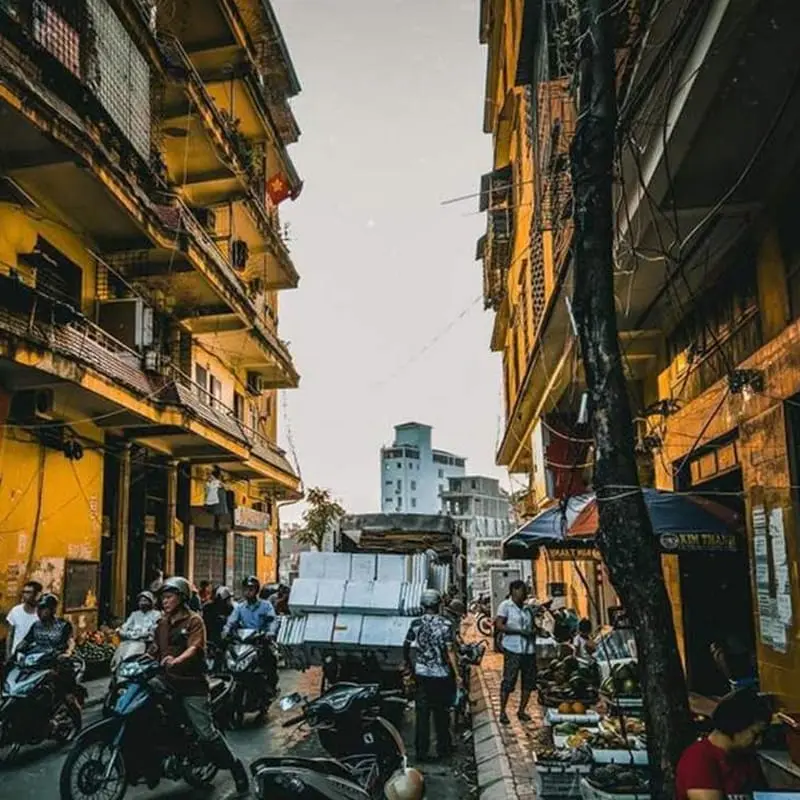
Discover old streets, markets and colonial landmarks with a local guide, tasting classic Haiphong dishes along the way.
From $79 per person
The Opera House, Heart Of The French Quarter
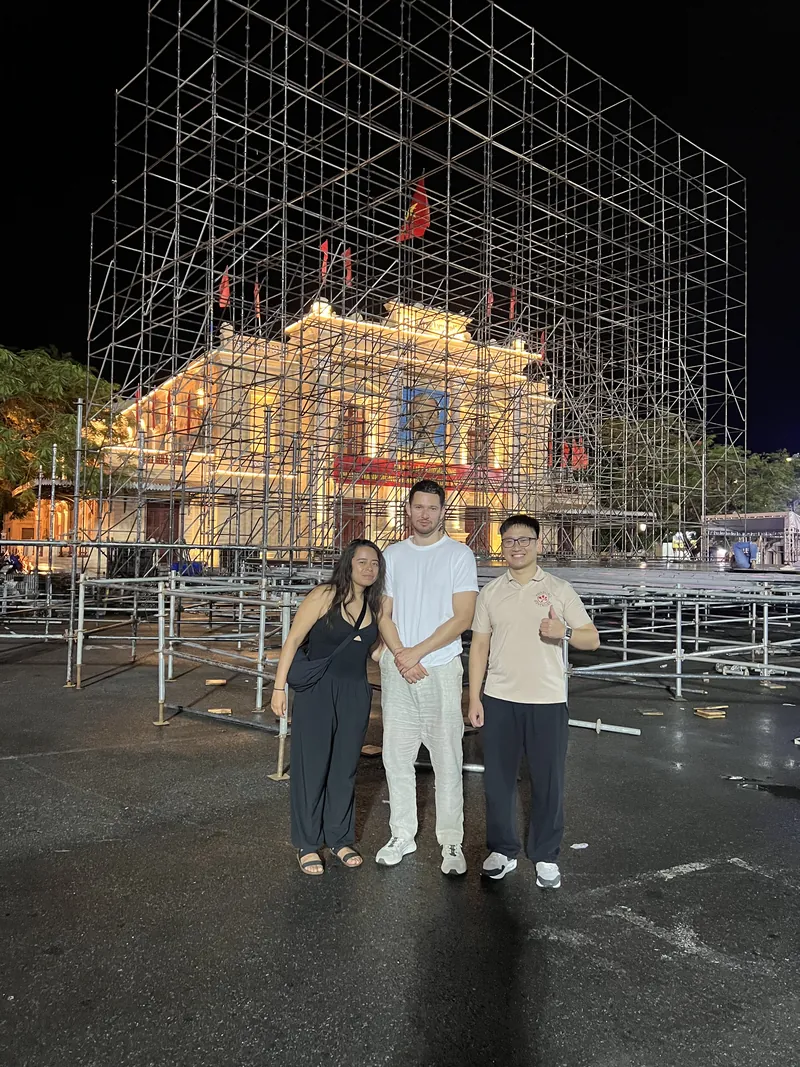
The Haiphong Opera House is the building most visitors recognise. Built by the French and completed in the early twentieth century, it follows the elegant style of European theatres of the time, with columns, arched windows and a grand facade facing a broad square.
The building has played many roles beyond performances. It has hosted important civic gatherings and remains a place where the city celebrates. On national holidays the square in front is decorated with flags and flowers, and in the evening it becomes one of the liveliest public spaces in town.
On our walks we pause here to talk about how the French quarter was planned, with wide boulevards, shady trees and grand public buildings, and how Vietnamese life gradually filled these spaces with street food, cafes and motorbikes.
The Old Post Office And Colonial Streets
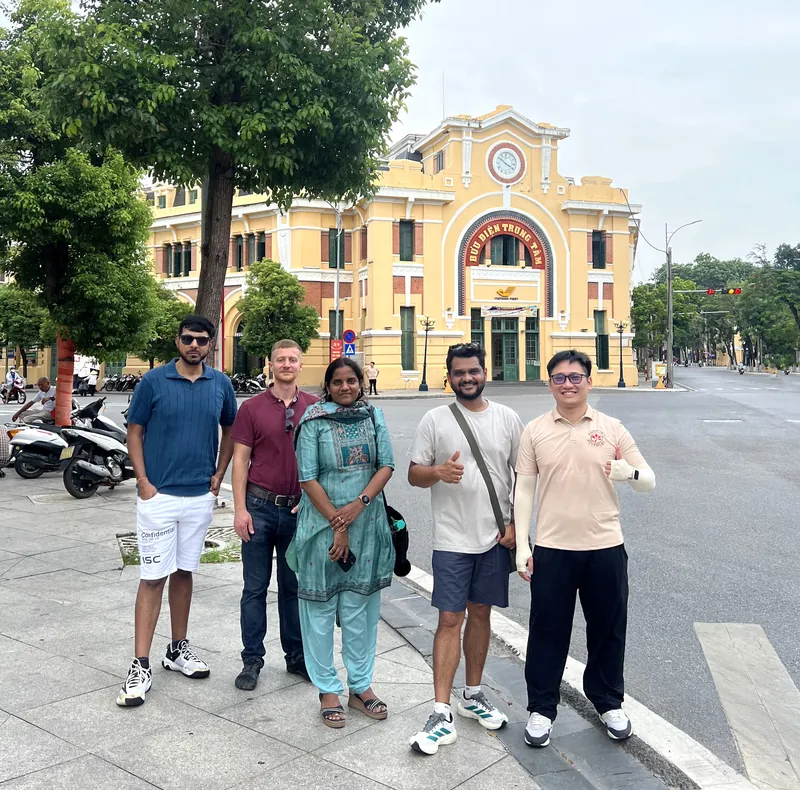
A few minutes away stands the Haiphong City Post Office, another landmark from the French era. Its yellow walls, tall windows and decorative details make it one of the most photographed buildings in the city, and it still works as a post office today.
Around it, the streets of the old French quarter are lined with colonial villas and shophouses. Some have been beautifully restored as cafes and offices, while others show their age with peeling paint and wooden shutters. Look up as you walk: balconies, ironwork and old lettering above doorways tell you how the neighbourhood once looked.
Guests often ask why so many old buildings are painted yellow. The colour was popular for colonial public buildings across Indochina, and in Haiphong it has become part of the city’s identity.
Haiphong Museum And Its Red Facade
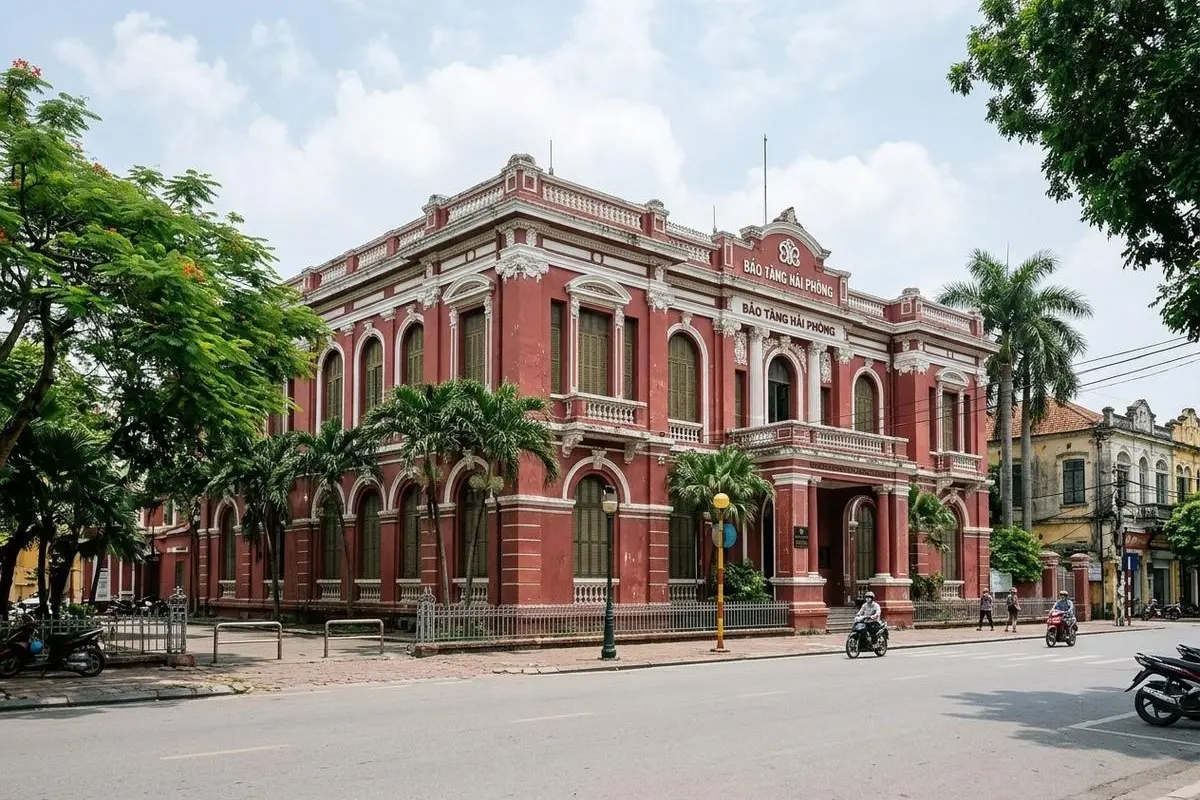
On Dien Bien Phu Street, the Haiphong Museum occupies a striking colonial building with a deep red facade and decorative arches. Inside, exhibits trace the history of the region from prehistoric times through the founding of the city, the colonial era, the wars of the twentieth century and modern development.
If you have time, a visit adds depth to everything you see on the street. Opening hours and ticket prices can change, so check locally before you go.
Cau Quay, The Swing Bridge And Mural Street
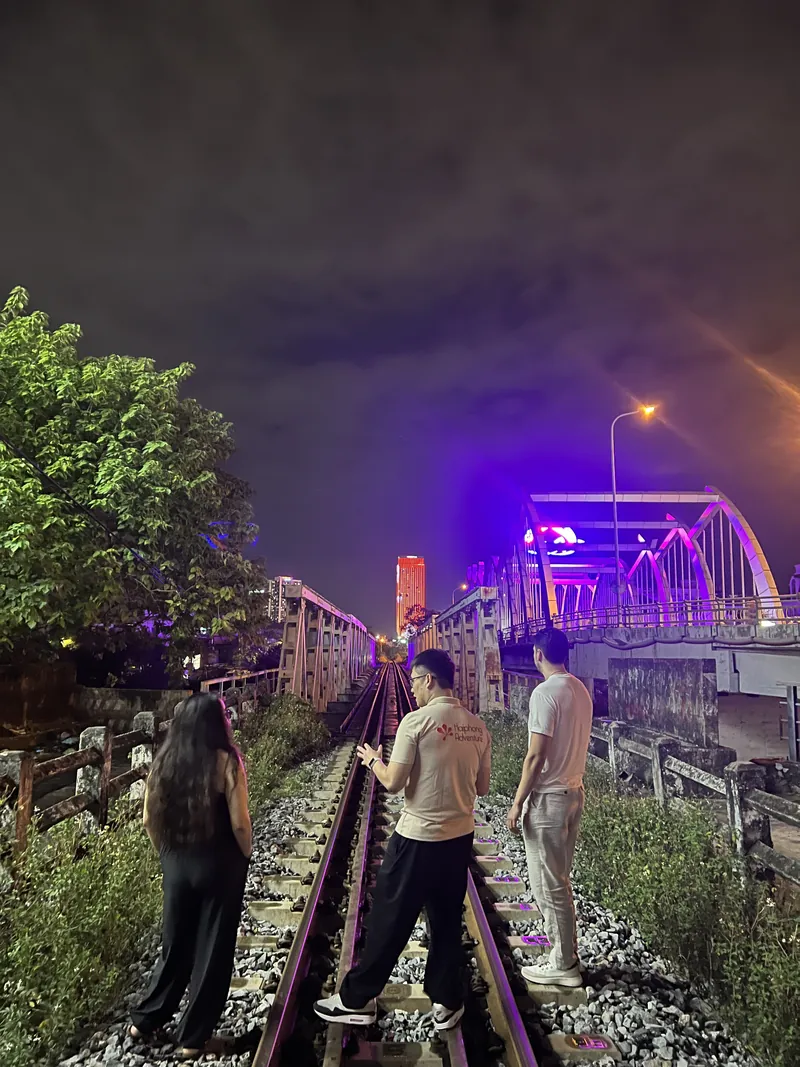
One of our favourite stops is Cau Quay, a historic railway swing bridge whose name comes from the Vietnamese word for turning. Bridges like this could rotate to let boats pass along the river, a clever solution in a city built around water and trade.
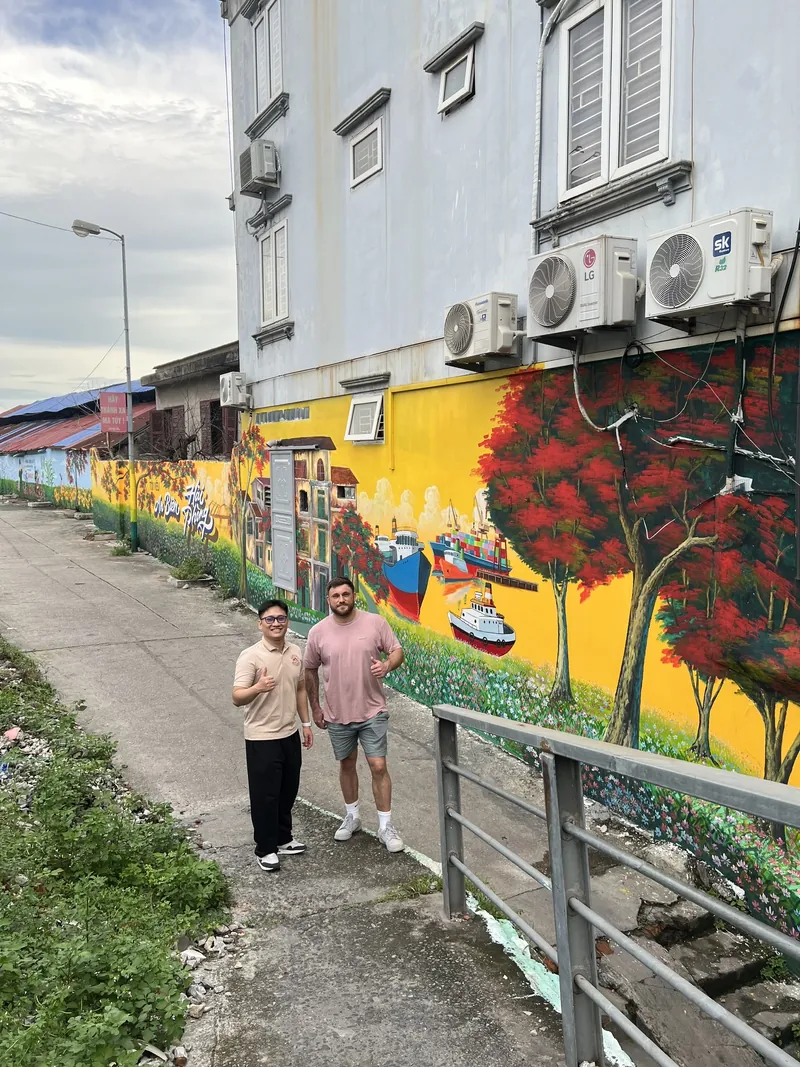
Today the old tracks are a popular spot for photos, and the walls at the foot of the bridge have been brightened with colourful murals showing scenes of city life. At night, with the lights of the city behind it, the bridge has a quiet, nostalgic atmosphere.
Standing on the tracks, we talk about the railway that connected Haiphong with Hanoi and beyond, carrying goods from the port inland. The line still runs today, and some travellers arrive in Haiphong by train.
The City Of Red Flamboyant Flowers
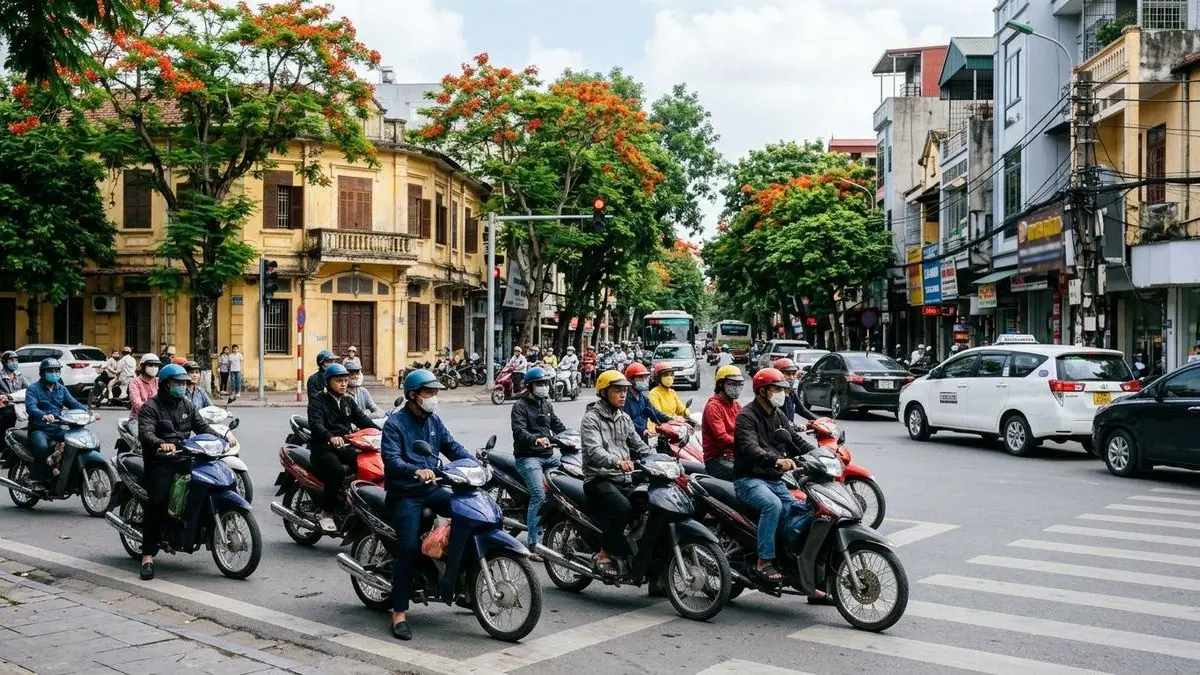
Haiphong is affectionately known in Vietnam as the city of red flamboyant flowers. In early summer, the flame trees along many streets burst into brilliant red, and locals hold events to celebrate the season.
On a walk in May or June you will see petals scattered on pavements and people stopping to take photos under the trees. Even outside the season, guides like to point out the trees and share songs and poems that link the flower with the city’s spirit.
Temples, Communal Houses And Everyday Faith
History in Haiphong is not only colonial. Between modern buildings you will find pagodas, temples and communal houses that have served neighbourhoods for generations. Places like Hang Kenh Communal House, known for its intricate wood carvings, and Du Hang Pagoda show the skill of traditional craftsmen and the role of faith in daily life.
When visiting, dress modestly, speak quietly and follow the lead of local worshippers. Your guide can explain the meaning of altars, offerings and the incense that fills the air.
We describe more of these places in our guide to cultural things to do in Haiphong.
A Simple Historical Walking Route
This route links the main stories above and takes around two to three hours at a relaxed pace, including stops.
- Start at the Le Chan statue square in the late afternoon.
- Walk to the Opera House and around the square.
- Continue through the French quarter streets to the City Post Office.
- Head to Dien Bien Phu Street to see the Haiphong Museum facade.
- Walk towards the Tam Bac river area and Cau Quay bridge for sunset or blue hour.
- Finish with street food or coffee nearby.
Distances are short, but traffic can be busy. Cross streets slowly and steadily, and keep valuables secure. If you only have a few hours, you might also like our half-day Haiphong tour itinerary.
>>> Free Things To Do In Haiphong For Budget Travel
Tips For Enjoying A Haiphong Walking Tour
- Go late in the day: the light is softer, the heat is lower and squares fill with local life.
- Wear comfortable shoes: pavements can be uneven and are often used for parking motorbikes.
- Carry water and a small umbrella: useful for both sun and sudden showers.
- Ask questions: the best stories often come from small details you point out.
- Respect privacy: ask before photographing people, especially in residential alleys.
- Consider a guide: a local guide brings the buildings to life. Read why in our article on how a local guide changes a Haiphong tour.
Frequently Asked Questions About A Haiphong Walking Tour
How long does a historical walking tour of Haiphong take?
Most routes around the centre take two to three hours. You can extend it with a museum visit, a pagoda or a long food stop.
Is Haiphong easy to explore on foot?
The historic centre is compact and walkable. Pavements can be busy with parked motorbikes and vendors, so walk carefully and cross roads slowly.
What is the best time of year for a walking tour?
Autumn and spring are generally the most comfortable. In summer, walk early in the morning or late in the afternoon to avoid the strongest heat.
Can I combine a walking tour with food tasting?
Yes. Many of our guests combine history with street food, stopping for banh da cua, banh mi cay or local coffee between landmarks.
Does Haiphong Adventure offer guided walking tours?
Yes. Alongside our haiphong tours by motorbike, we can arrange guided walks focused on history, architecture or food. Contact us to plan a route.
Walk Through Haiphong’s Past With Us
From a first-century general to French-era theatres and a bridge that once turned for passing boats, Haiphong is full of stories waiting to be told. A walking tour lets you hear them where they happened and meet the people who keep them alive. If you would like a guide to share these stories with you, the Haiphong Adventure team would love to show you around.
WhatsApp, Viber, WeChat: +84(0)934.555.001
KakaoTalk, Line ID: haiphongadventure