Haiphong French Colonial Architecture Worth Seeing
Haiphong French colonial architecture is concentrated in a compact, walkable area of the old centre. The highlights are the Haiphong Opera House, the bright yellow City Post Office, the red Haiphong Museum on Dien Bien Phu Street, the old railway station, the cathedral and rows of shuttered villas and shophouses along tree-lined streets. Most of these buildings date from the late nineteenth and early twentieth centuries, when Haiphong grew into one of the most important ports of French Indochina. You can see the main landmarks in half a day on foot, by cyclo or with a local guide.
In this guide, the Haiphong Adventure team introduces the buildings worth seeing, explains the styles behind them, suggests a walking route and shares photo and etiquette tips. Opening hours and access to buildings can change, and many are working offices or venues, so check locally before planning to go inside (updated October 2026).
A Short History Of Colonial Haiphong
Haiphong’s location near the mouth of the Cam River made it a natural gateway to northern Vietnam. From the late 1800s, the French developed the town into a major port, building docks, warehouses, administrative offices, banks, churches and homes. A railway connecting Haiphong with Hanoi opened in the early 1900s, which brought even more trade and new public buildings.
The colonial planners laid out wide boulevards, squares and green spaces in the centre, many of which still shape the city today. After independence, many buildings were adapted for new uses, becoming museums, government offices, post offices and cultural venues. That is why a walk through central Haiphong often feels like a journey through layers of history.
- Late nineteenth century. Port expansion, the first administrative buildings and churches.
- Early twentieth century. Railway, Opera House, post office and grand civic buildings.
- 1920s to 1940s. Villas and townhouses with Art Deco and Indochine touches.
- Today. Many buildings are still in use, giving the centre its distinctive character.
For a wider look at the city’s past and culture, read our cultural insights from a Haiphong city tour.
Haiphong Opera House
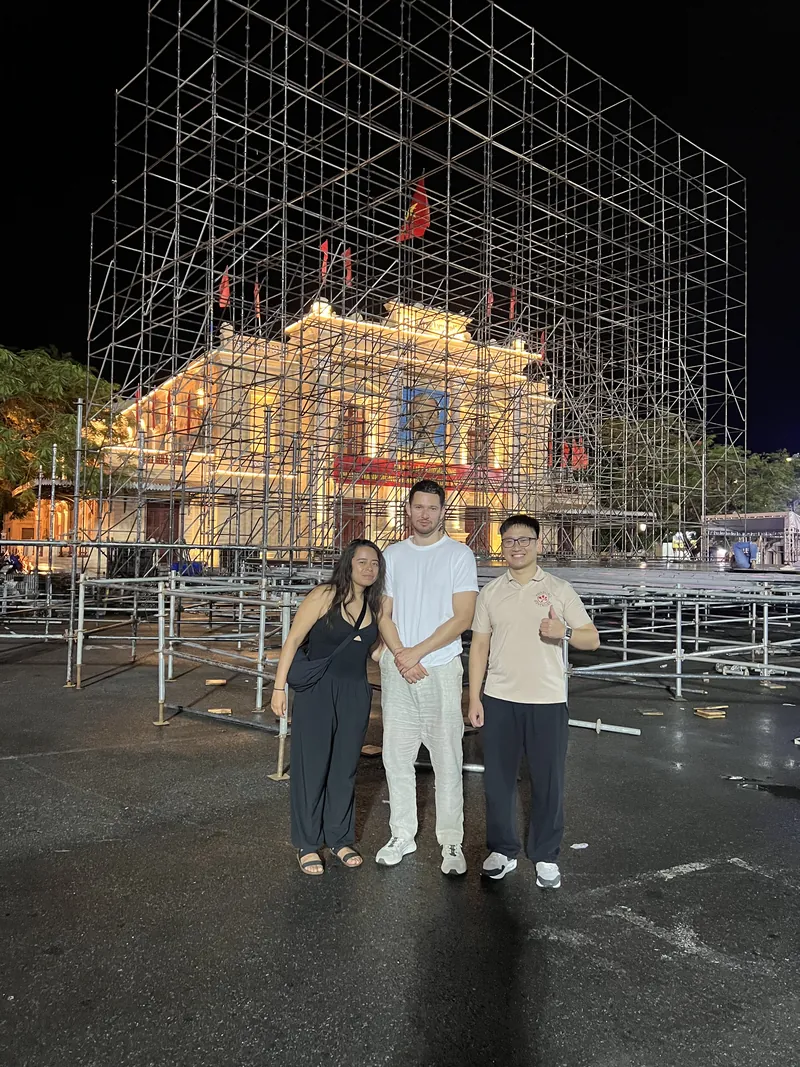
The Opera House is the most famous colonial landmark in the city. Completed in the early twentieth century, it shows a neoclassical style with columns, arched windows, decorative mouldings and a grand front facade facing a broad square. It remains an important venue for performances, ceremonies and civic events.
- What to notice. The symmetrical facade, columns and carved details above the entrance.
- Best time to visit. Early morning for soft light, or evening when the building is lit up.
- Inside access. Usually only during events, so admire it from the square.
Haiphong City Post Office
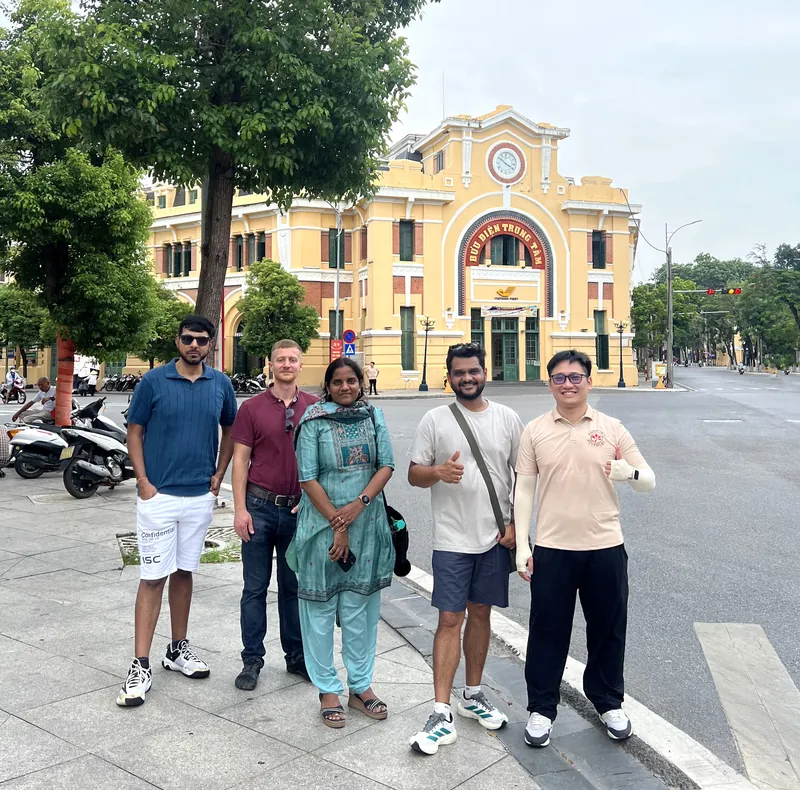
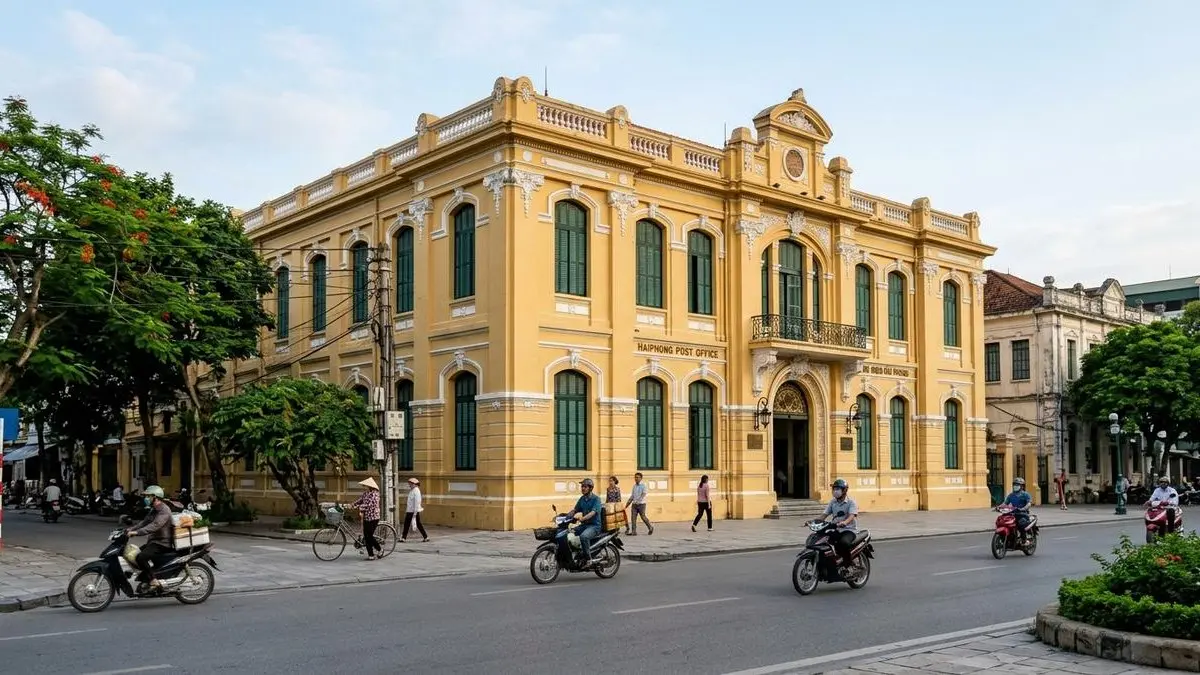
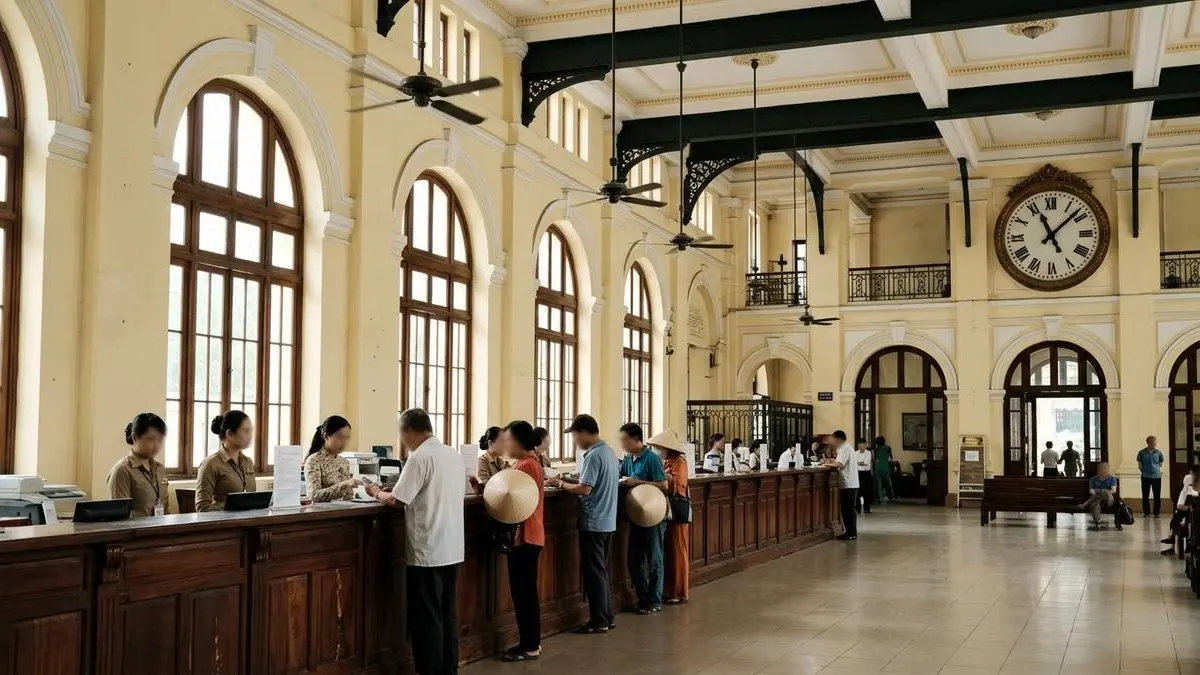
With its sunny yellow walls, tall windows and white trim, the City Post Office is one of the most photogenic colonial buildings in Haiphong. It dates from the early twentieth century and still functions as a post office, so you can step into the public hall during opening hours and even send a postcard home.
Look for the high ceilings, arched openings and the sense of space inside the main hall. Outside, the corner location and surrounding trees make for classic street photos.
>>> The Ultimate Haiphong Tour: Top 10 Must-Visit Spots in 2025
Haiphong Museum On Dien Bien Phu Street
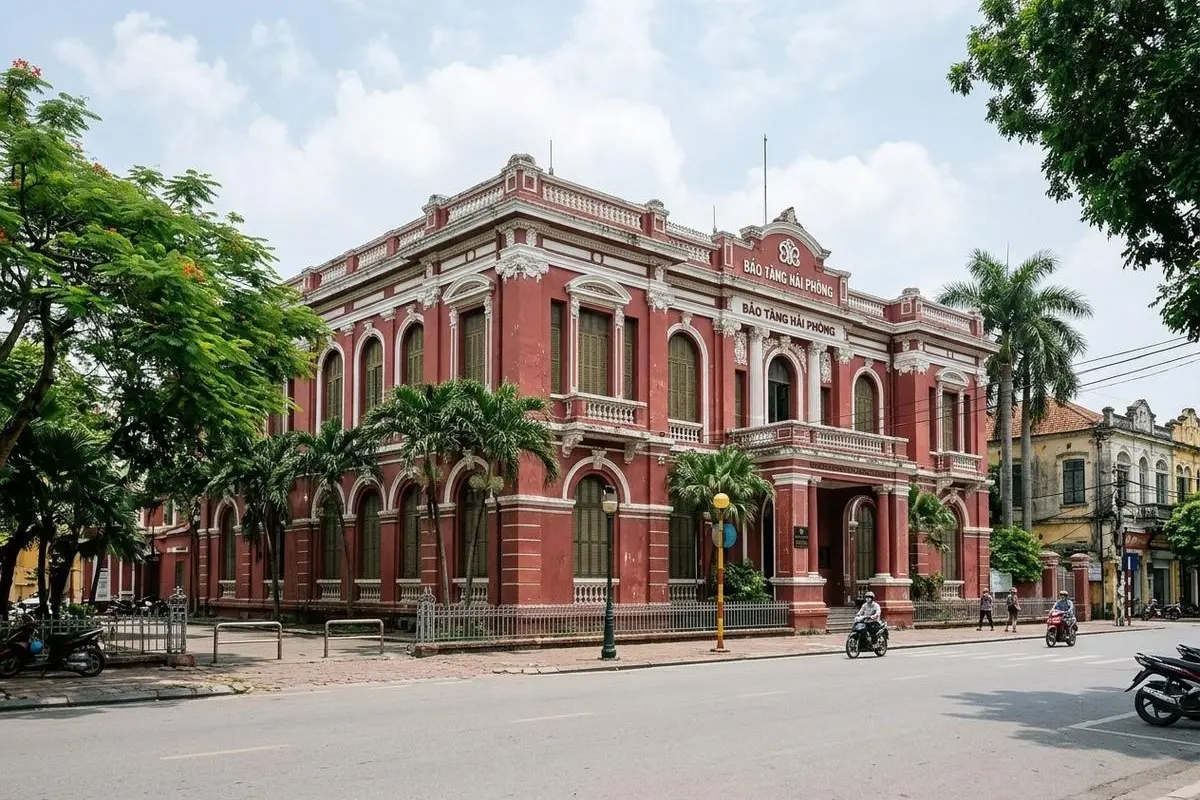
The Haiphong Museum occupies a striking deep red colonial building on Dien Bien Phu Street. Its arched windows, white trim and decorative details make it stand out among the trees. Inside, exhibitions cover the city’s history, culture and natural environment, which adds useful context to your architecture walk.
Dien Bien Phu Street itself is worth exploring slowly. It is lined with old villas, offices and shady trees, and it gives a good sense of how the colonial centre was planned.
Recommended tour
Taste of Old Haiphong
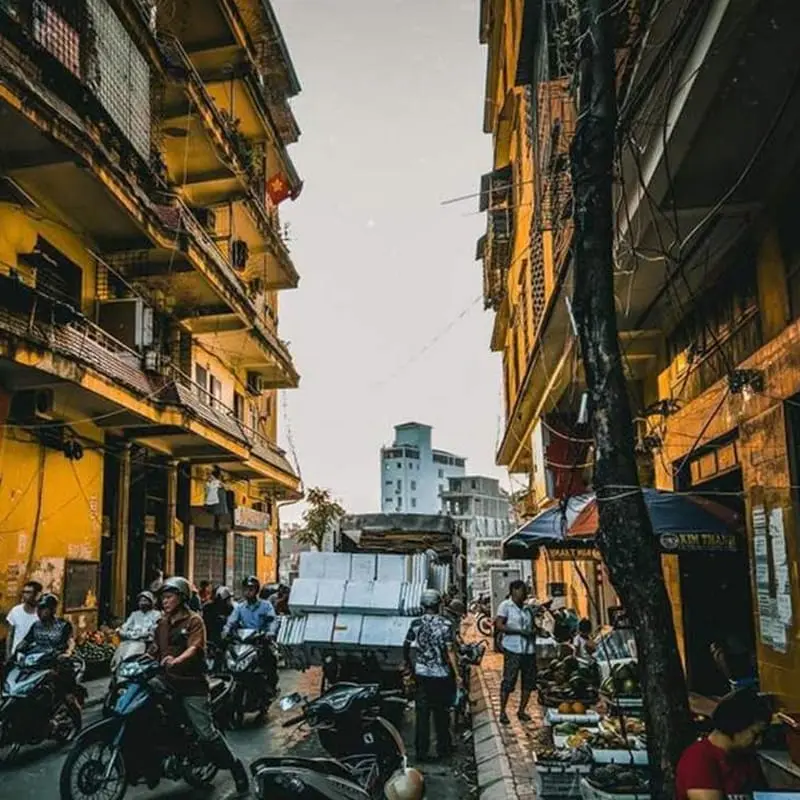
Explore the old quarter’s streets, landmarks and classic local flavours with a guide who knows the stories behind them.
From $79 per person
More Colonial Buildings To Look For
Beyond the big three, several other buildings help tell the story of colonial Haiphong.
Haiphong Cathedral
The city’s main Catholic cathedral dates back to the late nineteenth century. Its grey stone walls, pointed arches and bell towers reflect a Gothic-inspired style. Visitors are welcome outside service times, as long as they dress modestly and stay quiet.
Haiphong Railway Station
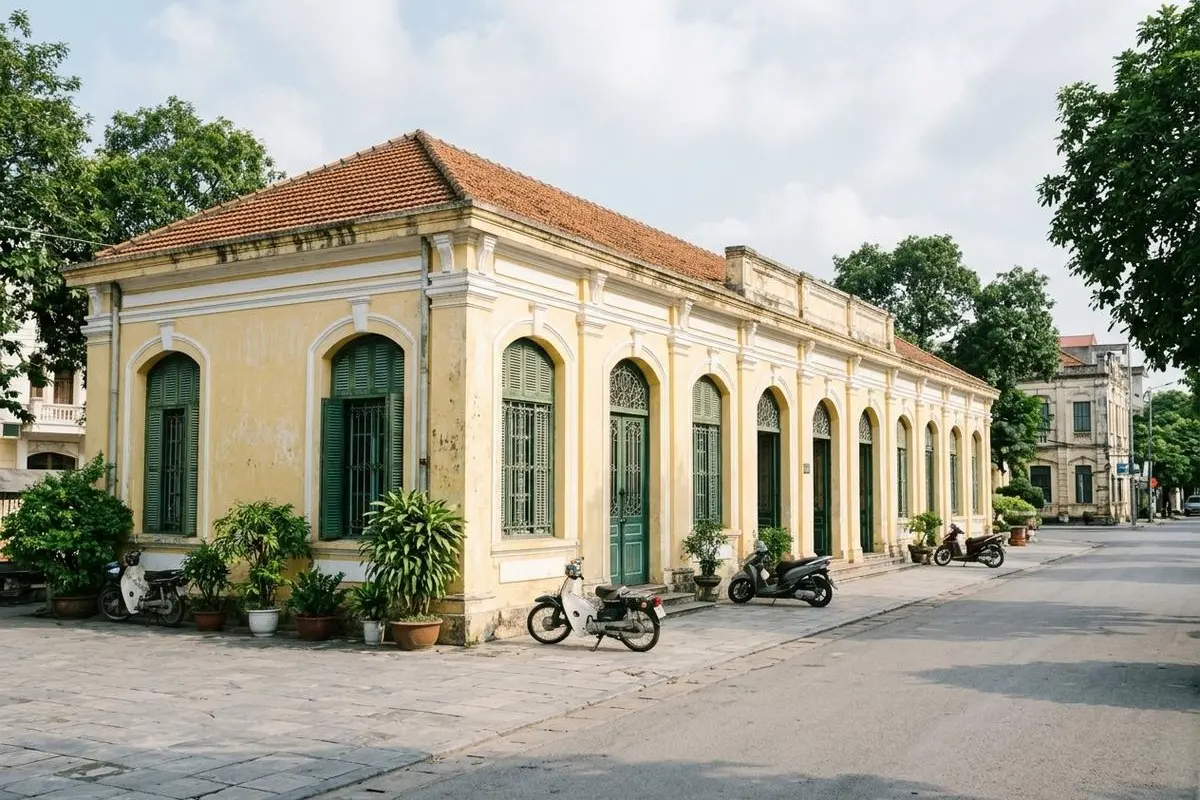
The station dates from the early years of the Hanoi to Haiphong railway. Its low, elegant facade with arched windows and shutters is a reminder of how important rail travel was for the port. It is still in use, so you can see it on arrival if you come by train.
Former Town Hall
The grand building that houses the city government was built in the colonial era as the town hall. It is an active government office, so enjoy it from the street and avoid photographing security staff or entrances up close.
Villas And Shophouses
Some of the most charming details are on ordinary streets: tall shutters, wrought-iron balconies, tiled roofs and faded pastel walls. Many have been converted into cafes, shops and homes. Our guide to quiet Haiphong coffee spots includes a few places where you can enjoy that atmosphere over a drink.
Key Styles And Details To Recognise
You do not need to be an architect to enjoy these buildings, but knowing a few features makes the walk more rewarding.
| Style | Typical features | Where to see it |
|---|---|---|
| Neoclassical | Columns, symmetry, pediments, grand entrances | Opera House, former town hall |
| Gothic-inspired | Pointed arches, towers, stone walls | Haiphong Cathedral |
| Colonial civic style | Bright colours, tall windows, arcades and white trim | City Post Office, Haiphong Museum |
| Indochine | European structure with local roofs, louvres and shade elements | Villas and offices in the old centre |
| Art Deco touches | Geometric patterns, rounded corners, simple lines | Later townhouses and shophouses |
Notice how many buildings use high ceilings, deep verandas and shutters. These features helped keep interiors cool in Haiphong’s hot, humid climate long before air conditioning.
>>> Half-Day Haiphong Tour: The Ultimate 4-Hour Itinerary
Suggested Colonial Architecture Walking Route
This route links the main landmarks in a loop of roughly three to four hours with photo and coffee stops. Distances are short, but summer heat makes an early start a good idea.
- Haiphong Opera House. Start at the square and take photos while the light is soft.
- City Post Office. Walk a few minutes to the yellow post office and visit the public hall if it is open.
- Former town hall. Admire the facade from the street.
- Cam River area. Take a short detour to the river for views and a breeze.
- Haiphong Cathedral. Visit quietly outside service times.
- Dien Bien Phu Street and Haiphong Museum. Stroll past villas and visit the museum if it is open.
- Coffee break. Finish in a cafe inside an old townhouse.
Short on time? Our 24-hour DIY Haiphong guide shows how to combine this route with food stops and other sights.
Photography And Etiquette Tips
- Go early. Morning light is softer, streets are quieter and it is cooler.
- Look up. The best details are often above street level: balconies, cornices and shutters.
- Respect working buildings. Many are offices or government buildings, so do not enter without permission and avoid photographing guards.
- Dress modestly at the cathedral. Cover shoulders and knees and keep your voice low.
- Watch the traffic. Find a safe spot on the pavement before stopping for photos.
- Support local cafes. Buying a drink is the polite way to enjoy a heritage interior.
Prefer to discover the stories behind each building? A guide makes a big difference, as we explain in why a local guide changes everything on a private Haiphong tour.
Combine Architecture With Local Life
Colonial buildings are only part of Haiphong’s charm. The best way to enjoy them is to mix heritage with everyday life: a bowl of banh da cua for breakfast, a stroll through a busy market, an afternoon coffee and an evening by the river.
- Morning. Opera House, post office and breakfast noodles.
- Midday. Museum visit and lunch at a local eatery.
- Afternoon. Cafe in a colonial townhouse and a cyclo ride.
- Evening. The Opera House lit up at night and street food nearby.
Many guests enjoy seeing these landmarks as part of our haiphong tours, where a local guide adds stories, hidden alleys and food stops. For more unusual corners of the city, see unusual things to do in Haiphong.
>>> My Favorite Things To Do In Haiphong On Weekend
Frequently Asked Questions About Haiphong French Colonial Architecture
What are the most famous colonial buildings in Haiphong?
The Haiphong Opera House, the City Post Office, the Haiphong Museum, the cathedral and the railway station are the best-known examples.
Can I go inside the Haiphong Opera House?
Access is usually limited to performances and events. Most visitors admire it from the square outside.
How long does a colonial architecture walk take?
Allow about three to four hours to see the main landmarks at a relaxed pace with photo and coffee stops.
Is it better to walk or take a tour?
Walking is easy in the compact centre. A guided tour adds historical context, local stories and food stops, and it saves time in the heat.
When is the best time to photograph the buildings?
Early morning gives the softest light and the quietest streets. Evening is good for illuminated landmarks such as the Opera House.
Discover Haiphong’s Colonial Heritage
Haiphong’s French colonial architecture offers a quieter, more local alternative to the busy heritage streets of bigger cities. With a few hours, comfortable shoes and an eye for detail, you can trace the story of the port city through its opera house, post office, museum and leafy boulevards.
If you would like a local guide to show you the city’s heritage buildings and the stories behind them, send the Haiphong Adventure team a message. We are happy to plan a haiphong adventure that matches your interests.
WhatsApp, Viber, WeChat: +84(0)934.555.001
KakaoTalk, Line ID: haiphongadventure