Haiphong Railway Station History And Architecture
Haiphong Railway Station is one of the quiet landmarks of the port city. Behind its modest, low facade lies more than a century of history: it was built in the French colonial period as the coastal end of the line from Hanoi, and for decades it linked the busy harbor with the capital and the mountains beyond. Today it is still a working station, and its colonial-era architecture makes it a rewarding stop on any walk around the old center.
In this guide, the Haiphong Adventure team explains the story of the station, what makes its architecture special and how to enjoy a visit, whether you are catching a train or simply passing by on one of our Haiphong tours.
If you plan to arrive by rail, read about our experience taking the train from Hanoi to Haiphong before you go.
Haiphong Railway Station At A Glance
| Item | Details |
|---|---|
| Location | Luong Khanh Thien Street, central Haiphong |
| Era | Early twentieth century, French colonial period |
| Role | Coastal terminus of the Hanoi to Haiphong railway |
| Style | Low, symmetrical colonial building with arched openings |
| Today | Working passenger station, mainly for trains to Hanoi |
Train timetables, ticket prices and station services change, so always check the latest information before you travel.
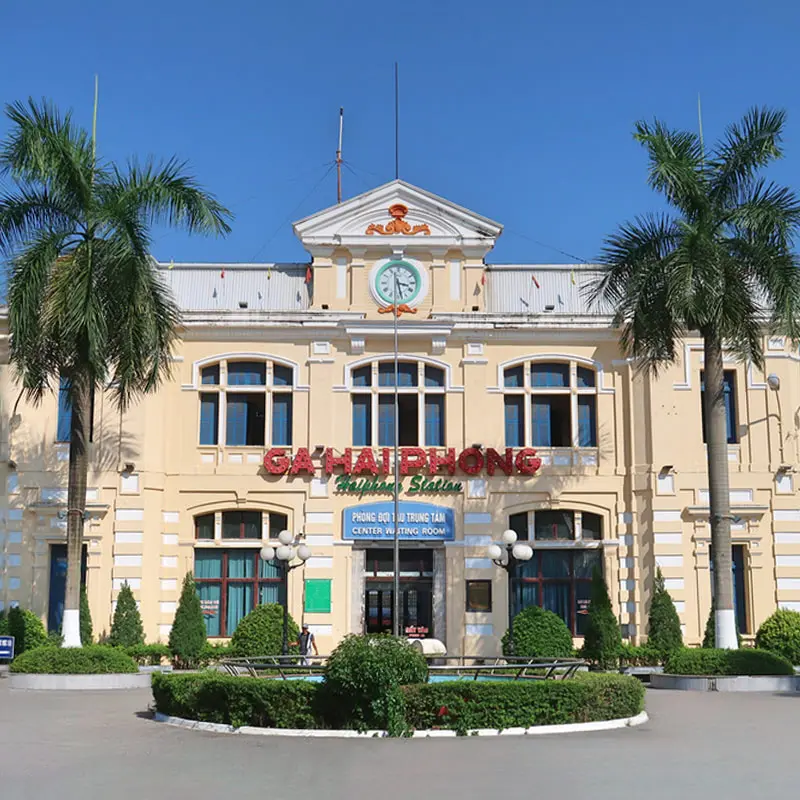
The History Of Haiphong Railway Station
A port city needs a railway
At the end of the nineteenth century, Haiphong was growing fast as the main seaport of northern Vietnam. Goods arrived by ship and needed a reliable way to reach Hanoi and the interior. The French colonial administration answered with a railway, and the line between Hanoi and Haiphong opened in the early 1900s. Haiphong Railway Station was built as its coastal terminus, close to the commercial heart of the city.
Gateway to the north and beyond
The Haiphong line soon became part of a much larger network. It formed the eastern end of the railway that ran from the coast through Hanoi and Lao Cai toward Yunnan in southern China. For years, cargo landed at the port could travel by rail deep inland, and the station became a symbol of Haiphong as a trading gateway.
Through war and change
Like much of northern Vietnam, the railway was affected by the conflicts of the twentieth century, and parts of the network were damaged and rebuilt over time. Through it all, the station kept its role as the city’s rail link to the capital. Its survival is part of what gives the building its quiet sense of history.
The station today
Today the station serves mainly passenger trains to and from Hanoi. Many travelers now choose buses or private cars, but the train remains popular with locals and visitors who enjoy a slower, scenic ride across the Red River Delta.
>>> Scenic Stops From Hanoi To Haiphong Journey
Architecture Of Haiphong Railway Station
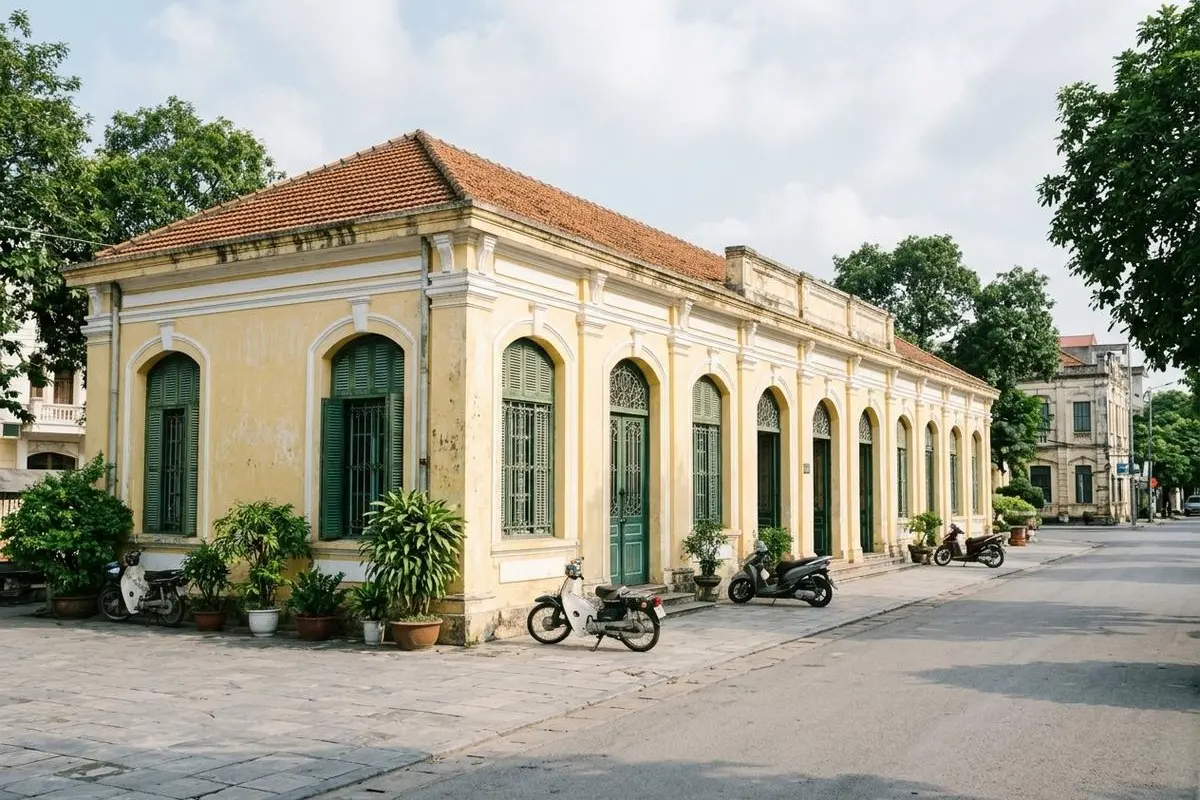
Haiphong Railway Station is not a grand cathedral of steam like some European terminals. Its charm lies in its proportions and simplicity. The building is long and low, with a calm, symmetrical facade that reflects the practical colonial architecture of the period.
Key features to look for
- Symmetry. The central entrance is balanced by matching wings on each side, a hallmark of French public buildings of the era.
- Arched openings. Tall arched doors and windows let in light and air, a practical answer to the tropical climate.
- Pale facade. Light colored walls with contrasting trim keep the building cool and give it a clean, elegant look.
- Wooden shutters. Shutters and high ceilings were common ways to manage heat before air conditioning.
- Forecourt. An open space in front of the station allows passengers, taxis and motorbikes to gather, and gives you room to take in the whole facade.
Built for the climate
Colonial architects in northern Vietnam adapted European styles to hot, humid summers and cool, damp winters. Thick walls, deep openings and good cross ventilation helped buildings like the station stay comfortable. Look closely and you will see how form follows function in many small details.
The Platforms And Trains
Beyond the main building are the platforms where trains arrive from and depart for Hanoi. The atmosphere here is very local: families with bags of produce, students heading back to the capital and staff in uniform keeping things moving. If you are traveling by train, take a moment to look back at the station from the platform side.
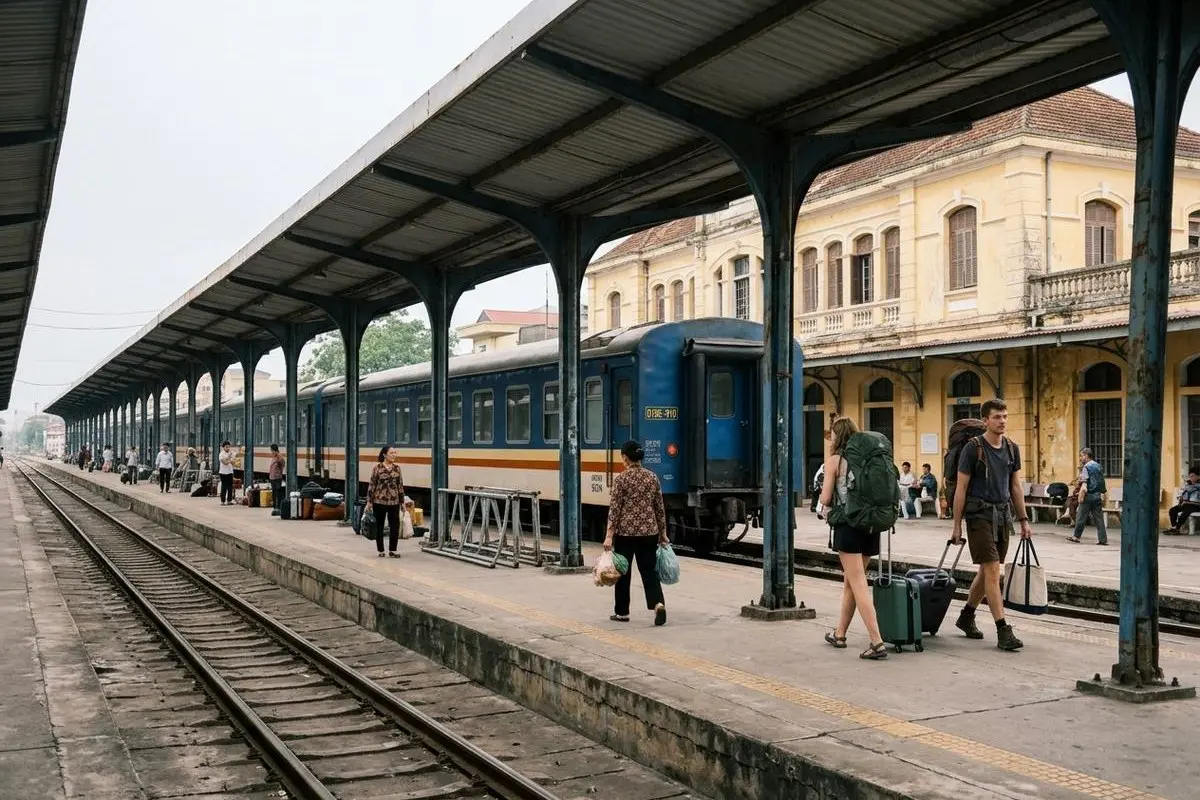
Access to the platforms is usually for ticket holders. If you only want to see the building, enjoy it from the forecourt and respect any restricted areas.
Comparing your options for the trip to the capital? See our guide to bus and train between Hanoi and Haiphong.
Recommended tour
See the railway station, colonial landmarks, hidden alleys and local coffee spots of central Haiphong with a friendly guide who shares the stories behind each place.
From $79 per person
The Station And The Colonial City
The railway station is part of a wider colonial landscape in central Haiphong. Within a short ride or a longer walk you can see the Opera House, the city post office and the Haiphong Museum on Dien Bien Phu Street. Together they show how the French period shaped the layout of the city, with wide streets, public buildings and a port at its heart.

How the station compares
| Landmark | Character | Best viewed |
|---|---|---|
| Railway station | Practical, low and symmetrical | From the forecourt |
| Opera House | Grand neoclassical facade | From the square in front |
| City post office | Elegant corner building | From across the street |
| Haiphong Museum | Ornate, colorful facade | From Dien Bien Phu Street |
For a broader cultural view of these places, read our cultural insights from a Haiphong city tour.
>>> Cultural Things To Do In Haiphong You Must Try
Life Around The Station
Stations are always about people, and Haiphong is no exception. The streets nearby are lined with small eateries, coffee shops and guesthouses that serve travelers and local workers. Early mornings bring breakfast stalls and the smell of noodle soup, while late afternoons fill with motorbikes picking up arriving passengers.
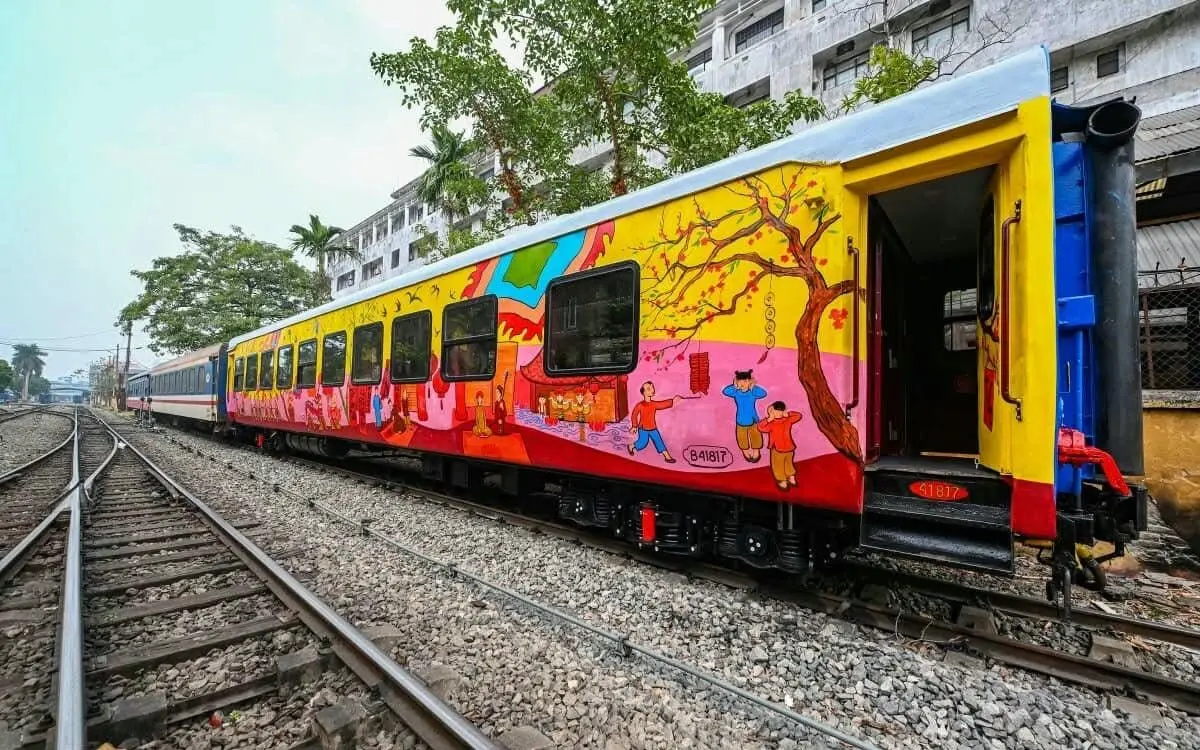
On special occasions such as Lunar New Year, you may see trains and carriages decorated with flowers and festive colors, a reminder that rail travel is still part of family life for many residents.
Tips For Visiting Haiphong Railway Station
- Go in the morning. Light is softer and the area is calmer outside departure times.
- Respect the rules. It is a working station, so follow staff instructions and avoid restricted areas.
- Be quick with photos. Take your pictures from the forecourt without blocking passengers or vehicles.
- Watch the traffic. Taxis and motorbikes come and go constantly, so stay alert when crossing.
- Combine it. Pair the station with the Opera House, Tam Bac Lake and a coffee break for a relaxed half day.
>>> Free Things To Do In Haiphong For Budget Travel
A Half Day Heritage Route Including The Station
| Stop | What to do | Suggested time |
|---|---|---|
| Haiphong Railway Station | Admire the facade and forecourt | 20 minutes |
| Coffee nearby | Try a Vietnamese iced coffee | 30 minutes |
| Haiphong Museum | Learn about the port city | 45 to 60 minutes |
| City post office | Send a postcard | 15 minutes |
| Opera House square | See the grand facade | 20 minutes |
Short taxi or ride-hailing trips connect the stops if you prefer not to walk the whole way. Opening hours of the museum and post office can change, so check on the day.
Need a full day plan? Our 24-hour DIY Haiphong itinerary shows how to fit everything in.
Frequently Asked Questions
When was Haiphong Railway Station built?
It dates from the early twentieth century, when the French colonial administration opened the railway linking Hanoi with the port of Haiphong.
Is Haiphong Railway Station still in use?
Yes. It is a working passenger station with trains mainly to and from Hanoi. Check current schedules before you travel.
Can I visit the station without a ticket?
You can admire the building from the forecourt at any time. Platform access is generally for passengers, so follow the rules set by staff.
Where is Haiphong Railway Station?
It is on Luong Khanh Thien Street in central Haiphong, a short ride from the Opera House and Tam Bac Lake.
Can Haiphong Adventure include the station in a tour?
Yes. We can add the station to a city walk or motorbike tour focused on history and architecture.
Explore Haiphong’s Heritage With Haiphong Adventure
Haiphong Railway Station may look modest, but it tells the story of a port city that connected the sea to the heart of northern Vietnam. Stand in the forecourt, look at the arches and shutters, and imagine the trains that have come and gone for more than a century. If you would like a local guide to show you the station and the colonial city around it, contact the Haiphong Adventure team:
- WhatsApp, Viber, WeChat: +84(0)934.555.001
- KakaoTalk, Line ID: haiphongadventure
We look forward to sharing the history of Haiphong with you.