Haiphong Old Quarter Self Guided Walking Route to Follow
This Haiphong old quarter self guided walking route links the city’s best-loved sights in one easy loop of roughly 4 to 5 kilometers. Start at the Opera House, walk past the flower gardens and Tam Bac Lake, explore the French colonial streets around Dien Bien Phu and Hoang Van Thu, then finish by the old Cau Quay swing bridge and its mural street. At a relaxed pace it takes 3 to 4 hours, including coffee and street food breaks.
We are Haiphong Adventure, a local team that has walked and ridden these streets with travelers for years. Below you will find the route step by step, what to look for at each stop, where to eat, and practical tips so you can explore confidently on your own.
Route at a Glance
Before you set off, here is the full loop in one view. Distances and times are approximate and assume an unhurried pace with photo stops.
| Stop | What you see | Suggested time |
|---|---|---|
| Opera House square | French theater, open square, Le Chan statue nearby | 20 to 30 min |
| Flower gardens and Tam Bac Lake | Shaded promenade, lake views, local life | 30 min |
| Dien Bien Phu Street and Haiphong Museum | Tree-lined boulevard, red colonial facades | 30 to 45 min |
| City Post Office and Hoang Van Thu Street | Yellow colonial buildings, old shopfronts | 20 min |
| Coffee break | Vintage cafe or sidewalk coffee | 30 min |
| Cau Quay swing bridge and mural street | Old railway bridge, colorful wall paintings | 30 to 45 min |
If you only have half a day, follow the first four stops and save the bridge for the evening, when the lights come on. Our guide to a half-day Haiphong tour shows other ways to use four hours well.
Start at the Haiphong Opera House
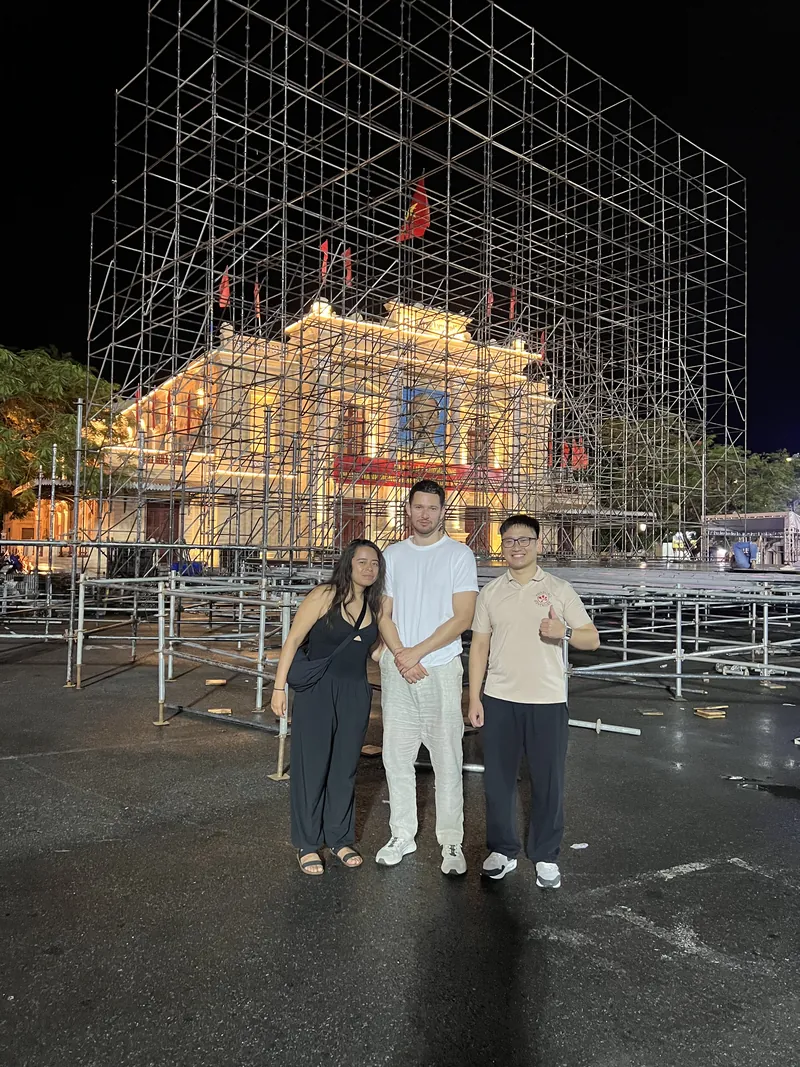
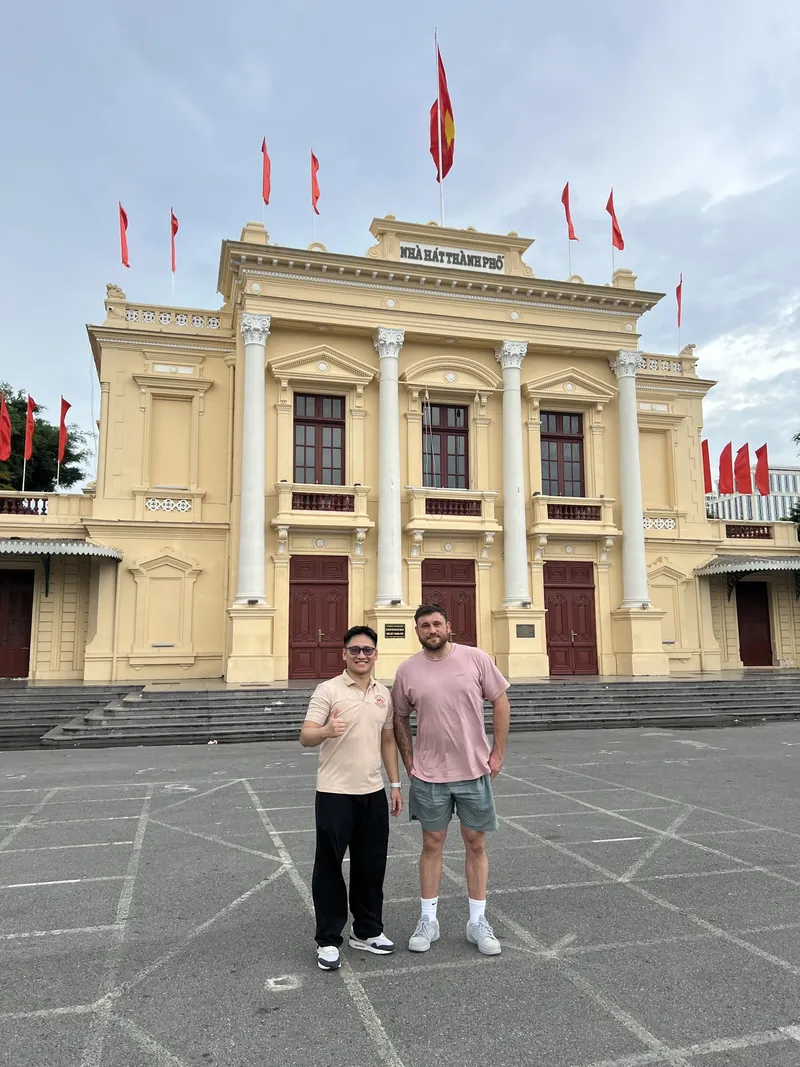
The cream and white Opera House was built during the French period in the early twentieth century and is still the symbolic heart of the city. Its columns, arched windows and grand front steps make it the best landmark to start from, and almost every taxi or ride-hailing driver knows it.
Walk around the square in front first. In the morning you will see locals doing exercises, older men playing chess and families feeding pigeons. In the late afternoon the square fills with children on rented toy cars and teenagers taking photos.
What to look for
- The symmetrical front facade, best photographed from the far side of the square.
- The ironwork and balconies, which show the French design influence.
- Banners and flags on national holidays, when the building is especially festive.
The Opera House is a working venue, so the interior is usually only open during performances. Check the program at the box office if you would like to see a show.
Walk the Flower Gardens to Tam Bac Lake
From the Opera House, walk along the long strip of flower gardens that runs through the center. This green corridor follows the line of an old canal and connects the square with the area around Tam Bac Lake. Benches, shade trees and small kiosks make it a pleasant walk even on warm days.
Tam Bac Lake is a narrow urban lake lined with walking paths. Early mornings and evenings are the liveliest times, when residents come out for a stroll, a jog or a chat. In late May and June the red flamboyant trees bloom here, which is why Haiphong is often called the city of red flamboyant flowers.

Close to the lake you will also find one of the city’s big traditional markets. A short detour inside gives you a taste of daily commerce, from fabrics and household goods to snacks. Keep your bag in front of you in the busy aisles.
>>> Cultural Insights From A Haiphong City Tour Day
Explore Dien Bien Phu Street and the Haiphong Museum
Head back toward the Opera House and turn onto Dien Bien Phu Street, one of the most elegant boulevards in the old quarter. Tall trees shade the sidewalks, and many buildings still keep their French-era proportions, high ceilings and shuttered windows.
The Haiphong Museum stands out thanks to its deep red facade and decorative details. It is one of the most photographed colonial buildings in the city. Inside, the exhibits cover local history from early settlements to the port city of today. Opening hours and ticket arrangements can change, so check at the entrance or ask your hotel before you plan to go in (reference only, updated November 2026).
Photo tips on this stretch
- Shoot the museum from across the street to fit the whole facade in the frame.
- Soft morning light works best on the red walls.
- Watch for motorbikes when you step back for a wider shot.
Visit the City Post Office and Hoang Van Thu Street
A few minutes away, the Haiphong City Post Office is another fine example of colonial architecture, with a long yellow facade and a corner entrance. It still works as a post office, so you can step inside, buy stamps and send a postcard home, a small souvenir that many travelers love.
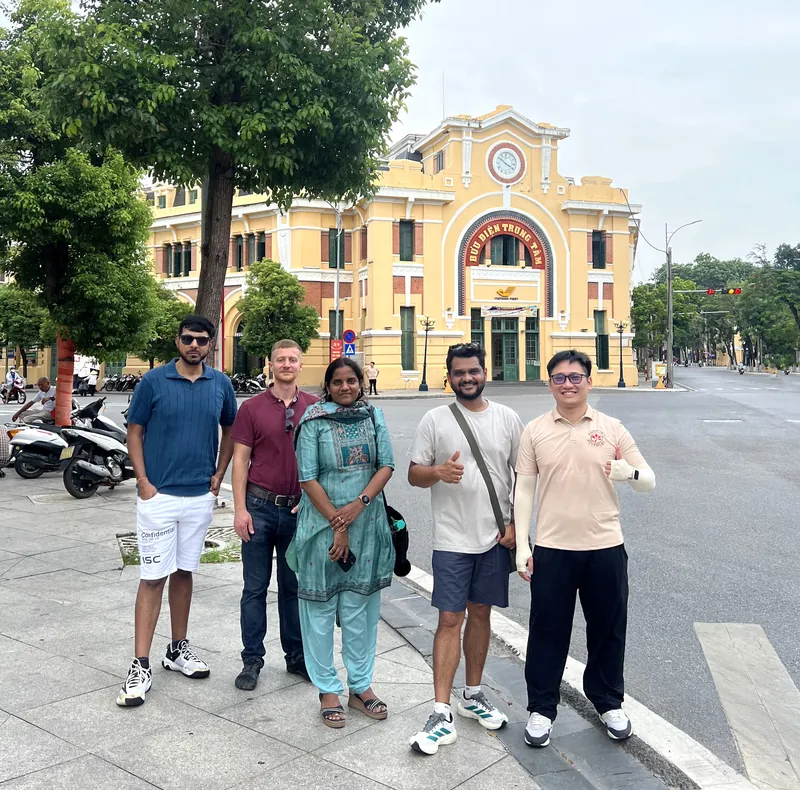
Hoang Van Thu Street and the small streets around it are worth a slow wander. Look up above the shop signs to see old balconies, decorative moldings and faded shutters. Ground floors are often busy family businesses, from tailors to tea shops, which shows how the old quarter is still lived in rather than preserved as a museum.
If heritage buildings are your main interest, our list of cultural things to do in Haiphong suggests more places to add.
Recommended tour

Prefer company on your walk? Explore the old quarter, hidden alleys, markets and street food stalls with a local guide who shares the stories behind each building.
From $79 per person
Take a Coffee Break the Local Way
By now you will have walked for a couple of hours, so it is time for coffee. Haiphong has a strong cafe culture. You can sit on a low plastic stool on the sidewalk with a glass of iced coffee with condensed milk, or choose a vintage cafe inside an old townhouse, with tiled floors and wooden furniture.
- Ca phe sua da: strong drip coffee with condensed milk over ice.
- Ca phe den: black coffee, often served sweetened unless you ask otherwise.
- Tra da: free or very cheap iced tea, a classic refreshment.
For calmer places to sit, browse our picks of quiet Haiphong coffee spots.
>>> Free Things To Do In Haiphong For Budget Travel
Finish at Cau Quay Swing Bridge and the Mural Street
The last section takes you toward the river and the old Cau Quay, an iron railway swing bridge that is one of the most distinctive pieces of industrial heritage in the city. The walls along the street near the bridge are painted with large murals showing scenes of old Haiphong, from cyclos and trams to traditional trades.
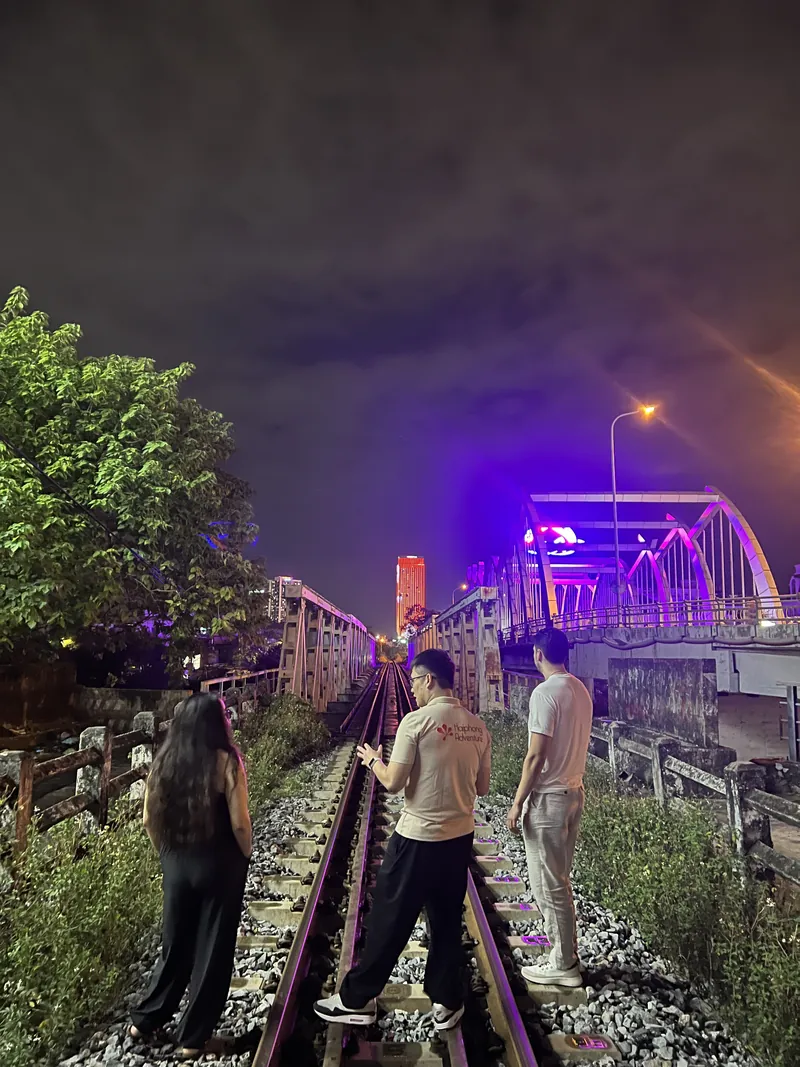
This area is a favorite photo spot with locals, especially in the late afternoon and after dark when the bridge is lit up. Trains may still use nearby tracks, so always follow signs, stay clear of moving trains and do not climb on any structure.
If your feet still have energy, walk a little further along the river promenade near Hoang Van Thu Bridge for sunset views over the water.
Where to Eat Along the Route
One of the joys of walking the old quarter is that food is never far away. You do not need a reservation. Just look for busy stalls full of locals, which usually means fresh food and quick turnover.
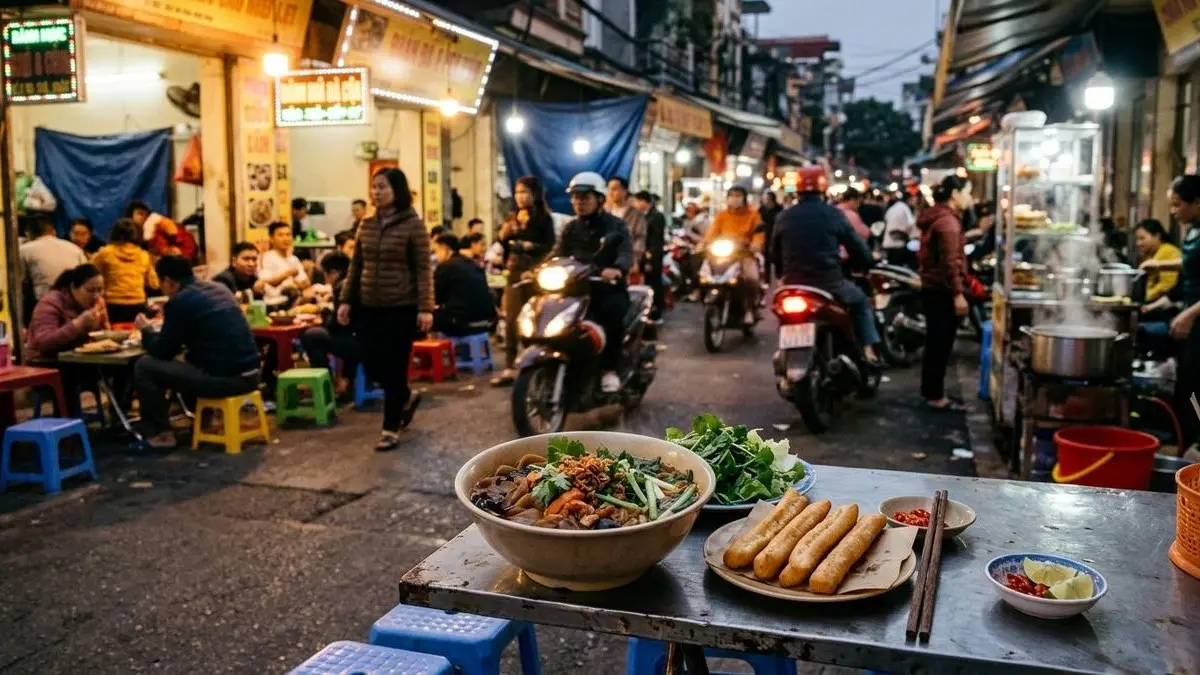
- Banh da cua: Haiphong’s famous crab noodle soup with flat brown rice noodles, perfect for breakfast or lunch.
- Banh mi que: thin, crispy baguette sticks with pate and chili sauce, an ideal walking snack.
- Nem cua be: square crab spring rolls, often shared as a starter.
- Fresh fruit and che: sweet soups and fruit cups for a cool afternoon treat.
Prices at street stalls are usually modest, but they change with location and season, so ask before you order (reference only, updated November 2026). For a deeper dive into the dishes, read about our Haiphong street food adventure.
>>> Finding The Best Banh Da Cua Exploring Local Alley
Practical Tips for Walking in Haiphong
Best time to walk
Start early, around 7 to 8 am, to enjoy cooler air and morning street life, or begin in the late afternoon and finish after dark at the bridge. From October to April the weather is generally cooler and more comfortable for walking. Summer can be hot and humid, so carry water and take shade breaks.
Crossing the street
Motorbike traffic looks chaotic at first. Cross slowly and steadily, make eye contact with riders and do not suddenly stop or run. Riders will flow around you. Use pedestrian crossings and traffic lights where available.
What to bring
- Comfortable walking shoes, since sidewalks can be uneven or used for parking.
- A refillable water bottle, sunscreen and a hat.
- Small Vietnamese dong notes for snacks and coffee.
- An offline map on your phone with the stops saved.
- A light rain jacket in the wet season.
Etiquette
Ask before taking close-up photos of people, especially vendors and elderly residents. Dress modestly if you plan to enter a pagoda or communal house along the way, with shoulders and knees covered.
Ways to Extend the Walk
If you have extra time, the old quarter connects easily with other experiences. Add a visit to a traditional communal house or pagoda, join a local market in the early morning, or hop on a motorbike tour to see the villages on the city’s edge. Our 24-hour DIY Haiphong itinerary shows how to combine this walk with other highlights.
Many travelers also like to repeat part of the route at night. The Opera House, the Le Chan statue square and the bridge all look completely different under lights, and the evening food scene is at its best.
Frequently Asked Questions
How long is the Haiphong old quarter self guided walking route?
The full loop is roughly 4 to 5 kilometers. Allow 3 to 4 hours with stops for photos, coffee and food.
Is it safe to walk around Haiphong on my own?
Yes, central Haiphong is generally safe for walking. Take normal care with your belongings in busy markets and be careful when crossing the street.
Do I need tickets for the sights on this route?
Most stops are free to see from outside. The museum and performances at the Opera House may require tickets, and arrangements can change, so check locally.
Can I do this walk at night?
Yes. The square, lake and bridge are lit in the evening and the street food scene is lively. Some buildings are closed, but the atmosphere is great.
Is the route suitable for families?
Yes, the walk is flat and can be shortened easily. Families with young children may prefer to split it into a morning walk and an evening walk.
Explore Haiphong with Haiphong Adventure
Walking the old quarter is one of the best free ways to understand Haiphong. If you would like a local to show you hidden alleys, explain the history and take you to the best food stalls, message us with your dates or browse our Haiphong tours, from walking and food tours to motorbike adventures.
Contact Haiphong Adventure:
WhatsApp, Viber, WeChat: +84(0)934.555.001
KakaoTalk, Line ID: haiphongadventure