Haiphong Festivals Calendar to Plan Your Visit by Season
This Haiphong festivals calendar helps you match your trip to the city’s biggest celebrations. In short: winter brings Tet, the Lunar New Year; spring is the season of pagoda and communal house festivals; May is famous for the Red Flamboyant Flower Festival; late summer and early autumn bring the Do Son buffalo fighting festival and Mid-Autumn lanterns; and the end of the year adds national holidays and Christmas lights. Many dates follow the lunar calendar, so they move each year on the Western calendar.
We are Haiphong Adventure, a local team in Haiphong. Below we explain what happens at each festival, when it usually takes place, and how to enjoy it respectfully as a visitor.
How the Lunar Calendar Affects Festival Dates
Most traditional Vietnamese festivals are set by the lunar calendar. A festival held on, say, the 15th day of the 8th lunar month will fall on a different Western date every year, usually within a window of three to four weeks. National holidays such as Reunification Day and National Day follow the Western calendar and do not move.
Before you book, convert the lunar date for your travel year with a calendar app, then confirm with your hotel or a local guide. Local authorities can also change, scale down or cancel events, so treat the dates below as a planning guide (reference only, updated November 2026).
Haiphong Festivals Calendar at a Glance
| Season | Festival or holiday | Usual timing |
|---|---|---|
| Winter | Tet, Lunar New Year | Late January to mid February |
| Spring | Pagoda, temple and communal house festivals | 1st to 3rd lunar months, roughly February to April |
| Spring | Hung Kings Commemoration Day | 10th day of the 3rd lunar month |
| Late spring | Reunification Day and Labor Day holidays | 30 April and 1 May |
| Early summer | Red Flamboyant Flower Festival | Usually May |
| Summer | Vu Lan, the festival of filial piety | 15th day of the 7th lunar month |
| Early autumn | National Day | 2 September |
| Early autumn | Do Son buffalo fighting festival | 9th day of the 8th lunar month |
| Early autumn | Mid-Autumn Festival | 15th day of the 8th lunar month |
| Winter | Christmas and Western New Year | 24 December to 1 January |
Tet, the Lunar New Year
Tet is the most important celebration of the year in Vietnam. In the weeks before, Haiphong’s streets fill with flower markets selling peach blossoms, kumquat trees and chrysanthemums. Families clean and decorate their homes, buy new clothes and prepare traditional foods such as banh chung, the square sticky rice cake.
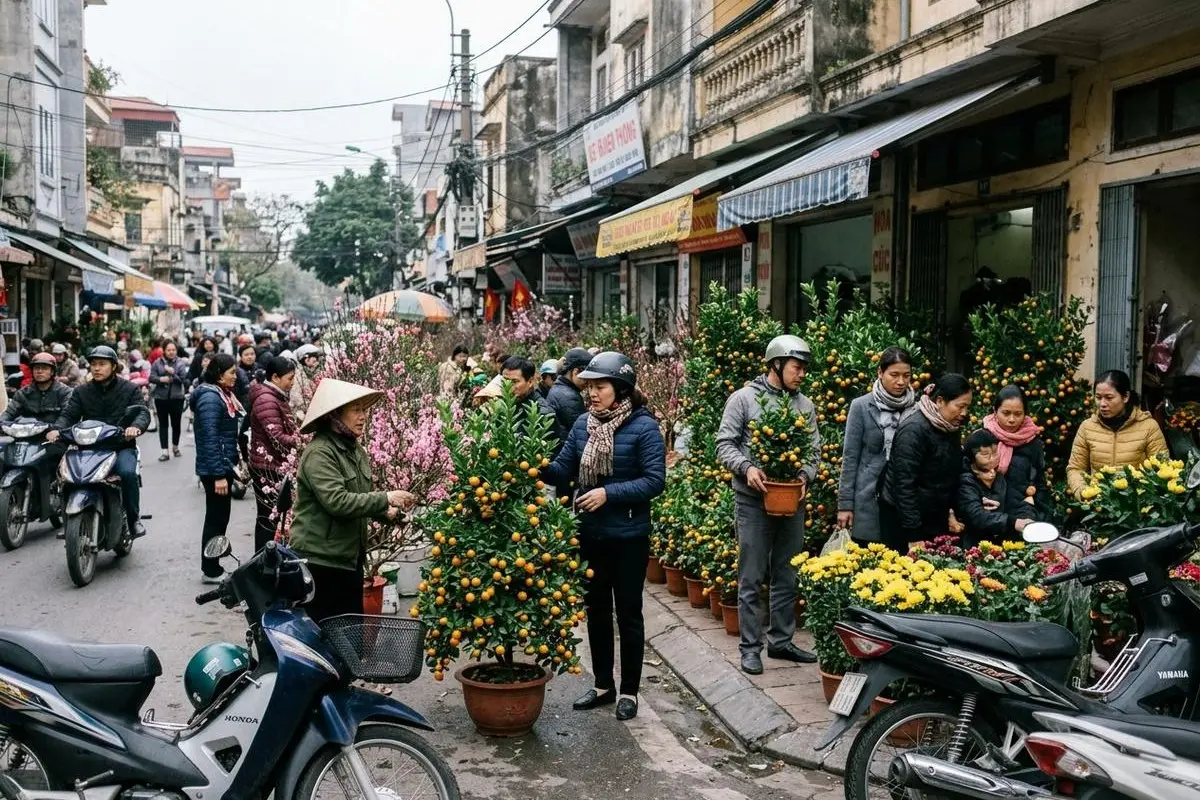
On New Year’s Eve many people visit pagodas to pray for luck, and fireworks are often held in the city on the night itself. The first days of the new year are for family visits, so the city becomes quiet and many shops, restaurants and services close for several days.
Tips for visiting at Tet
- Book transport and hotels early, since prices and demand rise before and after the holiday.
- Expect limited dining options in the first days of the new year.
- The days just before Tet are the most atmospheric for markets and street life.
Spring Pagoda and Communal House Festivals
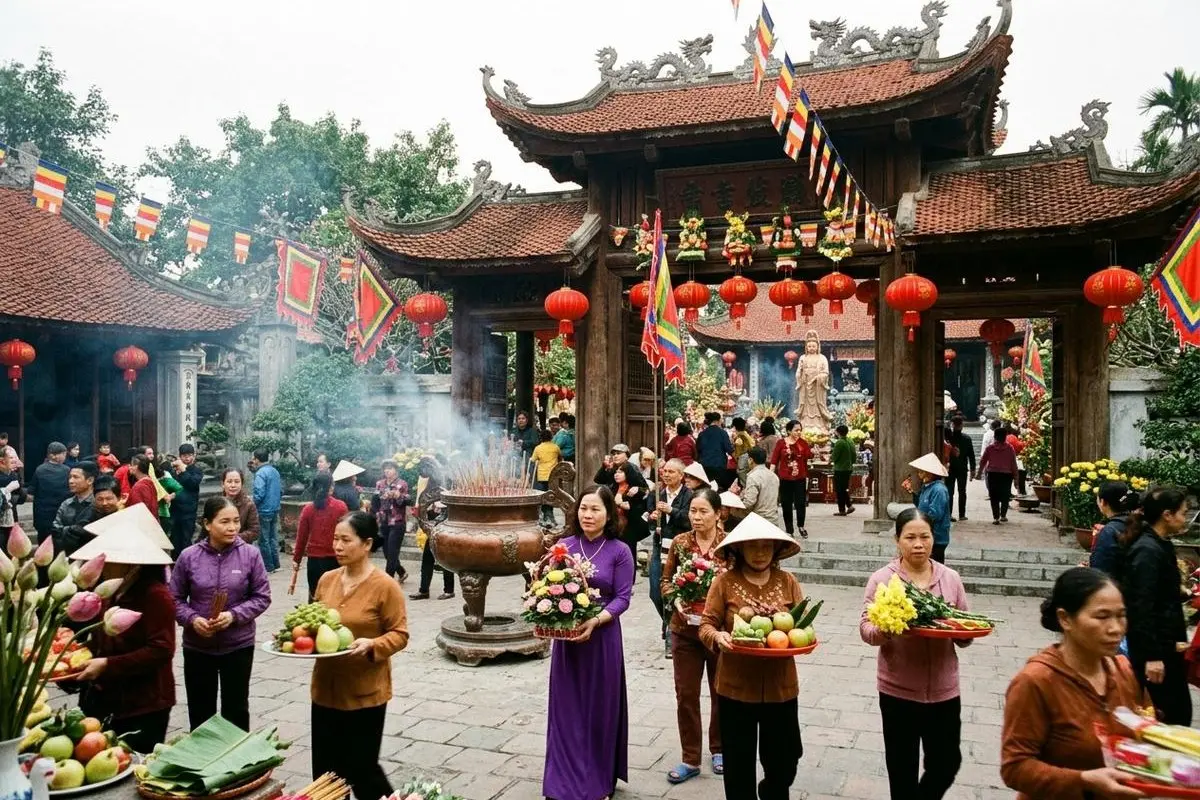
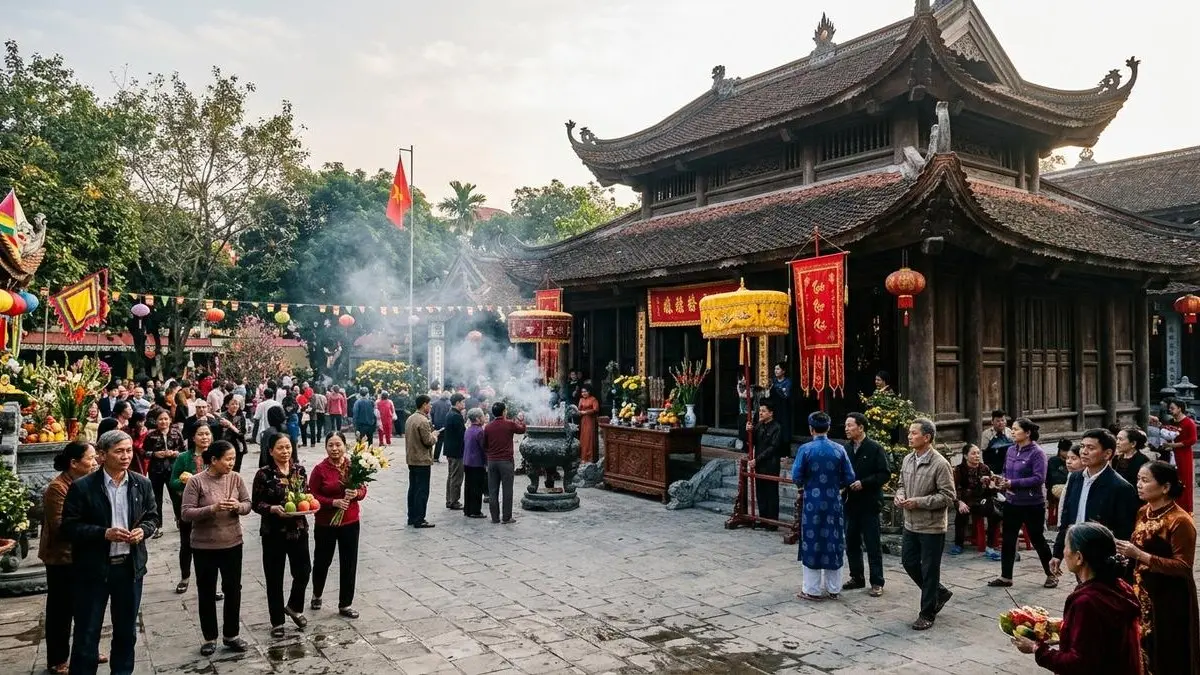
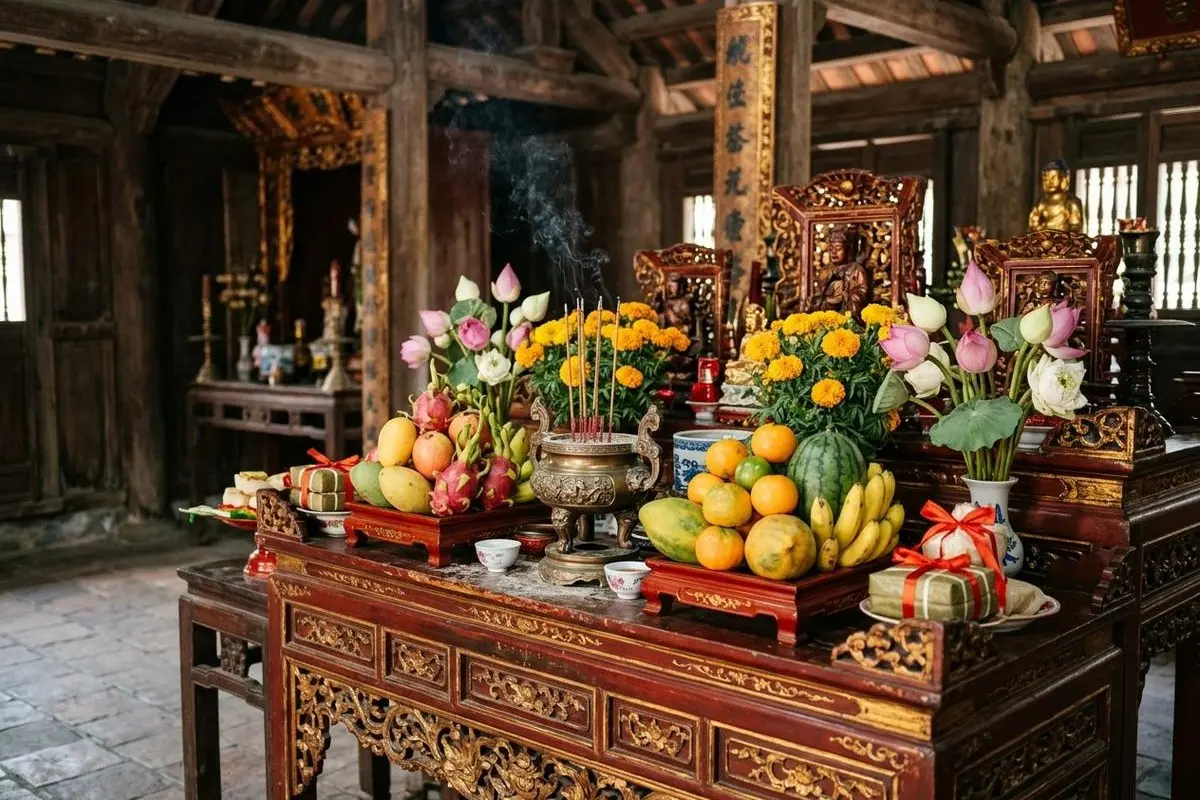
After Tet, the spring festival season begins. From the 1st to the 3rd lunar month, villages and city districts hold festivals at their pagodas, temples and communal houses. Typical activities include incense offerings, processions with palanquins, traditional music, folk games and wrestling or chess contests.
In central Haiphong, Du Hang Pagoda and Hang Kenh Communal House are two well-known places for spring worship and festivities. Exact dates differ by site and year, so ask locally once you arrive.
Since the 2025 administrative merger, the former Hai Duong province is part of Haiphong. This brings famous historic sites such as Con Son and Kiep Bac, known for their spring and autumn festivals, into the wider city area. They are further from the center, so plan a full day if you want to visit.
>>> Cultural Things To Do In Haiphong You Must Try
Hung Kings Day, Reunification Day and Labor Day
Hung Kings Commemoration Day honors the legendary founders of the nation and is a public holiday. A few weeks later, 30 April and 1 May form one of the busiest holiday periods of the year. Many Vietnamese families head to the coast, so Do Son and Cat Ba can be crowded and accommodation fills up.
If you plan to visit the islands at this time, book well ahead. Our guide to ferry and bus tips from Haiphong to Cat Ba helps you plan the journey.
Recommended tour
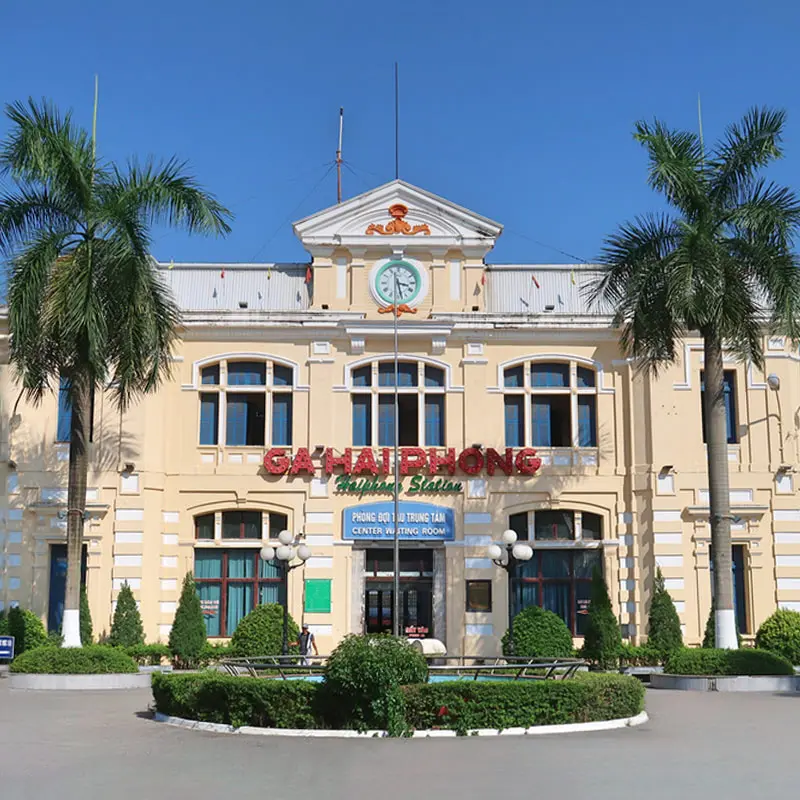
Visiting during a festival? Explore pagodas, markets and old streets with a local guide who can explain the customs and help you join in respectfully.
From $79 per person
Red Flamboyant Flower Festival
Haiphong is known as the city of red flamboyant flowers, and the trees bloom across the center in late spring and early summer. The city usually celebrates with the Red Flamboyant Flower Festival in May, around the anniversary of the city’s liberation on 13 May. Events often include street parades, music performances and cultural shows around the Opera House and the central flower gardens.
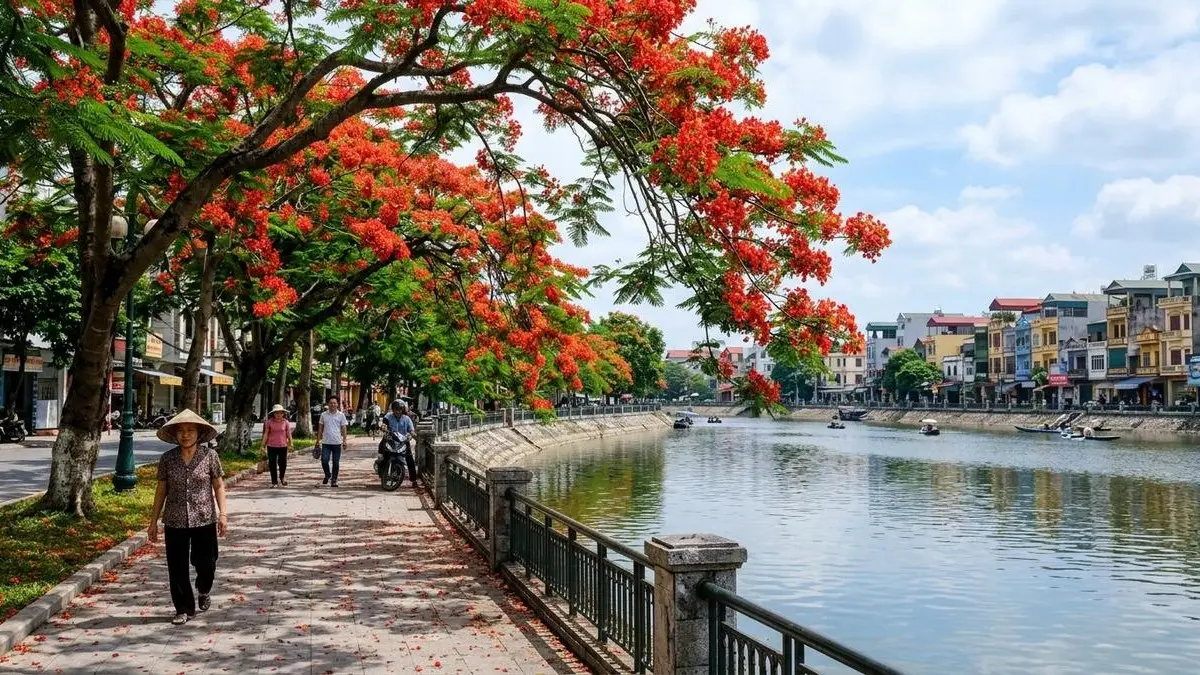
Even outside festival days, late May and June are lovely for photos, when streets around Tam Bac Lake and the Opera House glow red. It is also hot and humid, so plan walks for early morning or evening.
Vu Lan, the Festival of Filial Piety
On the 15th day of the 7th lunar month, Buddhists celebrate Vu Lan, a day to honor parents and ancestors. Pagodas hold ceremonies, and some people wear a rose on their clothing: a red rose if their mother is alive, a white one if she has passed away. It is a quiet, moving occasion. Visitors are welcome to observe from the side, dressed modestly.
National Day on 2 September
National Day marks the declaration of independence in 1945. Streets are decorated with flags, and there may be official ceremonies and evening events in the city center. It is often part of a long weekend, so domestic travel is busy.
Do Son Buffalo Fighting Festival
The best-known traditional festival in Haiphong takes place in Do Son, the seaside district south-east of the center. The main fighting day falls on the 9th day of the 8th lunar month, usually in September or early October, with preliminary rounds earlier in the summer. The festival is a ritual for the local water deity, with processions, flag dances, drums and powerful buffalo contests.
It is crowded and loud, and by tradition the buffaloes are sacrificed afterwards, which some travelers find difficult. Read up before you decide, and stay in the stands at all times. For more ideas around the peninsula, see our list of unusual things to do in Haiphong.
>>> Cultural Insights From A Haiphong City Tour Day
Mid-Autumn Festival
On the 15th day of the 8th lunar month, under the full moon, Vietnam celebrates Mid-Autumn, a festival focused on children. Shops sell mooncakes and colorful lanterns, and in the evening children carry lanterns through the streets, with lion dances and drumming in some neighborhoods. Central squares and parks are lively and family-friendly.
- Try mooncakes with fillings such as lotus seed, green bean or mixed nuts.
- Look for lion dance troupes in residential streets in the evening.
- Lantern stalls make fun, light souvenirs.
Christmas and Western New Year
Although Christmas is not a public holiday, it is popular in Haiphong. The cathedral on Hoang Van Thu Street is decorated, and crowds gather around it on Christmas Eve. Shopping malls and cafes add lights and trees. On 31 December, young people gather in central squares for countdowns, and some years bring fireworks or music events.
Choosing the Best Season for Your Trip
- For culture: the weeks before Tet and the spring festival season.
- For photos: May and June for flamboyant blooms.
- For a big traditional event: the Do Son buffalo fighting festival.
- For families: Mid-Autumn, with lanterns and lion dances.
- For quiet sightseeing: avoid the main Tet days and the late April to early May holiday.
Weather matters too. Spring is mild and often misty, summer is hot with occasional storms, and autumn is generally pleasant. Our weekend guide to Haiphong suggests what to do in any season.
>>> My Haiphong Tours Itinerary For Weekend Getaway
Festival Etiquette for Visitors
- Dress modestly at pagodas, temples and communal houses, covering shoulders and knees.
- Remove shoes where locals do, and do not step on door thresholds.
- Do not touch altars, offerings or ritual objects.
- Ask before photographing people taking part in ceremonies.
- Keep valuables secure in crowds and stay with your group.
- Follow instructions from organizers and security staff.
Frequently Asked Questions
What is the biggest festival in Haiphong?
Tet is the biggest celebration for local families. For visitors, the Do Son buffalo fighting festival and the Red Flamboyant Flower Festival are the best-known city events.
When is the Red Flamboyant Flower Festival?
It is usually held in May, around the city’s liberation anniversary on 13 May. Check the official program for the current year.
Is Tet a good time to visit Haiphong?
The days before Tet are wonderful for atmosphere. The first days of the new year are quiet, with many businesses closed, so plan around that.
How do I find exact festival dates?
Convert the lunar date for your travel year, then confirm with your hotel, the festival venue or a local guide close to the time.
Plan Your Festival Trip with Haiphong Adventure
Festivals are one of the best ways to see Haiphong’s living culture. Tell us your travel dates and interests, and we will check what is happening and suggest a plan, or explore our Haiphong tours for the rest of your stay.
Contact Haiphong Adventure:
WhatsApp, Viber, WeChat: +84(0)934.555.001
KakaoTalk, Line ID: haiphongadventure