
Experience Taking Train From Hanoi To Haiphong
I have made the journey from Hanoi to Haiphong more times than I can count – by bus, by car, on the back of a motorbike – but the slow train is still my favourite. It is not the fastest way, and it is certainly not the most luxurious. What it gives you instead is a window seat on everyday life in the Red River delta: farmers in conical hats, children waving from level crossings, ducks in the canals, and old station buildings that look as if nobody has repainted them in fifty years.
Guests of Haiphong Adventure often ask me what the ride is really like, so here is an honest account of a typical trip, from buying the ticket in Hanoi to stepping out of Haiphong Railway Station and deciding where to eat first. Timetables and fares change from season to season, so treat the times and prices here as a rough guide and check the current schedule before you go.
Why I Still Take The Slow Train From Hanoi To Haiphong
The expressway has made the road trip quick, usually around 1.5–2 hours by car. The train is slower, normally around 2.5 hours, and it only runs a few times a day. So why bother? For me, it is about arriving in the right frame of mind. On the bus you see mostly concrete barriers and billboards. On the train you watch the landscape shift from city to suburbs to open fields, and by the time you reach the coast you feel like you have actually travelled somewhere.
It is also one of the cheapest ways to make the trip, and it delivers you right into the old heart of the city rather than a bus station on the edge of town. For anyone who likes history, the line itself is part of the story: it has linked the capital with the port since the French colonial period, and many of the stations along the way still carry that feel.

Buying A Ticket
On my last trip I bought my ticket the afternoon before, at the counter in the station. Depending on the departure, trains toward Haiphong leave from Hanoi station or Long Bien station, so the first job is to check which one your train uses. Vietnam Railways also sells tickets through its official website and app, which is handy if you do not want to queue, but I like the counter because staff can confirm the platform and departure time in person.
Bring your passport, because the clerk will usually ask for your name and ID number. Seats come in simple classes, typically hard seats and soft seats, and the price difference is small enough that I always go for soft. The fare is low – usually somewhere in the range of roughly 80,000–150,000 VND, though it varies by class and date. On weekends and around holidays, buy your Hanoi to Haiphong ticket a day or two ahead; students and families going home fill the carriages quickly.
Finding The Platform And Boarding
I arrived about 30 minutes early, which felt like too much until I saw how slowly the queue at the platform gate moved. Vietnamese stations are not complicated, but announcements are mostly in Vietnamese, so keep an eye on the departure board and show your ticket to staff if you are unsure. They are used to pointing confused travelers in the right direction.
Boarding is relaxed. You walk along the platform, find your carriage number, and climb a few steep steps. If you have a large suitcase, ask a fellow passenger for a hand – someone always helps. Inside, seats are numbered, and luggage goes on the rack above or by your feet. I grabbed a window on the right-hand side, mostly by habit; both sides have good views once you leave the city.
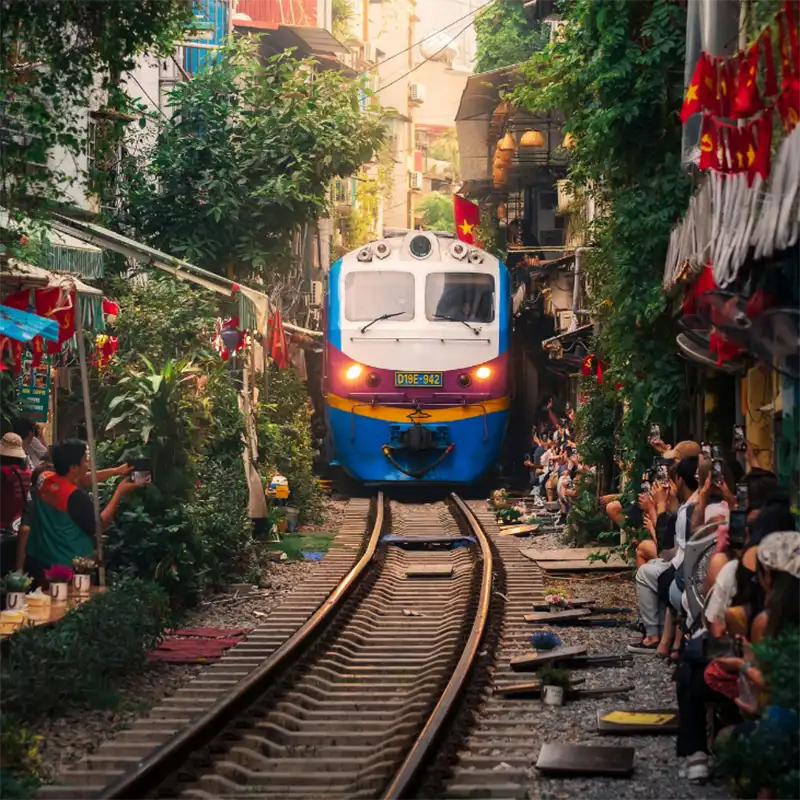
Recommended tour
Taste of Old Haiphong
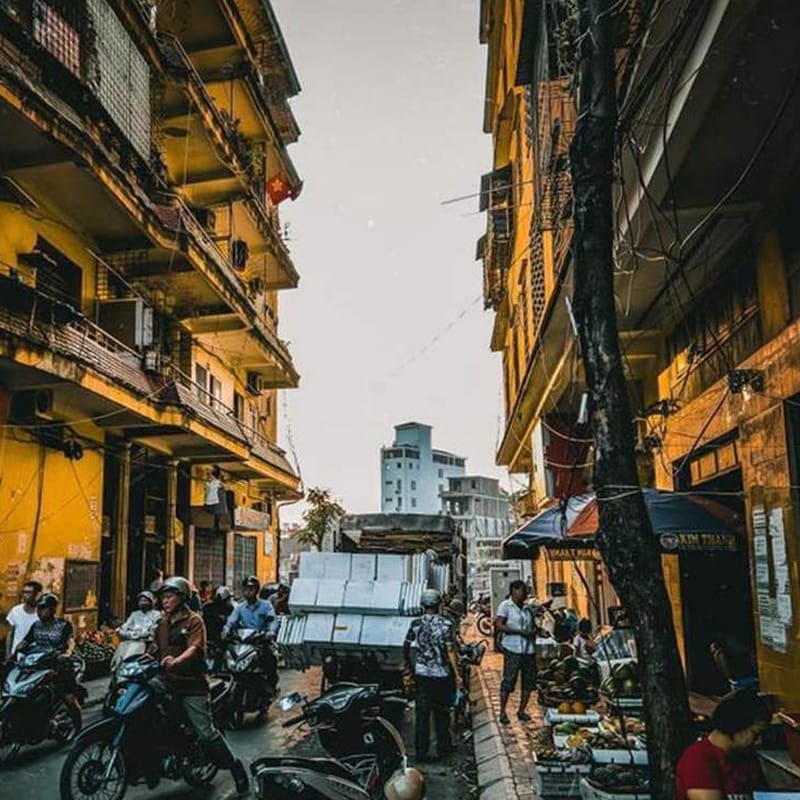
Explore Haiphong’s colonial architecture, old markets and local culture with a guide who grew up here, with plenty of tasting along the way.
From $79 per person
Rolling Out Of Hanoi And Across The River
The first part of the ride is pure Hanoi. If your train starts at Hanoi station, it creeps through the inner city along tracks lined with houses, some so close you could almost touch the laundry. People step back into doorways, cafe owners pull in their stools, and then the train slides past at walking pace.
Then comes my favourite moment: crossing the Long Bien Bridge. The old iron structure rattles and clanks beneath you, motorbikes buzz along the narrow lanes beside the rails, and below you the Red River spreads out wide and brown, with banana plantations and vegetable gardens on the sandbanks. Even after many crossings, I still put my phone away and just watch.

Through Gia Lam And The Eastern Suburbs
On the far bank the train passes through Gia Lam, where Hanoi’s eastern suburbs begin. This stretch is not pretty in the postcard sense, but it is honest: warehouses, new apartment blocks, small workshops, open-air markets and roadside cafes. It is a glimpse of how fast northern Vietnam is growing.
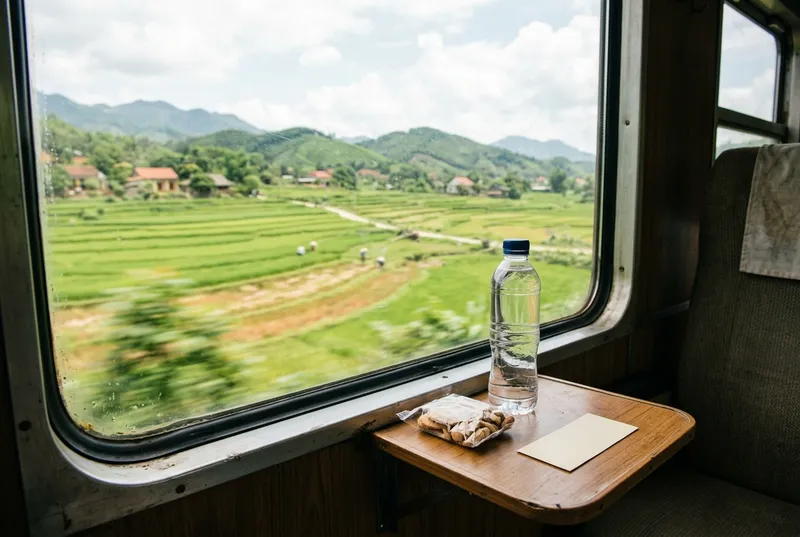
The train picks up a little speed here, but not much. You will hear the horn constantly as the train approaches level crossings, where barriers come down and queues of motorbikes wait patiently. A vendor might walk through the carriage selling drinks, snacks or fruit. I usually buy a bottle of water and a bag of something salty, mostly to support the person selling it.
Rice Fields And Village Life
About half an hour out of Hanoi, the view opens up, and this is the real reward of the slow train. Flat green rice fields stretch to the horizon, broken by bamboo hedges, small brick houses and family tombs standing right in the paddies. Depending on the season you might see farmers transplanting seedlings, the fields shining gold before harvest, or bare earth with flocks of ducks picking over the stubble.
I like to watch the small details: a woman cycling along a dyke with a basket of vegetables, children swimming in a canal, a buffalo standing completely still in the mud. None of it is staged for tourists. This is the stretch that convinces most of our guests that the train from Hanoi to Haiphong was worth the extra hour. It is simply daily life in the delta, and you get to see it at a pace slow enough to notice.

Keep an eye out, too, for the small details that tell you where you are: brick kilns with tall chimneys, fish ponds edged with banana trees, village gates with their names painted in red, and roadside shrines decorated with incense and fruit. When the train slows near a level crossing, you can often hear the radio playing from a nearby house or smell wood smoke from a kitchen fire. These are the moments I remember long after the trip.
Stops At Hai Duong And Smaller Stations
The train stops several times along the way, with Hai Duong being the biggest town between the two cities. Stops are short, and there is plenty of movement: passengers with sacks of rice, students with backpacks, a grandmother carrying a live chicken in a basket – I am not exaggerating, I have seen it more than once.
Smaller stations are often little more than a platform and a single colonial-era building painted yellow or ochre. Station staff in uniforms wave flags as the train arrives and leaves, a ritual that feels from another time. Do not get off at these stops unless you are sure of the departure time; the train does not wait long.
Life Inside The Carriage
Inside, the atmosphere is friendly and a little noisy. Most passengers are not tourists at all but locals making a routine trip – visiting relatives, going to university, or carrying goods to sell. Phones play videos without headphones, families share food, and someone always falls asleep with their mouth open. As a foreigner you will probably get curious looks and maybe a few questions in basic English – where are you from, how old are you, are you married. It is not rude here; it is how people start a conversation.
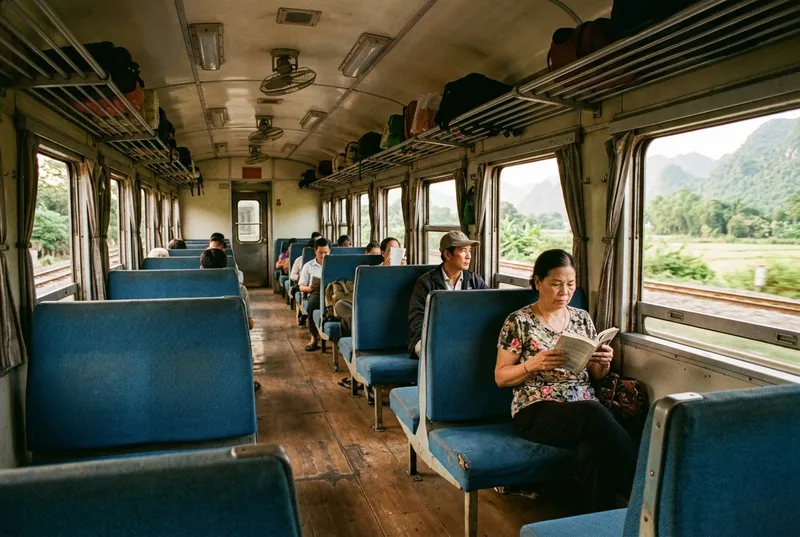
The carriages have fans or air-conditioning depending on the train, but in summer it can still be warm, so wear light clothes. Toilets are basic; bring tissues and hand sanitiser. Wi-Fi is not something to count on, so download a podcast or, better still, just look out of the window.
If you want photos, the doors between carriages are tempting, but stay inside and shoot through an open window instead – the train sways more than you expect, and branches sometimes come close to the tracks. Morning departures give soft light over the fields and a cooler carriage; afternoon trains are warmer but often catch a beautiful golden glow on the last stretch toward the coast. Either way, a phone with a fast shutter does the job better than a big camera in such a narrow space.
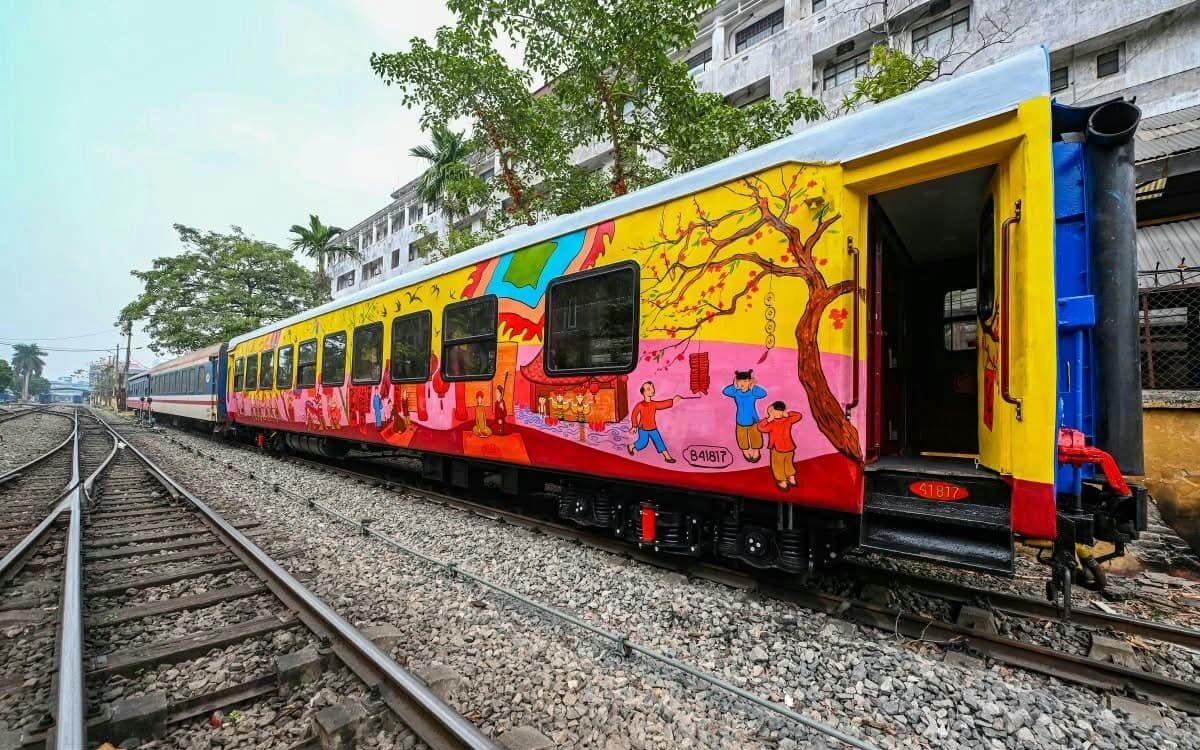
Arriving At Haiphong Railway Station
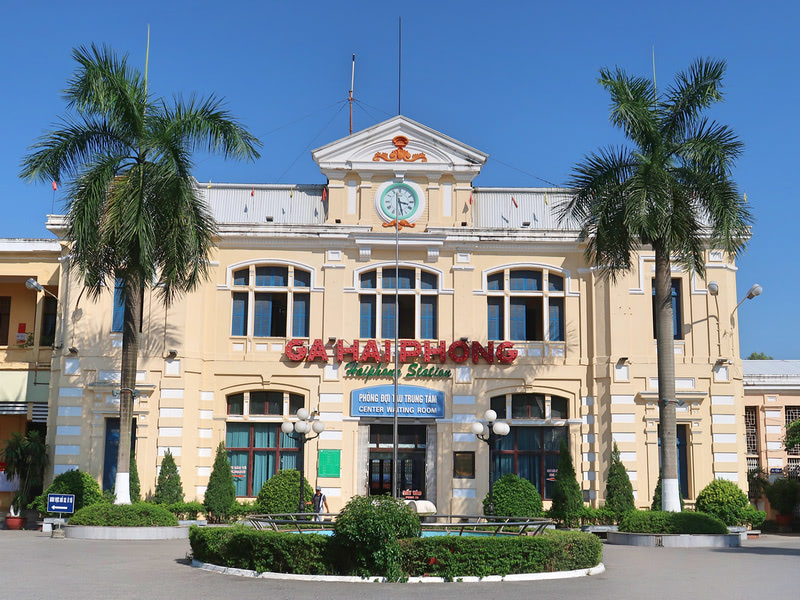
As you approach Haiphong, the fields give way to factories, canals and finally the dense streets of the city. The train slows almost to a crawl for the last stretch, and then you pull into Haiphong Railway Station, a lovely yellow French colonial building with tall windows and palm trees out front. It is one of the most photogenic stations in northern Vietnam, so take a minute for a picture before you rush off.
Outside, motorbike taxi drivers and taxis wait by the entrance. If you are staying in the old quarter, you may not need either – several central hotels and cafes are within walking distance. Otherwise, I suggest using a ride-hailing app so the price is clear before you start.
What To Do Next After You Arrive
The great thing about arriving by train is that you are already in the most interesting part of the city. Here is the simple plan I give guests who arrive around midday:
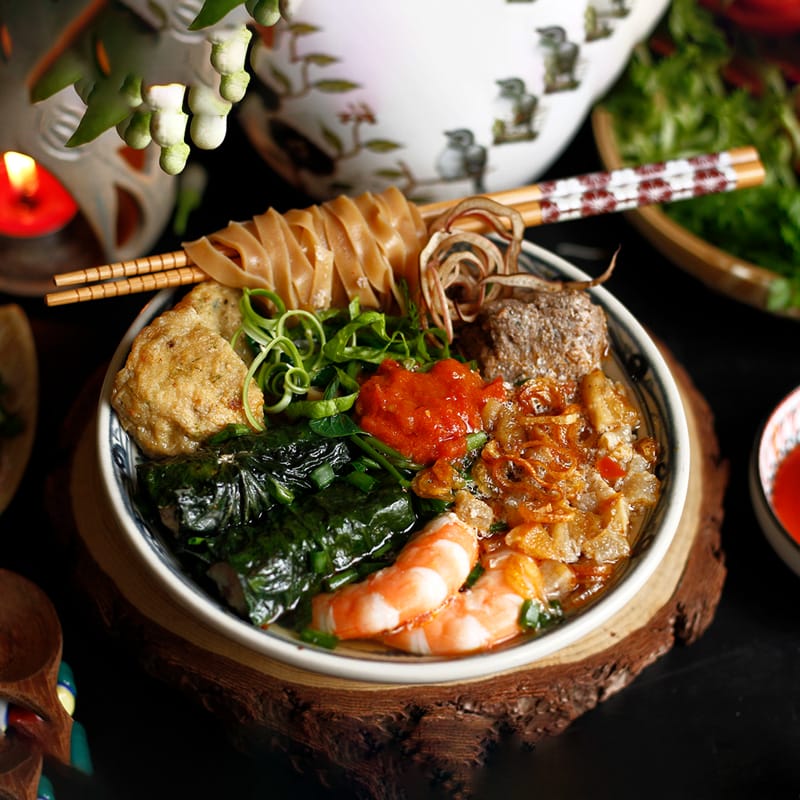
- Lunch first: find a bowl of banh da cua, the brown rice noodle soup with crab that Haiphong is famous for. My Haiphong street food adventure has plenty more dishes to keep you busy for days.
- Coffee break: sit on a plastic stool at a sidewalk cafe and order an iced coffee while the heat of the afternoon passes.
- Walk the French quarter: head to the Opera House, the old Post Office and the tree-lined streets around them. Late afternoon light is perfect for photos.
- Evening by the river: stroll along the Cam River near the Hoang Van Thu Bridge as the lights come on, or visit the Cau Quay swing bridge.
- Next day: explore pagodas, markets and local alleys. Our guide to cultural things to do in Haiphong has plenty of ideas.

Taking The Train Back To Hanoi
Plenty of guests ask whether they should do the return trip by rail too. My honest answer: it depends on what comes next. If you are heading back to Hanoi for an evening flight, the bus or a limousine van is the safer choice, because a single delayed train can leave you scrambling. If you are going back simply to continue your trip in the capital, the train is just as enjoyable in the other direction, and late-afternoon departures give you golden light over the fields.
Buy your return ticket at Haiphong Railway Station when you arrive, or at least a day before you leave. The station is small and easy to navigate, and staff are used to foreign visitors. Arrive 20–30 minutes before departure, grab a coffee from one of the cafes nearby, and enjoy one last look at the colonial facade before you board.
A combination I often recommend is the train from Hanoi to Haiphong for the scenery and the bus back for speed. If you are still deciding, my side-by-side look at the bus and train from Hanoi to Haiphong compares both options. That way you get the slow-travel experience once, without giving up too much time on your last day.
Practical Tips For Your Own Train Ride From Hanoi To Haiphong
- Check the current timetable a day or two before you travel; departures are few and can change.
- Confirm whether your train leaves from Hanoi station or Long Bien station.
- Carry your passport for ticket purchase and keep the ticket until you leave the station at the other end.
- Bring water, snacks, tissues and a light jacket for strong air-conditioning.
- Sit by a window and keep valuables in a bag on your lap or between your feet.
- If you are short on time or carrying heavy luggage, the bus or a limousine van may suit you better – the train is about the experience.
FAQ About The Train Journey
How long does the train take?
Usually around 2.5 hours, sometimes a bit longer if the train is delayed or makes longer stops. Check the current schedule for exact times.
Can I buy tickets on the day?
On quiet weekdays, often yes. On weekends, during school holidays and around Tet, it is safer to buy a day or more in advance.
Is the train comfortable for older travelers or children?
Soft seats are reasonably comfortable for a short ride, and children usually enjoy watching the scenery. The main challenge is the steep steps when boarding, so help may be needed with luggage.
Is the train from Hanoi to Haiphong cheaper than the bus?
Usually yes, or about the same. Fares are low for both, but the train often comes out slightly cheaper, especially if you start near the central stations in Hanoi and do not need a taxi to an outer bus station.
Is there food on board?
Vendors sometimes walk through with drinks and snacks, but do not rely on it. Bring your own water and something to eat.
Is the train ride worth it if I only have one day?
If you love slow travel, yes. If you want maximum time in Haiphong, consider the bus there and the train back, or the other way round.
Plan Your Arrival In Haiphong With Us
Arriving by train is the perfect start to a visit, and it puts you in the right place to begin exploring. If you would like a local to show you around after you step off the platform, browse our Haiphong tours or read about my favourite things to do in Haiphong on a weekend to plan your own route. Our guides can even meet you near the station.
Message Haiphong Adventure with your train time and we will help you plan the rest of your day.
WhatsApp, Viber, WeChat: +84(0)934.555.001
KakaoTalk, Line ID: haiphongadventure