
Scenic Stops From Hanoi To Haiphong Journey
Most people treat the trip from Hanoi to Haiphong as a transfer: jump on the expressway, look at your phone for an hour and a half, and arrive. That works if you are in a hurry. But the road between the capital and the port city runs straight through the heart of the Red River Delta, and if you give it half a day instead of two hours, the journey becomes part of the holiday rather than a gap between two hotels.
We drive and ride this corridor every week, collecting guests in Hanoi, bringing them back, and sometimes taking the long way just because the light over the rice fields is too good to ignore. This guide collects the stops our guides actually use: river views as you leave Hanoi, the temples and hills around Con Son and Kiep Bac, ceramic traditions in the old Hai Duong area, and the small, unglamorous roadside moments that tell you more about northern Vietnam than any photo spot. We have kept it honest. Where a detour is long or a site is better on certain days, we say so.

Why Slow Down on the Hanoi to Haiphong Road
The distance is only around 100 to 120 km depending on where you start and finish, and on the expressway a car or bus usually covers it in about 1.5 to 2 hours. That speed is exactly why so many travellers miss the countryside in between. The expressway is fenced, elevated in places and has very few exits, so what you see is a long green blur.
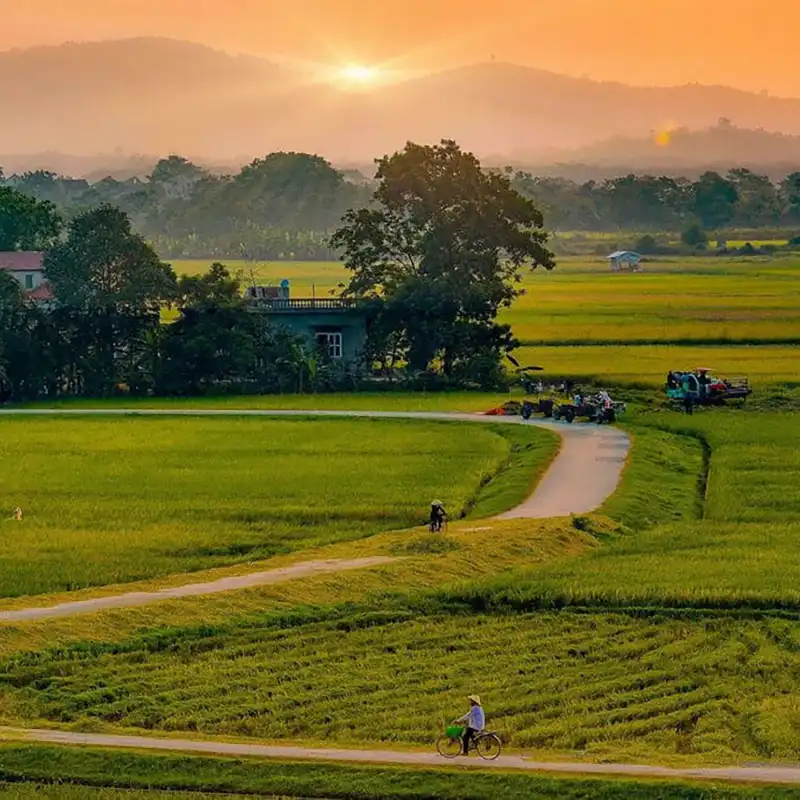
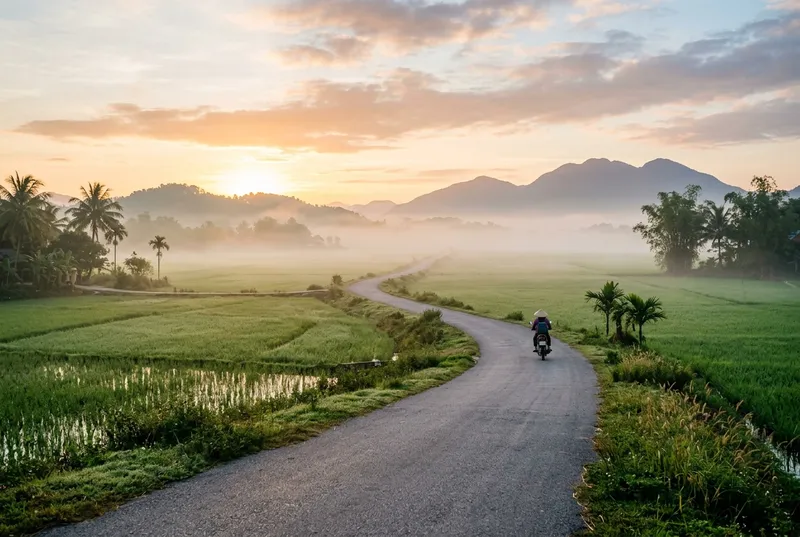
The delta itself, though, is one of the oldest farmed landscapes in Vietnam. Villages cluster on slightly higher ground, each with its own communal house, pagoda and family shrines. Canals cut between the paddies, and the rhythm of the year is visible from the road: flooded fields and bright seedlings in spring, deep green in early summer, gold at harvest, and burning straw smoke in the evenings afterwards. A few unhurried stops let you see that rhythm up close.
Expressway or Highway 5: Picking a Route With Stops
Two main roads link the cities, and they suit very different trips.
The Hanoi–Haiphong Expressway
The expressway is about 105 km long, fast and smooth. It is closed to motorbikes, and because exits are limited, it is not built for wandering. If you are in a car and only want one meaningful stop, you can leave the expressway at an exit in the Hai Duong area and rejoin later, but every detour adds time. There are service stops along the way for fuel, toilets and drinks, though they are functional rather than scenic.
National Highway 5
Highway 5 is the older road, running roughly parallel to the expressway and passing through towns, markets and the edge of Hai Duong city. It is busier, slower and shared with trucks, buses and motorbikes, but almost every stop in this guide is easiest to reach from here. If you are riding a motorbike, this is the road you will be on. Our guides usually mix the two: Highway 5 or local roads for the scenic middle section, the expressway when we need to make up time.
How to Travel If You Want to Stop
Your transport choice decides how many stops are realistic.
- Private car with driver: the most flexible option. You agree a route beforehand, and the driver waits while you explore. Ideal for families and anyone with luggage.
- Motorbike: wonderful for the delta’s small roads, but only for experienced riders with the correct licence. Stay on Highway 5 and local roads, never the expressway.
- Train: you cannot hop off at temples, but the slow line (usually around 2.5 hours, with only a few departures a day) is the most scenic way to see rice fields without effort. More on that below.
- Bus: cheap and frequent, but buses do not stop where you want. Fine for the direct trip, not for this kind of journey. If you are weighing up the options, see our comparison of bus and train from Hanoi to Haiphong.
If you would like us to arrange a driver or guide who knows these detours, Haiphong Adventure can set up a private transfer with stops and then hand you straight over to a city experience once you arrive.
Recommended tour
The Haiphong Street Food and City Tour
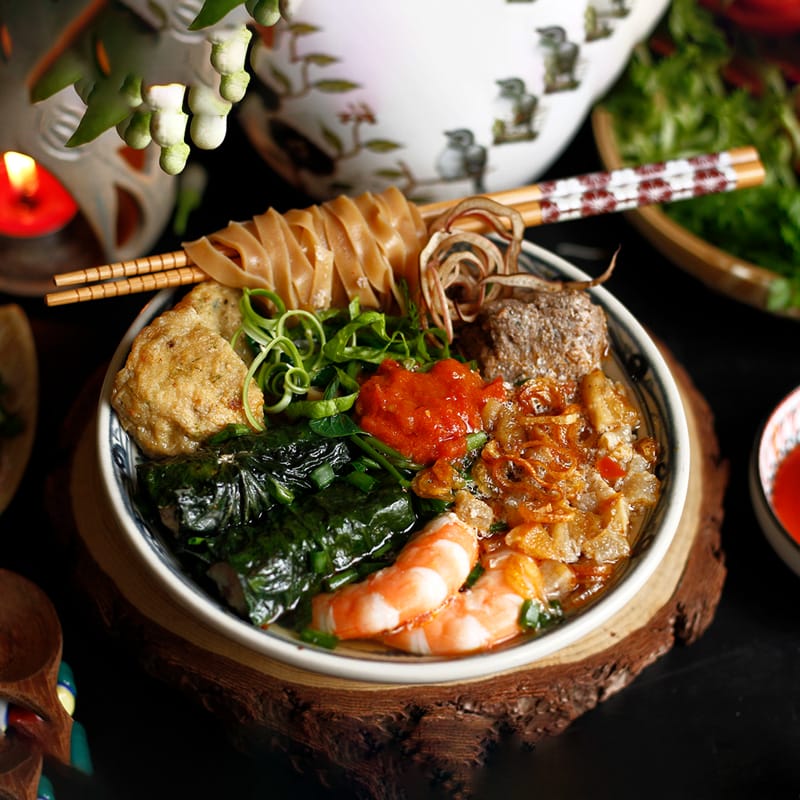
Combine Haiphong’s top city sights with a tasting trail of famous dishes like banh da cua and banh mi cay, all by motorbike with a local guide.
From $85 per person
Long Bien Bridge and the Red River
Before you even leave Hanoi, take twenty minutes for Long Bien Bridge. Built under French rule and opened in the early 1900s, the old steel bridge is one of the most recognisable sights in the capital. Today it carries trains, motorbikes and pedestrians, while cars use newer bridges nearby. Walking a short way out onto the pedestrian path gives you views over the Red River, the banana plantations and vegetable gardens on the sandbank below, and the city skyline behind.
Early morning is best. The light is soft, locals are out exercising, and you avoid the midday heat. Stay on the marked walkway and watch for motorbikes on the narrow lanes beside it. If you are taking the train to Haiphong from Long Bien station, there is a good chance your train will rumble across this very bridge, so you get a second look from the carriage window.

Once you cross the river on the Hanoi to Haiphong road, the delta opens up quickly, although Hanoi’s traffic can make the eastern suburbs feel endless.
Rice Fields and Village Life of the Delta
You do not need a famous name to enjoy the countryside on the way from Hanoi to Haiphong. Some of our favourite stops are simply a gap in the traffic beside a field, where you can watch farmers working, ducks being herded along a canal, or a village funeral procession making its way along a dyke road.
Leave the main road on any small lane heading towards a pagoda roof or a line of trees, and within a few minutes you are among paddies. Stay on paths and dykes, do not walk into planted fields, and ask before photographing people.
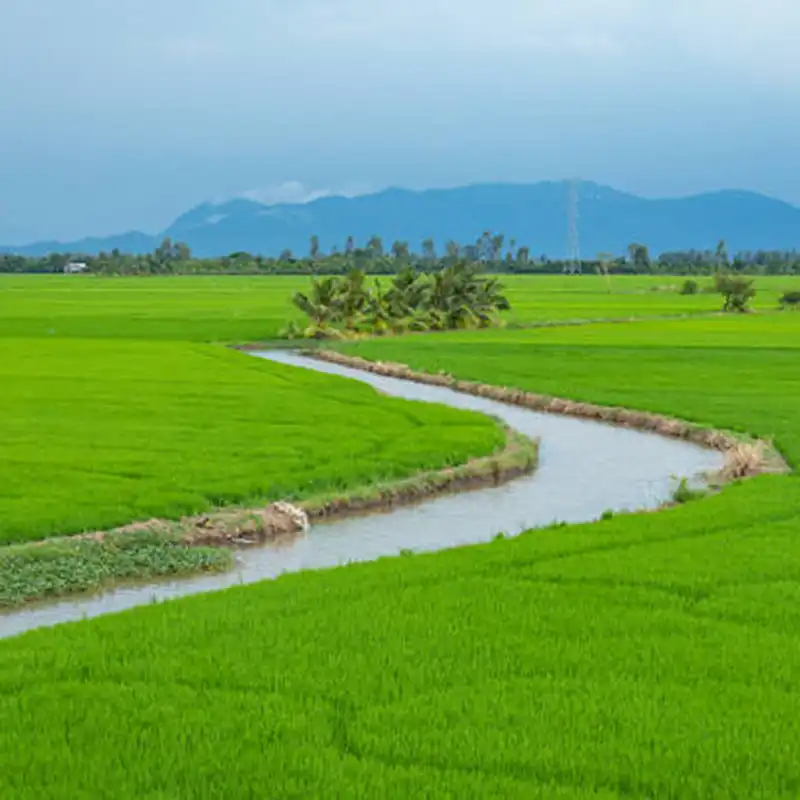
Timing matters. Transplanting usually happens in late winter to spring and again in summer, and harvests tend to fall around late spring to early summer and again in autumn, but the exact weeks shift each year and vary by village. If golden fields are high on your list, ask us a week or two before your trip and we will tell you what the fields look like that month.
Hai Duong City and Its Famous Snacks
Roughly halfway along the route, Hai Duong has long been the natural break. The area was its own province for decades and, following Vietnam’s 2025 administrative reorganisation, is now part of Haiphong, so technically you are already “in Haiphong” well before the port city appears.
The city centre is not a sightseeing destination in itself, but it is known across the country for banh dau xanh, small green bean cakes that are sweet, crumbly and best with a cup of hot green tea. Shops along the main roads sell them in boxes, and they make an easy gift for friends back home. The wider area is also known for banh gai, a dark leaf-coloured sticky rice cake filled with mung bean and coconut, and, in early summer, for lychees from the Thanh Ha orchards. Lychee season is short, usually around June, so treat it as a bonus rather than a plan.
A quick coffee and snack stop here breaks the trip nicely and costs very little.
Con Son – Kiep Bac Relic Area
If you only make one real detour, make it this one. In the Chi Linh area north of the main road, the Con Son – Kiep Bac complex is one of the most important historical and spiritual sites in northern Vietnam, and it is a national-level relic site.
Con Son Pagoda
Con Son is closely linked to Nguyen Trai, the 15th-century scholar, poet and strategist who helped drive out Ming rule and later spent time here. The pagoda sits at the foot of a forested hill, and a long stone stairway climbs through pine trees towards the top. Bring water and allow at least an hour if you want to reach the upper areas.
Kiep Bac Temple
A short drive away, Kiep Bac Temple honours Tran Hung Dao, the 13th-century general celebrated for defeating the Mongol invasions. He is revered across Vietnam, and many Vietnamese visitors come here to pray for protection and strength. The temple grounds are calm on ordinary weekdays and very crowded during festival periods in the lunar calendar, when pilgrims arrive by the busload.
Realistically, this detour adds two to three hours to your journey including travel and visiting time. It suits travellers interested in Vietnamese history or anyone who wants a gentle hill walk, and it pairs well with a lunch stop in the Chi Linh or Hai Duong area. Dress modestly (shoulders and knees covered) for both sites.
Chu Dau Ceramics Heritage
Ceramics collectors will know the name Chu Dau. Pottery from this area of the old Hai Duong province, in the Nam Sach district, was made and exported across Asia several centuries ago, and pieces have been recovered from shipwrecks and now sit in museums abroad. The tradition faded for a long time and has been revived in recent decades, with workshops producing pieces in the old blue-and-white style.
We include Chu Dau with a note of caution. It is a detour from the main road, opening hours and what you can see on a given day vary, and it is more rewarding for people with a real interest in ceramics than for a casual photo stop. If you want to visit, tell us when you book and we will check what is open before planning the route, rather than sending you on a long drive to a closed door.
The Slow Train’s Window Seat
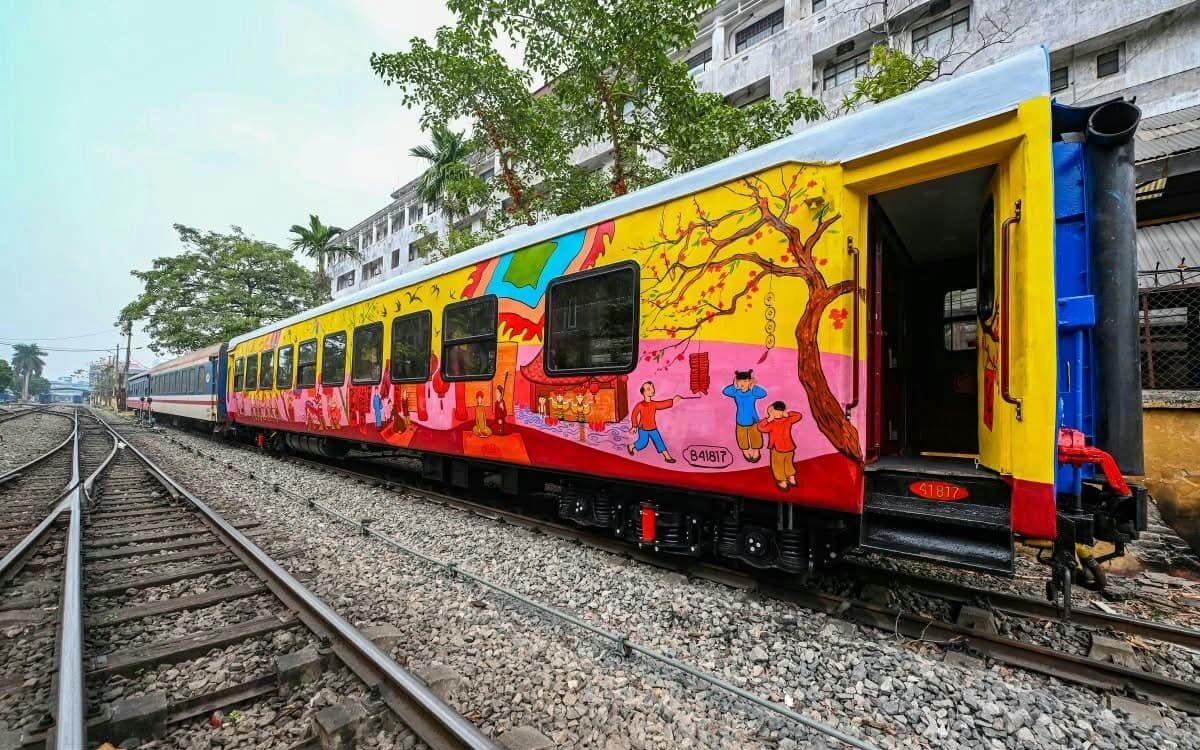
If you prefer to sit back and watch, the train from Hanoi to Haiphong is the scenic option most travellers overlook. It is slow, inexpensive and simple, with windows that frame the delta and small station halts along the way. We describe a full ride in our story about the experience of taking the train from Hanoi to Haiphong.
Sit on whichever side has the morning or afternoon light behind you, keep your camera ready as the train crosses the Red River, and watch for the moments when the line runs right beside paddies and village ponds. There are only a few departures a day and schedules change, so check the current timetable at the station or with us before you plan around it.
Arriving in Haiphong: Railway Station and Riverside
The final approach into Haiphong is industrial: factories, port traffic and new urban areas. Do not judge the city by it. Within minutes of reaching the centre, the streets fill with flame trees, colonial buildings and pavement cafes.
If you arrive by train, step outside and look back at Haiphong Railway Station, a yellow French colonial building with palm trees in front. It is one of the prettiest arrival points in the north and a nice first photo. By road, ask your driver to finish along the Cam River so you can see the riverfront and, a little further on, the old Cau Quay swing bridge with its railway tracks and mural street.

From here the city is compact. Our list of favourite things to do in Haiphong on a weekend is a good starting point for the next day, and if you want help with the first evening, a guided street food ride is the easiest way to get your bearings.
Sample Itinerary: A Slow Day From Hanoi to Haiphong
Here is a day plan our guides often suggest for travellers going by private car. Times are approximate and depend heavily on Hanoi traffic.
- Around 7:00 – Walk onto Long Bien Bridge for river views and morning light.
- Around 8:00 – Leave Hanoi heading east. Expect slow traffic until you are past the outer suburbs.
- Around 9:30 – Short roadside stop among rice fields on a quiet lane off the main road.
- Around 10:30 – Arrive at Con Son. Climb part of the stone stairway and visit the pagoda.
- Around 12:00 – Visit Kiep Bac Temple.
- Around 13:00 – Lunch in the Chi Linh or Hai Duong area, then pick up green bean cakes.
- Around 15:00–16:00 – Arrive in Haiphong, check in and rest.
- Evening – Street food in the city centre, ideally with a local who knows where the good stalls are. Our Haiphong street food adventure gives you a taste of what to try.
If you are short on time, skip Con Son – Kiep Bac and keep the Long Bien stop, one rice field stop and a snack break in Hai Duong. That still turns a transfer into a small adventure and adds only an hour or so.
Practical Tips for a Scenic Journey
Start Early and Avoid Rush Hour
Hanoi’s outbound traffic on weekday mornings and Friday afternoons can be heavy. Leaving early, or after the morning peak, makes a big difference. Our local traffic tips for travelling from Hanoi to Haiphong explain how to handle the roads. Coming back towards Hanoi on Sunday evenings is often slow too.
Watch the Calendar
Around Tet and other national holidays, roads, temples and buses fill up. Con Son and Kiep Bac in particular can be very crowded during festival seasons. Ordinary weekdays are the calmest time for these sites.
Dress for Temples and Weather
Pack a light scarf or long trousers for temple visits, sunscreen and a hat for summer, and a warm layer from December to February, when the north can be grey, damp and surprisingly chilly. Light rain jackets are useful most of the year.

Cash and Toilets
Small roadside shops and parking attendants usually want cash. Fuel stations and larger cafes are the most reliable toilet stops.
Safety on the Road
If you are riding, read our road trip guide from Hanoi to Haiphong by motorbike first. Highway 5 carries a lot of trucks and long-distance buses; keep right, wear a proper helmet and avoid riding after dark.
FAQ: Scenic Stops Between Hanoi and Haiphong
How long does the Hanoi to Haiphong drive take with stops?
The direct trip is usually 1.5 to 2 hours by expressway. With a Long Bien stop, a rice field stop and a snack break, plan on 3 to 4 hours. Adding Con Son – Kiep Bac makes it a full day of around 7 to 8 hours door to door.
Can I stop along the way if I take the bus?
Not really. Buses run direct between stations and only stop at their own rest points. For flexible stops, use a private car or ride a motorbike on Highway 5.
Is Con Son – Kiep Bac worth the detour?
For travellers interested in history, temples or a gentle hill walk, yes. It is one of northern Vietnam’s key heritage sites and feels far from the tourist trail. If you mainly want food and city life, you may prefer to save the time for Haiphong itself.
Can I ride a motorbike on the Hanoi–Haiphong expressway?
No. Motorbikes are not allowed on the expressway. Use Highway 5 and local roads instead, and make sure you have a valid licence and insurance that covers riding.
Which is the most scenic transport option if I do not want to stop?
The train. It is slower than the bus, but the windows look straight out over the delta and the Red River crossing is a highlight. Check the current timetable, as departures are limited.
When are the rice fields most beautiful?
Fresh green after transplanting and gold just before harvest are the favourites. These periods move each year, so message us before your trip and we will tell you what the fields look like at that moment.
Plan Your Journey With Our Local Team
A trip from Hanoi to Haiphong does not have to be dead time. With a few well-chosen stops, you see the river that shaped northern Vietnam, the temples that honour its heroes and the farms that still feed its cities, and you arrive ready to explore rather than worn out by a bus seat.
We run haiphong tours every day, from street food evenings to countryside rides, and we are happy to help you plan the journey here too: private transfers with stops, advice on train times, or simply which detour suits your interests. If you are planning a longer stay, our guide to cultural things to do in Haiphong shows how to fill your days once you arrive. Tell us your dates and what you love, and we will suggest a route that fits.
WhatsApp, Viber, WeChat: +84(0)934.555.001
KakaoTalk, Line ID: haiphongadventure