Best Photography Spots in Haiphong: Street, City, Sea Views
The best photography spots in Haiphong are packed into a surprisingly small area: the old steel swing bridge and its rail tracks, the yellow French quarter around the Opera House, the glowing Cam River bridges at night, and, a short ride away, the sunrise coast at Do Son and the karst islands of Cat Ba and Lan Ha Bay. If you love street, city or sea photography, Haiphong gives you all three in one trip, without the crowds of Hanoi or Halong.
This guide lists 11 places our local team at Haiphong Adventure keeps coming back to with a camera, with the best time of day for each, what to shoot, and practical tips on gear, light and etiquette. It is written for travelers with a phone as much as for photographers carrying a full kit.
How to Use This Guide to the Best Photography Spots in Haiphong
We grouped the spots into three styles so you can plan around what you enjoy shooting:
- Street and heritage: the swing bridge, mural street, French quarter, post office and old pagodas. Best in soft morning light or the blue hour.
- City lights: the Opera House square, Tam Bac Lake and the Cam River bridges. Best from sunset until about 9 pm.
- Sea and islands: Do Son, Cannon Fort on Cat Ba and Lan Ha Bay. Best at sunrise or sunset, and worth a full day.
Lighting schedules, access rules and opening times can change, so treat the timing notes as a guide (updated November 2026) and check locally on the day.
Cau Quay Swing Bridge and Its Rail Tracks
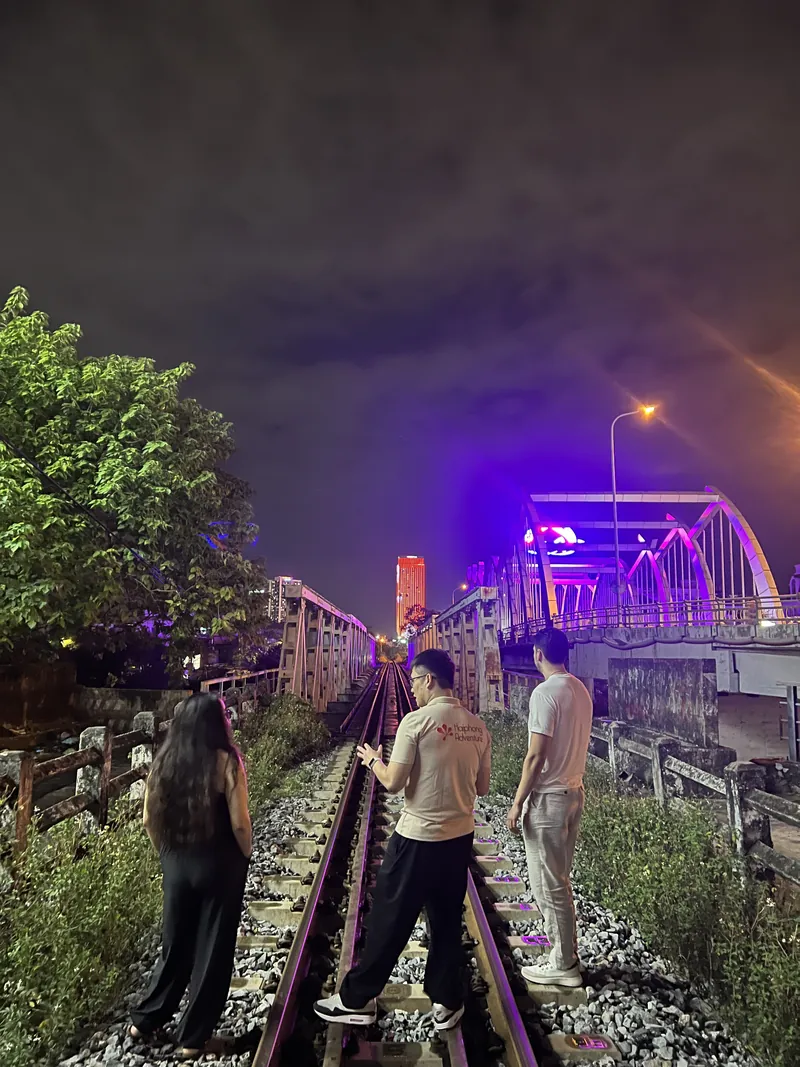
Cau Quay, the old swing bridge, is a small steel bridge with rail tracks running across it. It no longer feels like a busy crossing, and locals now use it as a place to stroll, take wedding photos and sit by the water. For photographers, the tracks give you strong leading lines, and the rusted steel frame makes a great textured background for portraits.
What to shoot
- Low-angle shots along the rails, with the bridge frame closing in towards the horizon.
- Portraits framed by the steel girders.
- Night shots when the street lights reflect on the tracks and the river below.
Best time
Early morning for quiet tracks and soft light, or after sunset for a moodier look. Watch your step on the rails and stay off any section that is fenced or marked as closed.
Mural Street at the Foot of the Bridge
Next to the swing bridge, a stretch of wall has been painted with bright murals of old Haiphong life. It is one of the easiest places in the city to get colorful travel portraits, and it works well even in flat, cloudy light because the color comes from the walls themselves.
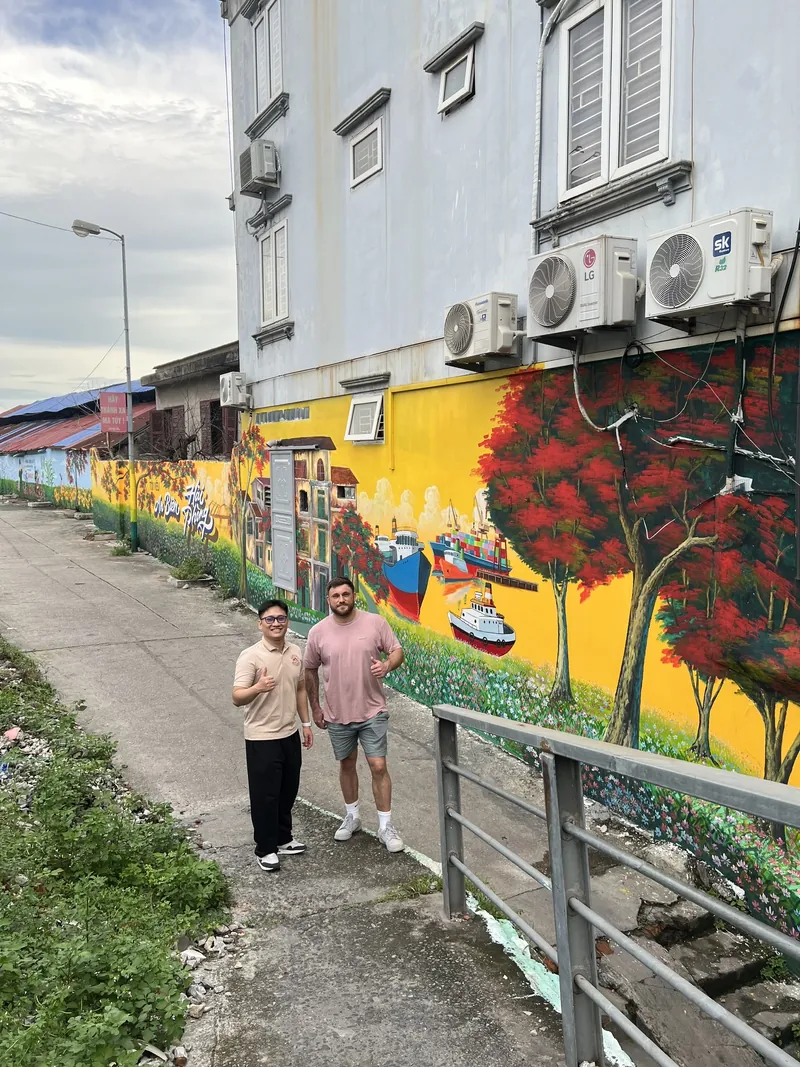
Shoot with the wall at a slight angle rather than straight on, so the mural becomes a background with depth. If you photograph people who live or work along the street, ask first with a smile and a gesture towards your camera.
>>> Haiphong Trip Memorable Moments And Photos
Haiphong Opera House and Its Square
The Haiphong Opera House, finished in the early 20th century during the French colonial period, is the most photographed building in the city. Its pale facade, columns and dome look elegant in daylight and dramatic at night, when the building is lit and the square fills with families, skaters and street vendors.
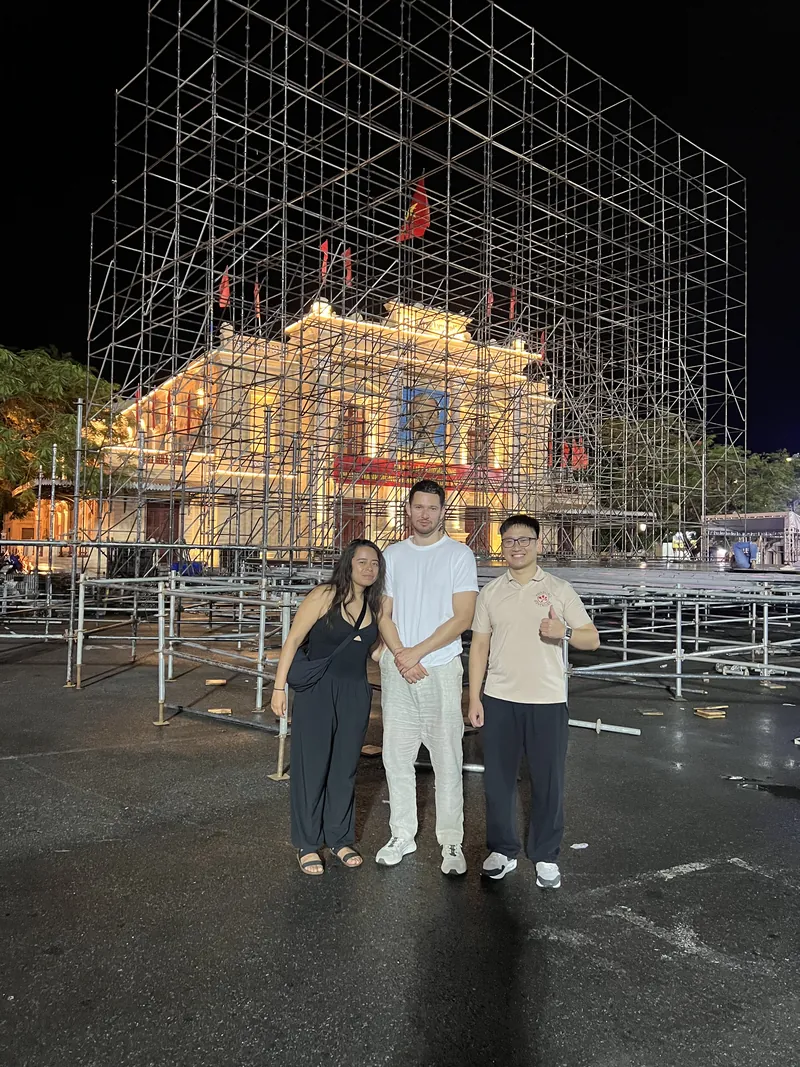
Tips for the Opera House
- Stand at the far end of the square and use a wide lens to fit the whole facade.
- At night, rest your phone or camera on a bench or railing for sharper shots.
- Use the flower beds and trees along the square as foreground.
- Look out for flag decorations on national holidays, which add a burst of red.
For a slower, after-dark visit, our guide to the night view of Haiphong Opera House covers the best walking loop around the square.
French Quarter Streets and the Old Post Office
The streets around the Opera House hold some of Haiphong’s best preserved colonial buildings: yellow walls, green shutters, tall windows and tiled roofs, often half hidden behind trees and power lines. The old Haiphong City Post Office is a highlight, with its symmetrical facade and clock.
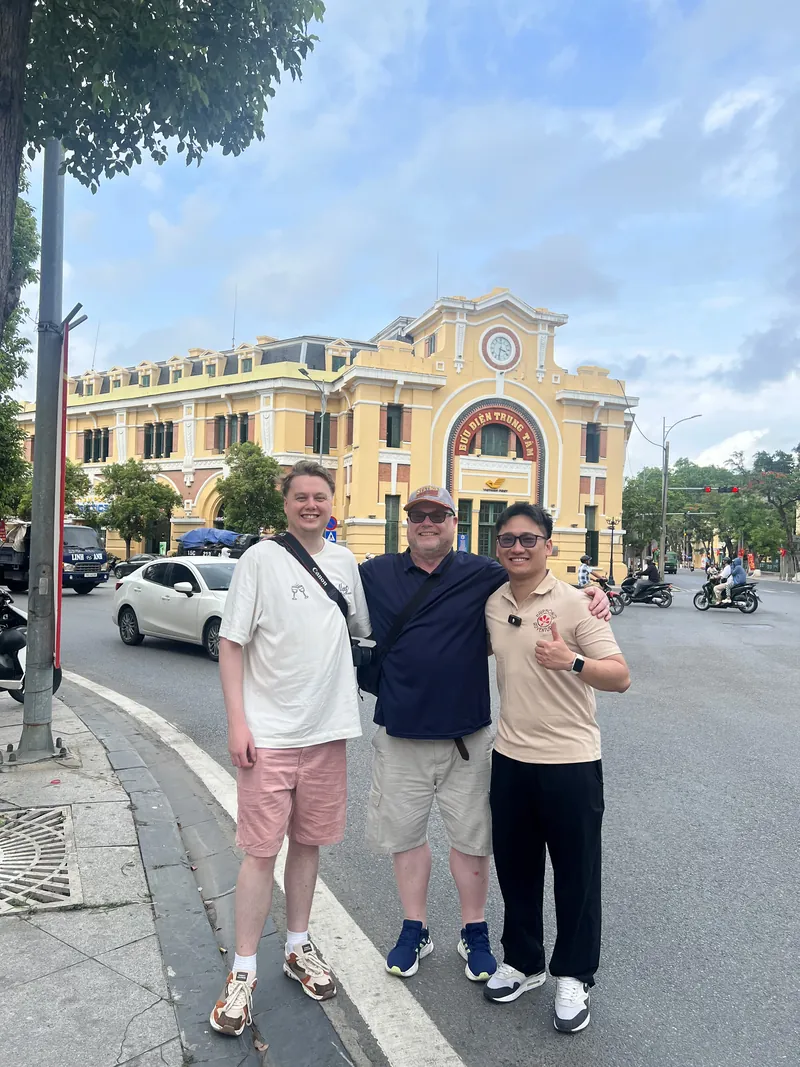
The charm here is in the details: a bicycle against a faded wall, a shutter half open, a street vendor passing a colonial doorway. Walk slowly and look up. Our guide to Haiphong French colonial architecture explains the history behind the facades you will be photographing.
>>> Haiphong Colonial Buildings Map for Tourists Who Love Heritage
Recommended tour
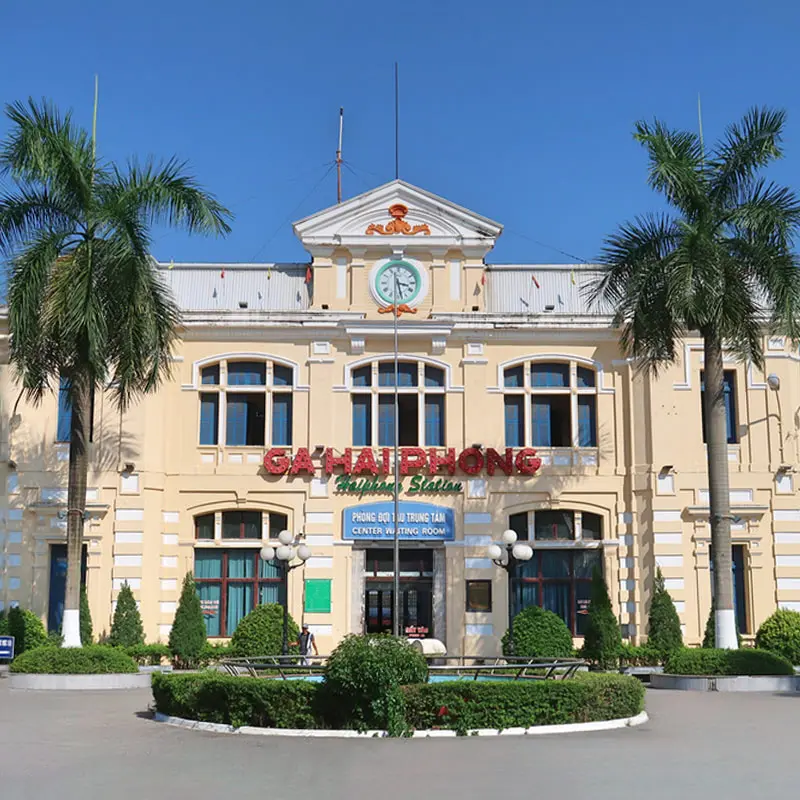
See the bridges, colonial streets, markets and sidewalk cafes with a local guide who knows where the light is good and who to ask before you take a portrait.
From $79 per person
Tam Bac Lake After Dark
Tam Bac Lake is a long, narrow lake in the city center. In the evening, colored lights along its banks reflect on the water, and the promenade fills with walkers and couples. It is a good place to practice reflection shots and long exposures.
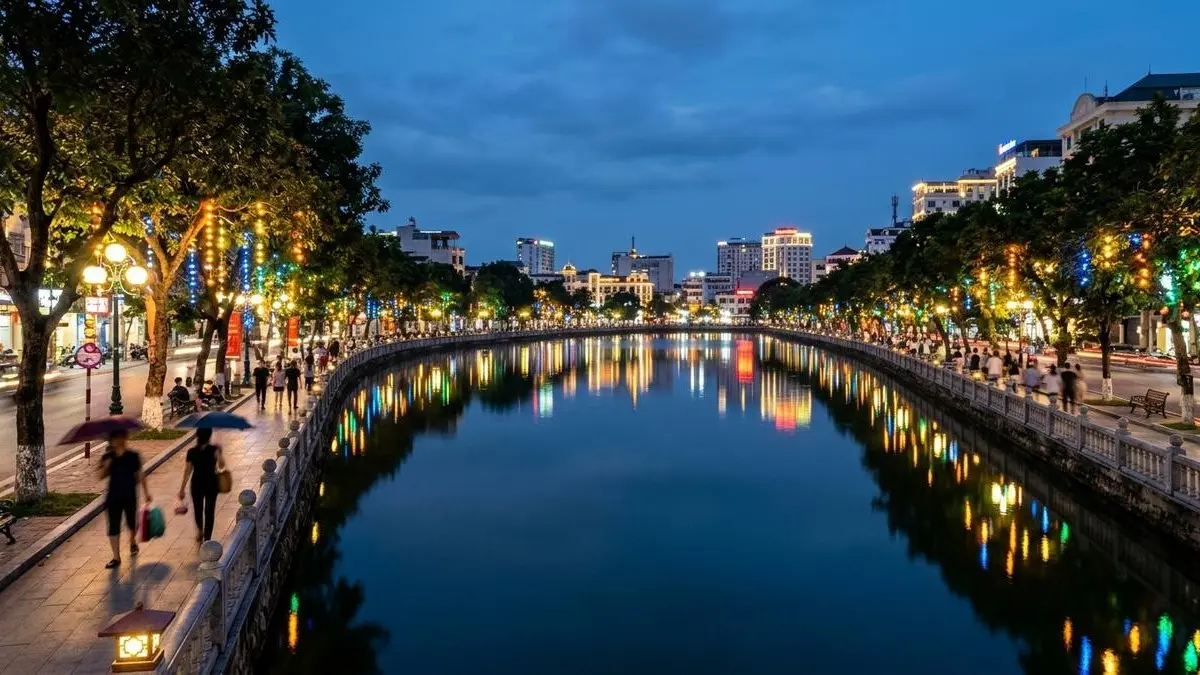
- Go on a calm evening. Wind breaks up the reflections.
- Get low, close to the water’s edge, to double the lights in the frame.
- A small travel tripod or a phone clamp helps a lot here. Exposures of one to two seconds smooth the water nicely.
Light shows and decorations change with the season and city events, so check what is on during your stay.
Cam River Promenade and Hoang Van Thu Bridge
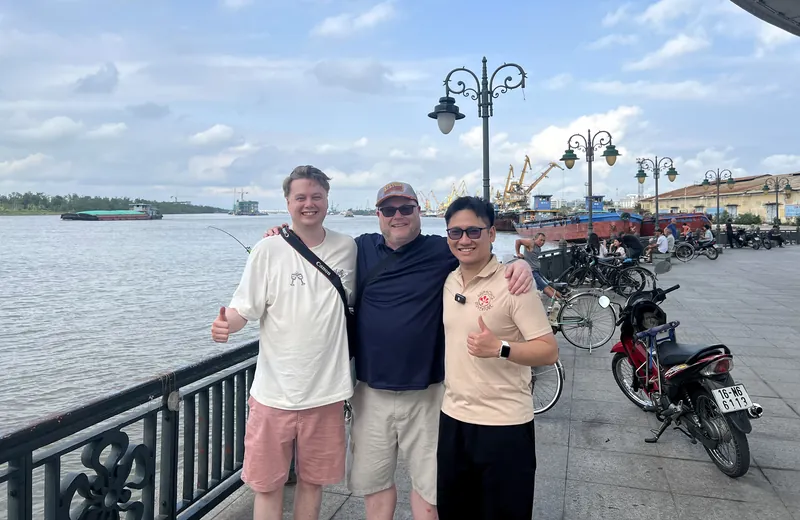
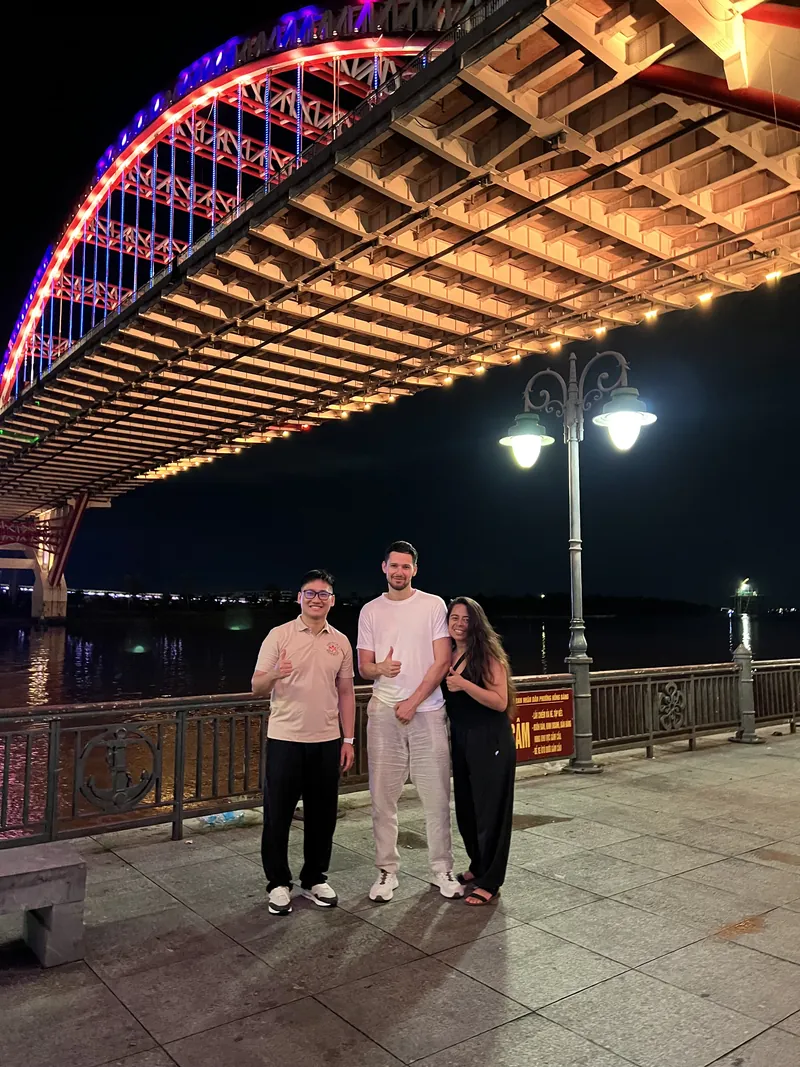
The Cam River runs along the northern edge of the old city, and the cable-stayed Hoang Van Thu Bridge is now one of Haiphong’s modern landmarks. From the riverside promenade you can shoot the bridge with the water in front, cargo boats passing and the city lights behind.
Blue hour on the river
The 20 to 30 minutes after sunset, when the sky is still deep blue and the bridge lights are on, is the sweet spot. Arrive before sunset, pick your angle, then wait. Standing under the bridge gives a very different shot: strong cables and lines that pull the eye upwards.
Old Pagodas and Communal Houses
Haiphong’s pagodas and communal houses offer quieter subjects: curved tiled roofs, bell towers, incense smoke in shafts of light and carved wooden beams. They are active places of worship, so they reward a slow, respectful approach.
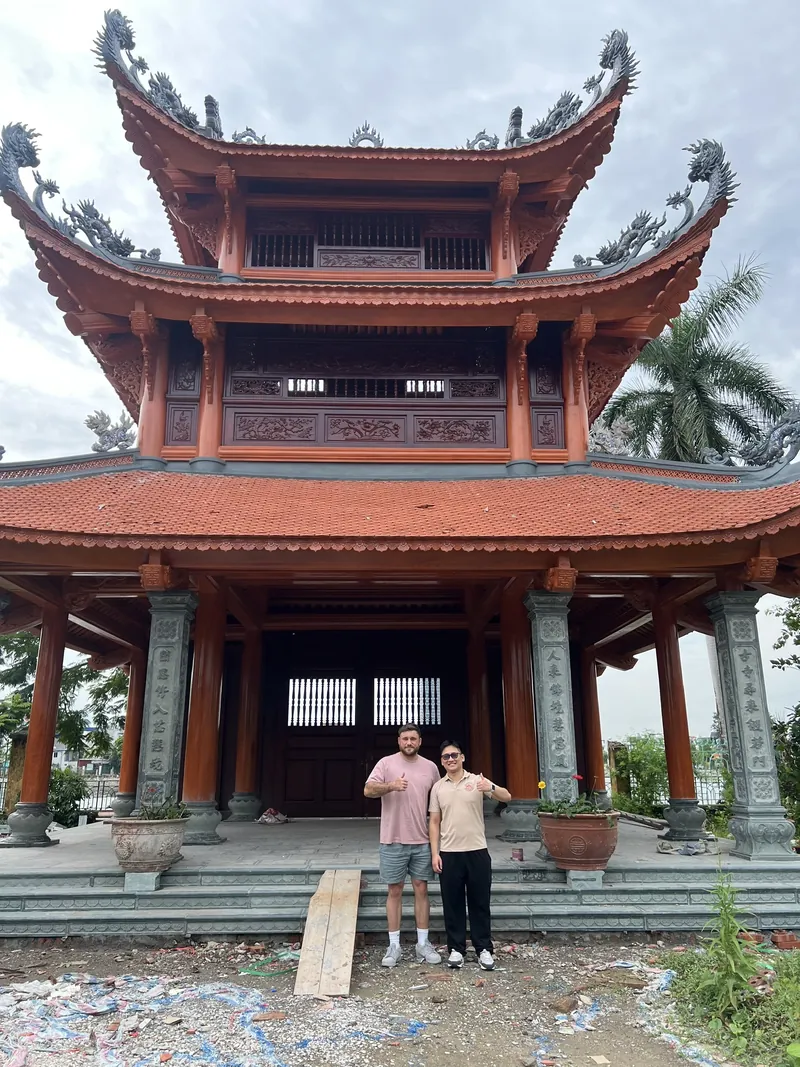
- Dress modestly and remove your shoes where locals do.
- Do not use flash inside halls or photograph people praying up close.
- Morning light through the courtyard trees is often the most beautiful.
Hang Kenh Communal House is famous for its wooden carvings, and our article on temples and pagodas in Haiphong lists more places worth a visit with a camera.
Sidewalk Cafes and Everyday Street Life
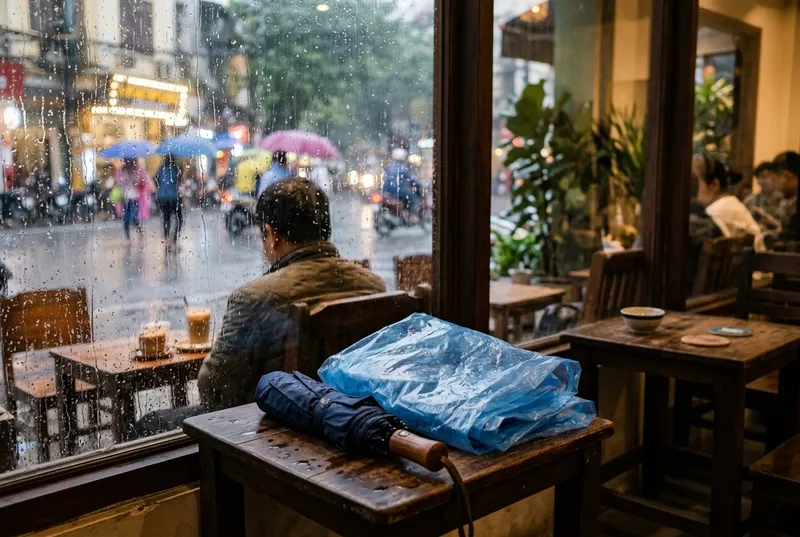
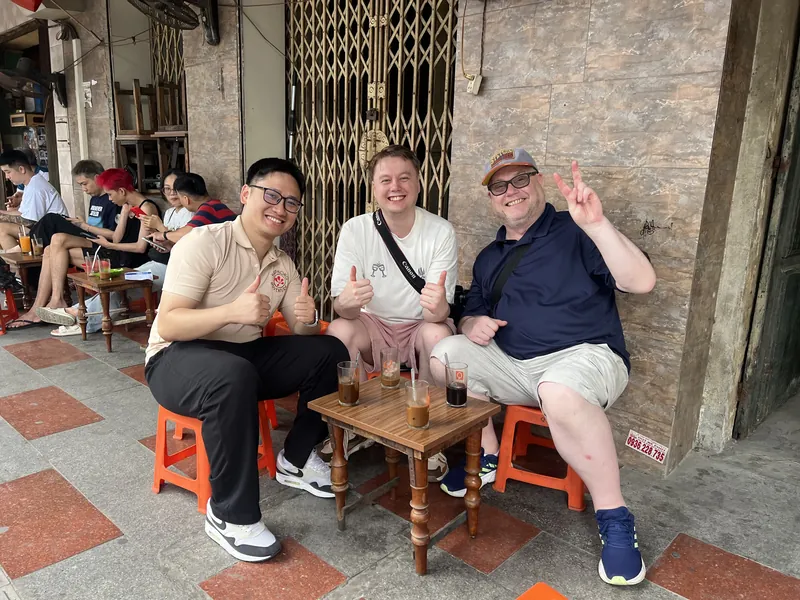
Some of the best photos you will take in Haiphong are not of landmarks at all. Low plastic stools at a sidewalk coffee shop, a woman selling bread from a bicycle, schoolchildren on a scooter, steam rising from a noodle stall at dawn. These everyday scenes are what make the city feel real.
Order a coffee, sit for 20 minutes and let the street come to you. People get used to you, and your photos become more natural. A 35mm or 50mm equivalent focal length works well, and on a phone the standard 1x lens is usually best.
>>> Why Haiphong Is Called the City of Red Flamboyant Trees
Do Son Peninsula at Sunrise
Do Son, around 20 kilometers southeast of the city center, faces the sea to the east, which makes it Haiphong’s best sunrise spot on the mainland. Wooden fishing boats, a long seafront road and green hills on the peninsula give plenty of variety.
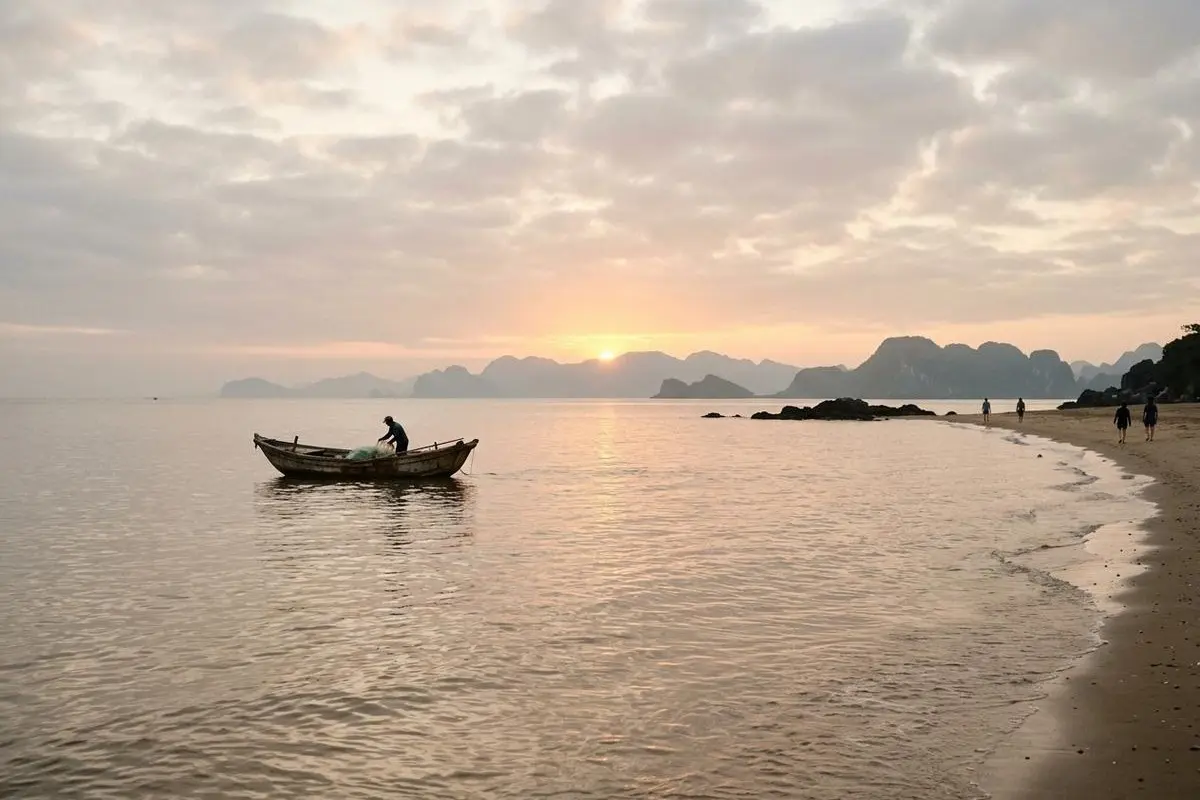
- Leave the city about an hour before sunrise to arrive in time.
- Include a boat, a person or a rock in the frame to give scale to the sea and sky.
- Stay after sunrise for the morning fish trade and locals swimming.
If you visit around the eighth lunar month, you may also catch preparations for the famous festival described in our Do Son Buffalo Fighting Festival guide.
Cannon Fort on Cat Ba Island
Cannon Fort sits on a hilltop above Cat Ba town and is one of the island’s classic sunset viewpoints. From the top you look over the harbor, the beaches and the karst islands of Lan Ha Bay. There is an entrance fee, and you can walk up or ride part of the way. Check the latest price and hours on arrival.
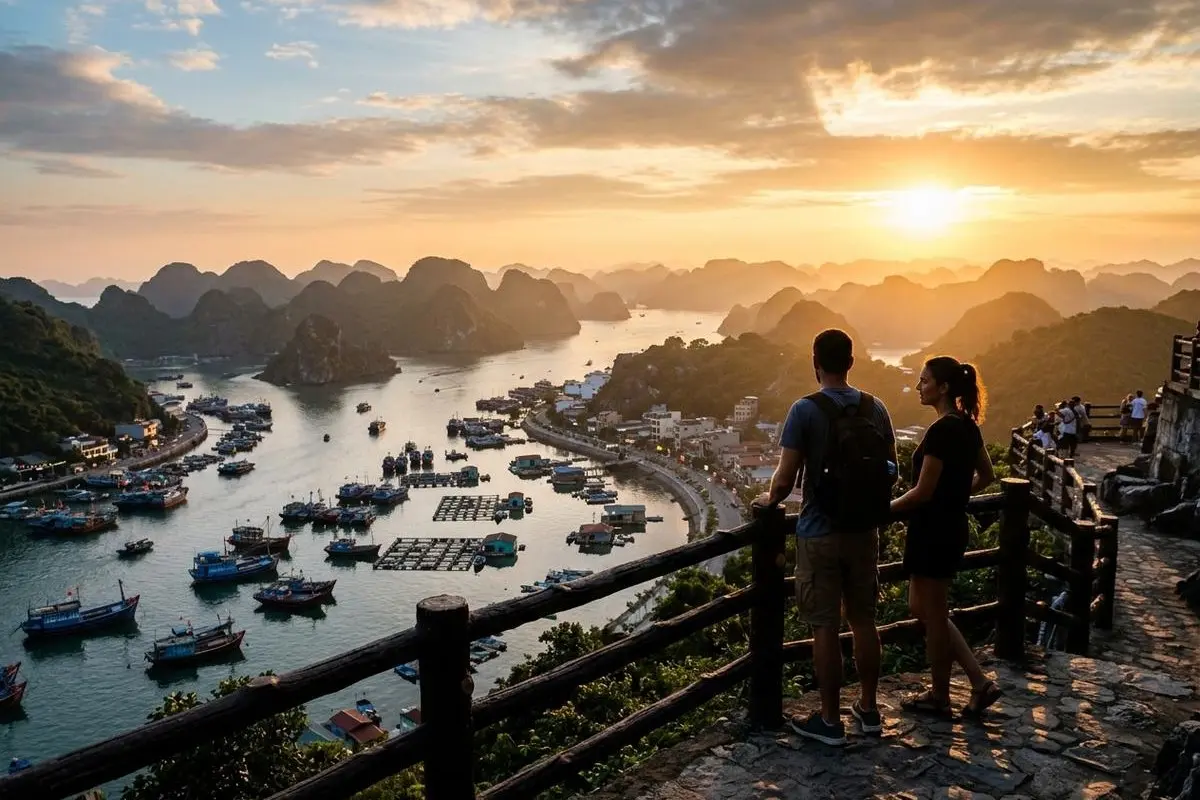
A zoom lens helps here, so you can isolate boats in the harbor or layer the islands against the setting sun. Bring a small torch for the walk down. Our Cannon Fort Cat Ba trail guide explains the walk to the top.
Lan Ha Bay From the Water
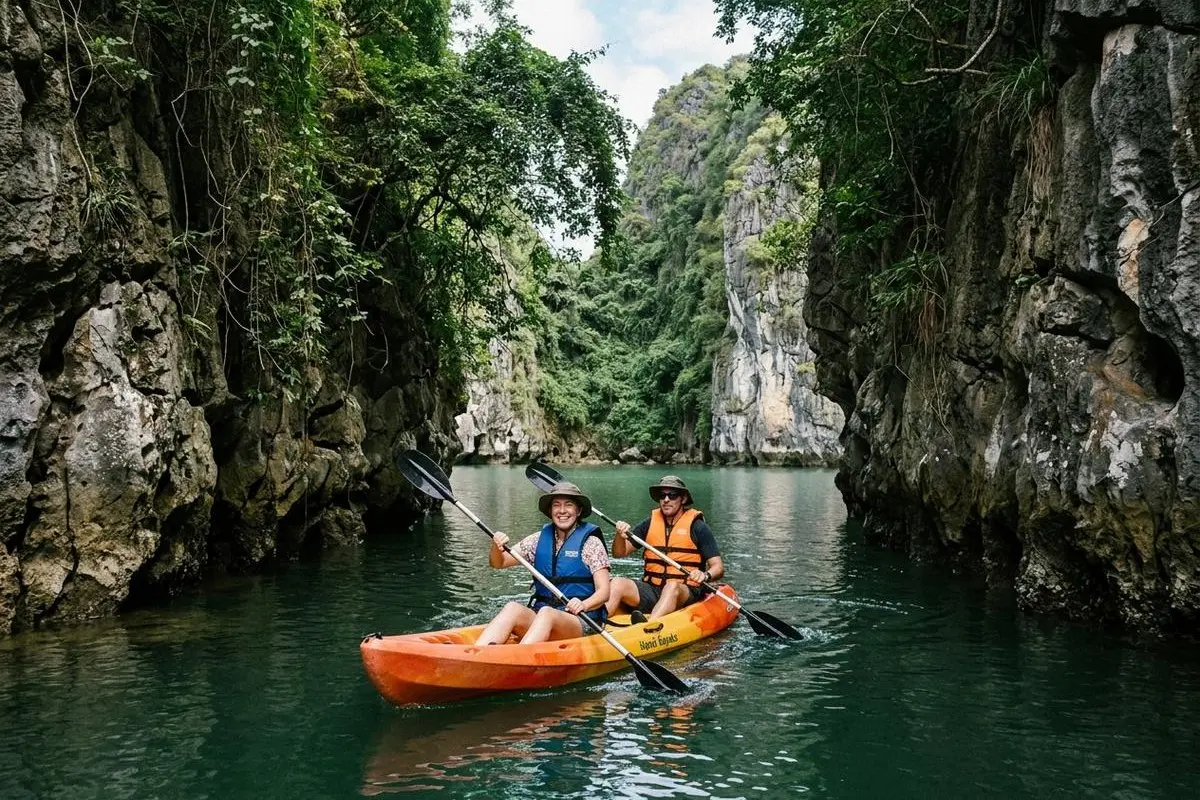
To photograph Lan Ha Bay properly, you need to be on a boat. Limestone islands rise straight out of green water, floating fish farms sit in quiet coves, and early morning mist softens everything into layers.
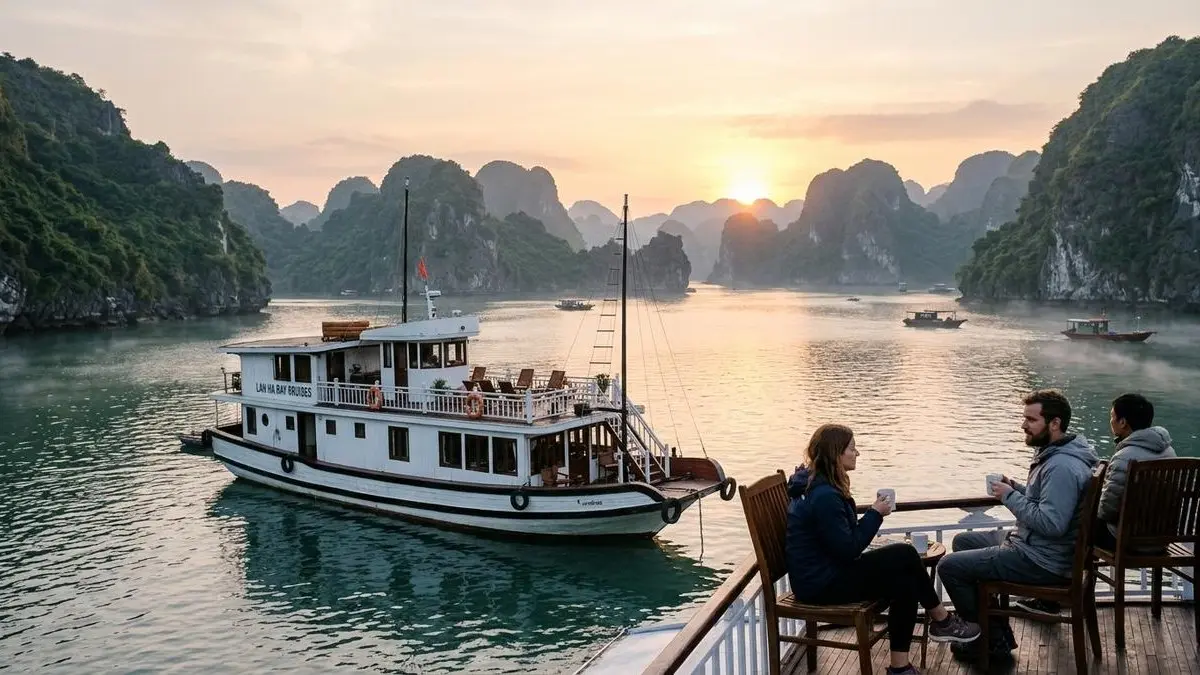
- An overnight cruise gives you sunrise and sunset on the water, the best light of the day.
- Shoot from the top deck and use a fast shutter speed, because boats move and rock.
- Keep a dry bag for your camera when you switch to a kayak.
>>> Cat Ba Tours Experience Cruising And Kayaking
Best Time of Day for Each Spot
Use this table to build your own photo plan. Times are general and depend on the season.
| Spot | Best light | Main style |
| Cau Quay swing bridge | Early morning or after sunset | Street, portraits |
| Mural street | Any time, soft light is best | Color portraits |
| Opera House square | Late afternoon to evening | Architecture, night life |
| French quarter and post office | Morning | Heritage details |
| Tam Bac Lake | Evening, calm nights | Reflections |
| Cam River and Hoang Van Thu Bridge | Blue hour | Cityscape |
| Pagodas | Morning | Detail, atmosphere |
| Do Son | Sunrise | Seascape |
| Cannon Fort, Cat Ba | Sunset | Panorama |
| Lan Ha Bay | Sunrise and sunset | Seascape, karsts |
Seasons matter too. Spring often brings mist, early summer brings the red flamboyant blooms, and autumn usually has the clearest skies. Our month by month guide to the best time to visit Haiphong helps you match the season to your shot list.
A One-Day Photo Route Through the City
This route links the city spots in a natural order on foot, by taxi or on the back of a motorbike.
- 6:00 Cau Quay swing bridge and the mural street while it is quiet.
- 7:30 Breakfast and street life at a sidewalk stall.
- 8:30 French quarter streets and the old post office.
- 10:00 A pagoda or communal house before the midday heat.
- 12:00 Rest, back up your photos and charge batteries.
- 16:30 Opera House square in late light.
- 17:30 Cam River promenade for sunset and blue hour on Hoang Van Thu Bridge.
- 19:30 Tam Bac Lake reflections, then dinner.
Add a second day for the sea: Do Son at sunrise, or a night on Cat Ba for Cannon Fort and a Lan Ha Bay cruise.
Gear, Settings and Practical Tips
What to bring
- A wide lens or the phone’s 0.5x for architecture and bridges.
- A short zoom for Cannon Fort and boats in the bay.
- A small tripod or phone clamp for night shots.
- A lens cloth, because humidity fogs lenses when you leave air conditioning.
- Spare batteries and a power bank.
- A dry bag for boat days.
Simple settings
- Night city: use night mode on a phone, or on a camera try a low ISO with a tripod and a 1 to 4 second exposure.
- Street: a shutter speed of 1/250 second or faster freezes passing scooters.
- Sunrise and sunset: expose for the sky and lift the shadows later.
Safety and traffic
Haiphong traffic is busy. Never step back into the road to get a wider frame, and keep your bag in front of you in crowded areas. If you want help with timing and transport, a local guide on a Haiphong Adventure motorbike tour can take you between spots quickly and safely.
Photo Etiquette in Haiphong
People in Haiphong are generally friendly to cameras, but a little courtesy goes a long way. Ask before taking close portraits, especially of older people and vendors. Buying something small from a stall you photograph is a kind gesture. Avoid photographing military sites, port security areas and people at prayer. Our guide to Haiphong etiquette tips for foreigners covers more of the local dos and don’ts.
Drone rules in Vietnam are strict and require permission, so do not fly over the city or the bay without checking the current regulations first.
Frequently Asked Questions
What are the best photography spots in Haiphong for beginners?
Start with the Cau Quay swing bridge, the mural street and the Opera House square. They are close together, easy to reach and give strong results even with a phone.
Where can I see the sunrise near Haiphong?
Do Son peninsula faces east and is the easiest sunrise spot from the city. On Cat Ba, a sunrise cruise on Lan Ha Bay is a beautiful option.
Is it safe to take photos at night in Haiphong?
Yes, the main areas such as the Opera House, Tam Bac Lake and the Cam River promenade are busy and well lit in the evening. Keep an eye on your gear and on traffic.
Do I need a tripod?
Not for daytime shots. For night scenes on the river and at the lake, a small tripod or a phone clamp makes your photos much sharper.
Can I take a photo tour with a guide?
Yes. A guide helps with timing, transport between spots and asking locals for portraits. Haiphong Adventure can shape a city tour around your photo list.
Capture Haiphong With a Local Guide
From rail tracks and colonial facades to glowing bridges and island sunsets, the best photography spots in Haiphong reward anyone who goes out early, stays late and walks slowly. Plan around the light, respect the people you photograph, and you will leave with a set of images most visitors to northern Vietnam never take.
If you want a local friend to show you the way, browse our Haiphong tours or send us your shot list and dates. We are happy to plan a photo day by motorbike, on foot or out to Do Son and Cat Ba.
Contact Haiphong Adventure
- WhatsApp, Viber, WeChat: +84(0)934.555.001
- KakaoTalk, Line ID: haiphongadventure