Kayaking in Haiphong for Beginners: Easy Routes, Safety Tips
Kayaking in Haiphong for beginners is easier than most first-timers expect. The city’s kayaking happens around Cat Ba Island and Lan Ha Bay, where sheltered lagoons, calm channels between limestone islands and short, guided routes suit people who have never held a paddle. With a stable sit-on-top kayak, a life jacket and the right time of day, a first paddle here feels more like a gentle float than a sport.
This guide is written for complete beginners. It explains where the easy water is, what a first session looks like, how to paddle without wearing yourself out, what to wear, and the safety habits that matter most on a tidal bay. If you have already kayaked before and want bay-specific tour advice, our separate guide to kayaking safely on a Lan Ha Bay tour goes deeper.

Is Kayaking in Haiphong Good for Beginners?
Yes, as long as you start in the right place. Haiphong’s coastline faces the Gulf of Tonkin, but most beginner kayaking happens inside Lan Ha Bay, south and east of Cat Ba Island. Hundreds of small karst islands break up the wind and waves, so the water between them is often flat, especially in the morning.
Three things make the area friendly for first-timers:
- Short distances. Many beginner loops cover only a few kilometers, with beaches, floating villages or lagoons to rest at along the way.
- Stable boats. Tour operators and rental points mostly use sit-on-top kayaks, which are wide, hard to tip and easy to climb back onto.
- Guided options. Almost every bay day trip and overnight cruise includes a kayaking session with a guide nearby, so you never need to plan a route yourself.
What makes it less easy is the tide, the sun and the occasional boat wake. None of these are dangerous if you understand them, and the rest of this guide shows you how.
Where Beginners Can Kayak Around Haiphong
There is no real kayaking in Haiphong city itself. The rivers in town are busy with cargo and fishing boats, and the water is not pleasant for paddling. Instead, think of Cat Ba Island and Lan Ha Bay, which are part of Haiphong city’s territory and reachable in a few hours by road and ferry or by speedboat.
Sheltered lagoons in Lan Ha Bay
Several lagoons in Lan Ha Bay are almost fully enclosed by limestone walls. Ba Ham is the best known, a chain of small lagoons entered through low cave-like passages that are only passable at certain tide levels. Inside, the water is still and quiet, which makes it ideal for practicing steering. Your guide will time the visit for the tide, so follow their lead.
Beaches and islets near Cat Ba
Small sandy coves such as the Ba Trai Dao area and the beaches around the islets near Cat Ba town are popular stops. A typical beginner session paddles from an anchored boat to one of these beaches, stops for a swim, then returns. It gives you a clear goal and a rest in the middle.
Around floating fishing villages
Floating fish farms and houses dot the bay. Some act as bases where tour boats stop and kayaks are launched. Paddling slowly past the wooden platforms is a calm way to see local life. Keep a respectful distance from nets and cages, and never tie up to a farm without permission.

Halong Bay as an alternative
Halong Bay, next door in Quang Ninh province, has similar scenery and kayaking stops on many cruises. It is busier, but if your trip already includes Halong, its organized kayak areas are also beginner friendly. Our Haiphong to Halong Bay travel time guide helps you compare the two bays.
>>> Cat Ba Tours Experience Cruising And Kayaking
Easy Beginner Routes Compared
Routes change with the tide, weather and each operator’s plan, so treat this table as a guide to the type of paddle rather than an exact itinerary.
| Route type | Typical time on water | Why it suits beginners | Watch out for |
| Floating village loop | 30 to 60 minutes | Flat water, many rest points, easy to stay close to the boat | Nets, mooring ropes, other kayaks |
| Boat to beach and back | 45 to 90 minutes | Clear target, swim stop halfway | Sun on the open stretch, boat wakes |
| Lagoon and cave passage | 1 to 2 hours | Very calm inside the lagoon | Low ceilings and tide timing at the entrance |
| Half-day island hopping | 2 to 3 hours with breaks | Variety and scenery for confident beginners | Fatigue, wind picking up in the afternoon |
If this is your very first time, choose a floating village loop or a boat-to-beach paddle. You can always add a lagoon on day two once you feel comfortable.
What Your First Kayaking Session Looks Like
Knowing the steps in advance takes away most of the nerves. A guided beginner session in Lan Ha Bay usually runs like this:
- Briefing on the boat. The guide explains the route, the meeting point and the time limit. Ask questions here, not halfway across the bay.
- Life jacket check. Put it on, fasten every buckle and pull the straps tight. It should not rise above your chin when you lift your arms.
- Boarding. You step into the kayak from a low platform while a crew member holds it steady. Sit down first, then bring your legs in.
- A few practice strokes. Most groups paddle in a small circle near the boat before heading off.
- The paddle. The guide leads or follows in a kayak or small motor boat and keeps the group together.
- Return and climb out. Come alongside the platform slowly, hand up your paddle, then stand up only when someone is holding the kayak.
Many travelers share a tandem kayak on their first try. It is more stable, and the stronger paddler can sit at the back to steer. Couples sometimes joke that tandem kayaks test relationships, so agree on who steers before you leave.
Recommended tour

Try your first kayak among the limestone islands on a relaxed cruise, with caves, calm water and a crew to help you on and off the boat.
From $109 per person
Basic Paddling Technique for First-Timers
You do not need lessons to enjoy an hour on the bay, but a few basics will save your arms and keep you moving in a straight line.
Hold the paddle the right way
Hold the shaft with both hands a little wider than your shoulders. The concave side of each blade should face you, like a spoon scooping water. Knuckles point up. If the paddle feels like it is slipping through the water, it is probably upside down or backwards.
Use your body, not just your arms
Sit upright, put the blade in the water near your feet and pull it back to your hip, then lift it out. Rotate your upper body slightly with each stroke. Your torso is much stronger than your arms, and this small twist is the difference between tired after twenty minutes and comfortable after an hour.
Steering and stopping
- To turn right, paddle more on the left side, or make a wide sweeping stroke on the left.
- To turn left, do the opposite.
- To slow down or stop, put the blade in the water behind your hip and push forward.
- In a tandem, the front paddler sets the rhythm and the back paddler matches it and steers.
What to do if you capsize
Sit-on-top kayaks rarely flip in calm water, but it can happen if you lean over too far to take a photo. Stay calm, your life jacket will hold you up. Keep hold of your paddle, swim to the side of the kayak, flip it back if needed, then pull yourself across the middle on your stomach and swing your legs back in. Your guide can help, so wave if you need them.
>>> Cat Ba Rock Climbing: Best Crags, Tours and Tips for Visitors
Safety Tips for Kayaking in Lan Ha Bay
Lan Ha Bay is a calm place to learn, but it is still the sea. These habits keep beginners safe.

- Always wear your life jacket, even if you are a strong swimmer and even in the lagoons.
- Stay with your group and within sight of the guide or mother boat. Do not explore caves or passages alone.
- Respect the tide. The tidal range in this part of the Gulf of Tonkin is large, and cave entrances to lagoons can close or become dangerous as the water rises. Never enter a low passage unless your guide says it is the right time.
- Watch for boat wakes. Turn your kayak to face larger waves head-on rather than side-on, and keep paddling steadily.
- Avoid the afternoon wind. Breezes often pick up after midday. Morning sessions are usually calmer.
- Stay off the water in storms. If there is thunder, lightning or a weather warning, the trip should not go ahead. A good operator will cancel or change the plan.
- Drink water and protect your skin. Reflected sun on the water burns fast, even on cloudy days.
- Do not touch sharp rock. Limestone edges and oyster shells can cut hands and feet.
Before you travel, save the key contacts from our guide to emergency numbers and hospitals in Haiphong. You will probably never need them, but it is good to know.
What to Wear and Bring
Pack light. On a sit-on-top kayak you will get wet, at least from the knees down, and anything loose can fall overboard.
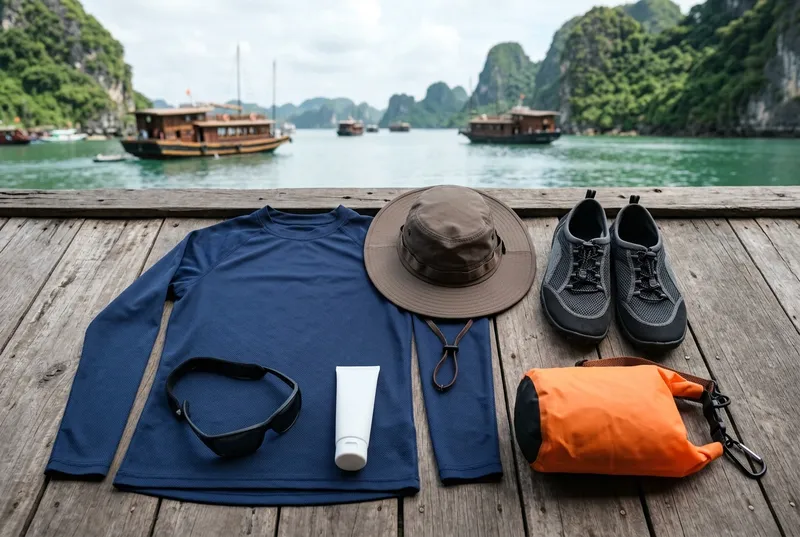
| Item | Why it helps |
| Swimsuit and quick-dry top | Dries fast, protects shoulders from the sun |
| Hat with a strap and sunglasses with a cord | Sun on the water is strong, and wind can blow things away |
| Reef-safe sunscreen | Apply before boarding, reapply after swimming |
| Water sandals or old sneakers | Protect feet on rocky beaches and shells |
| Small dry bag | Keeps phone, cash and medicine dry |
| Phone pouch with a lanyard | Lets you take photos without risking your phone |
| Water bottle | Dehydration sneaks up on you on hot days |
| Light jacket in winter | Mornings on the bay can be cool from December to February |
Leave jewelry, drones and expensive cameras on the boat unless they are fully waterproof and secured. For a longer packing list, see our safety gear guide for your Haiphong adventure trip.
Best Time of Year and Day to Kayak
You can kayak in Lan Ha Bay most of the year, but conditions change with the seasons. The pattern below is general and can vary from year to year.
| Season | What to expect for beginners |
| Spring (March to May) | Mild, often misty early in the season, calm water, a good time for first-timers |
| Summer (June to August) | Hot and humid, warm water for swimming, risk of storms and sudden showers |
| Autumn (September to November) | Often clear and pleasant, though early autumn can still bring storms |
| Winter (December to February) | Cool and sometimes grey, fewer people, bring a layer for the boat |

As for the time of day, mornings are usually calmest and coolest. Late afternoon is beautiful for light and photos but can be windier, so beginners should stay close to the boat at that time. Typhoon season in northern Vietnam runs roughly from summer into early autumn, and boats may stop running when a storm warning is issued. Check the forecast a few days before you go, and read our month-by-month guide to the best time to visit Haiphong to plan the rest of your trip.
>>> Deep Water Soloing Lan Ha Bay: Climb Cliffs Above the Sea
Guided Tour, Cruise or Rental
Beginners have three main ways to get on the water. Here is how they compare.
- Day trip from Cat Ba. The easiest option for most travelers. A boat takes you into Lan Ha Bay, stops for one or two kayak sessions, lunch and swimming, and brings you back the same afternoon. Kayaks and life jackets are normally included, but confirm when you book.
- Overnight cruise. Gives you two chances to paddle, often in the late afternoon and early morning. Mornings on an anchored cruise are some of the calmest conditions you will find.
- Kayak rental. Some floating bases and beaches rent kayaks by the hour. This suits travelers who already feel confident. Beginners should stay within sight of the rental point and avoid caves and open channels.
Whatever you choose, ask a few questions before paying: Are life jackets in good condition and in adult and child sizes? Is a guide on the water with the group? How long is the kayak session? What happens if the weather changes? A trustworthy operator answers clearly. Prices and inclusions change, so confirm them directly at the time of booking.

If you are traveling as a family or a mixed-ability group, our guide to adventure activities in Haiphong for groups shows how kayaking fits alongside cycling, climbing and island hikes.
Kayaking With Kids and Older Travelers
Lan Ha Bay is a good place to introduce children to kayaking, as long as an adult paddles with them in a tandem. Make sure the operator has a properly fitting child life jacket, not an adult one pulled tight. Keep the first outing short, around 30 to 45 minutes, and plan a beach stop so kids can swim and play.
Older travelers or anyone with back or shoulder concerns can still enjoy the bay. Choose a tandem with a strong partner, use a seat with back support if available, and stick to the floating village loop. If paddling is not for you, many boats offer a bamboo rowing boat ride with a local rower through the same scenery, a relaxing alternative.
For more family ideas on the mainland and the islands, see things to do in Haiphong with kids.
Responsible Kayaking in the Bay
Lan Ha Bay’s beauty depends on clean water and healthy marine life. A few simple habits help keep it that way.
- Take all rubbish back to the boat, including food wrappers and bottle caps.
- Do not break off coral, rock or plants from caves and lagoons.
- Keep your voice down near floating homes and in quiet lagoons.
- Do not feed monkeys or other wildlife you meet on beaches.
- Choose reef-friendly sunscreen and avoid spraying it near the water.

Kayaking is also one of the gentlest ways to see the bay. No engine noise, no fumes, just the sound of your paddle. That quiet is part of the experience.
Frequently Asked Questions
Do I need to know how to swim to kayak in Haiphong?
Being able to swim is recommended, but many non-swimmers kayak safely in Lan Ha Bay wearing a fastened life jacket and paddling a tandem with a guide nearby. Tell your guide before you start.
Where is the best place for beginner kayaking near Haiphong?
Lan Ha Bay around Cat Ba Island. Its sheltered lagoons, floating villages and small beaches give calm water and short routes that suit first-timers.
How long is a typical beginner kayak session?
Usually 30 minutes to 2 hours, depending on the tour. First-timers are happiest with about an hour and a beach or swim stop in the middle.
Is a single or tandem kayak better for beginners?
A tandem is more stable and lets a stronger paddler steer from the back. Single kayaks give more freedom but need a bit more balance and steering skill.
Can I kayak in Lan Ha Bay in winter?
Yes, on calm days. The water is cooler and mornings can be misty, so bring a light layer, but the bay is quieter and the paddling is pleasant.
Start Your First Paddle With Confidence
Kayaking in Haiphong for beginners comes down to a few simple choices: start in the sheltered water of Lan Ha Bay, go in the morning, wear your life jacket, follow the tide advice of your guide and keep the first session short. Do that, and your first paddle between the limestone islands will be one of the highlights of your trip to northern Vietnam.
Haiphong Adventure runs Haiphong tours by motorbike and on foot, and helps travelers plan Cat Ba, Lan Ha and Halong Bay days that fit their pace. Browse our Haiphong tours or send us a message to plan a trip that includes your first kayak.
Contact Haiphong Adventure
- WhatsApp, Viber, WeChat: +84(0)934.555.001
- KakaoTalk, Line ID: haiphongadventure