Cat Ba Tours Experience Cruising And Kayaking
Picture a wooden boat sliding between limestone towers while mist still clings to the water, then a kayak slipping through a low gap into a lagoon where the only sound is your paddle. That is the heart of Cat Ba tours that combine cruising and kayaking, and it is why so many travellers rank a day on the water above everything else in northern Vietnam. This article describes what the experience actually feels like, hour by hour, so you can decide if it suits you and prepare properly. It is written by the Haiphong Adventure team from the trips our guides and guests share with us again and again.
Why Cruising And Kayaking Belong Together On Cat Ba Tours
A cruise gives you scale. From the deck you see dozens of islands layered into the distance, and the boat covers ground that you could never paddle. A kayak gives you intimacy. At water level the cliffs feel taller, the water looks greener and every sound is clearer. Put them together and a long day never feels repetitive: you watch, then you move, then you rest.
The archipelago around Cat Ba is part of the Ha Long Bay and Cat Ba Archipelago World Heritage site, a status recognised by UNESCO. The landscape is a drowned karst, with limestone towers that rise straight out of calm water. That geology is what makes sheltered lagoons and quiet channels, which are exactly the places where kayaking works best.
An Early Start At The Pier
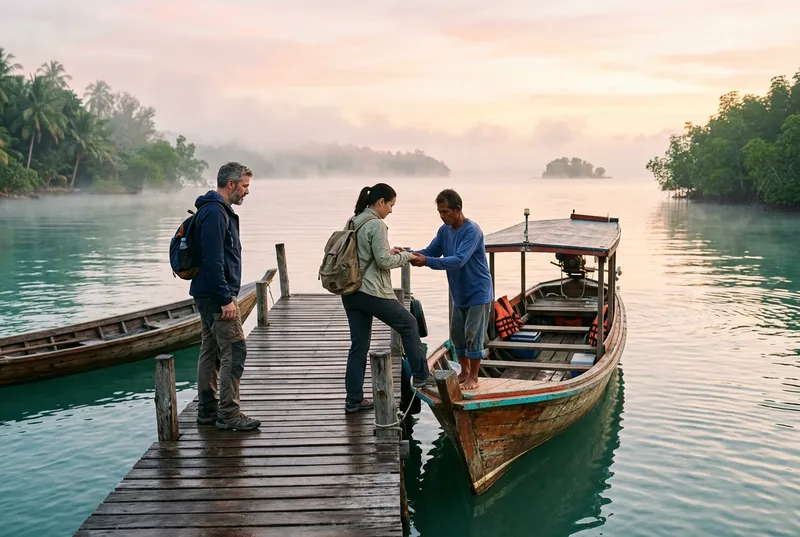
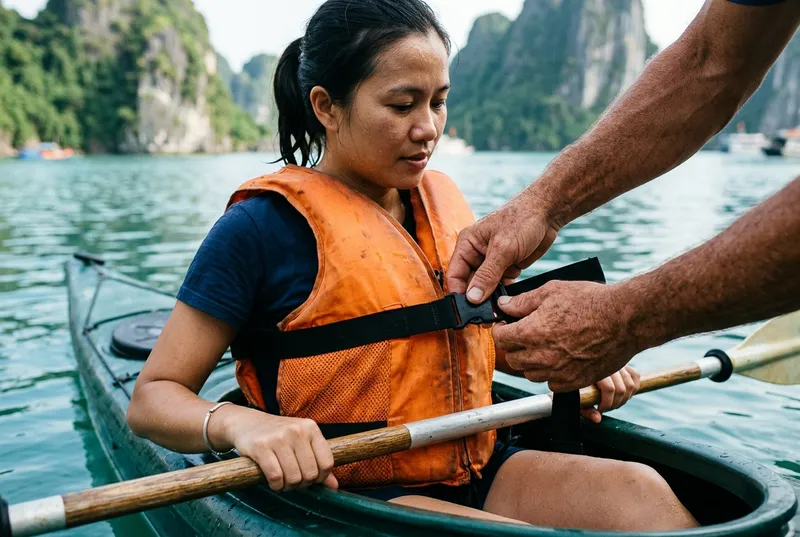
Most days begin with a pick-up at your hotel or a meeting point near the harbour. The earlier you start, the better the light and the fewer boats you share the water with. Expect a short transfer to the pier, a safety briefing and a quick distribution of life jackets. A good crew will adjust each jacket for you and will not rush this step.
Boats vary a lot. Some are traditional wooden junks with an open upper deck and a shaded lower cabin. Others are smaller and faster. Ask what type you will be on, how many guests share it and whether there is shade, because the sun on the water is stronger than it feels.
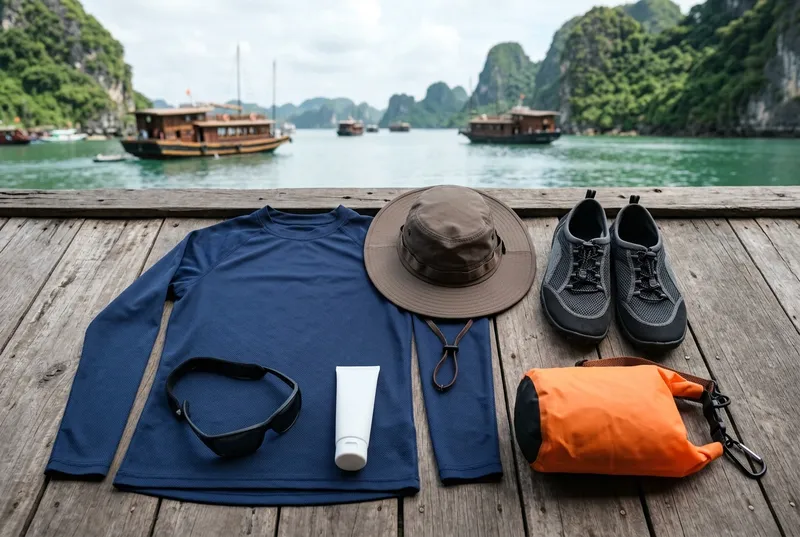
What to wear and carry
- A light long-sleeve top and a hat for sun protection.
- Swimwear under quick-dry clothes, plus a spare dry top.
- Non-slip sandals or water shoes that stay on your feet.
- Reef-safe sunscreen, sunglasses with a strap and a small towel.
- A waterproof phone pouch and a little cash for small purchases.
Cruising Between The Islands
Once the boat leaves the harbour, the mood slows. The crew may serve tea or coffee, and most guests drift to the railings. The first hour is the best time for photographs, with soft light and a quiet bay. If you love photography, our photography guide for your Lan Ha Bay tour explains how to use the light, protect your camera and compose the limestone layers.
Along the way you will often pass floating fish farms, small wooden boats and sometimes a rock shaped like an animal that your guide will name. Many floating homes have been reorganised in recent years, so what you see depends on the route and the season. Treat these places as working spaces, not stage sets: ask before you photograph people, keep your voice low and do not throw anything overboard.

>>> Lan Ha Bay Tour Experience Cruising The Unknown
Choosing A Route With Fewer Crowds
Route decides how the day feels. Some popular stops fill up quickly, especially at midday, while a thoughtful operator will time lagoons and swim spots to avoid the peaks. Ask where the kayak stop is and whether the boat visits it before or after the busiest hours. We explain this in more depth in our guide to avoiding the crowded spots.
It also helps to be flexible about the weather. Wind, tide and haze all affect which stops are comfortable, and a good captain will change the plan to keep you safe and relaxed. A trip that looks less ambitious on paper can feel far better if it gives you time to enjoy each place.
The First Paddle Into A Lagoon
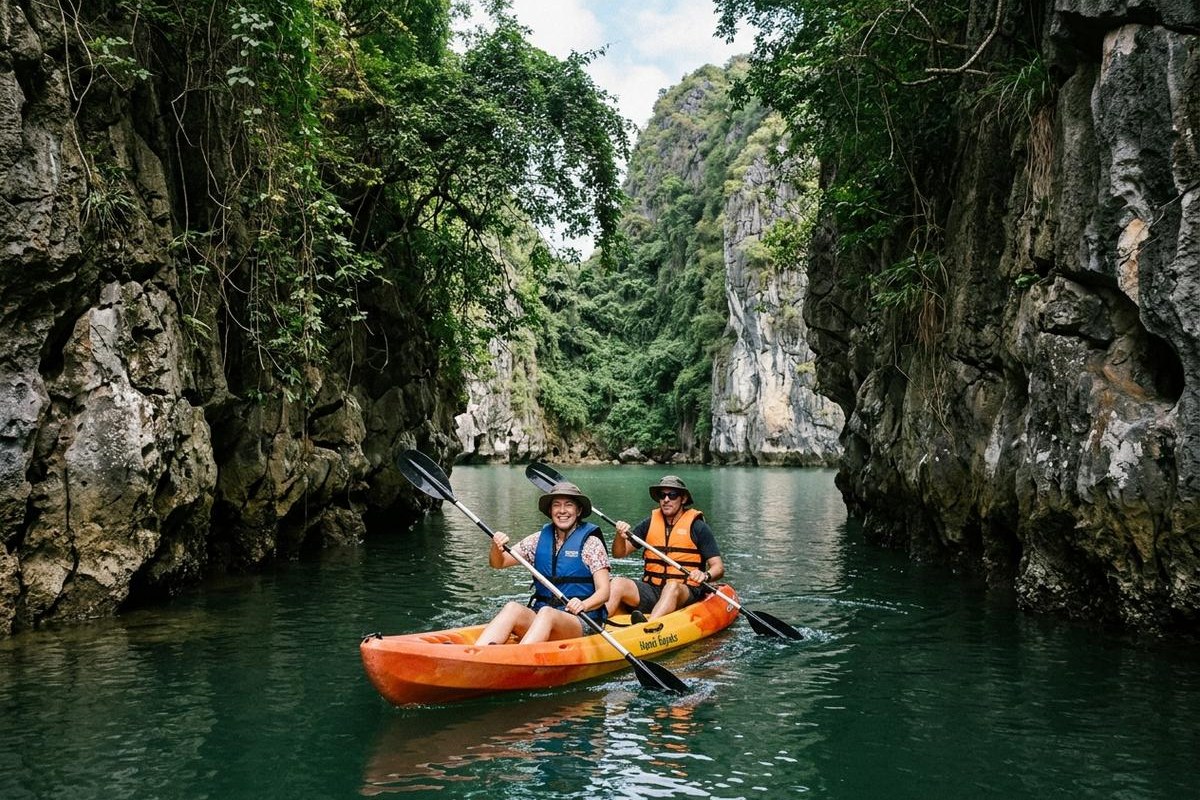
For many guests this is the highlight. The boat anchors near a cluster of karsts, and you step into a kayak or a small rowing boat. You paddle through a narrow gap, sometimes a short cave passage that the guide checks first, and the world changes. Cliffs rise on every side, sunlight bounces off the water and the only sounds are drips, birds and your own breathing.
Kayaks are usually stable and forgiving, and most people are comfortable within a few minutes. You do not need to be fit, but you should be able to sit and paddle for 30 to 60 minutes. Tell your guide if you have shoulder or back problems. If you are nervous, choose a tandem kayak and sit in the front with a more experienced partner behind you.
Kayak technique in five minutes
Hold the paddle with hands a little wider than your shoulders, and keep the blade face aligned with the water. Rotate from the torso rather than pulling with your arms, because this saves energy. To turn, paddle on one side only. To stop, dip the blade behind you. If you drift toward a wall or another boat, back paddle gently instead of pushing off the rock, which can be sharp.
Stay close to your guide and your group, and keep your life jacket on at all times, even if you are a confident swimmer. Do not stand up in the kayak and do not lean over the side for a photo. Before you set off, ask your guide how to handle wind, boat wakes and what to do if you tip.
Recommended tour

A comfortable Ha Long Bay day cruise among the limestone islands, with caves, kayaking options and lunch on board, a good fit if you like the idea of a day on the water.
From $109 per person
Swimming And Beach Stops
After the paddle, many boats stop for a swim or a beach break. The water is usually calm and a pleasant temperature in warmer months, and cooler in winter. If you plan to swim, ask where the stop is, how deep the water is and whether the crew keeps watch. Always swim with your life jacket or within easy reach of the boat, and avoid jumping from heights unless the crew has explicitly checked the spot.
Beaches in the bay are small and often shared with other boats. Bring your own bag for rubbish, because bins may be limited. Do not take shells, coral or sand, and keep to marked areas. Small habits protect a landscape that thousands of visitors enjoy every week.
Lunch On Board
Lunch is usually served on the boat while it cruises or anchors in a calm spot. Typical meals include rice, vegetables, fish or other seafood and fruit, though the exact menu depends on the operator. Mention allergies and dietary needs when you book, not on the day, so the crew can plan.
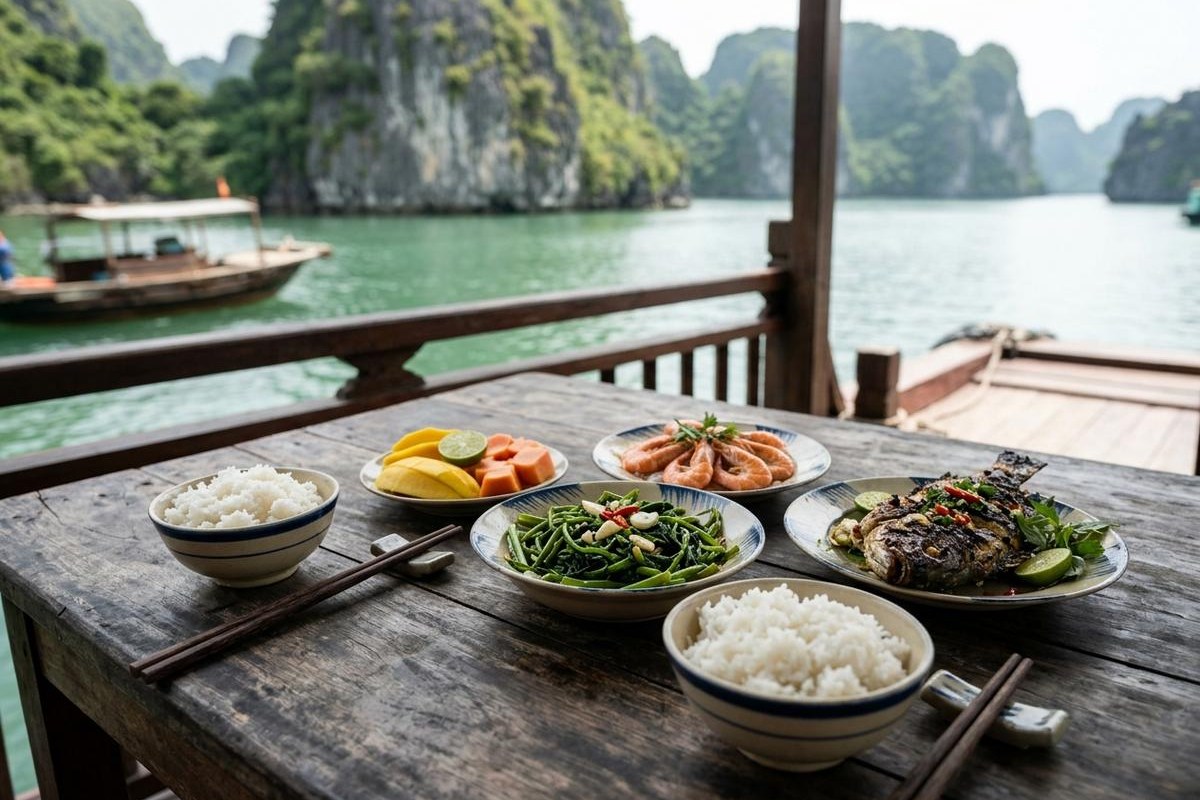
If you love Vietnamese seafood, save some appetite for the mainland too. Haiphong is known for crab noodle soup, banh beo and sidewalk coffee, which make a good food stop before or after your bay day.
>>> My Haiphong Street Food Adventure Local Taste
Caves, Viewpoints And Quiet Corners
Depending on the route, you might visit a cave, climb a short staircase to a viewpoint or float quietly in a channel. These are not guaranteed on every itinerary, so ask what is planned and how much walking is involved. Cave visits depend on tides and water levels, and viewpoints depend on weather and visibility.
The best moments are often unplanned. A heron lifting off a rock, a fisherman rowing home or a patch of light on the cliffs can become the memory of the day. Leave room for pauses and put your phone away for a few minutes.
Respecting the place
Keep to the guide’s instructions in caves and lagoons, do not touch formations, and never leave anything behind. Choose operators that avoid single-use plastic where they can and that manage waste on board. If you see something that worries you, mention it politely to the crew.
The Slow Cruise Home
The return journey is often the most relaxed part. The crew hands out fruit or tea, guests chat or doze, and the light turns golden. The boat reaches the pier in the mid to late afternoon in many programmes, but times vary with the season, so always confirm your return time before you plan anything for the evening.
Back on land, take a shower, eat dinner in town and go to bed early. Two or three days on the island lets you combine the bay with a forest walk, and a slower pace keeps both days enjoyable.
>>> Tips For Kayaking On A Lan Ha Bay Tour Safely
Overnight Versus Day Cruising
A day cruise covers the main scenes in about 6 to 8 hours (reference only, updated October 2026, confirm with your operator), which suits most schedules. An overnight cruise adds sunset, a calm evening and a quiet morning paddle before other boats arrive. If you can spare the time and the weather is good, the overnight option is hard to beat. If you are unsure, start with a day trip and decide later.
Whichever you choose, check the cabin standard, the safety equipment and the cancellation terms. Reputable operators are happy to answer these questions in writing. For general advice before you pay, read our essential tips before booking your Cat Ba tour.
Who Will Love This Experience
Almost anyone who can sit in a boat and enjoy a view. Families with children usually enjoy it if the group is small and life jackets fit. Couples love the quiet. Solo travellers often make friends on board. People with limited mobility can enjoy the cruise but should ask about boarding, stairs and kayak access.
It may not be for you if you get severe seasickness, hate hot sun or want a fast, high-adrenaline day. In that case look at land-based activities, or ask us for a mix. You can also combine a day on the water with a motorbike day on the island with one of our Haiphong tours.
A Sample Timeline For The Day
Every operator runs its own programme, so treat the outline below as an example of the rhythm, not a promise. It shows how a typical day can flow when the weather behaves.
- Early morning: hotel pick-up, short transfer, safety briefing and boarding.
- Mid morning: cruising between the islands, tea or coffee on deck, first photo stops.
- Late morning: kayak or small boat stop in a lagoon, with guides close by.
- Around midday: lunch on board while the boat moves to a calm anchorage.
- Early afternoon: swim, beach stop or a short viewpoint, depending on the route.
- Mid to late afternoon: slow cruise back, fruit or tea, return to the pier and transfer.
If a stop is cancelled for tide or weather, a good crew replaces it with something else rather than simply shortening the day. Ask your operator how they handle that.
Mistakes First Timers Make
The most common mistake is underestimating the sun. Reflected light from the water burns skin quickly, even on cloudy days, so reapply sunscreen and keep your shoulders covered. The second is wearing the wrong shoes, since wet limestone and boat decks are slippery. The third is carrying too much: a big bag becomes a nuisance in a kayak, and you will only need a small waterproof pouch.
Another frequent error is booking the cheapest option without asking what is included. Check whether kayak hire, entry tickets, lunch and drinks are covered. Finally, many people plan a tight onward connection. Give yourself a generous margin after the return, in case the boat arrives later than expected.
How to choose an operator
Look for clear information about safety equipment, group size, routes and cancellations. Read recent reviews for patterns, not single complaints. Ask whether guides speak good English and whether they carry a first aid kit. If an operator will not answer simple questions in writing, move on. A company that cares about the experience is usually open about its limits as well as its strengths.

Planning Around The Seasons
Spring and autumn usually bring comfortable temperatures and calmer water. Summer is hot and busy, with swimming at its best but storms possible. Winter is cooler, often misty, and better for photography than for swimming. Check the forecast from Vietnam’s national weather service, or ask your guide, before you go, and leave a spare day in your plan in case a trip is postponed.
Boat operations can be suspended when the sea is rough or when storms are expected. A responsible operator will tell you honestly, offer a new date and not push you onto the water in unsafe conditions.
Frequently Asked Questions
Do I need kayaking experience?
No. The kayaks used on most bay trips are stable, and the guide will explain the basics. Choose a tandem if you want company and support.
Is it safe for children?
Often yes, with properly fitted child-size life jackets, a calm season and an attentive crew. Confirm age rules when you book.
Can I swim if I am not a strong swimmer?
Yes, but stay close to the boat and keep your life jacket on. Tell the crew about your level.
What if it rains?
Light rain can make the bay moody and beautiful. If the weather is unsafe, the operator may delay or cancel and should offer a fair alternative.
How long does the experience last?
Day trips usually take most of the day, while overnight cruises last one or two nights. Confirm exact times with your operator.
Start Planning With Haiphong Adventure
A day of cruising and kayaking is one of the easiest ways to fall in love with Cat Ba and the bay. If you would like help choosing a boat, matching the trip to your dates or combining it with time in Haiphong, message our team and we will suggest an honest plan. Prices and schedules mentioned online are for reference only and may change, so we will confirm current details before you book.
WhatsApp, Viber, WeChat: +84(0)934.555.001
KakaoTalk, Line ID: haiphongadventure