Why Haiphong Is Called the City of Red Flamboyant Trees
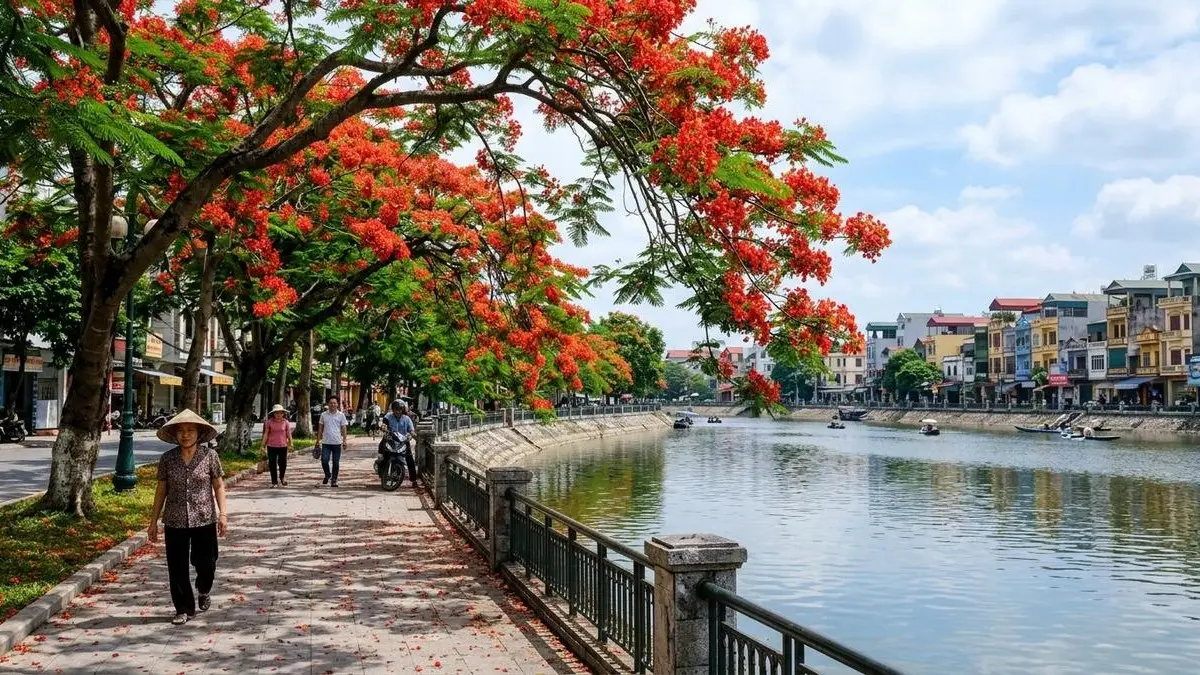
Why Haiphong is called the city of red flamboyant trees has a simple answer: for more than a century these trees have lined its streets, lakes and school yards, and every summer they turn the whole city red. Locals call them hoa phượng, the phoenix flower, and the nickname Thành phố Hoa Phượng Đỏ, the City of Red Flamboyant Flowers, has become part of Haiphong’s identity, from songs and poems to an annual festival in May.
But the story behind the name is richer than a pretty season. It involves French town planners, a tree from Madagascar, generations of students and a city that chose a flower as its symbol. In this guide we look at the trees themselves: where they came from, why people love them, and how you can find the best of them on a walk through the center.
Why Haiphong Is Called the City of Red Flamboyant Trees
Many Vietnamese cities have flamboyant trees, so why does Haiphong own the title? Three reasons stand out.
- Density in the center. The old city core has an unusually high number of mature flamboyants along its main boulevards, parks and lakes. In bloom, whole streets look red from end to end.
- A long history. Many trees were planted during the colonial period, so some streets have had flamboyant shade for generations.
- A deliberate choice. The city embraced the flower as its symbol. It appears in local songs, poems, souvenirs and civic events, and the Red Flamboyant Festival is held each year in May.
In other words, the name began as a description and became an identity. Ask anyone from Haiphong about home and they will soon mention the phượng.
We also cover the topic from the flower’s point of view in why Haiphong is called the city of red flamboyant flowers. Here we focus on the trees and the streets they shape.
A Tree From Madagascar With a Phoenix Name
The flamboyant tree, Delonix regia, is native to Madagascar. Its wide umbrella crown, feathery leaves and brilliant red-orange flowers made it a favorite shade tree across the tropics during the 19th and 20th centuries.
The meaning of phượng vĩ
In Vietnamese the tree is called phượng vĩ, which means phoenix tail. Look at a branch and you will see why: the long, finely divided leaves fan out like tail feathers, and the flowers glow like fire. The phoenix is a noble creature in Vietnamese tradition, so the name gives the tree a sense of grace and good fortune.
What makes it special to look at
| Feature | What you notice |
| Crown | Wide and flat, like an open umbrella over the street |
| Leaves | Fine and feathery, filtering sunlight into soft shade |
| Flowers | Five petals, bright red with one streaked petal, in large clusters |
| Seed pods | Long, dark and woody, hanging on through the dry season |
| Blooming | Mainly late spring to summer in northern Vietnam |
How the Trees Came to Haiphong
Haiphong grew quickly in the late 19th century as the main port of northern Vietnam. French planners laid out wide boulevards, squares and public buildings, and they planted shade trees to cool the hot, humid streets. The flamboyant, with its broad canopy and spectacular color, was one of the trees they chose.
Over the decades the trees spread from the colonial center to parks, schools, lakes and newer neighborhoods. Residents came to see the summer bloom as part of the rhythm of the year. After 1955, when Haiphong entered a new chapter, the city kept planting and caring for its flamboyants, and the bond between people and tree only grew stronger.
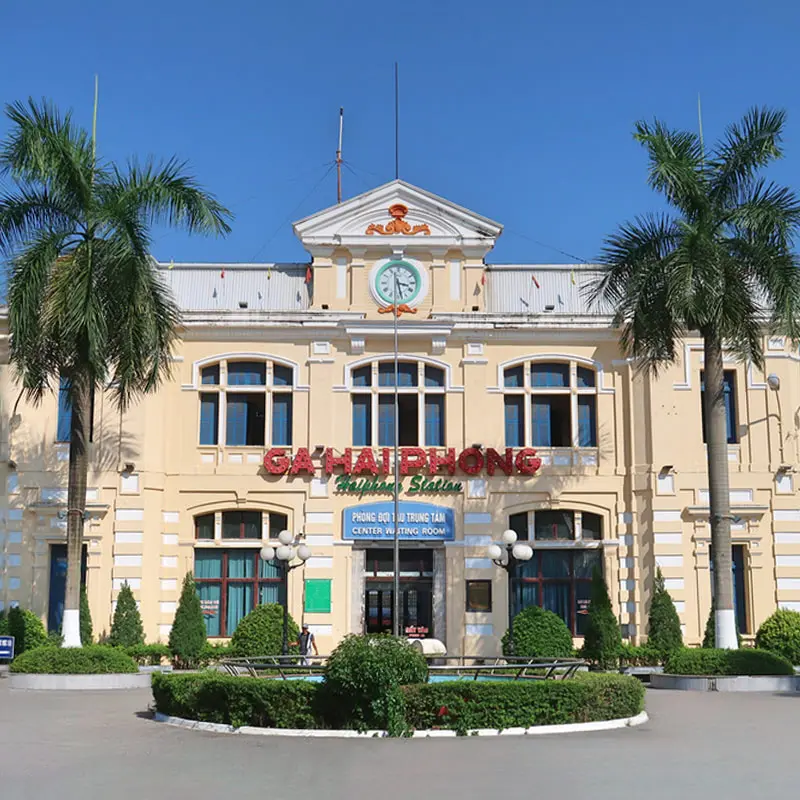
Today the oldest trees stand among the city’s colonial buildings, which makes a heritage walk in bloom season especially beautiful. Our Haiphong colonial buildings map pairs nicely with a flamboyant walk.

>>> Haiphong During the French Colonial Period and Its Legacy
Recommended tour
See the city of flamboyant trees with a local guide, from shady colonial boulevards and lakeside paths to markets, cafes and hidden alleys.
From $79 per person
The Student Flower and Summer Memories
Across Vietnam, the flamboyant is known as hoa học trò, the student flower. It blooms just as the school year ends, so for generations it has marked final exams, goodbyes to classmates and the start of summer holidays.
Students used to press the petals in notebooks, write farewell messages in each other’s yearbooks and make butterflies from the flowers. Almost every Vietnamese adult has a memory of a flamboyant tree in a school yard. In Haiphong, where the trees are everywhere, that feeling is even stronger. When the city turns red, people talk about youth, nostalgia and the passing of time.
This is why the nickname touches people so deeply. It is not only about a beautiful street. It is about growing up in Haiphong.
The Red Flamboyant Festival
The city celebrates its symbol with the Red Flamboyant Festival, Lễ hội Hoa Phượng Đỏ, usually held in mid-May. The timing links the bloom with the anniversary of Haiphong’s liberation on 13 May 1955, so the festival is both a flower celebration and a civic event.
Programs change from year to year, but often include:
- An opening ceremony and outdoor concert in the city center
- Street parades and carnival performances
- Art, photo and cultural exhibitions
- Food, sports and community activities around the city
Dates and programs are announced each spring, so check the latest schedule if you plan to travel for it. Our Haiphong festivals calendar shows what else is happening through the year.

>>> Flamboyant Flower Season Haiphong When to See the Blooms
When to See the Trees in Bloom
The flamboyant season in Haiphong usually begins in May, peaks from late May through June and fades during July. Weather shifts the timing a little each year, and individual trees bloom at slightly different moments, so there is often some color well into summer.
| Period | What the trees look like |
| March to April | Fresh green leaves, first buds on some trees |
| May | Blooming begins, festival time in the city |
| Late May to June | Peak color on most streets and lakes |
| July | Flowers fade, seed pods start to form |
| Autumn and winter | Green shade, then bare branches and hanging pods |
Summer is hot and humid, so plan walks for early morning or late afternoon, carry water and expect sudden showers. For more seasonal advice, see the best time to visit Haiphong.
Where to Find the Best Flamboyant Streets
You do not need a map to find flamboyants in season, but some areas are especially lovely. Start in the old center and walk at an easy pace.
- Around the Opera House: the square and nearby boulevards combine colonial facades with old shade trees.
- Tam Bac Lake: lakeside paths where red flowers reflect in the water, best in the morning light.
- The central boulevards: the wide streets of the old French quarter, with long rows of mature trees.
- Riverside promenades: newer walks along the Cam River, where young trees are growing alongside the water.
- School yards and small parks: peek through the gates in May and June to see why it is called the student flower.
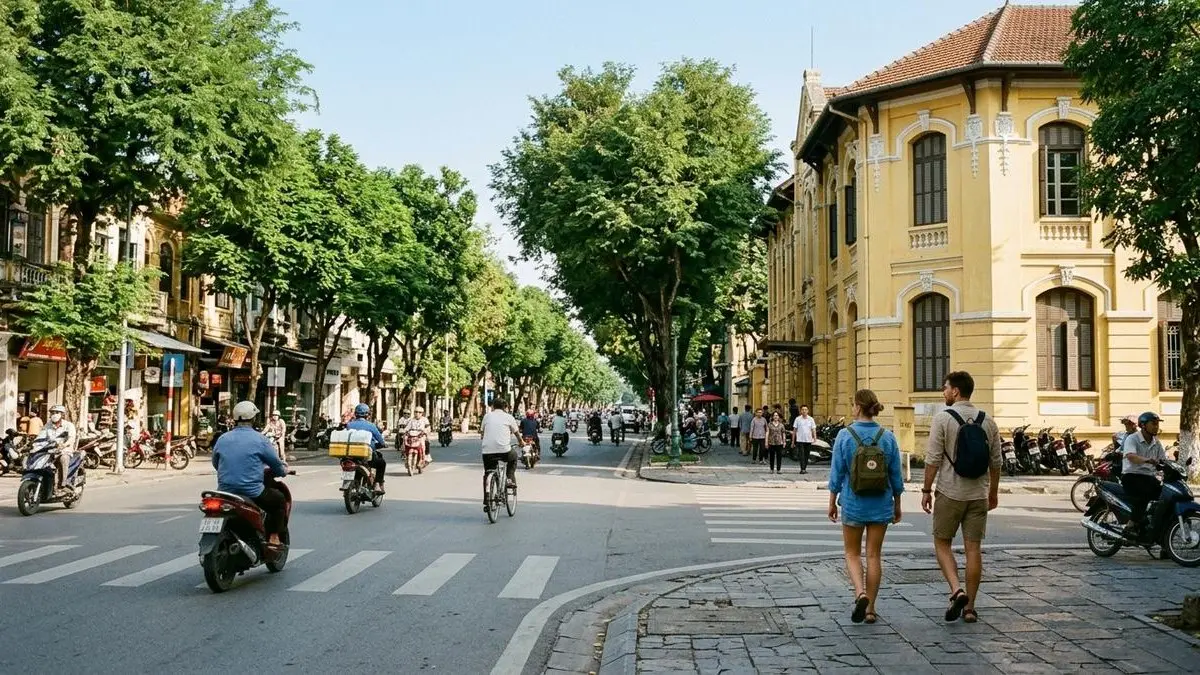
Our Haiphong Old Quarter self-guided walking route links many of these places in one easy loop.

>>> Night View Of Haiphong Opera House Walking Spot
Tips for Enjoying the Flamboyant Season
- Go early. Light is softer, streets are quieter and the heat is lower before 8 am.
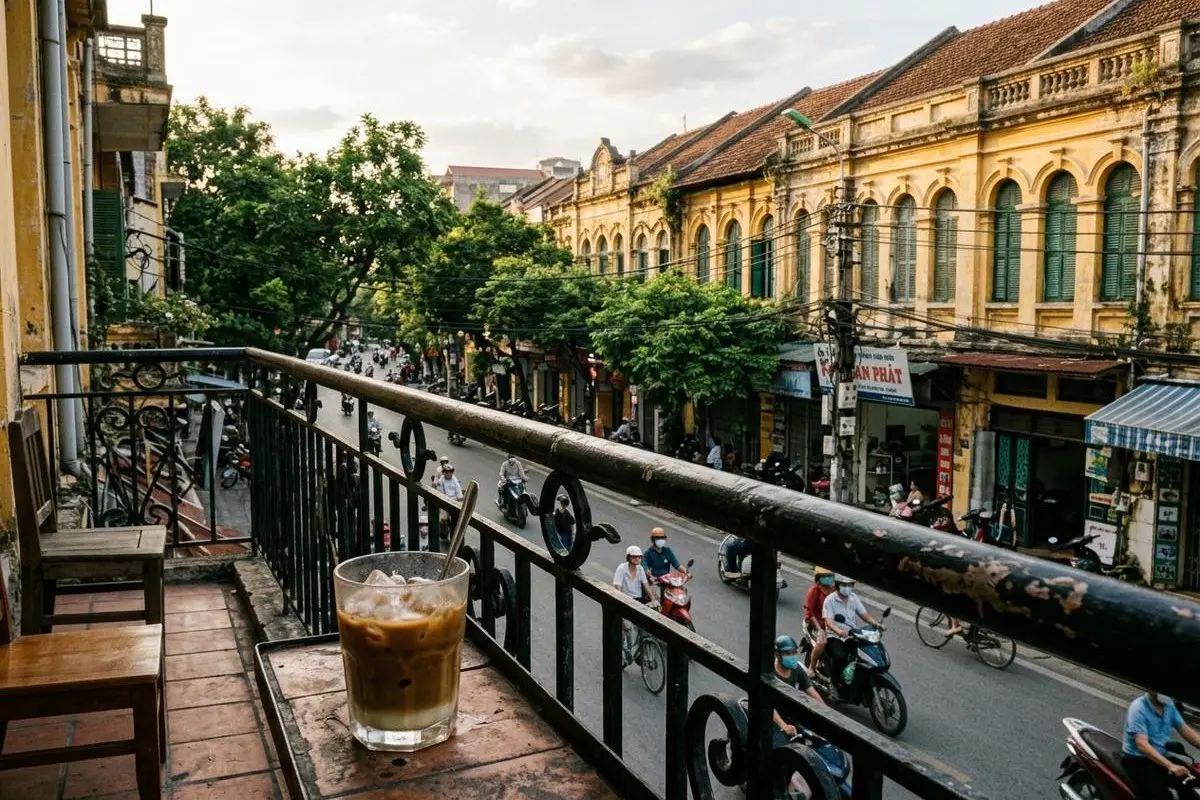
- Combine with coffee. Many cafes have balconies or sidewalk seats under the trees, perfect for a slow break.
- Respect the trees. Do not climb them or break branches for photos. Petals on the ground make the best pictures anyway.
- Watch the traffic. Popular photo spots are often on busy streets, so stay on the sidewalk.
- Bring rain gear. Summer storms come quickly, and fallen petals after rain are a beautiful sight.
Frequently Asked Questions
What is the red flamboyant tree called in Vietnamese?
It is called phượng vĩ, meaning phoenix tail, or simply hoa phượng. Its scientific name is Delonix regia.
When do the flamboyant trees bloom in Haiphong?
Usually from May to July, with peak color from late May through June. Timing varies slightly from year to year with the weather.
Who planted the flamboyant trees in Haiphong?
Many were planted as shade trees during the French colonial period, when the city’s boulevards were laid out. The city has continued planting them ever since.
When is the Red Flamboyant Festival?
It is usually held in mid-May, around the anniversary of Haiphong’s liberation on 13 May. Check each year’s official program for exact dates.
Why is the flamboyant called the student flower?
It blooms at the end of the school year, so it is linked with exams, farewells and summer holidays for generations of Vietnamese students.
See Haiphong in Red
Now you know why Haiphong is called the city of red flamboyant trees: a century of shade on its boulevards, a phoenix-tail name, memories of school summers and a festival that celebrates them all. If you visit in late spring or early summer, give yourself time to walk under the red canopy. Haiphong Adventure runs small-group and private Haiphong tours by motorbike and on foot, and in bloom season our guides know the prettiest streets. Browse our Haiphong tours or message us to plan your visit.
Contact Haiphong Adventure
- WhatsApp, Viber, WeChat: +84(0)934.555.001
- KakaoTalk, Line ID: haiphongadventure