Wildlife You Can See On A Cat Ba Island Tour
Wildlife is one of the quiet reasons to join a Cat Ba Island tour, but it helps to arrive with honest expectations. Cat Ba is not a safari park. Many animals here are shy, nocturnal or extremely rare, and a lucky sighting depends on patience, season and good guiding. What you can count on is a living landscape of forest, cliffs and sea where every walk or boat ride turns up something small and surprising. This guide explains which animals you might see, which ones you almost certainly will not, how to improve your chances and how to watch wildlife without harming it. At Haiphong Adventure, we plan trips across northern Vietnam, and we prefer to tell guests the truth before they travel.

What kind of wildlife does Cat Ba have?
Cat Ba combines limestone forest, mangrove edges, sea cliffs and open water, so it supports a surprising range of species. Much of the island is protected as a national park, which gives forest animals space to survive. Marine life thrives in the bay, where fishing communities have lived for generations.
Expect lots of small creatures, such as butterflies, lizards, birds and insects, and a few larger animals if you are fortunate. Do not expect large predators or herds. The magic of Cat Ba wildlife is in the details.
A simple rule of thumb
Common animals are easy to enjoy, rare animals are a bonus and endangered animals deserve silence and distance. If you remember this rule, your trip will feel richer and kinder.
What you are likely to see at a glance
| Animal group | Where to look | Chance on a standard tour |
|---|---|---|
| Butterflies and insects | Forest trails, damp soil near streams | High |
| Lizards and geckos | Sunlit rocks, cave walls | High |
| Forest and sea birds | National park edges, coastline | Good, best in early morning |
| Fish, crabs and jellyfish | Calm bay water, rocks, fish farms | Good from a boat or kayak |
| Macaques | Some beaches and islands in Lan Ha Bay | Possible, not guaranteed |
| Cat Ba langur | Remote cliffs and forest | Very unlikely |
Treat this table as a general guide, not a promise. Weather, season and your route on the day all change what you meet.
The Cat Ba langur, a very rare neighbor
The Cat Ba langur is the island’s most famous animal and one of the rarest primates in the world. It is critically endangered and found only on Cat Ba, which makes it a conservation story that matters far beyond Vietnam. Park rangers and conservation teams work to protect the remaining groups, and the langur has become a symbol of the whole island.
The honest message for visitors is that you are very unlikely to see one on a standard tour. The animals live in remote areas and avoid people. A guide who promises a guaranteed sighting is not being truthful. Treat the langur as a reason to respect the forest, not as a checklist item.
Why it matters to travelers
Visitor choices affect conservation. Stay on trails, avoid loud noise, never leave rubbish and support operators who follow park rules. Your quiet behavior is a small but real contribution.
>>> Cat Ba Tour Itinerary For Nature Lovers Guide

Birds you can realistically spot
Birdwatching is the most reliable wildlife activity on the island. Early morning is the best time, when birds are active and the air is calm. Expect forest birds in the national park, sea birds along the coast and small birds around villages and fields.
Bring binoculars if you have them, but your eyes and ears are enough to begin. Listen first, then scan slowly. A guide can identify calls and show you where to look, which turns a green blur into a living map.
Tips for better birdwatching
- Go early, ideally within two hours of sunrise.
- Wear quiet clothing and avoid bright colors.
- Move slowly, pause often and speak softly.
- Use a phone or camera zoom instead of walking closer.
Small forest animals and insects
The forest floor and trunks hold plenty of small life. You may spot geckos on cave walls, skinks on sunlit stones, frogs after rain and many kinds of beetles and ants. Butterflies often gather on damp soil near streams, creating moving patches of color.
Insects can be loud, especially at dusk, and mosquitoes are common after rain. Pack repellent and treat bites calmly. Most animals you meet are harmless, but you should never touch snakes or unknown creatures, and you should tell your guide if you see one.
Night walks
If your accommodation offers a guided night walk, it can reveal frogs, insects and spiders that are invisible by day. Only join walks led by experienced guides with proper lights, and keep to clear paths.
Monkeys and the temptation to feed them
In some areas of Lan Ha Bay, you may meet macaques near beaches or islands where boats stop. They look charming and can be bold, which leads some visitors to feed them. Please do not. Feeding changes natural behavior, can cause aggression and harms their health.
If a macaque approaches, stay calm, keep food hidden and avoid eye contact. Do not run, do not shout, and do not leave bags open. Boat crew can often help keep the situation under control.
Recommended tour
We do not list a fixed Cat Ba package on our tour page yet, but we can help you plan a nature-focused route with a responsible local guide. See the Cat Ba tours page for updates, or message us on WhatsApp.
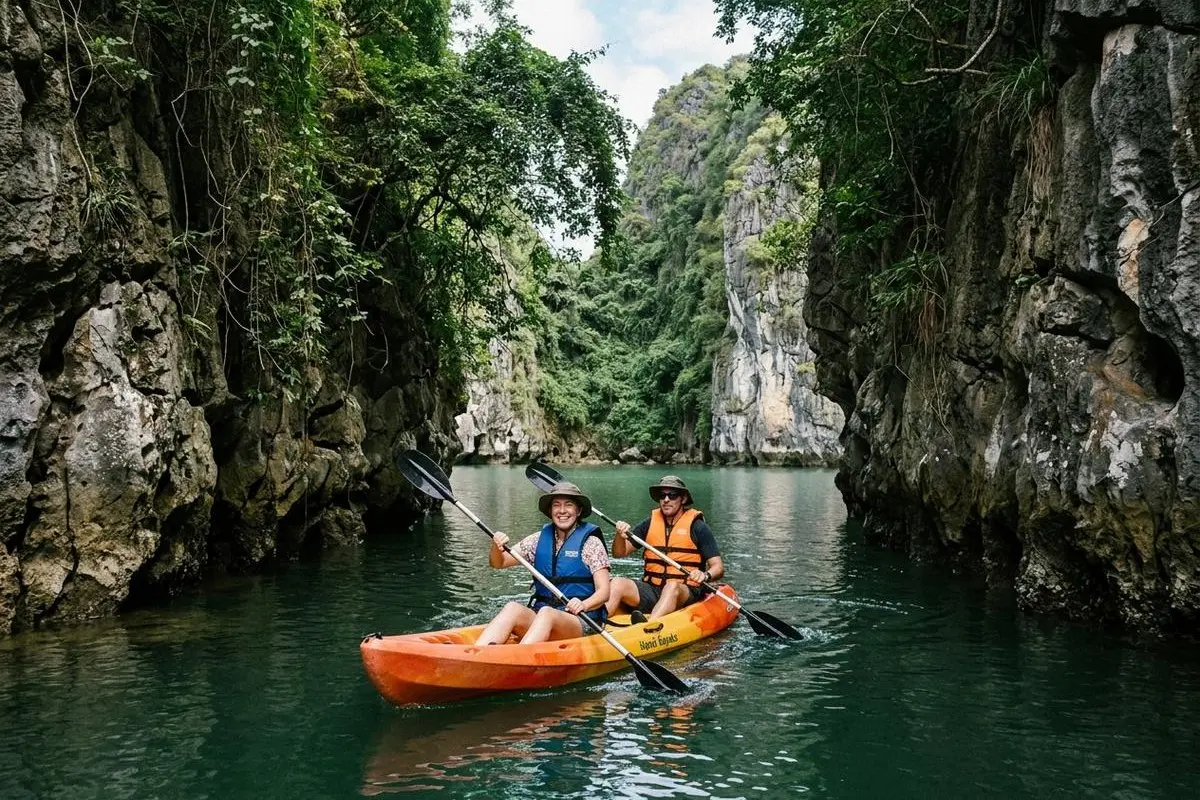
Marine life in the bay
The sea around Cat Ba is full of life you can watch without disturbing it. From a boat or kayak, you may see fish near the surface, crabs on the rocks, jellyfish drifting in calm water and sea birds diving for food. On a quiet morning, the bay feels like a living aquarium.
Local fishing communities are part of the ecosystem, too. Floating fish farms and small boats show how people and the sea depend on each other. Ask your guide how fishing works and which species matter to local families, and always ask before photographing people at work.
For a boat-based view of the bay, read our account of the Lan Ha Bay tour experience.
Swimming and snorkeling respect
- Do not touch corals, shells or sea creatures.
- Use reef-safe sunscreen if possible.
- Take all rubbish back to the boat.
- Avoid stepping on rocks where small animals live.

The best time to look for wildlife
Wildlife is most active in the early morning and late afternoon, when temperatures are lower. Rain can bring out frogs and insects, while dry, clear days make birdwatching easier. Seasonal changes affect what you see, so ask a guide what is active in the weeks you will visit.
Avoid the midday heat if you can. Animals rest, and humans tire. A slow breakfast followed by an early walk, then a late lunch and an afternoon boat ride, fits both the animals and your energy.
>>> Cat Ba Tour Activities Trekking Hiking Swimming

A wildlife-friendly day on a Cat Ba Island tour
A good wildlife day is not packed with stops. It leaves space for slow walks, quiet water and time to look again at the same tree. Here is a simple shape many nature lovers enjoy, which your guide can adjust to weather and season.
Early morning in the forest
Start with a short walk on a marked trail in or near the national park. Birds are most vocal at this hour, and butterflies begin to move as the sun warms the leaves. Walk at the back of the group if you want fewer people between you and the animals.
Late morning on the water
Move to the bay before the midday heat. From a boat or kayak, watch the rocks, the water surface and the floating farms. Paddling slowly along the cliffs often reveals crabs, small fish and sea birds resting on ledges.
Midday rest
Have lunch in the shade and let the hottest hours pass. Animals rest too, so you lose very little by slowing down. It is a good moment to compare photos and notes with your guide.
Late afternoon and evening
Return to a viewpoint or a quiet beach as the light softens. Birds become active again and the bay turns calm. If a guided night walk is available, finish with frogs and insects under a soft torch light.
Many travelers add a day on the mainland before or after Cat Ba. A city ride with Haiphong Adventure pairs well with a nature trip, because it shows the other side of the region: busy markets, sidewalk cafes and street food.
>>> My Haiphong Street Food Adventure Local Taste
How to watch wildlife responsibly
Good wildlife watching is mostly about restraint. Keep your distance, stay quiet and let animals set the pace. If an animal changes behavior because of you, step back.
- Never feed wild animals.
- Do not use flash photography on nocturnal animals.
- Avoid souvenirs made from wildlife, including shells, coral and animal parts.
- Choose operators who follow park rules and brief guests on conduct.
- Report illegal activity to park staff or your guide.
Responsible habits protect fragile species and make your own experience calmer and more authentic.

What to pack for wildlife watching
- Binoculars, if you have them
- A phone or camera with a good zoom
- Neutral clothing, light and breathable
- Repellent, sunscreen and a hat
- Water and a small snack
- A notebook for sightings
Pack light and keep your hands free. A notebook is a surprisingly useful tool, because writing down what you see makes you notice more.

Frequently asked questions about wildlife on a Cat Ba Island tour
Can I see the Cat Ba langur on a normal tour?
It is very unlikely. The species is critically endangered and lives in remote areas, so treat any sighting as extraordinary luck.
Is it safe to walk in the forest?
Yes, on marked paths and with sensible precautions. Avoid touching snakes or unknown animals, and tell your guide if you see one.
Are there dangerous animals?
Most animals avoid people. Snakes, insects and macaques deserve caution, but serious incidents are uncommon when you follow basic rules.
What is the best month for wildlife?
It depends on what you want to see. Ask a local guide for current advice, since conditions change from year to year.
Are fees and park rules fixed?
No. Rules and fees change, so confirm locally and treat any figure as a reference, updated October 2026.
Plan your Cat Ba Island tour with us
If you would like help planning a nature-focused trip with responsible guiding, message us with your dates and interests. You can also compare other Haiphong tours if you want to add a mainland day to your trip.
WhatsApp: +84(0)934.555.001
Viber and WeChat: +84(0)934.555.001
KakaoTalk and Line ID: haiphongadventure