
Cat Ba Tour Activities Trekking Hiking Swimming
A good Cat Ba tour is about more than a boat ride. The island has a national park with steep jungle trails, sheltered beaches you can swim from, quiet lagoons for kayaking, flat valley roads for cycling and limestone walls that attract climbers from around the world. The trouble is that most visitors only learn what each activity really involves once they are already halfway up a muddy slope in the wrong shoes.
Our guides at Haiphong Adventure spend a lot of time on Cat Ba with guests of every fitness level, from families with young kids to travelers who want to sweat all day. This guide goes activity by activity: how hard each one is, what gear you need, which months work best and how to combine them into an active few days. If you still need to sort out getting to the island, our guide to planning a perfect Cat Ba tour from Haiphong city covers transport and timing, so here we focus purely on what you do once you arrive.

How to Match Activities to Your Fitness and Time
Before choosing anything, be honest about two things: how fit you feel in heat and humidity, and how many full days you have on the island. Cat Ba is not high, but the terrain is limestone. Paths are rocky, often wet, and steeper than they look on a map. A hike that would take an hour at home can take twice as long in July when the air is thick and the rocks are slippery.
We usually sort activities into three rough levels for our guests:
- Easy: beach swimming, gentle kayaking in sheltered lagoons, flat cycling in Viet Hai valley, short walks to viewpoints near Cat Ba town.
- Moderate: the climb to Ngu Lam peak, longer kayak sessions across open water, cycling the hilly coastal road, intro rock climbing with an instructor.
- Challenging: the long jungle trek across Cat Ba National Park, full-day climbing, multi-activity days that combine a trek and a kayak.
With one full day, pick one land activity and one water activity. With two or three days, you can rotate between them and give your legs a rest. Trying to fit trekking, kayaking and cycling into a single day usually means doing all three badly.
What Every Active Cat Ba Tour Needs: Season and Basic Gear
Season shapes every activity on Cat Ba. Spring (roughly March to May) and autumn (roughly September to November) are the most comfortable for trekking and cycling. Summer (June to August) is the best time for swimming, but it is hot, very humid and busy, and it overlaps with the storm season, when boats can be held in port at short notice. Winter (December to February) is cool and often grey; trails are pleasant, but the sea is too cold for most swimmers and fog can hide the views.
Whatever the season, a few items make every day on the island easier:
- Shoes with real grip. Trail runners or light hiking shoes beat sneakers on wet limestone.
- Water sandals or old trainers you do not mind soaking for kayaking and rocky beaches.
- At least 1.5 to 2 litres of water per person for any trek, more in summer.
- Sunscreen, a hat and a light long-sleeve top. Reflection off the water burns quickly.
- Insect repellent for the forest, especially after rain.
- A small dry bag for your phone and cash on boats.
You can rent bicycles, scooters and kayaks on the island, but quality varies a lot, so check brakes, tyres and paddles before you set off.
Trekking in Cat Ba National Park
Cat Ba National Park was established in 1986 and covers a large part of the island’s interior: forested limestone hills, caves and small valleys. It is home to the critically endangered Cat Ba langur, though you are very unlikely to see one on a regular trail. Trekking here is the most rewarding land activity on any Cat Ba tour, and also the one people most often underestimate.
The short climb to Ngu Lam peak
Most visitors start at the park headquarters and climb to the Ngu Lam viewpoint. The trail is short but steep, with rocky steps, roots and some metal sections near the top. Fit walkers usually go up and down in around one to two hours, including time at the top. The reward is a wide view over rolling green hills with no buildings in sight. Difficulty: moderate. Do not try it in flip-flops, and avoid the middle of the day in summer.
The long jungle trek
Experienced hikers can cross the park on a longer route through the forest toward the Viet Hai side of the island. Expect most of a day on foot, often five hours or more, with muddy sections, uneven rock and little shade at times. This route should only be done with a local guide; trails are not always clearly marked and phone signal drops in places. Many people finish at Viet Hai village and return by boat, which makes a great combination with a bay trip.
Trekking tips from our guides
- Start early. By late morning in summer the forest feels like a sauna.
- Check the park’s current rules and entry fee at the gate; they change from time to time.
- After heavy rain, trails become slippery and leeches can appear. Long socks help.
- Stay on the path. The forest is protected and some areas are closed for conservation.

Recommended tour
The Insider’s Haiphong

Ride pillion with a friendly local guide through French colonial streets, hidden alleys, markets and sidewalk cafes, and see the side of Haiphong most visitors miss.
From $79 per person
Hiking to Viewpoints Around Cat Ba Town
If a full trek sounds like too much, there are shorter hikes that still give you big views. The best known is Cannon Fort, a hilltop site above Cat Ba town with old gun emplacements, tunnels and a panoramic view over the harbour and the islands beyond. You can walk up from town on a steady uphill road in roughly half an hour to forty-five minutes, depending on your pace. Sunset is the most popular time, so go a little earlier if you want space at the railings.
Hospital Cave, on the road between the town and the national park, is less of a hike and more of a short walk with stairs, but it pairs well with a morning in the park. The cave was used as a secret hospital during the American War, and its concrete rooms give a very different side of the island’s story.
Difficulty for these hikes is easy to moderate, and they work for most families. Bring water, because there is little shade on the road up to the fort.
Swimming at Cat Co Beaches and in Lan Ha Bay
Swimming is the easiest activity on the island and one of the most enjoyable. The three Cat Co beaches are a short walk from Cat Ba town, separated by headlands and linked by a cliffside path. They are small, sheltered and good for a quick swim after a hot day on the trails. In peak summer, especially on Vietnamese public holidays and weekends, they can be very crowded, so early morning is the quiet time.

The more memorable swims usually happen from the boat. Most Lan Ha Bay trips stop at a small beach on one of the islands or in a calm stretch of water where you can jump in from the deck. The water is generally warm from late spring to early autumn. Visibility is not like a tropical reef, but the setting, with limestone towers all around you, makes up for it.
Swimming safety
- There are rarely lifeguards outside the main town beaches. Swim with someone and stay close to shore.
- Jellyfish appear in some months. Ask your guide or boat crew before jumping in.
- Wear water shoes on rocky island beaches; oysters and sharp rock are common near the waterline.
- Do not swim after drinking on a boat party. It sounds obvious, but this is where most problems start.
Kayaking Through the Karsts
Kayaking is the activity most people picture when they book a Cat Ba tour, and it deserves its reputation. Paddling into a lagoon enclosed by cliffs, with no engine noise and only birds overhead, is the moment many of our guests remember most. Most bay trips include a kayak session of around an hour, using sit-on-top double kayaks launched from a floating platform or the boat itself.
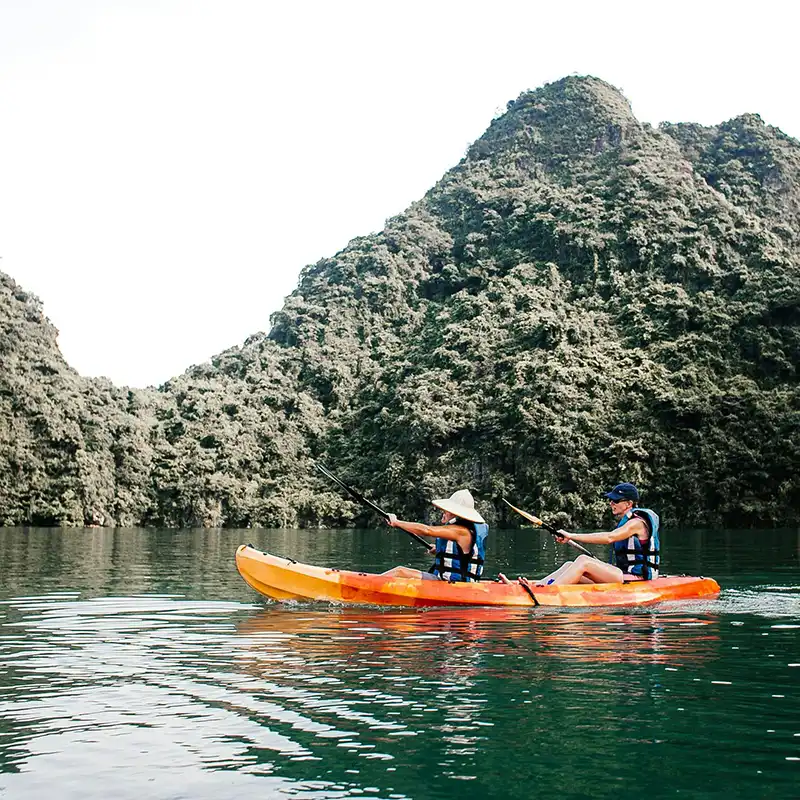
Difficulty depends almost entirely on wind and tide. On a calm morning, beginners manage easily. In the afternoon, a breeze can make the paddle back hard work. Double kayaks are forgiving, but if you have never paddled before, sit in the back with a stronger partner in front, or ask the crew for a quick technique tip. Life jackets should always be provided; wear them even if you swim well.
Some lagoons are only accessible at certain tides because you pass through a low cave or arch. Your boat crew will time this, which is one reason the order of stops on a bay trip can change on the day. We have a separate article on paddling safely, so here the key point is simple: treat kayaking as a moderate activity on windy days, and keep the session short if anyone in your group is nervous.
Cycling to Viet Hai Village
Viet Hai is a small village tucked into a valley on the eastern side of the island, surrounded by limestone hills. Most people reach it by boat to a small landing point and then cycle or walk the last few kilometres along a quiet paved lane between fields and forest. The ride is mostly flat with a few gentle rises, so it suits families and casual riders. Bicycles are usually rented near the landing, and some bay tours include this ride as part of the day.

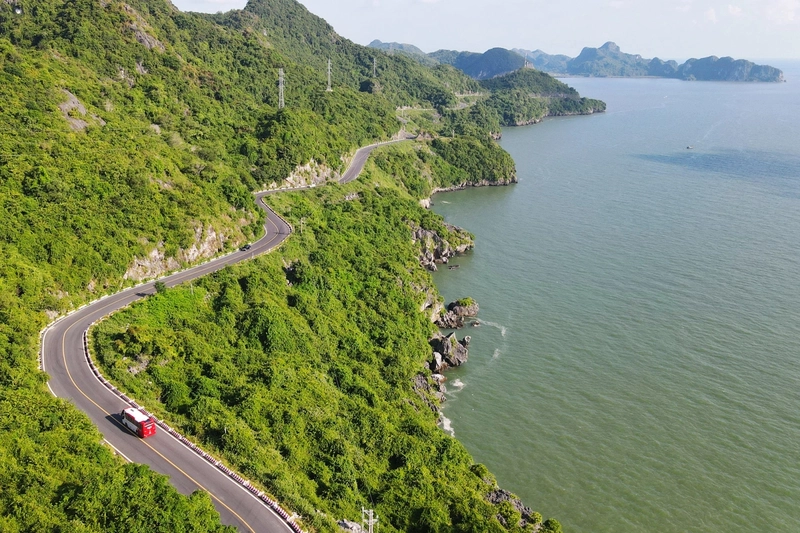
For stronger riders, cycling sections of the main island road is another option. The road between Cat Ba town and the national park has real climbs, and the coastal stretches can be busy with buses and trucks heading to and from the ferry. We only recommend it to confident cyclists with a well-maintained bike, and ideally outside the midday heat.
Cycling tips
- Test the brakes and gears before you leave the rental spot.
- Carry water; there are only a few small shops along the Viet Hai lane.
- Ride on the right, keep to the edge and expect scooters to overtake closely.
Rock Climbing Basics on Cat Ba Island
Cat Ba has some of the best limestone climbing in Vietnam, with bolted routes on inland crags and sea cliffs in the bay. You do not need experience to try it: half-day and full-day introductory sessions are offered with instructors who supply harness, shoes, helmet and ropes. For beginners, a first session usually covers knots, belaying and a few easier routes on solid rock.
Experienced climbers come for deep water soloing, climbing sea cliffs without ropes and dropping into the water below. This is an advanced activity that depends on tide, sea conditions and local knowledge of water depth. Never attempt it without a qualified local operator.
What to check before you climb
- Ask whether the instructor holds a recognised climbing certification and how long they have guided on Cat Ba.
- Look at the condition of ropes and harnesses. Faded or frayed gear is a reason to walk away.
- Climbing on wet rock is dangerous; sessions are often moved or cancelled after rain.
- Spring and autumn give the best conditions. Summer heat makes sea-cliff climbing very tiring.
Sample Three-Day Active Cat Ba Tour
This is the kind of plan we often suggest to guests who want to stay active without burning out. Adjust it to the weather on the day; on Cat Ba, flexibility is the most useful thing you can pack.
Day 1: Arrive and warm up
Arrive on the island around midday, check in and have a light lunch. In the afternoon, swim at the Cat Co beaches and walk the cliffside path between them. Finish with the hike to Cannon Fort for sunset, then seafood in town.
Day 2: Trek and caves
Start early at Cat Ba National Park and climb to Ngu Lam peak while the air is still cool. Strong hikers can take the long trek toward Viet Hai instead and finish by boat. On the way back, stop at Hospital Cave. Keep the evening easy; your legs will thank you.
Day 3: Bay, kayak and bike
Take a full-day boat trip into Lan Ha Bay with a kayak session in a sheltered lagoon and a swim stop. If your trip includes Viet Hai, cycle the valley lane to the village and back. Climbers can swap this day for an introductory climbing session.
If you are starting from Haiphong city, it is worth adding a day there before or after the island. Our guide to a weekend getaway itinerary in Haiphong shows how to fill it, and our haiphong tours are a relaxed way to see the city before the active part of your trip.

Gear and Safety Checklist for Each Activity
Use this quick list when you pack the night before each activity:

- Trekking: grippy shoes, 2 litres of water, snacks, repellent, a light rain jacket, charged phone.
- Hiking to viewpoints: comfortable shoes, water, hat, a small torch if you stay after sunset.
- Swimming: water shoes, towel, reef-safe sunscreen, a dry bag on boats.
- Kayaking: life jacket (provided), hat with a strap, sunglasses on a cord, sandals.
- Cycling: helmet if available, water, sunscreen, a quick brake check.
- Climbing: instructor-supplied gear, chalk if you have it, plenty of water, a rest day afterward if you are new.
Two general rules apply to everything. First, tell someone where you are going and when you expect to be back. Second, if the weather turns, change the plan rather than pushing through. Storms come in quickly over the bay, and boat crews will return early for good reason.
If you plan to ride a scooter around the island between activities, read our motorbike safety tips first. The island roads are quieter than the city, but steep bends and gravel catch out inexperienced riders every season.
FAQ About Activities on a Cat Ba Tour
Do I need to be very fit for a Cat Ba tour?
No. Swimming, gentle kayaking, the Viet Hai bike ride and short viewpoint hikes are fine for most healthy adults and older children. The long park trek and full-day climbing are the only activities that really need good fitness.
How long is the hike to Ngu Lam peak?
Most people take around one to two hours for the return trip, including a rest at the top. It is short but steep, with rocky steps and some metal sections, so proper shoes matter more than distance.
When is the water warm enough for swimming?
Generally from around May to October. Summer is warmest, but also the busiest and the most likely to have storm-related boat cancellations. In winter most people find the water too cold.
Can beginners go kayaking in Lan Ha Bay?
Yes. Most bay trips use stable double kayaks in sheltered lagoons, and crews give a short briefing. On windy afternoons it is harder work, so stay close to the group and keep sessions short if you are unsure.
Is rock climbing on Cat Ba safe for first-timers?
With a qualified instructor and good equipment, introductory climbing is a well-managed activity. Check the instructor’s experience and gear before you start, and never try deep water soloing without a specialist operator.
Can I do several activities in one day?
Yes, two is a sensible maximum: for example, a morning trek and an afternoon swim, or a bay trip with kayaking and the Viet Hai bike ride. Three or more in one day tends to be rushed, especially in summer heat.
Plan Your Active Cat Ba Tour With Our Local Team
Every guest has a different idea of an active holiday. Some want a hard trek and a quiet evening, others want an easy paddle and a long swim. Tell us your fitness level, the dates you have in mind and what you would most like to try, and we will help you shape a realistic plan, including the city day in Haiphong if you want one. You can also browse our Cat Ba tour options page and message us for current availability, since trips on the island are arranged to suit each group and season.
We also offer self-drive motorbike rental for confident riders who want to explore at their own pace. Just message us with your dates.
WhatsApp, Viber, WeChat: +84(0)934.555.001
KakaoTalk, Line ID: haiphongadventure