Cultural Value Of Hang Kenh Communal House Site
Hang Kenh Communal House is one of the most valuable heritage sites in Haiphong, and its importance goes far beyond its age. Built in the early eighteenth century in the old village of Hang Kenh, now part of Le Chan District, it is celebrated for some of the finest traditional wood carving in northern Vietnam, for its role as the spiritual heart of a village community and for its link to Ngo Quyen, the hero of the first great Bach Dang River victory. For travellers, it offers a quiet, authentic window into village life, faith and craftsmanship inside a busy modern city.
In this guide, the Haiphong Adventure team explains why Hang Kenh Communal House matters: what a communal house is, the stories behind it, the meaning of its carvings, its role in festivals and community life and how to visit respectfully. Some historical details vary between sources, and opening times can change, so treat practical information as a reference (updated October 2026).
What Is A Vietnamese Communal House
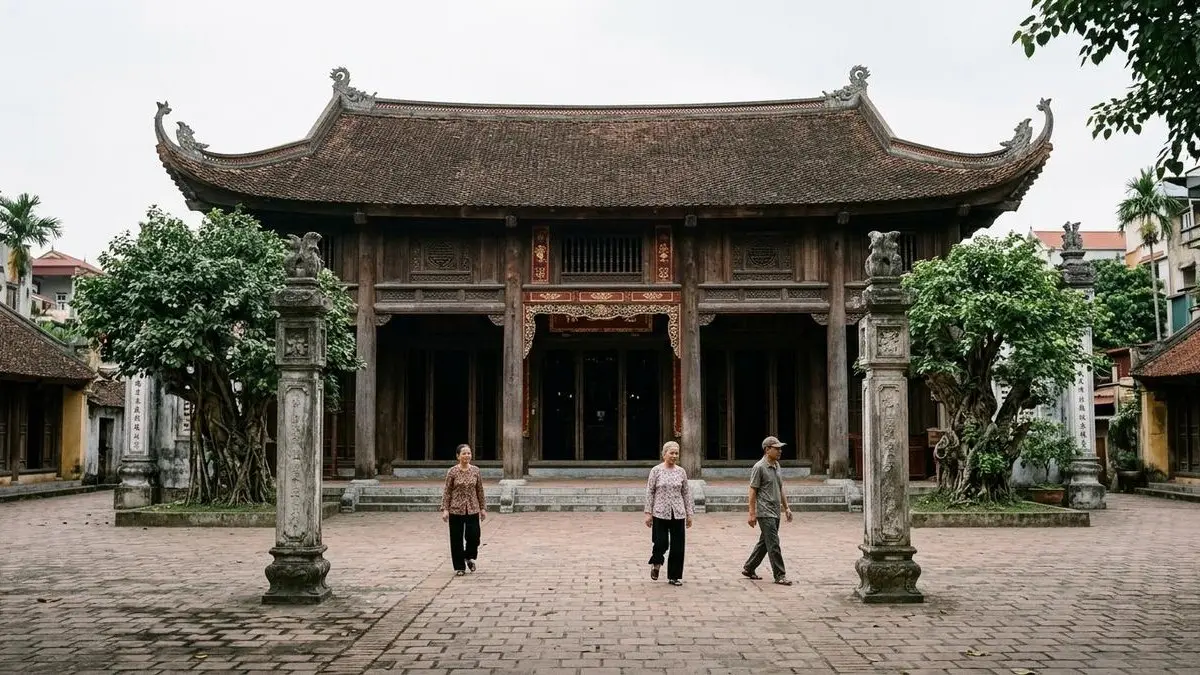
To understand the value of Hang Kenh, it helps to know what a communal house, or dinh, actually is. In traditional northern Vietnam, every village had one. It was not a Buddhist pagoda or a family temple, but a shared building that served the whole community.
- A place of worship. The dinh honours the village’s guardian spirit, often a historical hero, legendary figure or local founder.
- A village hall. Elders met here to discuss village affairs, settle disputes and organise work.
- A festival ground. Seasonal festivals, processions and performances took place in and around it.
- A symbol of identity. A beautiful dinh showed the pride and prosperity of the village.
Many communal houses were lost to time, war or urban growth. That is why surviving examples like Hang Kenh, with their original structure and carvings, are so precious.
History Of Hang Kenh Communal House
Hang Kenh was once a separate village on the edge of old Haiphong. Local histories date the communal house to the early eighteenth century, during the later Le period. Over the following centuries it was repaired and maintained by villagers, but its main wooden framework and many carvings have survived.
As Haiphong grew, the village was absorbed into the city. Today the communal house stands among modern streets, yet its courtyard and halls still feel like part of a rural village. It has long been recognised by Vietnamese authorities as an important historical and cultural relic, which helps protect it for future generations.
The village and its crafts
Hang Kenh village was traditionally known for handicrafts, including hand-woven carpets. This craft heritage fits well with the extraordinary skill seen in the communal house’s carvings, a reminder that the village was home to talented artisans.
For more context on the city’s past, our Haiphong city tour with cultural insights explains how old villages and colonial districts came together to form the modern city.
Ngo Quyen And The Spiritual Heart Of The Site
Hang Kenh Communal House is widely associated with the worship of Ngo Quyen, the general who defeated the Southern Han fleet on the Bach Dang River in 938. That victory is remembered as a turning point that led to Vietnamese independence after a long period of northern rule.
Honouring Ngo Quyen as a guardian spirit gives the communal house a meaning that reaches beyond one village. It connects local people with one of the most important moments in national history, and with the rivers and sea that shaped Haiphong.
- Local pride. Villagers see their guardian as a protector of the community.
- National memory. The link to Bach Dang makes the site part of Vietnam’s wider story.
- Living tradition. Offerings and ceremonies continue to honour him today.
>>> The Ultimate Haiphong Tour: Top 10 Must-Visit Spots in 2025
The Famous Wood Carvings
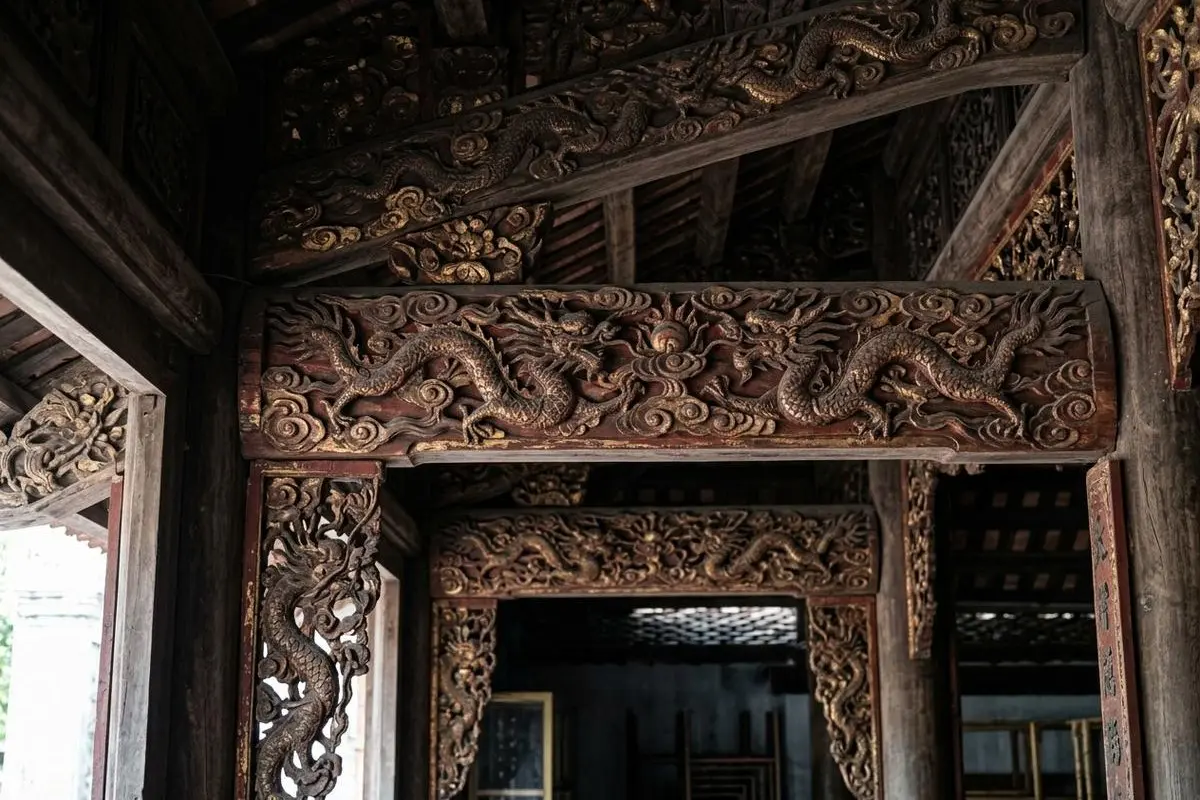
The greatest artistic treasure of Hang Kenh Communal House is its wood carving. The beams, rafters, brackets and panels inside are covered with detailed reliefs carved from dark, durable timber. Local accounts often mention more than 300 dragons hidden among the carvings, along with many other figures.
Common motifs and their meaning
| Motif | Traditional meaning |
|---|---|
| Dragon | Power, protection and good fortune |
| Phoenix | Grace, peace and harmony |
| Clouds and water | Rain, fertility and abundant harvests |
| Flowers and leaves | Prosperity and the beauty of nature |
| Scenes of daily life | Village activities and community values |
What makes the carvings special is their energy. Dragons twist through clouds, mythical creatures peek from corners and plant motifs flow along the beams. Spend a few minutes looking closely and you will notice small surprises carved by artisans centuries ago.
Why the carvings matter
- Artistic value. They are among the best surviving examples of village wood carving in the region.
- Historical record. Styles and motifs reveal the tastes and beliefs of the period.
- Craft heritage. They show the skill of local artisans and inspire today’s craftspeople.
Recommended tour
The Haiphong Street Food and City Tour
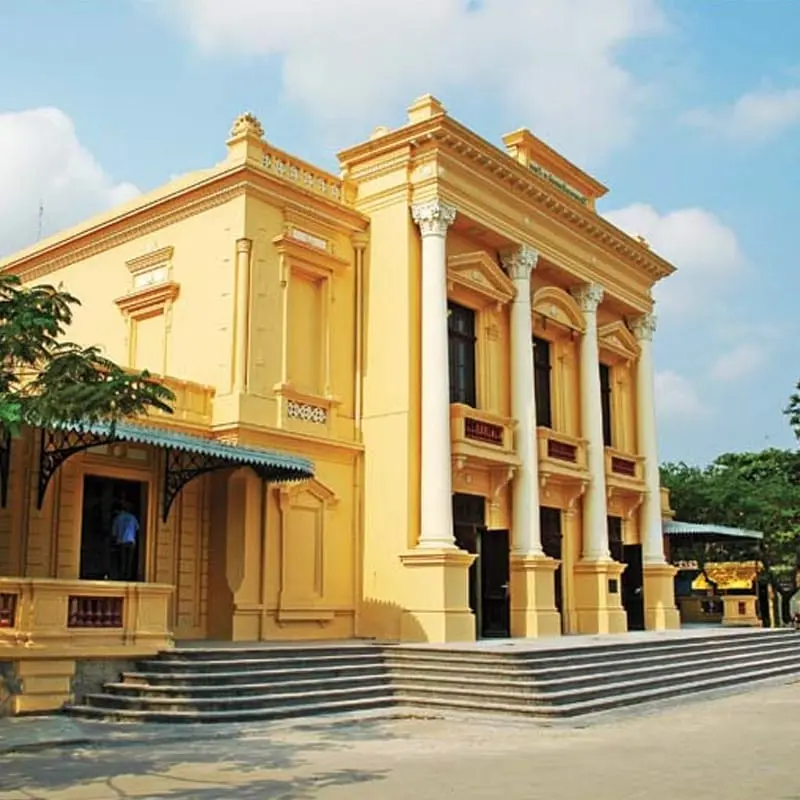
Combine heritage sites, colonial streets and local food with a guide who explains the stories behind Haiphong’s temples and communal houses.
From $85 per person
Architecture Of A Northern Village Dinh
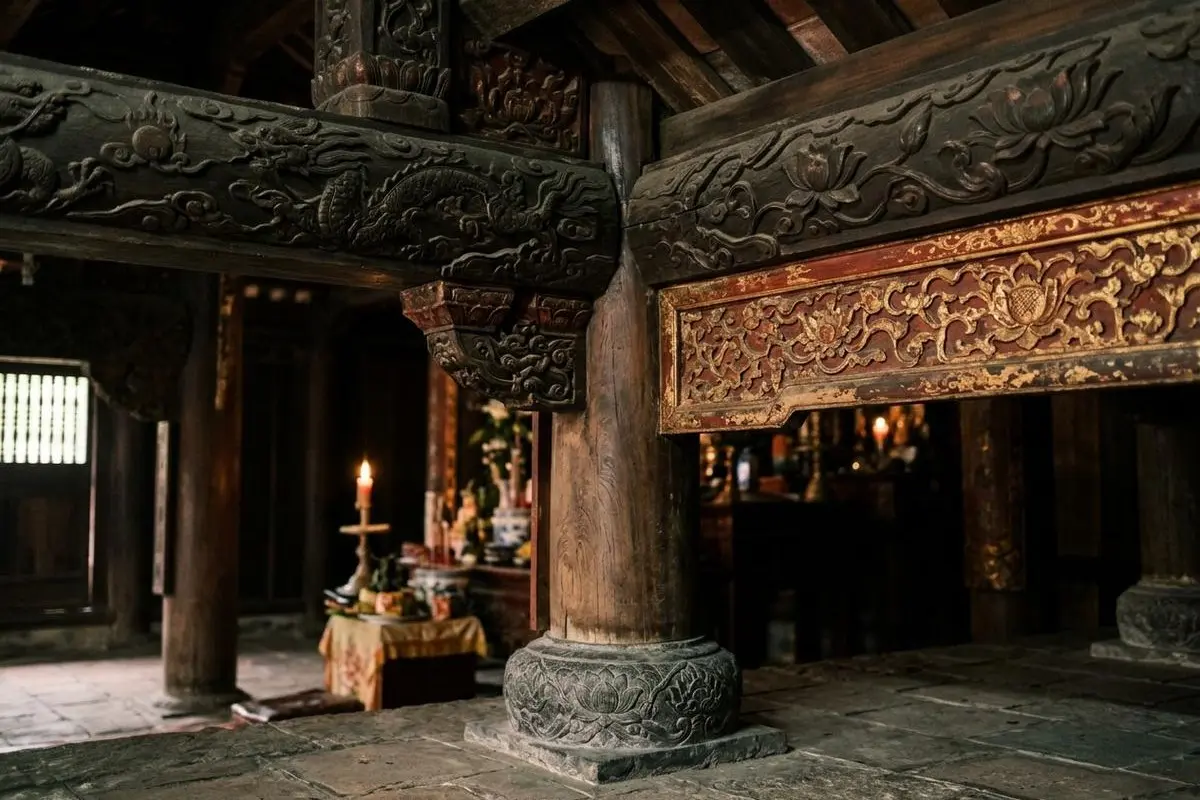
Beyond the carvings, the building itself is a fine example of traditional northern Vietnamese architecture. Its design reflects both practical needs and spiritual beliefs.
- Low, sweeping roof. Heavy clay tiles and wide eaves protect the wooden frame from sun and rain, while upturned corners give a sense of lightness.
- Wooden frame. Thick columns and interlocking beams hold the structure together, traditionally without metal nails.
- Raised floor and open halls. These create cool, airy spaces for gatherings.
- Courtyard and gate. The open yard in front hosts festivals and ceremonies, framing the building as you approach.
Compare it with a Buddhist pagoda and you will notice differences. Pagodas focus on Buddha statues and monastic life, while communal houses centre on the guardian spirit and community events.
If you enjoy traditional architecture, our guide to cultural things to do in Haiphong suggests other temples and heritage buildings to add to your route.
Festivals And Community Life
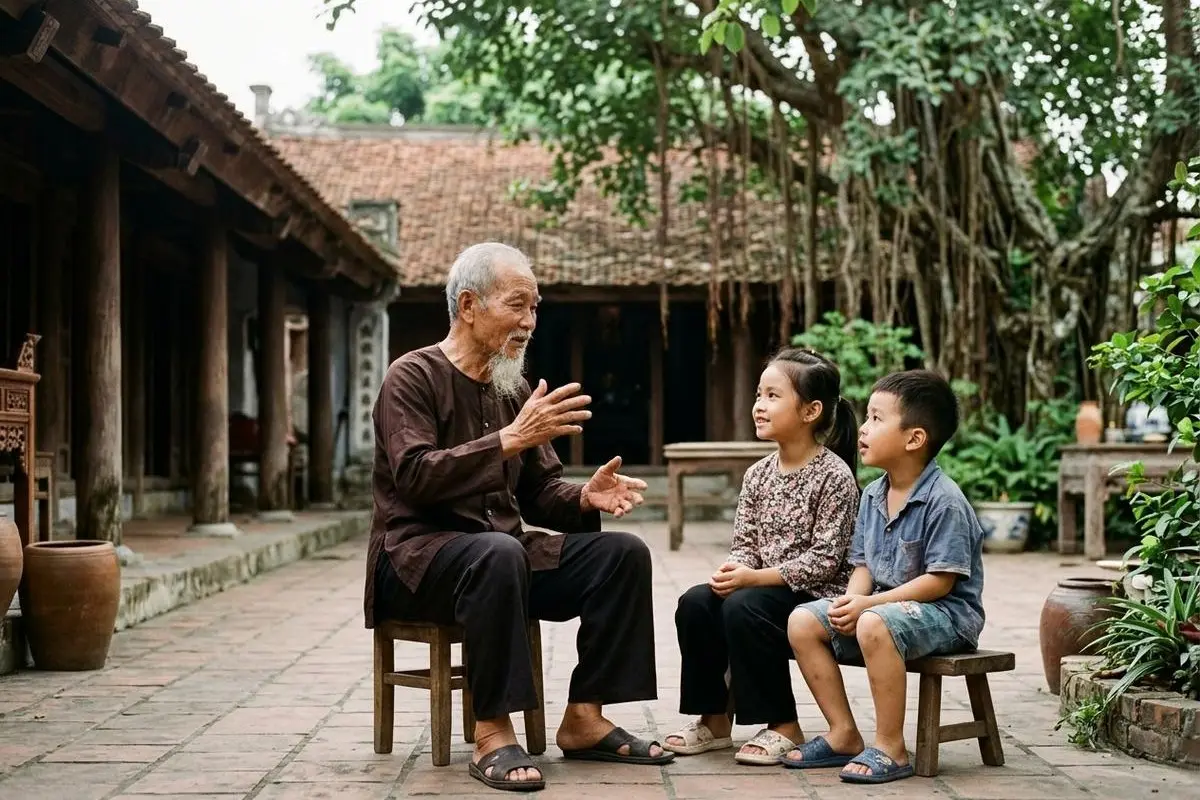
A communal house is not a museum. Its cultural value lives on through the people who use it. Hang Kenh hosts a traditional village festival, held according to the lunar calendar, usually in spring.
What happens during festival days
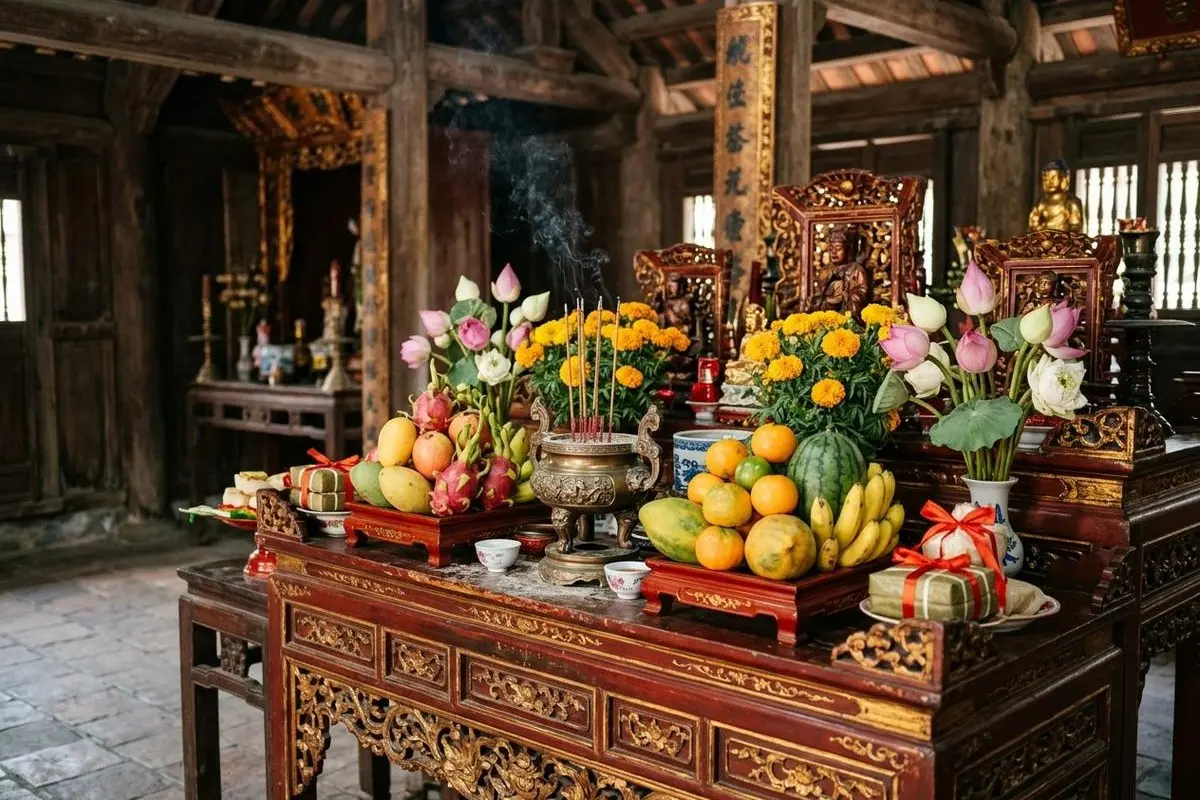
- Ceremonies and offerings to honour the guardian spirit.
- Processions with flags, palanquins and traditional costumes.
- Folk games and performances that bring the community together.
- Family gatherings, as people return to their home neighbourhood.
Exact dates change each year with the lunar calendar. If you hope to see a festival, ask a local guide or your hotel to check the schedule before your trip.
>>> Free Things To Do In Haiphong For Budget Travel
Why The Site Matters Today
In a fast-growing port city, Hang Kenh Communal House plays several important roles at once.
- Preserving heritage. It protects original carvings and architecture that would otherwise be lost.
- Keeping memory alive. It links residents to their village roots and national history.
- Education. Students and visitors learn about traditional beliefs, crafts and community life.
- Tourism. It offers travellers an authentic cultural experience beyond the city’s colonial landmarks.
- Community space. It remains a place where neighbours gather, worship and celebrate.
For travellers, visiting Hang Kenh is a chance to see a living tradition rather than a recreated attraction. That authenticity is a big part of its value.
How To Visit Respectfully
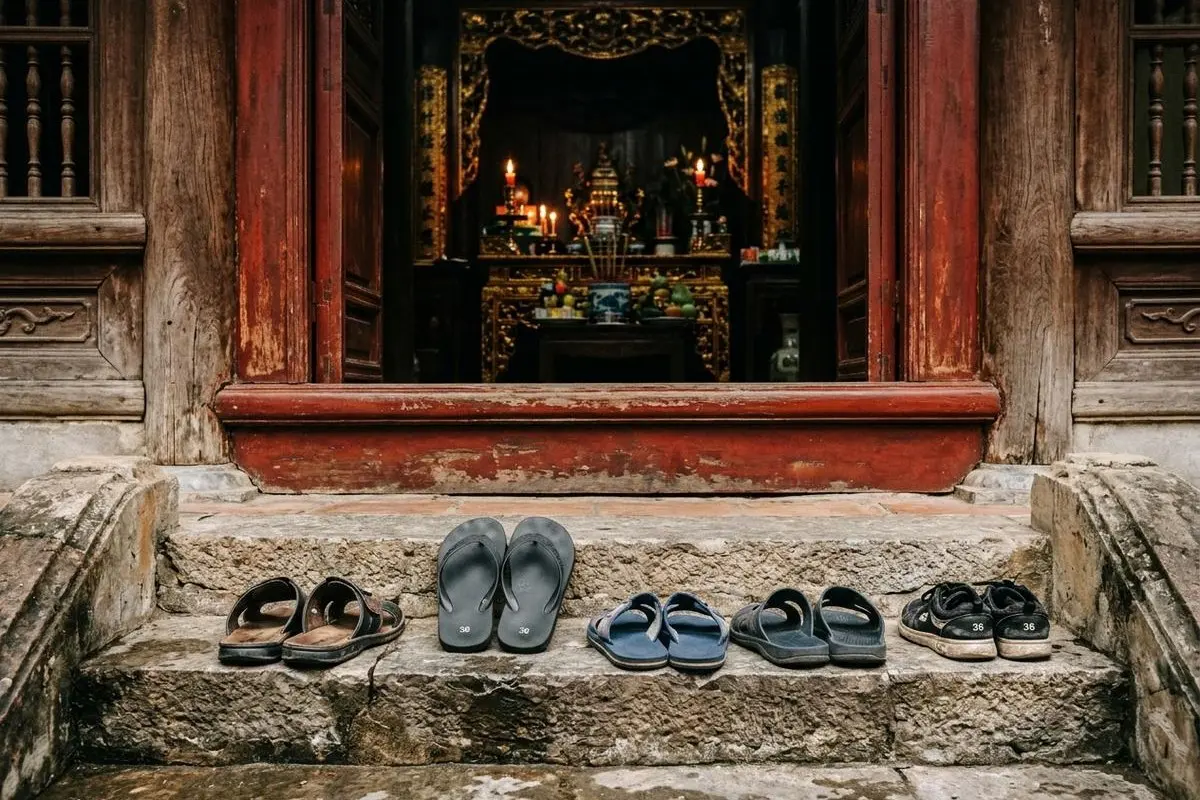
Hang Kenh Communal House is an active place of worship. A few simple habits help you enjoy the visit while respecting local customs.
- Dress modestly. Cover shoulders and knees if possible.
- Speak softly and move calmly, especially near altars.
- Remove shoes if you see others doing so before entering certain areas.
- Ask before photographing people or ceremonies. Avoid flash near altars.
- Do not touch carvings or lean on old wooden columns.
- Leave a small donation if you wish, as a sign of respect.
Practical tips
- Location. The site is in Le Chan District, a short ride from the old centre.
- Opening times. Hours can vary and the site may close at midday. Morning visits are usually best.
- Time needed. Plan 30 to 60 minutes to look at the carvings properly.
- Combine it. Pair the visit with other cultural sites, a local market or a coffee stop.
Adding Hang Kenh To Your Haiphong Itinerary
Hang Kenh Communal House fits well into a cultural half day in Haiphong. Here is one simple plan:
- 8:00. Breakfast of banh da cua in the old centre.
- 9:00. Visit Hang Kenh Communal House and study the wood carvings.
- 10:00. Continue to Du Hang Pagoda, another historic religious site in the same part of the city.
- 11:00. Coffee break, then a walk through a local market.
- 12:00. Lunch with Haiphong specialities.
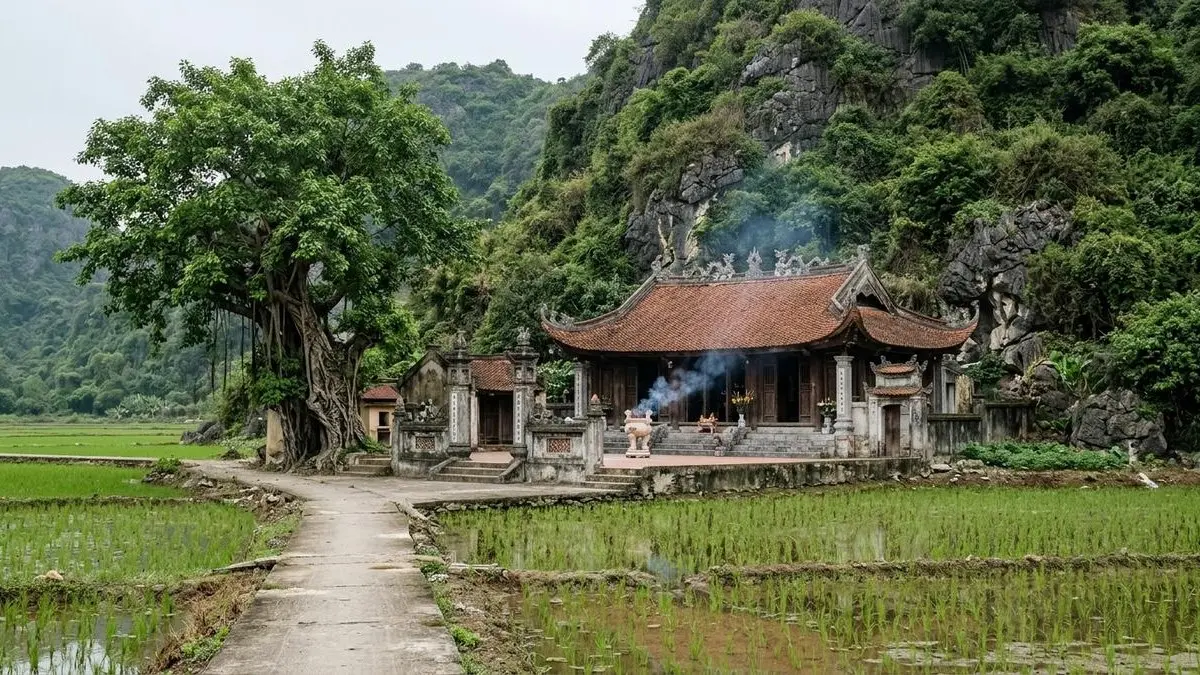
Many travellers explore these sites on one of our haiphong tours, where a local guide explains the symbols in the carvings, translates inscriptions and tells the legends behind them. It is an easy way to turn a quiet temple visit into a meaningful haiphong adventure. For more unusual ideas, see our list of unusual things to do in Haiphong.
Frequently Asked Questions About Hang Kenh Communal House
Where is Hang Kenh Communal House?
It is in Le Chan District, Haiphong, in the area of the former Hang Kenh village, a short ride from the city centre.
Why is Hang Kenh Communal House famous?
It is known for its outstanding traditional wood carvings, including many dragons, and as one of the best-preserved village communal houses in northern Vietnam.
Who is worshipped at Hang Kenh Communal House?
The communal house is widely associated with the worship of Ngo Quyen, the hero of the 938 Bach Dang River victory, as the village guardian spirit.
Is there an entrance fee?
Visiting is generally inexpensive or free, but a small donation is appreciated. Check locally, as arrangements can change.
What should I wear when visiting?
Modest clothing that covers shoulders and knees is respectful, especially if ceremonies are taking place.
Experience Haiphong’s Living Heritage
Hang Kenh Communal House is much more than an old building. Its carvings preserve centuries of craftsmanship, its altars keep alive the memory of a national hero and its courtyard still gathers a community for worship and celebration. A short visit reveals a side of Haiphong that many travellers miss.
If you would like a local guide to show you Hang Kenh Communal House and other heritage sites, send the Haiphong Adventure team a message. We will help you plan a cultural day that suits your interests.
WhatsApp, Viber, WeChat: +84(0)934.555.001
KakaoTalk, Line ID: haiphongadventure