Understanding Haiphong Map Traffic Patterns
Reading a Haiphong map is easy. Reading Haiphong traffic is a different skill, and it is the one that decides whether your day feels relaxed or stressful. The city is laid out around a few big arteries, two rivers and a busy port, and the flow of motorbikes, trucks and buses changes with the hour, the weather and even the day of the week. This guide explains how the city fits together on paper, how traffic actually behaves on the street, and how to plan your movements so you spend your time sightseeing instead of waiting at crossroads. At Haiphong Adventure we ride these streets every day with visitors, so the advice below comes from real experience rather than a mapping app alone.
How the city is laid out on a Haiphong map
Open any Haiphong map and you will notice that the city is not a tidy grid. It stretches along the Cam River and its branches, with the old center on the southern bank of the main channel and newer districts spreading outward toward the airport, the industrial zones and the coast. Think of the center as a compact heart with long roads running out like spokes.
The old center and the French quarter
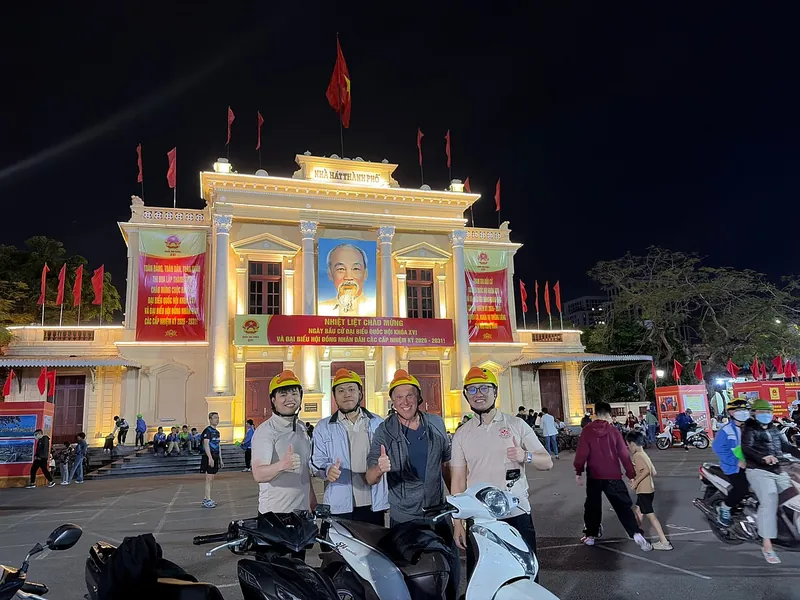
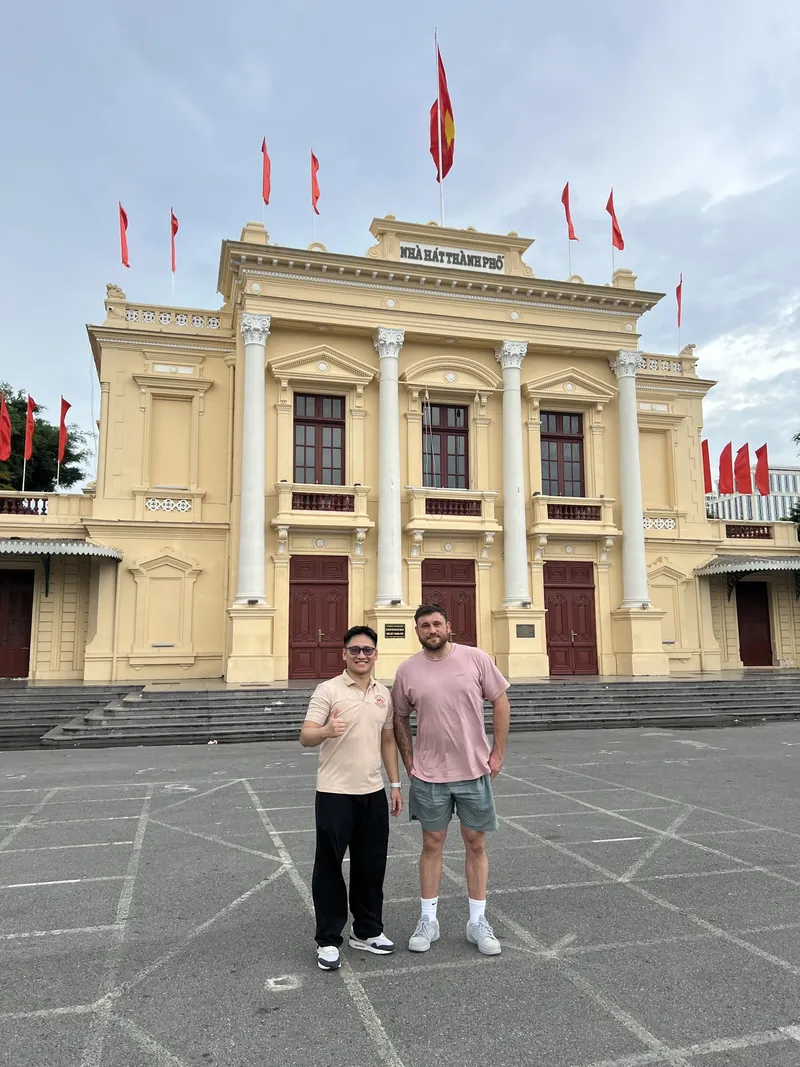
The historic core is small enough to cross on foot. It holds the Municipal Theatre, wide boulevards lined with old trees, colonial villas and a cluster of markets and cafes. Streets here are often one-way or narrow, and parking is limited, so this is the area where a local rider saves you the most time.
The riverside and the port
The waterfront is the working side of the city. Cargo cranes, ferry piers and fishing boats sit close to residential lanes. Roads near the port carry heavy trucks, especially on weekday mornings, and that has a direct effect on how you should plan your route.

The ring roads and the newer districts
Modern avenues loop around the center and link it to the highway toward Hanoi and to the roads heading to the islands. They are wider and faster, yet they also attract more freight. If your map shows a long straight road with few turns, expect speed, but also expect large vehicles.
>>> Travel From Hanoi To Haiphong Local Traffic Tips
The shape of a normal traffic day
Traffic in Haiphong follows a rhythm that most locals can feel without looking at a clock. Understanding that rhythm is the first step toward moving through the city smoothly.
Early morning, quiet and cool
Between about 5:30 and 7:00 a.m. the streets belong to street sweepers, market sellers and people exercising. Motorbikes are present, but speeds are gentle. This is the best window for photographs of the old center and for a first bowl of noodles before the day heats up.
The commuter peaks
The main rush usually builds from roughly 7:00 to 8:30 a.m. and again from late afternoon into early evening. School runs add to it. At these times, junctions near bridges, markets and big schools can fill with a dense river of bikes that moves slowly but steadily. Buses and trucks sit in the same stream, so lane discipline matters less than awareness.
Midday lull and afternoon
Many shops close for a break around noon, and the city slows. Heat tends to push visitors indoors, which makes this a good time for a long lunch, a museum visit or a coffee. After the early afternoon, activity picks up again as people finish work.
Evenings and weekends
Evenings bring families to parks, pavements and street food corners. On weekends, the pace is looser but lively, with traffic gathering around food streets, lakeside areas and shopping zones. These patterns are general observations, not fixed timetables, and they can change with events, holidays and weather.
What traffic feels like for a first-time visitor
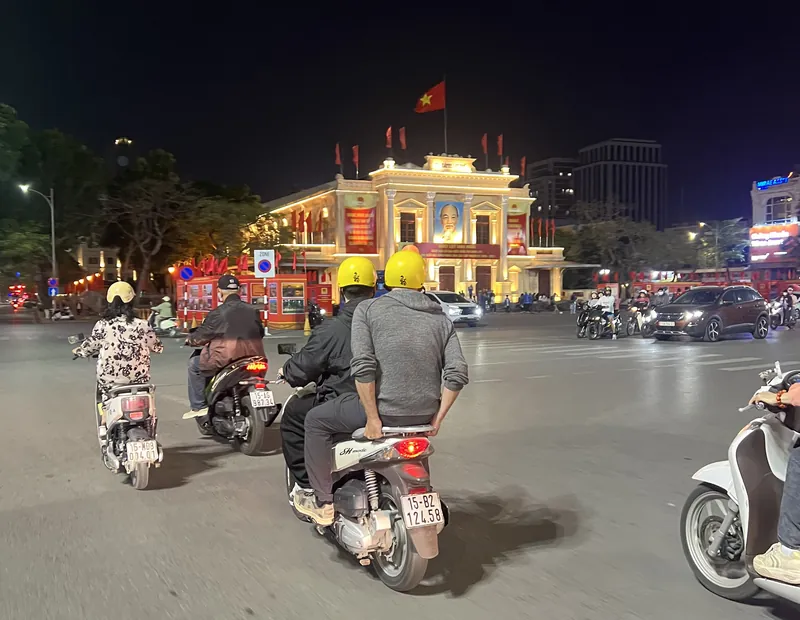
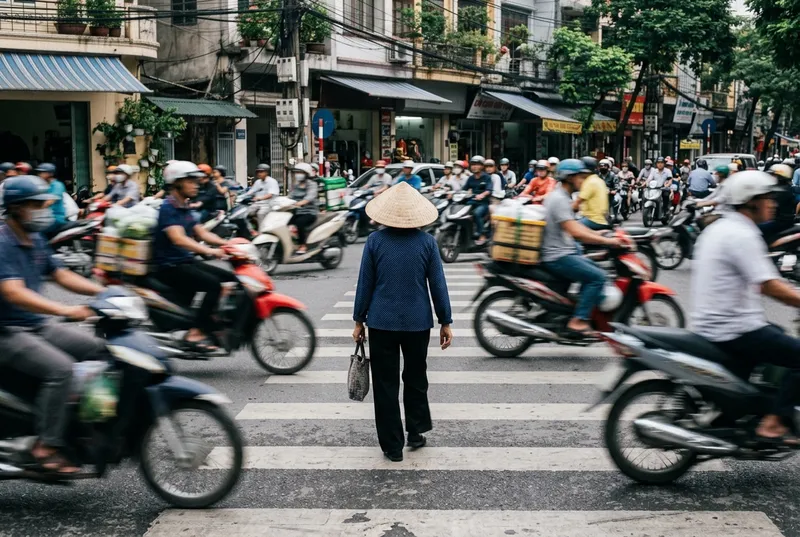
If you arrive from a country with strict lanes and signals, Vietnamese traffic can look like chaos. Spend ten minutes watching a busy junction and you will see that it follows its own logic. Riders move in flowing streams, adjust speed instead of braking hard, and communicate with small gestures and short horn taps. A horn here usually means “I am here,” not “get out of my way.”
Pedestrians are part of this flow. When you cross a busy road, do not run and do not stop in the middle. Walk at a steady pace, look ahead and let riders steer around you. They predict your path, and sudden changes confuse them. In Haiphong the volume is lower than in Hanoi, which many first-time visitors find reassuring.
Common patterns you will notice
- Motorbikes dominate. Cars, vans and trucks share the same lanes and often move at the same speed as bikes in the center.
- Riders turn across oncoming traffic in a slow, steady curve, and others adapt around them.
- Many people park on pavements, so walkers sometimes step onto the street. Stay alert near shops and cafes.
- Traffic lights are respected at large junctions, but small lanes work on mutual courtesy.
None of this is dangerous when you know it is coming. It becomes risky only when a visitor behaves unpredictably, which is why we recommend letting a trained local handle the riding.
Where traffic builds up and why
Every map has hot spots. In Haiphong they tend to appear in a handful of predictable places, and each has a simple explanation.
Bridges and river crossings
Because the city sits between waterways, the number of crossings is limited. When many vehicles funnel into one bridge, queues form. If your plan involves crossing a major bridge, try to do it outside the commuter peaks.
Markets and school gates
Local markets are busiest early in the morning and again in late afternoon. School gates create short but intense bursts at opening and closing time. Streets near these spots slow down, and cars may stop briefly with hazard lights on.
Industrial and port roads
Roads leading to terminals and factories carry heavy vehicles, particularly on weekdays. For a leisurely ride, choose parallel streets or travel on a weekend when freight volume is lower.
Roads toward the islands and the highway
Travelers heading to the ferries or toward Hanoi share the road with commercial traffic. On holiday weekends, volumes rise noticeably. Our guide to riding from Hanoi to Haiphong by motorbike explains what to expect on the main corridor.
Weather and seasons change the picture
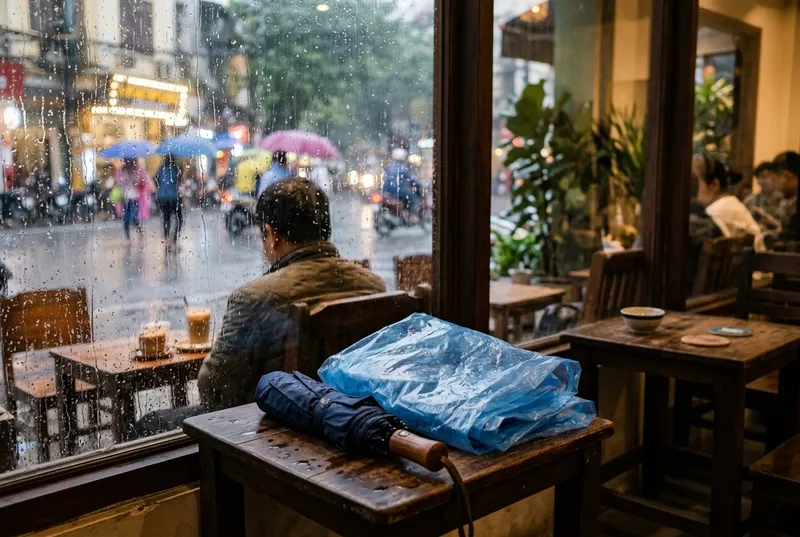
Northern Vietnam has distinct seasons, and each one shapes how traffic behaves. In hot months, people ride early and late to avoid the strongest sun. During the rainy season, sudden showers slow the streets, create puddles at low junctions and make surfaces slippery. In winter, cool drizzle and fog can reduce visibility, so riders slow down and keep a bigger gap.
Storm season can bring heavy rain and strong wind to the coast, and local authorities sometimes restrict movement when a typhoon approaches. Always check a trusted forecast, such as Vietnam’s national weather service, before you plan a long ride or a trip to the coast. Dates and conditions vary each year, so treat any seasonal pattern as a guide.
>>> Experience Taking Train From Hanoi To Haiphong
Choosing how to move around the city
A map shows distance, but it does not show effort, comfort or safety. Before you decide how to travel, compare the realistic options.
Walking
The old center is walkable, and a morning stroll gives you the best sense of its architecture. Pavements can be uneven or occupied, so bring comfortable shoes and keep an eye on the ground.
Taxis and ride-hailing
Car taxis and ride-hailing apps are widely used by visitors. They are comfortable in hot or rainy weather. Prices and availability change, so confirm the fare method before you start the trip. In peak hours, a short distance can take longer than expected.
Public buses
City buses connect many districts at low cost, but routes and timetables can be hard to read if you do not speak Vietnamese. They suit patient travelers with flexible plans.
Renting a motorbike
Renting gives freedom, yet it also puts you inside the traffic flow with unfamiliar rules. Visitors should hold the right license and insurance and understand local regulations before riding. Rules change, so check official sources and read our guide to avoiding scams with motorbike rental in Haiphong if you consider this option.
Riding with a local guide
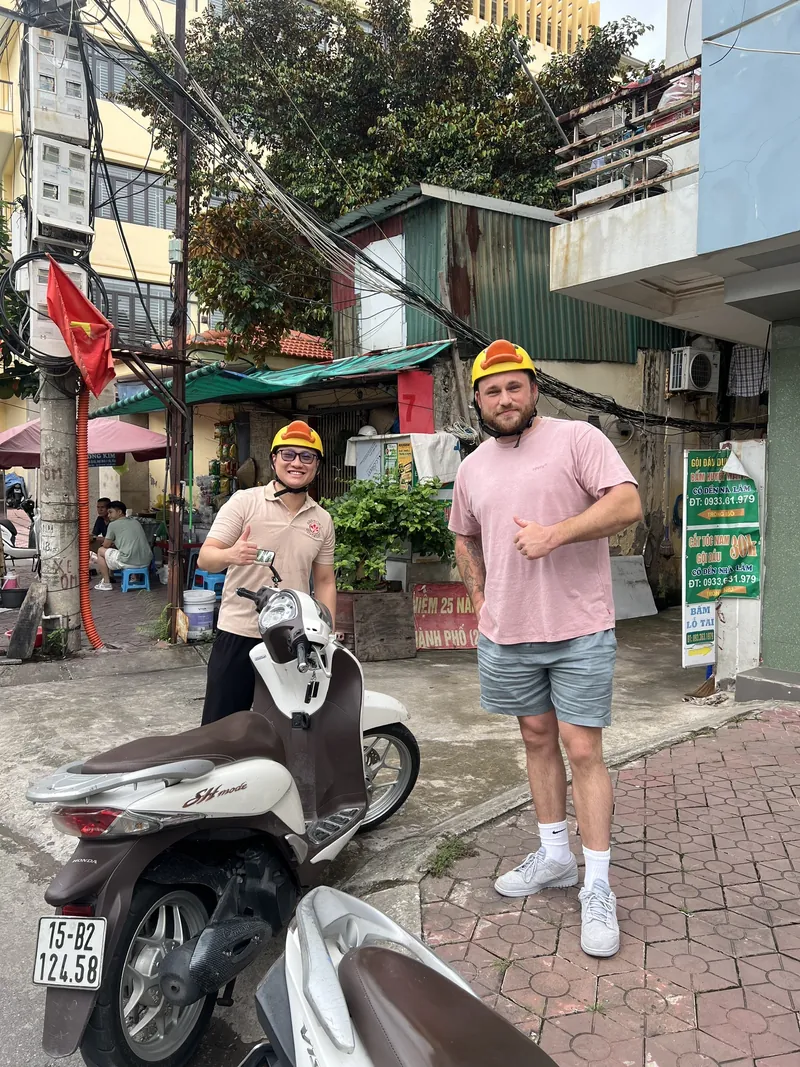
For most travelers, sitting behind an experienced rider is the calmest way to see the city. The rider reads the traffic, picks calm routes, avoids hot spots at the wrong hour and handles the navigation. You keep your hands free for photos and your attention on what you came to see.
Using digital maps wisely
Digital maps are useful, but they are not perfect in Vietnam. Apps can suggest narrow lanes that technically exist but are too small, too steep or too crowded for comfort. They may also underestimate how slow a short trip becomes in rush hour.
- Download an offline map of the city before you travel, so a weak signal will not leave you lost.
- Save your hotel address in Vietnamese as well as English. A driver or passer-by can read it quickly.
- Check the live traffic layer before you leave, but treat the estimate as a rough guide.
- Use more than one app if you can. Open-source maps such as OpenStreetMap sometimes show smaller footpaths that other apps miss.
- Do not stare at your phone while walking along a busy street. Stop at the side first.
Spelling can also confuse a search. Street names may appear with or without tone marks, and the same place can have an older and a newer name. If a search fails, try a nearby landmark instead.
Quick reference for timing your moves
If you remember only one thing from this guide, make it this. The same route can take very different amounts of time depending on when you leave. The table below sums up the patterns described above.
Treat it as a general guide from our daily rides, not an official timetable (reference, updated October 2026).
| Time of day | What the streets feel like | Good for |
|---|---|---|
| Early morning (about 5:30 to 7:00) | Quiet, cool, gentle speeds | Photos of the old center, breakfast, walking |
| Morning rush (about 7:00 to 8:30) | Dense but steady flow near bridges, schools and markets | Coffee nearby, short walks |
| Midday | Slower city, strong heat in summer | Long lunch, museums, a proper rest |
| Late afternoon to early evening | Second commuter peak and school runs | Short hops only, avoid bridges and port roads |
| Evening | Lively food streets, families out | Street food, night rides with a local |
| Weekends | Fewer trucks, busier leisure areas | Countryside rides and longer trips |
How to use this on the day
Plan the long or cross-river legs of your day for the quiet windows. Keep the busy hours for things you can do on foot or from a cafe chair.
If crossing a bridge at rush hour is unavoidable, add extra time and do not book anything tight at the other end. On public holidays and festival days the patterns shift, so ask your hotel or your guide the evening before.
Sample routes and timing ideas
These simple plans use the traffic rhythm to your advantage. They are examples, not fixed itineraries, so adapt them to your own pace.
A relaxed old-center morning
Start at sunrise near the theatre and the main boulevards, when the streets are almost empty. Have breakfast at a neighborhood stall, walk through a market while it is lively and finish before the midday heat arrives.
A food crawl in the evening
Wait until after the first commuter wave has passed, then move between food streets by motorbike or ride-hailing car. Short hops are easier than one long journey. Sidewalk stalls fill up after dark, so arrive a little early if you want a seat.

>>> My Haiphong Street Food Adventure Local Taste
A countryside escape
Leave the city before the morning rush and head into rural lanes where traffic thins quickly. Quiet roads, rice fields and small villages reward an early start. You can read more in exploring rural villages via a Haiphong motorbike tour.

Recommended tour
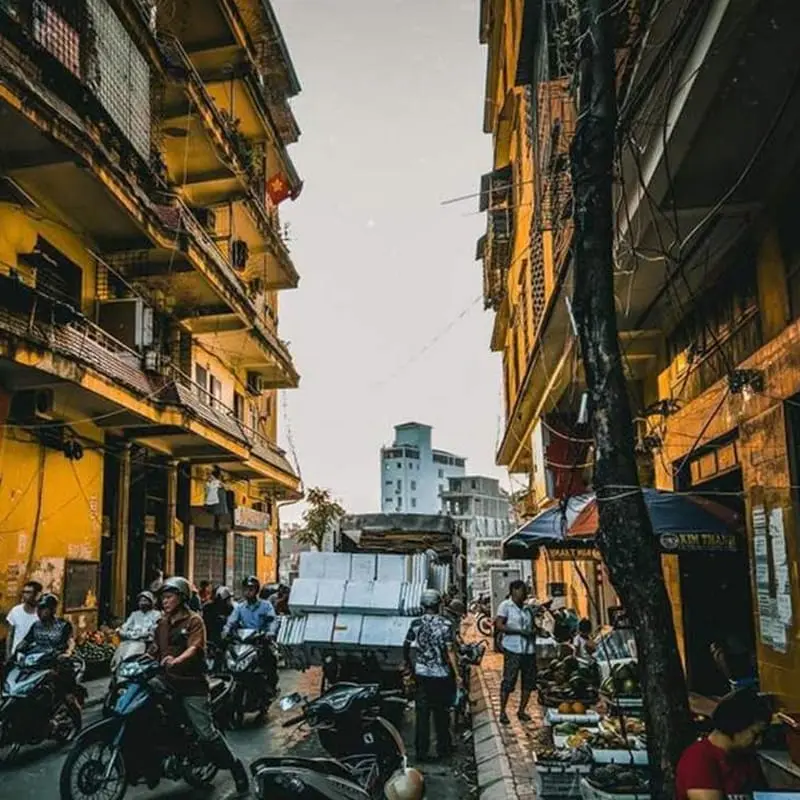
A guided motorbike journey through the old streets, architecture and markets, with local food stops along the way. You sit behind a local rider who already knows the quiet routes and the busy corners.
From $79 per person (reference price, updated October 2026, please confirm on the tour page)
Safety habits that work in any traffic
Whether you walk, ride or sit in a taxi, a few habits keep you comfortable in Haiphong traffic.
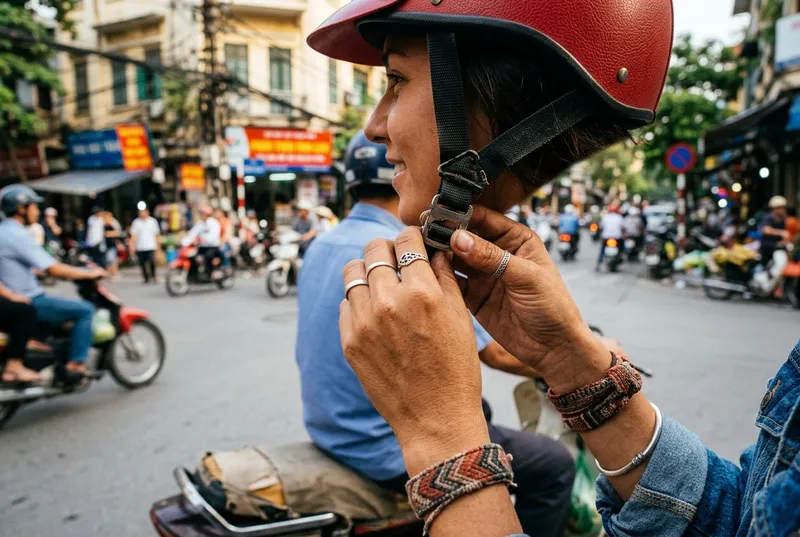
- Always wear a proper helmet on a motorbike. Insist on a well-fitting one with a working strap.
- Wear closed shoes, long trousers and a light jacket. Rain gear helps in wet months.
- Avoid riding or walking at dusk in poorly lit lanes if you can plan around it.
- When you cross a street, move at a steady pace and do not change direction suddenly.
- Keep your phone and wallet in a zipped pocket, particularly near markets and busy junctions.
- If you feel tired or the weather turns bad, change your plan. Nothing on a map is worth a rushed ride.
When to avoid certain areas
Skip the port roads at the start and end of the workday, avoid bridges at the peak of the commuter rush and stay away from festival streets when large crowds gather. A little flexibility saves a lot of time.
Why local knowledge beats any app
A map can tell you where a road is. A local can tell you that the road floods after a heavy shower, that a school empties onto it at 11:30, that the market spills across two lanes on certain mornings and that a tiny alley will save fifteen minutes. That layer of knowledge is what makes the difference between a tour that simply visits sights and one that flows.
It is also why guided rides are so popular in Haiphong. Our riders pick the route according to the hour, the weather and your interests, and they adjust on the go. If you want to see what is available, browse our selection of Haiphong tours and choose the style that suits you.
Frequently asked questions about the Haiphong map and traffic
Is Haiphong traffic as heavy as Hanoi?
Generally it is lighter and calmer, though it still has busy peaks in the morning and late afternoon. Conditions vary by district and day.
What is the best time of day to explore the city center?
Early morning is usually the most peaceful and the coolest. Late afternoon can also be pleasant, once the heat has eased and before the evening rush grows.
Can I rely on a phone map to get around?
It helps, but it is not always accurate for small lanes or for travel time in rush hour. Download an offline map and keep your hotel address handy.
Is it safe to cross the street as a pedestrian?
Yes, if you walk at a steady pace and look ahead. Do not stop or run, and let riders flow around you.
Should I rent a motorbike to explore?
Only if you are an experienced rider with the correct license and insurance. Many visitors prefer to ride as passengers with a local guide, which is calmer and keeps your hands free.
Plan a smoother trip with Haiphong Adventure
Understanding the Haiphong map is a great start, and understanding its traffic rhythm is even better. If you would rather let an experienced local handle the roads, message us and we will shape a route around your timing, your interests and the season. Tell us your dates and we will suggest the best hours to ride.
WhatsApp: +84(0)934.555.001
Viber and WeChat: +84(0)934.555.001
KakaoTalk and Line ID: haiphongadventure