
Travel From Hanoi To Haiphong Local Traffic Tips
The trip from Hanoi to Haiphong is short on the map, but the traffic along the way can shape your whole day. A smooth expressway run can turn into a slow crawl if you leave Hanoi at the wrong hour, and the first time you try to cross a busy street in Haiphong, a wall of motorbikes may make you freeze on the curb. None of this is dangerous once you understand how it works – it just follows rules that are not written in any guidebook.
Our guides ride these roads every day, and over the years we have helped hundreds of travelers adjust to Vietnamese traffic culture. This guide is not about choosing a bus or a train (we cover that in our guide to bus and train options from Hanoi to Haiphong). It is about the rhythm of the road itself: when to travel, how to read what drivers are doing, how to cross the street with confidence, and how to use ride-hailing apps and taxis without stress once you arrive. Think of it as the local knowledge we give our own friends before they visit.
Why Traffic Feels Different On The Hanoi To Haiphong Corridor
The corridor between the capital and the port city is one of the busiest in northern Vietnam. Haiphong is a major seaport, so alongside cars and coaches you share the road with container trucks heading to and from the docks. The Hanoi–Haiphong expressway, about 105 km long, carries most of the fast traffic, while National Highway 5 runs roughly parallel and serves towns, factories and local motorbike traffic.
On the expressway, traffic moves quickly and in a fairly orderly way. The challenges are mostly at the ends: the slow exit from Hanoi, the toll gates, and the approach into Haiphong where trucks peel off toward the port. Inside both cities, motorbikes dominate. They flow like water around obstacles, fill every gap, and expect others to move predictably. Once you accept that the system works by flow rather than by strict right-of-way, it starts to make sense.
Timing Your Trip: Rush Hours And Holidays
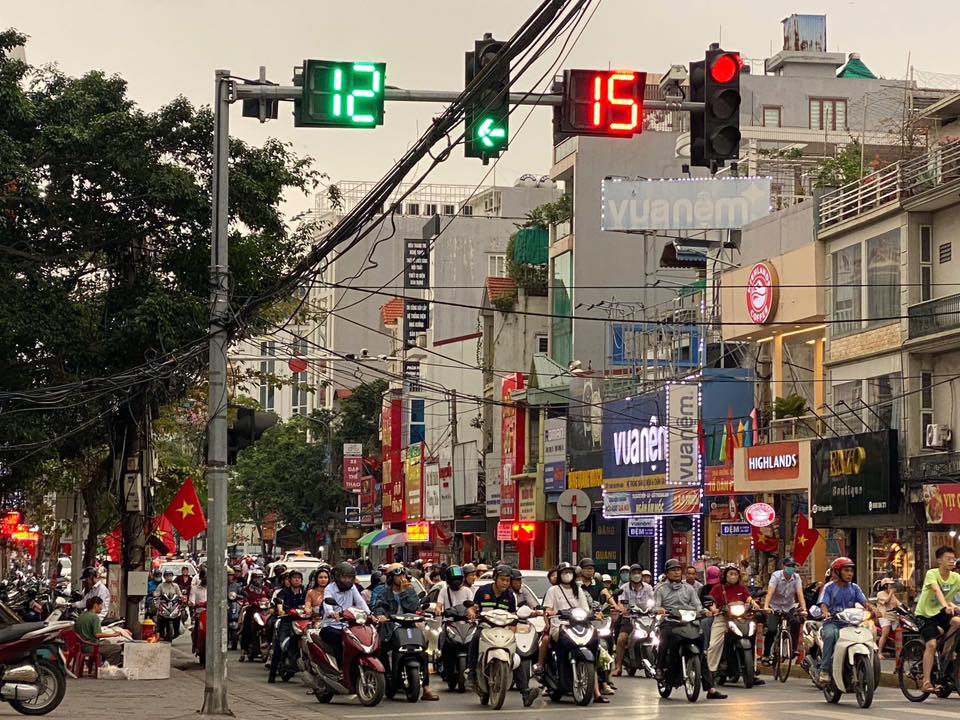
The single best thing you can do to make your day easier is to pick the right departure time. Both cities have clear rush hours:
- Morning: roughly 7:00–9:00, when commuters and school runs fill the roads.
- Late afternoon: roughly 16:30–19:00, usually the worst period, especially when leaving Hanoi.
- Friday evenings and Sunday afternoons: traffic between Hanoi and the coast picks up as people head out for the weekend and back again.
Public holidays are a different level. Around Tet (Lunar New Year), the 30 April and 1 May holidays, and National Day on 2 September, huge numbers of people travel home or to the beach at Do Son and Cat Ba. The first and last days of these breaks can add an hour or more to the journey, and buses and vans sell out. If you can, travel a day before or after the main rush. Late morning, roughly 9:30–11:30, or early afternoon on a normal weekday is usually the calmest window.
One more timing tip: when you plan the trip from Hanoi to Haiphong, think about what you want to do on arrival. Checking into a hotel in the early afternoon, then heading out in the late afternoon once the heat drops, fits the city’s rhythm perfectly. If you arrive during the evening rush instead, you will spend your first hour in Haiphong stuck at junctions rather than enjoying a bowl of crab noodle soup. Our guides also notice that weekday mornings in the rainy season can be slower than usual, because riders put on ponchos and drive carefully through puddles, so leave a small buffer on wet days.
Getting Out Of Hanoi Without Stress
Leaving Hanoi is often the slowest part of the whole journey. From the Old Quarter, a car has to cross the Red River and work its way to the expressway entrance, and at peak times that alone can take 30–60 minutes. If you are taking a bus from an outer station, allow extra time for the ride there.
A few habits help. Pack the night before so you are not rushing. If you are using a limousine van with hotel pickup, be ready in the lobby early, because drivers collect several passengers on narrow streets and cannot wait long. If you are booking a Grab to a station for your Hanoi to Haiphong bus, request it a little earlier than the app suggests, because estimated times in the Old Quarter are often optimistic. And always keep a bottle of water and a snack – a delay feels much shorter when you are not hungry.
Recommended tour
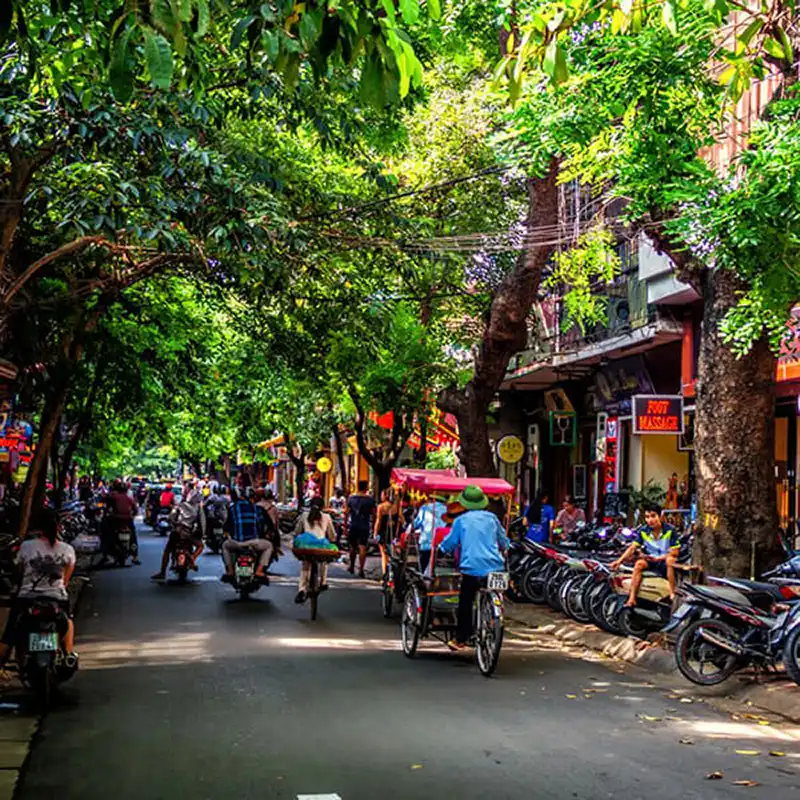
The Insider’s Haiphong

Ride pillion with a friendly local guide through French colonial streets, hidden alleys, markets and sidewalk cafes, and see the side of Haiphong most visitors miss.
From $79 per person
Read The Horn As Information, Not Anger
The first thing most visitors notice is the noise. Horns sound constantly, and it is easy to assume drivers are irritated. In fact, in Vietnam a short beep usually just means “I am here” or “I am about to pass you”. A truck sounding its horn on the highway is announcing itself, not shouting at you. Taxi and bus drivers use the horn the same way.
A long, repeated blast is different – it means someone wants you to move or has seen a real risk. As a pedestrian or passenger, you do not need to react to every beep. Just pay attention when a horn is loud and close, and look in that direction. Our guides joke that the horn is the most important safety device on a Vietnamese motorbike, and they are only half kidding.
Cross Streets In Haiphong The Local Way
Haiphong’s traffic is calmer than Hanoi’s, but crossing a wide road like Dien Bien Phu or Lach Tray at peak time still takes some nerve. The local technique is simple once you trust it:
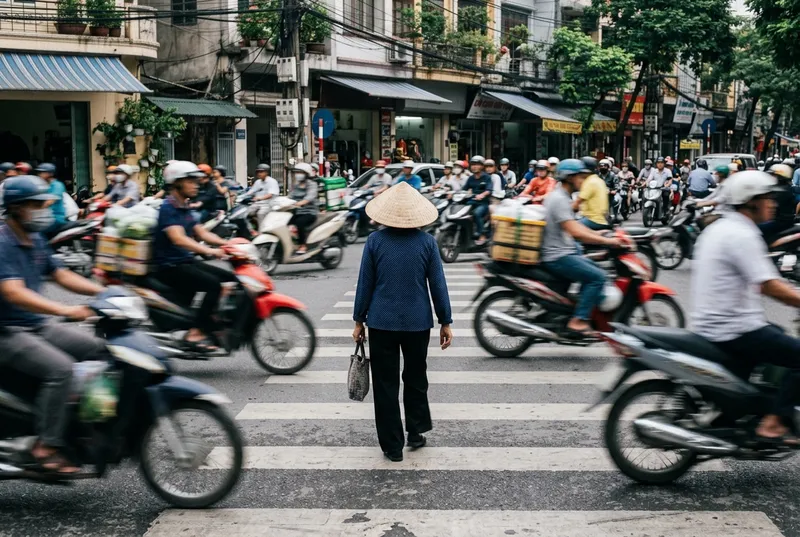
- Wait for a small gap in the flow rather than a complete stop – it may never come.
- Make eye contact with oncoming riders if you can, then step out.
- Walk at a slow, steady pace. Do not run, and above all do not stop suddenly or step backward.
- Motorbikes will steer around you because they can predict where you will be. Cars and buses will not swerve as easily, so let them pass first.
- Use pedestrian crossings and traffic lights where they exist, but still look both ways – some riders turn right on red.
If you are nervous, cross next to a local person and match their pace. Pavements in Haiphong are often used for parking motorbikes and for sidewalk cafes, so you may need to walk on the edge of the road at times. Stay close to the parked bikes and keep an eye on traffic coming from behind.
Use Ride-Hailing Apps Wisely
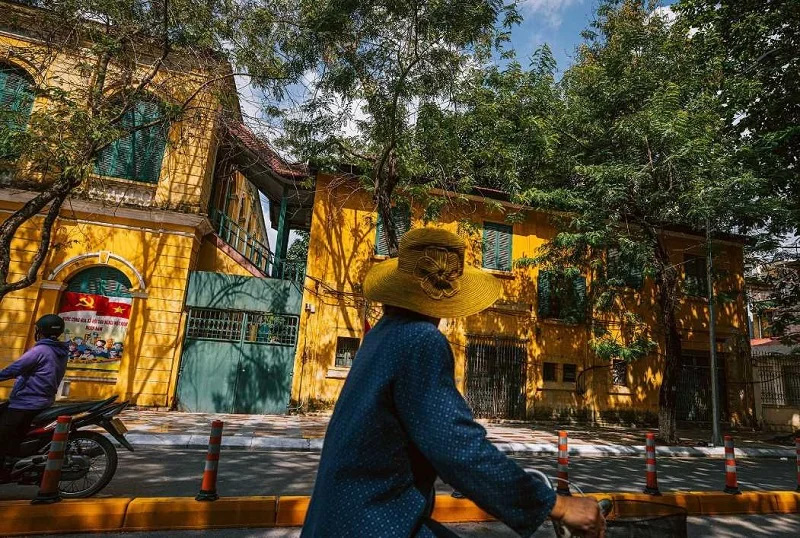
For most visitors, ride-hailing apps are the easiest way to move around once they arrive from Hanoi to Haiphong. Grab is widely used in both cities, and other local apps also operate; availability of each service can change, so check what works on your phone before you travel. You can book either a car or a motorbike taxi, see the fare up front, and avoid explaining directions in Vietnamese.
A few tips from our team:
- Set your pickup pin carefully. Bus and train stations have several exits, and drivers often wait on the main road rather than inside the station.
- Check the licence plate and driver’s photo before getting in or on.
- For motorbike rides, the driver should give you a helmet. Wear it and fasten the strap.
- Keep cash in small notes as a backup in case the card payment fails.
- Mobile data matters – buy a local SIM or eSIM before leaving Hanoi.
Take Metered Taxis Without Getting Overcharged
Traditional taxis are still common, especially outside stations and at the airport. Most are honest and metered, but a few tricks happen everywhere. Use taxis from well-known fleets with clear branding and a phone number printed on the car. Make sure the meter is switched on when you start moving, and have your destination written in Vietnamese or saved on your phone map.
If a driver at a bus station offers a fixed price without a meter, it is usually higher than the metered fare would be. You can politely say no and walk a little away from the station entrance to find a regular taxi or book through an app. When you arrive, check the meter, pay with small notes, and take your time collecting your bags before the taxi leaves.

Carry Your Address And A Few Useful Words
Many drivers in Haiphong speak little English, and street names can be confusing when you hear them pronounced the Vietnamese way. Before you leave Hanoi, save your hotel name and full address in Vietnamese on your phone, and take a screenshot in case your battery or data runs low. A pinned location on a map app is even better, because you can simply show it to the driver.
A handful of words also goes a long way on the road:
- Dừng lại (zung lai) – stop here.
- Chậm thôi (chum toy) – slow down, please.
- Bao nhiêu tiền? (bow nyew tee-en) – how much?
- Cảm ơn (gahm un) – thank you.
Drivers usually respond with a smile when a visitor makes the effort. “Chậm thôi” in particular is worth remembering – most motorbike taxi riders will happily ease off if you ask.
Stay Safe As A Passenger On Two Wheels
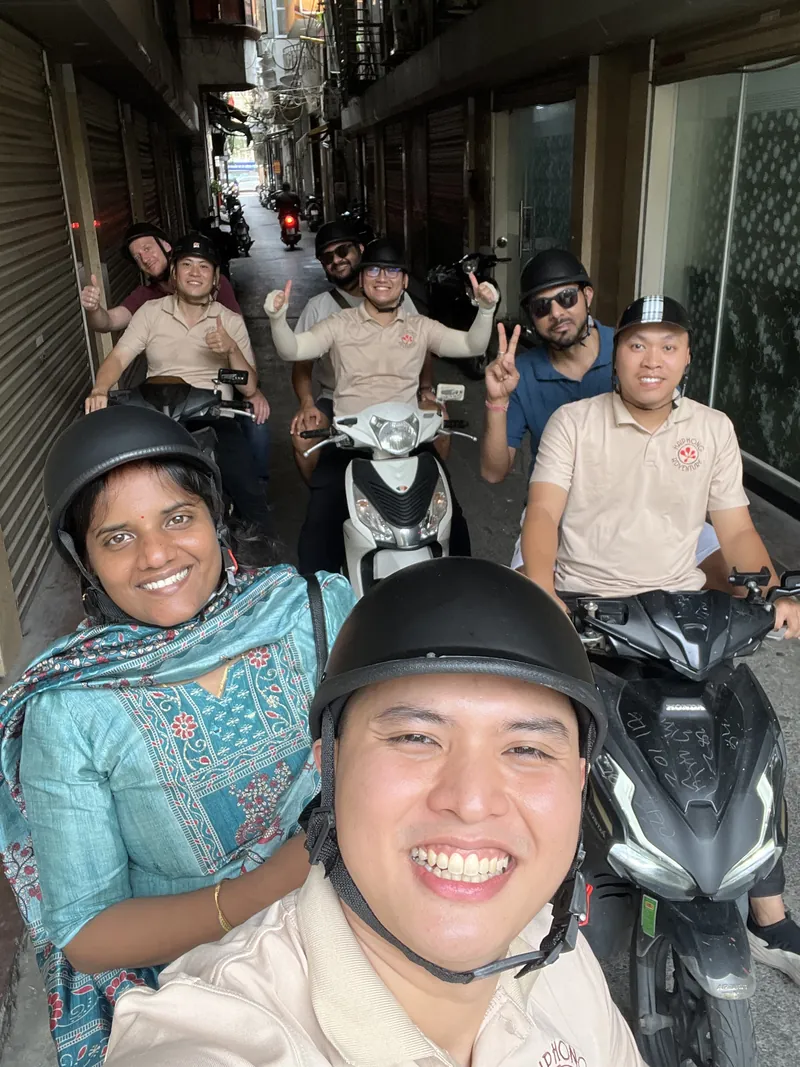
Sooner or later you will ride on the back of a motorbike, whether on a motorbike taxi or with one of our guides. Being a good passenger makes the ride safer for everyone. Sit close to the driver, keep your feet on the footrests and away from the hot exhaust pipe on the right side, and hold on to the rear grab bar or the driver’s waist. Lean with the bike in corners rather than against it.
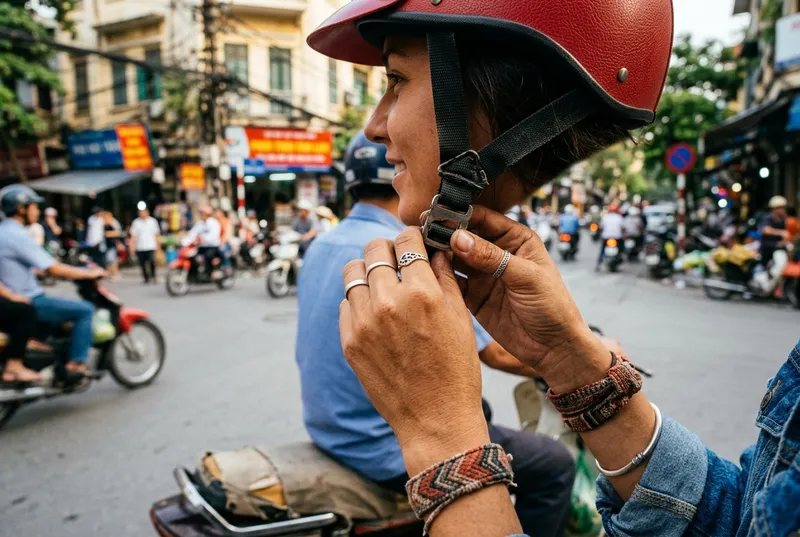
Wear closed shoes if you can, and avoid loose scarves or long skirts that could catch in the wheel. Keep your phone in a zipped pocket – snatch thefts from moving bikes are rare in Haiphong but do happen in big cities. If you want to learn more, our guide to motorbike tour safety in Haiphong goes into much more detail.
Watch Out For Weather And Night Driving
Weather changes the road more than people expect. In summer, sudden heavy storms can flood low streets in minutes, and visibility on the expressway drops sharply. Many drivers slow right down or pull over, which is wise. In winter, northern Vietnam gets cold, drizzly days when roads stay slick and fog can settle over the delta in the early morning.
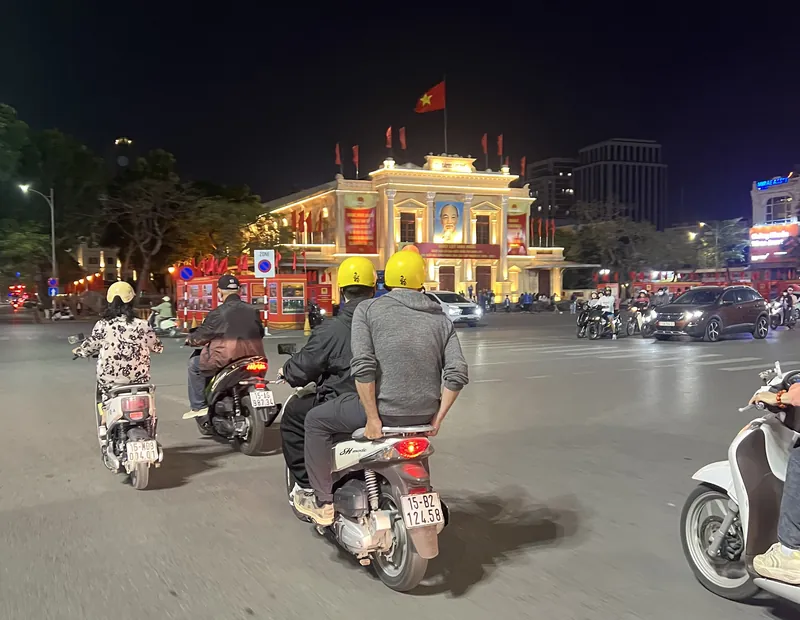
At night, the roads are quieter but not always safer. Some vehicles drive with poor lights, and trucks run late toward the port. If you are travelling after dark, choose a reputable bus, van or taxi rather than an unknown driver, and wear something light-coloured when walking along roads without pavements. In the city centre, evening traffic is relaxed and the streets around the Opera House are lovely to walk once the heat drops.
A Low-Stress Day From Hanoi To Haiphong
Here is a simple plan we often suggest to first-time visitors who want to arrive relaxed:
- 8:00–9:00: breakfast near your hotel in Hanoi while the morning rush clears.
- 9:30: leave for the station or meet your limousine van. Travel during the quieter late-morning window.
- Around midday: arrive in Haiphong, book a ride to your hotel through an app, and drop your bags.
- Early afternoon: lunch and a rest. This is the hottest part of the day, and locals slow down too.
- Late afternoon: practise crossing streets on a short walk around the colonial centre, then sit at a sidewalk cafe and watch the traffic flow – it is surprisingly calming once you understand it.
- Evening: join a guided ride or a real Haiphong food tour so someone local handles the roads while you enjoy the city.
If you only have a few hours, our half-day Haiphong itinerary shows how to see the highlights without spending too long in traffic.

FAQ: Traffic Questions From Our Guests
Is traffic in Haiphong as busy as in Hanoi?
It is busy at rush hour, but generally calmer and more spacious than Hanoi. Many guests tell us Haiphong is a good place to get comfortable with Vietnamese traffic before tackling bigger cities.
How long does the drive from Hanoi to Haiphong take at rush hour?
Normally the drive takes around 1.5–2 hours on the expressway. At peak times or on holiday weekends it can stretch to 2.5–3 hours or more, mostly because of slow traffic leaving Hanoi.
Is it safe to walk around Haiphong at night?
The city centre is generally safe and lively in the evening. Use normal precautions: watch your phone and bag, stay on lit streets, and take care when crossing wide roads.
Should I tip taxi or Grab drivers?
Tipping is not expected, but rounding up the fare or leaving small change is appreciated, especially if the driver helped with luggage.
Can I rent a motorbike myself after arriving?
You can, if you have a valid licence, insurance and real riding experience. If you are new to Vietnamese traffic, we suggest riding as a passenger with a guide first. If you do rent, read our tips on scams to avoid with motorbike rental in Haiphong first. We also offer motorbike rental – message us to discuss.
What happens during Tet?
Before Tet, roads are extremely busy as people travel home. During the first days of the new year, cities are quiet and many shops close. Transport still runs but with fewer services, so book early.
Let Locals Handle The Traffic For You
Understanding the road makes travel in Vietnam much easier, but you do not have to figure it all out alone. On our Haiphong tours, local guides do the riding while you sit back and enjoy the alleys, markets and colonial streets. If you would rather have someone with you for the whole day, read why a private Haiphong tour with a local guide changes the experience.
Send Haiphong Adventure your travel date and questions, and our team will reply with practical advice about timing and getting around.
WhatsApp, Viber, WeChat: +84(0)934.555.001
KakaoTalk, Line ID: haiphongadventure