
Photography Guide For Your Lan Ha Bay Tour Trip
Lan Ha Bay is one of those places where you can lift a camera in almost any direction and come home with something worth printing. Limestone towers rise straight out of jade-green water, fishing boats drift between hidden lagoons, and the light changes from soft and misty to sharp and golden within a single morning. Yet many visitors return with the same handful of blurry, overexposed shots taken from a crowded deck at midday. This guide shares what our team at Haiphong Adventure has learned from years of taking guests out on the water: when to go, where to point your lens, which gear to bring and how to protect it, plus a simple plan for a photo-focused day.
Whether you shoot on a phone, a compact camera or a full mirrorless kit, the tips below will help you turn a standard bay trip into a set of images you will be proud to share.
Why Lan Ha Bay Is A Photographer’s Dream
Lan Ha Bay lies off the south-eastern coast of Cat Ba Island, within the city of Haiphong, and borders the better-known Ha Long Bay to the north. In 2023 UNESCO extended the Ha Long Bay World Heritage listing to include the Cat Ba archipelago, and the area has long been part of a UNESCO biosphere reserve. For photographers, that protected status shows: the water is often clearer than in the busier parts of Ha Long, the islands feel closer together, and there are fewer large cruise ships filling the frame.
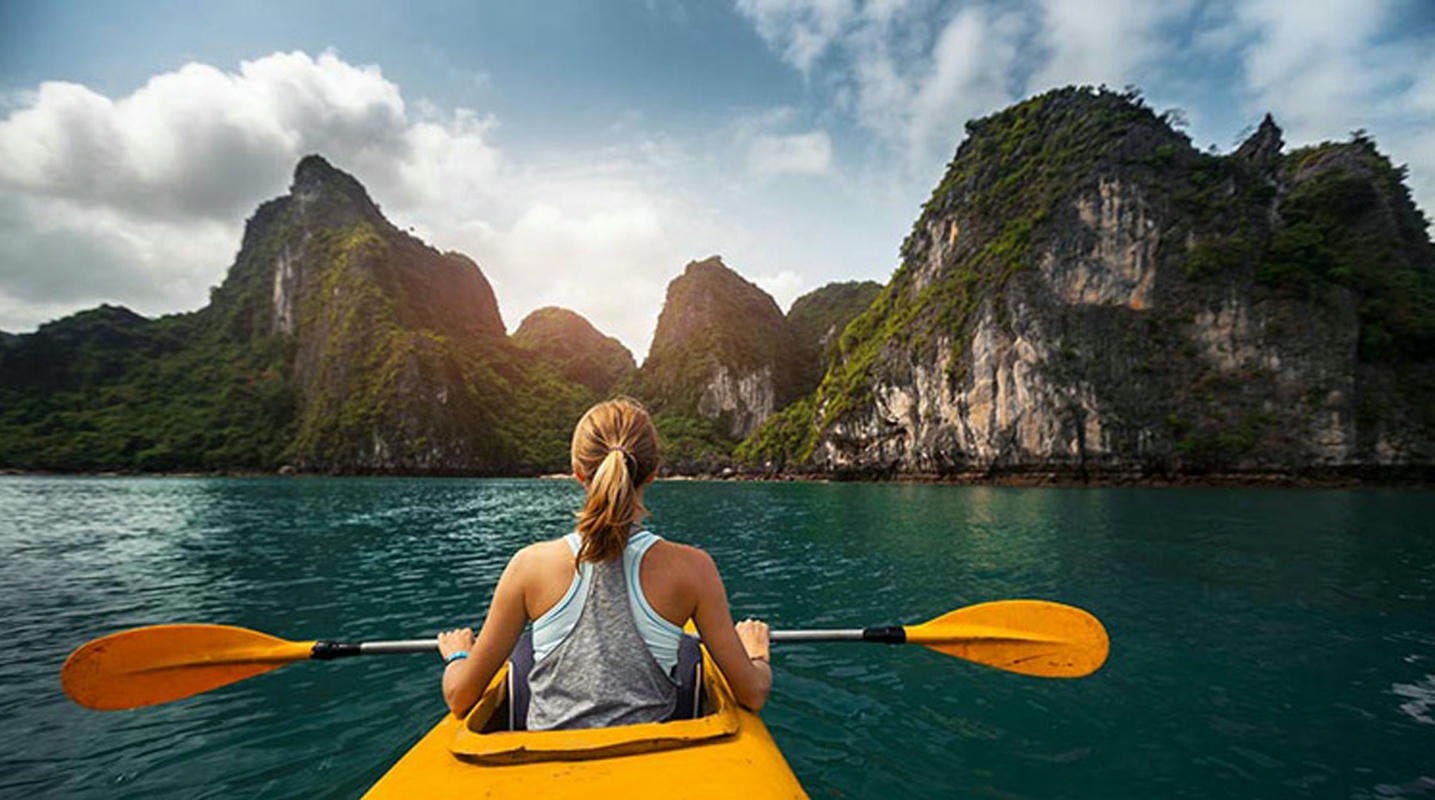
What makes the bay so photogenic is the layering. Karst islands stack one behind another, each a shade paler in the haze, which gives your images natural depth. Add a kayak, a wooden fishing boat or a swimmer in the foreground and you already have a strong composition.
What You Can Photograph In One Trip
- Sheer limestone cliffs with hanging vegetation and sea-carved notches at the waterline.
- Quiet lagoons reached through low caves or narrow channels, best explored by kayak.
- Floating fish farms and the daily routines of the families who live and work on them.
- Small sandy coves, turquoise shallows and the forested hills of Cat Ba Island.
- Sunrise and sunset colors reflected on calm water between the islands.
Best Time Of Year And Day For Photos
There is no bad season on the bay, but each one gives you a different look. Weather patterns vary from year to year, so treat the advice below as a general guide and check the forecast a few days before your trip.
Seasons At A Glance
- Spring (roughly March to May): soft, hazy light and mild temperatures. Mist can hide distant islands but creates beautiful, moody layers.
- Summer (roughly June to August): the clearest, most turquoise water and the warmest swimming, but also strong sun, heat and the chance of storms. Typhoon season generally runs through the summer and early autumn, and boats may be suspended at short notice.
- Autumn (roughly September to November): a favorite with many photographers, often with clearer skies, pleasant temperatures and good visibility.
- Winter (roughly December to February): cool, grey and frequently misty. Colors are muted, but the atmosphere can be wonderfully dramatic for black-and-white work.
Golden Hour Versus Midday
The first two hours after sunrise and the last hour or so before sunset give you warm side light that brings out the texture of the cliffs. Midday light is harsh and flattens the karsts, but it is the best time to capture the vivid color of shallow water and coves from above. If your tour runs through the middle of the day, use that time for swimming, kayaking and detail shots, then save your landscape frames for the early or late light.
Getting To Lan Ha Bay From Haiphong
Most bay trips start from Cat Ba Island. From Haiphong city you can reach the island by road with a short car ferry crossing, or by a direct boat service; door-to-door journey times are commonly around two to three hours depending on your connections, but schedules change often, so confirm the latest times with your hotel or tour operator. Our guide to planning a perfect Cat Ba tour from Haiphong city covers the options in more detail.

Keep your camera handy during the journey. The ferry deck offers your first wide views of the islands, and the coastal roads on Cat Ba have several spots where the bay opens up beneath you. If you prefer to stay based in the city and still see the karst scenery, several haiphong tours combine a comfortable day on the water with transfers.
Recommended tour
The Luxury Halong Bay Tours
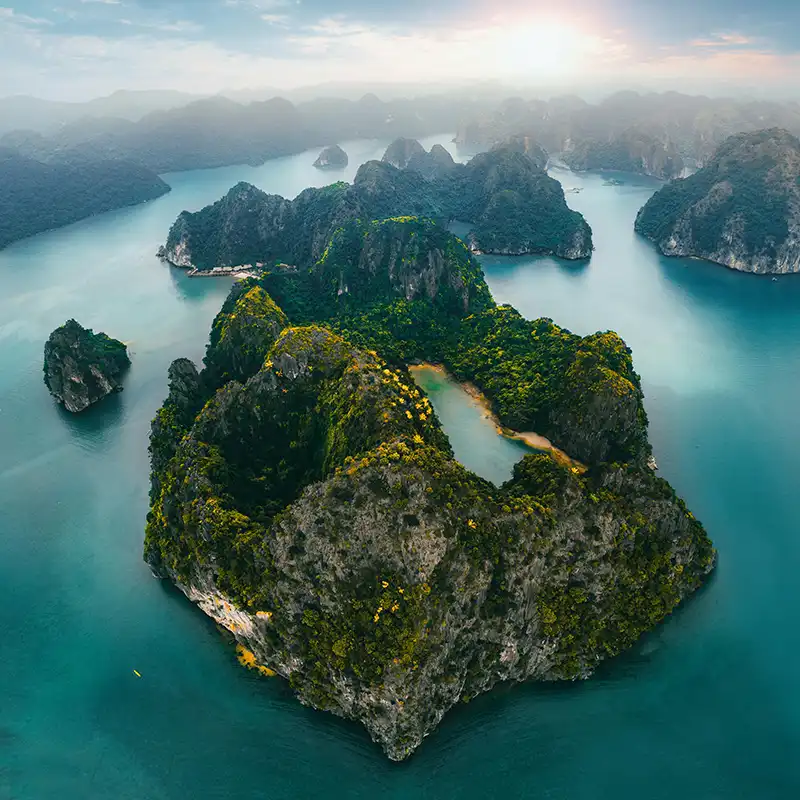
Want limestone seascapes without the planning? Cruise among the karst islands on a relaxed day trip with time on deck for photos, cave visits and a meal on board.
From $109 per person
Kayak-Level Shots Among The Karsts
Some of the most striking images of the bay are taken from just above the waterline. Shooting from a kayak puts the cliffs high above you and makes them look truly monumental. Many Lan Ha Bay tours include kayaking in sheltered areas, often around lagoons and low caves where the water is calm.
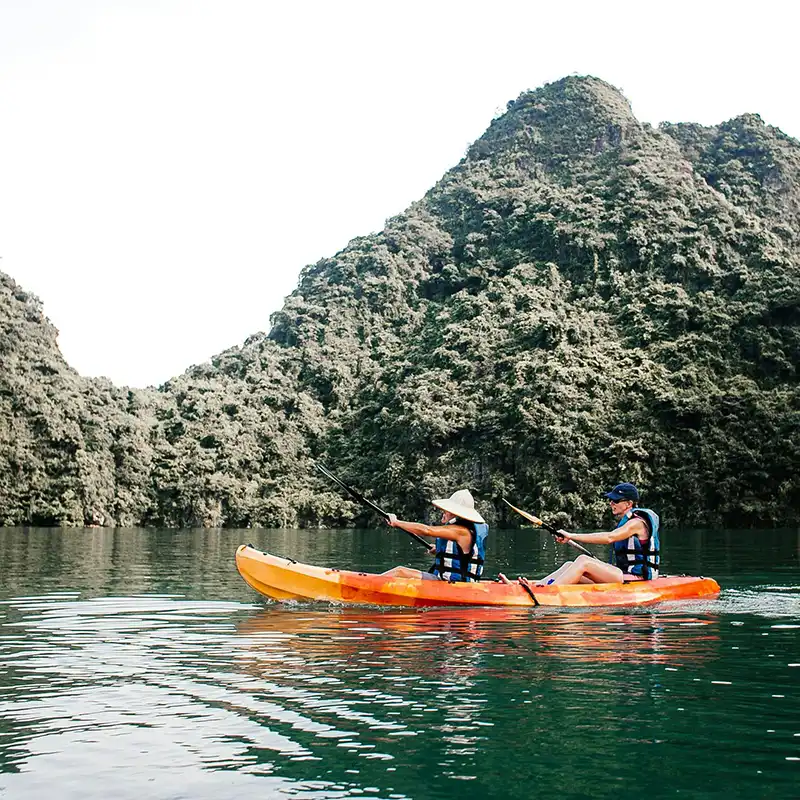
To get the shot, ask a friend to paddle ahead and photograph them with the cliffs behind. A bright kayak or life jacket adds a pop of color against the green and grey rock. Keep your camera on a wrist strap or inside a dry bag between shots, and never lean out too far to chase an angle. Our tips for kayaking safely on a Lan Ha Bay tour cover the basics before you set off.
Life On Deck And Candid Travel Portraits
The boat itself is a great subject. Wooden decks, ropes, the captain at the wheel and your travel companions looking out over the islands all tell the story of the trip. Candid moments usually work better than posed ones, so keep your camera ready while people chat, point at the scenery or relax in the shade.
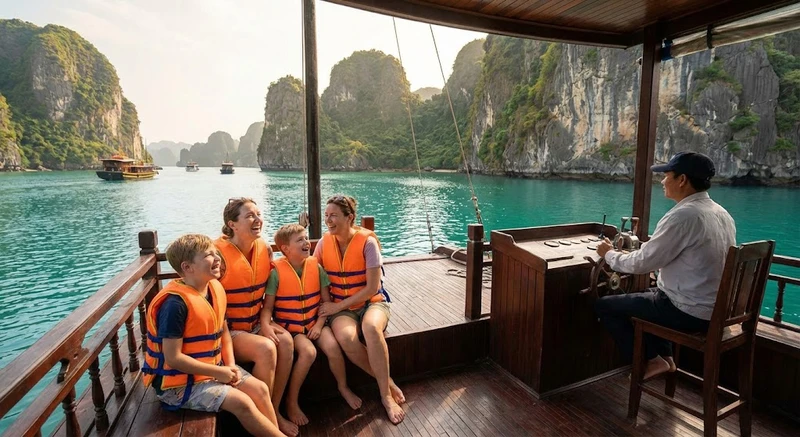
Frame people against the open side of the boat so the islands fill the background. If the sky is bright, expose for faces and let the background become slightly lighter, or step to one side so the light falls across your subject rather than behind them.
Floating Fish Farms And Fishing Life
Floating fish farms dot the sheltered waters around Cat Ba, and many boats pass close by. They offer color, texture and a glimpse of daily life: nets drying, small rowing boats tied up, dogs patrolling the walkways. These are working homes, so photograph respectfully. A smile and a gesture toward your camera goes a long way, and if someone shakes their head, lower the lens and move on.
Telephoto lenses are useful here because you can capture details without intruding. Look for repeating shapes such as rows of floats and buoys, and for reflections on calm water in the early morning.
Beaches, Coves And Clear Shallows
Many routes stop at a small beach for swimming. These stops are perfect for showing the color of the water: stand a little higher than the shoreline, on rocks or a boat ladder, and shoot down into the shallows to reveal the gradient from turquoise to deep green.
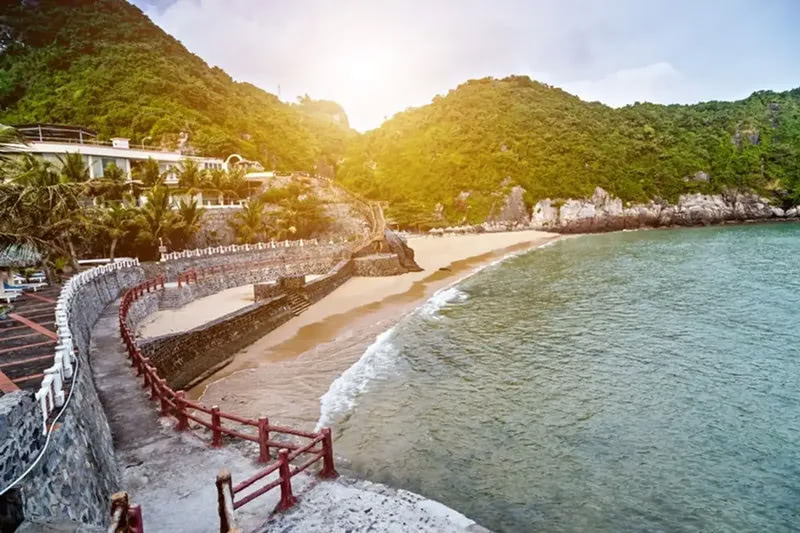
A polarizing filter is your best friend at the beach, cutting surface glare so the sand and rocks under the water show through. On a phone, try tapping the brightest part of the water to set exposure, then nudge brightness down slightly to keep colors rich.
Viewpoints Above The Bay On Cat Ba Island
For the classic overview shot, head to higher ground. Cat Ba Island has hiking trails and coastal roads with sweeping views across the bay, and the national park offers forested peaks for those happy to climb. The reward is a wide panorama of islands fading into the distance.
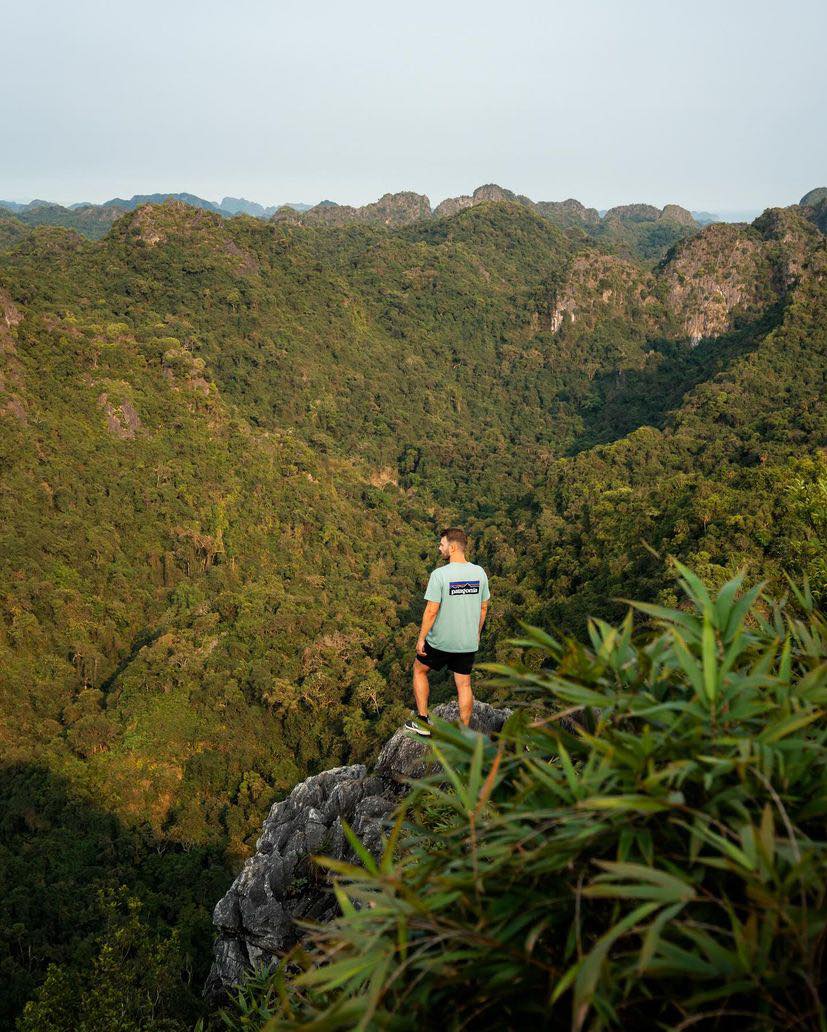
Bring a wide-angle lens or use your phone’s panorama mode, and include a person or a path in the frame to give a sense of scale. Trails can be steep, rocky and slippery after rain, so wear proper shoes, carry water and avoid hiking in the hottest part of the day.
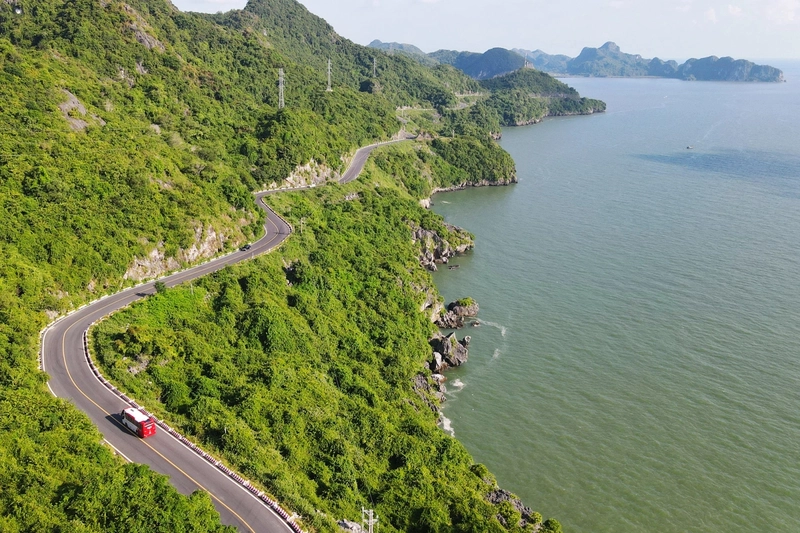
The coastal road itself is a fine subject, curling along the hillside above the water. If you are touring the island by motorbike, our guide to scenic views on the Haiphong to Cat Ba route has more inspiration, but always pull over safely before you take a picture.
Sunrise, Sunset And Blue Hour On The Water
If your itinerary allows an overnight stay on Cat Ba or on a cruise, plan at least one session at dawn or dusk. The water is often at its calmest early in the morning, giving you mirror-like reflections of the islands. In the evening, warm light paints the cliffs orange before the sky fades into deep blue.
Low light means slower shutter speeds. On a moving boat, a tripod will not help much, so raise your ISO, open your aperture and brace yourself against something solid. On land, a small tripod or a beanbag on a wall lets you take longer exposures that smooth the water.
Camera Gear And Settings That Work On The Water
You do not need a heavy bag to take great photos on the bay. A light, well-chosen kit is easier to protect and quicker to use when a moment appears.
What To Pack
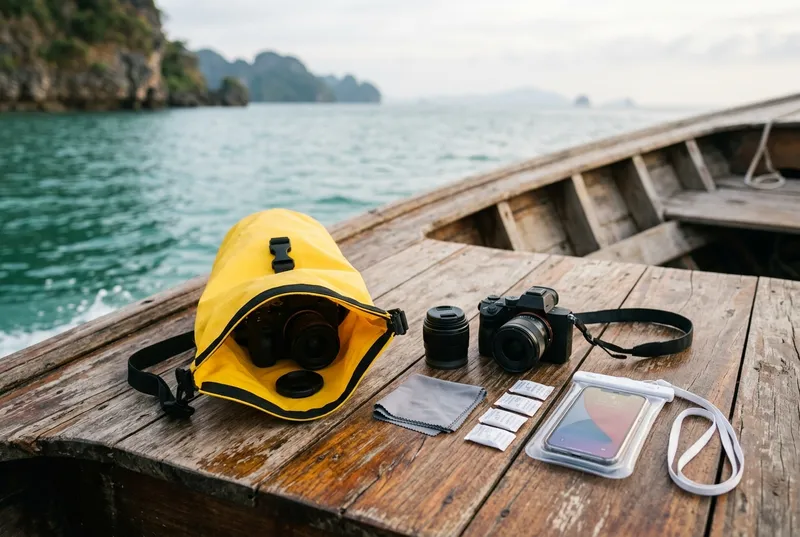
- A camera or phone you know well, plus at least one spare battery or a power bank.
- A versatile zoom (roughly 24 to 105mm equivalent) or a wide lens plus a short telephoto.
- A circular polarizing filter for glare and richer water color.
- A dry bag or waterproof pouch, a microfiber cloth and a few silica gel packets.
- Spare memory cards, a wrist or neck strap, and a lens hood to block spray and stray light.
Simple Settings To Start With
- Landscapes in good light: aperture around f/8, ISO at its base value, and a shutter speed of at least 1/500s on a moving boat.
- People and action: shutter speed of 1/1000s or faster to freeze splashing paddles and swimmers.
- Low light from the deck: open the aperture, let ISO rise and switch on image stabilization if your camera or lens has it.
- Phones: use the main lens rather than digital zoom, lock focus and exposure, and try HDR for bright skies.
How To Shoot From A Moving Boat
A boat is a moving, rocking platform, which makes sharp, level photos harder than on land. The good news is that a few simple habits fix most problems.
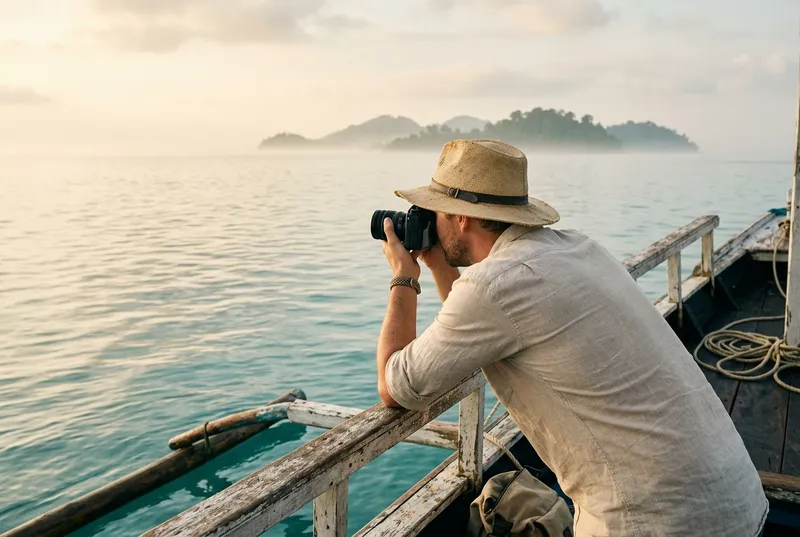
- Brace your elbows on a railing or against your body, but avoid resting the camera directly on the hull, which transmits engine vibration.
- Use a fast shutter speed and burst mode, then pick the sharpest frame later.
- Watch the horizon. Turn on your camera’s grid or level and straighten images in editing if needed.
- Move to the front or the side of the boat to avoid engine fumes and other passengers in your frame, and ask the crew where it is safe to stand.
- Anticipate turns. When the boat swings around an island, the view changes quickly, so be ready before it happens.
Protecting Your Gear From Salt, Spray And Humidity
Sea air, salt spray and tropical humidity are tough on electronics. Our guides have seen plenty of phones slide off wet decks and lenses fog up after a swim, so take a moment to protect your kit.
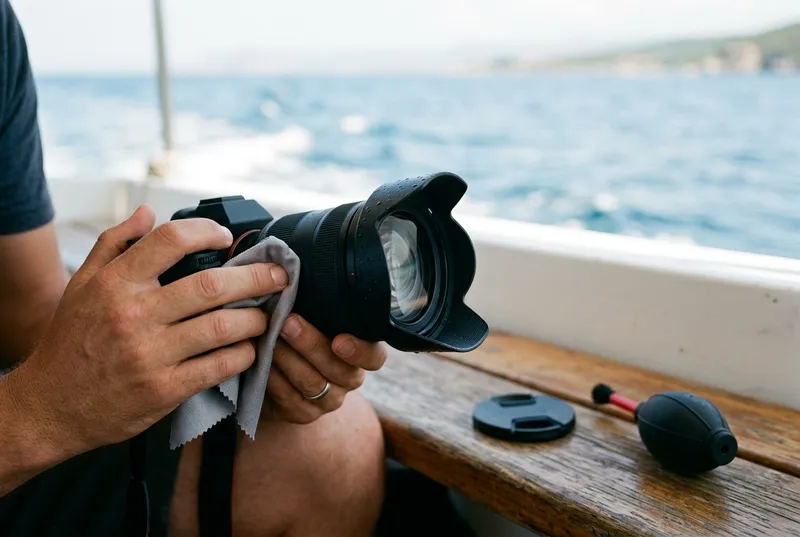
- Keep everything in a dry bag when you are not shooting, especially during kayaking and on speedboat transfers.
- Wipe salt spray off lenses with a microfiber cloth as soon as you notice it; dried salt can scratch glass.
- Moving from an air-conditioned cabin into humid air causes fogging. Let your camera warm up in its bag for several minutes before you shoot.
- Do not change lenses on a windy, wet deck. Fit the lens you need before you leave the cabin.
- Back up your photos each evening to your phone, laptop or cloud storage.
Drones And Photo Etiquette On The Bay
Drone footage of the bay is spectacular, but flying is not simple. Vietnam regulates drone flights, and permission is generally required; rules and enforcement can change, and many boat operators will not allow take-offs from their vessels. Before you pack a drone, check the current regulations and ask your tour provider whether flying is possible on your route. Never fly over people, boats or protected areas without clear permission.
Good manners matter just as much for ground-level photography:
- Ask before photographing people up close, especially on fish farms and in villages.
- Do not block narrow walkways, cave entrances or boat ladders while setting up a shot.
- Leave no trace. Take all wrappers, bottles and batteries back with you.
- Respect any area your guide says is off limits, including fragile coral or wildlife zones.
Sample Photo-Focused Day On A Lan Ha Bay Tour
Every operator runs slightly different routes, and our guide to a Lan Ha Bay tour route that avoids the crowded spots explains how to find quieter water. A photo-friendly day often looks something like this. Times are approximate and depend on tides, weather and your departure point.
- Early morning: leave the harbor as early as your operator allows to catch soft light and calm water. Shoot wide landscapes and reflections.
- Mid-morning: kayak through a lagoon or cave area. Switch to your waterproof setup and focus on low-angle shots and friends in kayaks.
- Around midday: beach stop and lunch on board. Photograph clear shallows from above, then rest and back up your cards.
- Early afternoon: cruise past floating fish farms. Use a telephoto for details and respectful portraits.
- Late afternoon: return slowly as the light warms. Ask if the boat can pause in a quiet spot for golden-hour photos.
If you have an extra day, add a sunrise hike or a ride along the Cat Ba coast. Our Cat Ba tours page will list island options as they become available, and the main haiphong tours page shows everything else we run around the city and the coast.
Frequently Asked Questions
Is Lan Ha Bay better than Ha Long Bay for photography?
Both are beautiful and share the same type of limestone scenery. Lan Ha Bay tends to have fewer large boats and many sheltered lagoons and beaches, which makes it easier to get clean, uncluttered compositions. Ha Long Bay has some famous rock formations and caves that many photographers also want to see.
Can I take good photos of the bay with just a phone?
Yes. Modern phones handle bright, scenic conditions very well. Use a waterproof pouch, keep the lens clean, avoid digital zoom and shoot in the early or late light for the best results.
What is the best month for photographing Lan Ha Bay?
Many photographers like autumn and late spring for a balance of clear skies and comfortable temperatures. Summer offers the bluest water but carries a higher chance of storms, while winter brings mist and moody, muted colors.
Can I fly a drone on a Lan Ha Bay tour?
Drone flights in Vietnam generally require permission and many boats do not allow them. Check current rules and confirm with your operator before your trip rather than assuming it will be possible.
How do I keep my camera dry while kayaking?
Store it in a roll-top dry bag clipped to the kayak, use a wrist strap when shooting, and only take it out in calm water. A waterproof action camera or phone pouch is a safer choice if you plan to paddle a lot.
Will the guide help me find good photo spots?
Local guides know where the light falls and which areas are quieter at certain times. Tell them at the start that photography is a priority, and they can often suggest small changes to timing or route.
Plan Your Photo Trip With Haiphong Adventure
A great set of bay photos comes down to timing, a light and well-protected kit, and a route that gives you space and calm water. If you would like help choosing the right day on the water, combining it with time in Haiphong, or simply getting local tips for your own trip, our team is happy to help. Send us a message with your dates and interests, and we will suggest options that suit your style of travel and photography.
WhatsApp, Viber, WeChat: +84(0)934.555.001
KakaoTalk, Line ID: haiphongadventure