Taste Of Nom Bo Kho Haiphong Traditional Snack
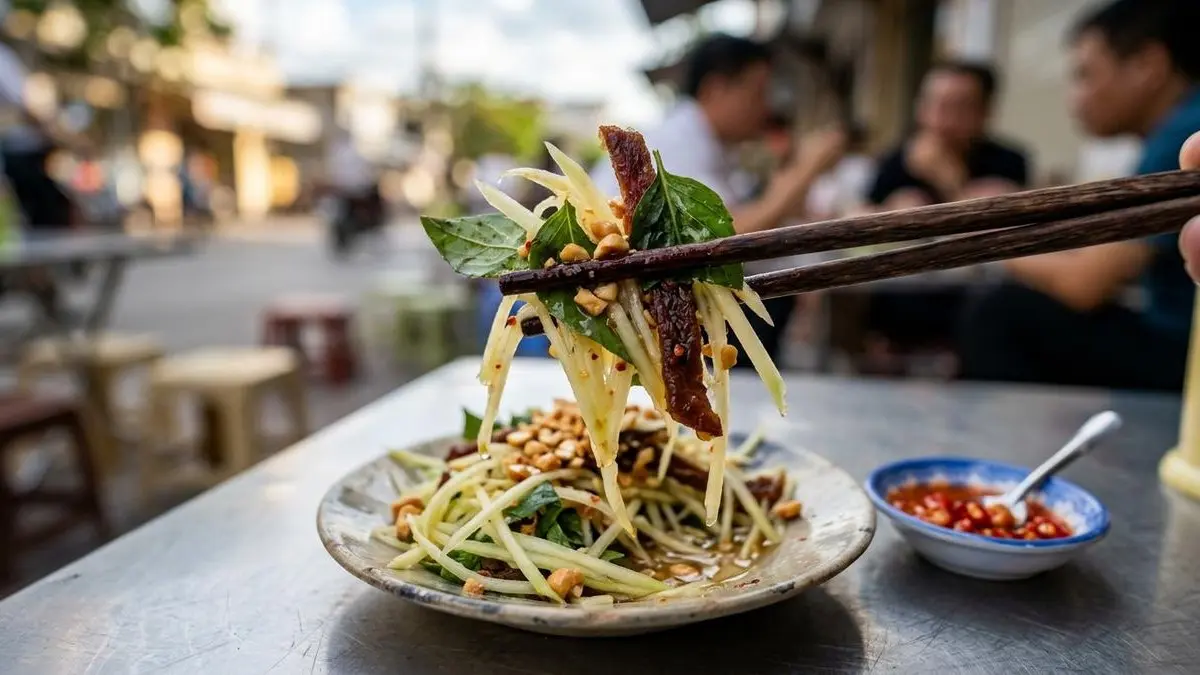
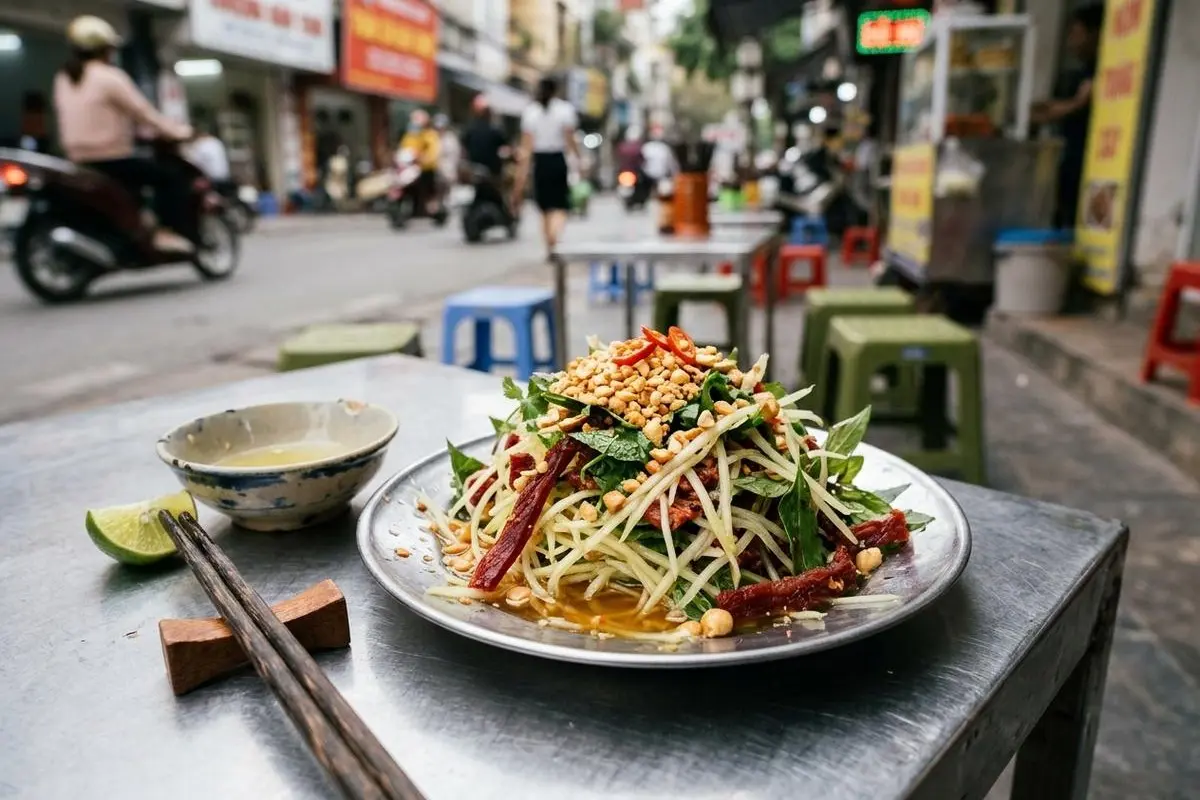
Nom bo kho is a cool, crunchy papaya salad topped with chewy dried beef, fresh herbs, roasted peanuts and a sweet, sour and gently spicy dressing. In Haiphong it is one of the most loved afternoon snacks, sold from small carts and simple stalls near schools, markets and busy streets. One plate costs very little, takes five minutes to eat and gives you a perfect taste of how northern Vietnamese people balance flavours.
In this guide, the Haiphong Adventure team explains what nom bo kho tastes like, why it became a classic street snack, how locals eat it, when and where to find it and what to drink with it. Prices and stall locations change often, so treat any practical details as a reference (updated October 2026).
What Is Nom Bo Kho
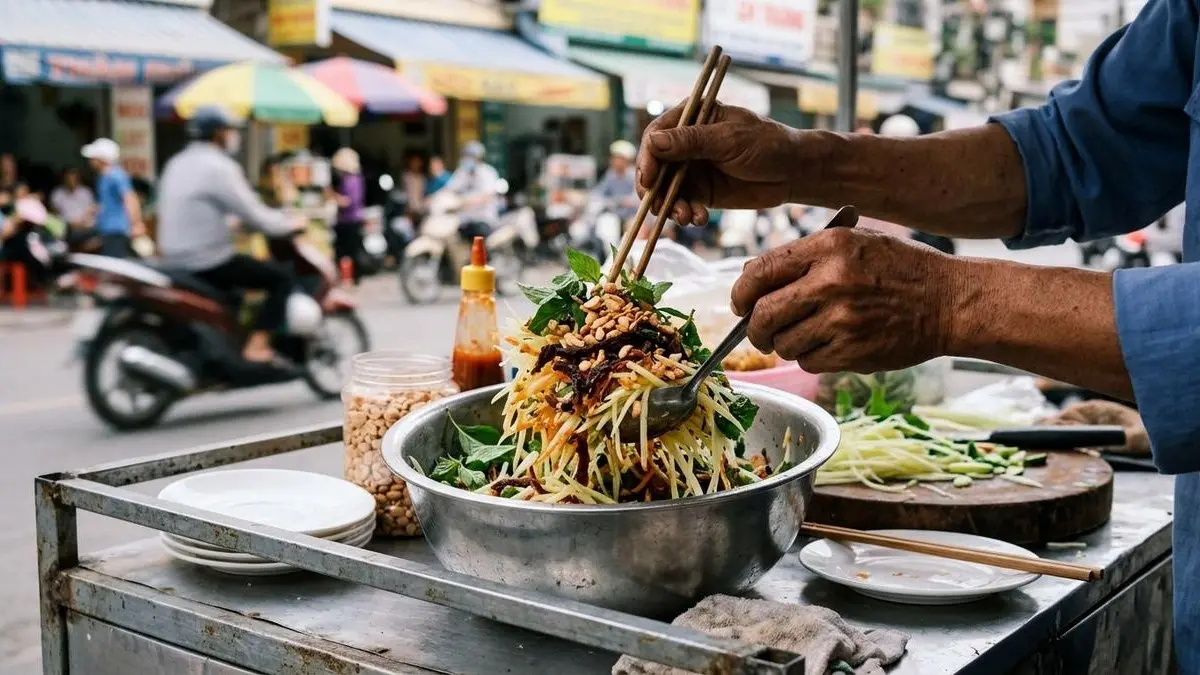
The name tells you almost everything. In Vietnamese, nom means a salad or mixed dish, bo means beef and kho means dried. So nom bo kho is a salad with dried beef. The base is usually shredded green papaya, sometimes mixed with carrot, and the topping is a handful of dark, chewy strips of seasoned dried beef.
What makes it special is not one ingredient but the combination. Every bite should be crunchy, chewy, fresh, sweet, sour, salty and a little bit spicy at the same time. It is light enough to eat between meals, yet satisfying enough to keep you going until dinner.
A snack, not a main meal
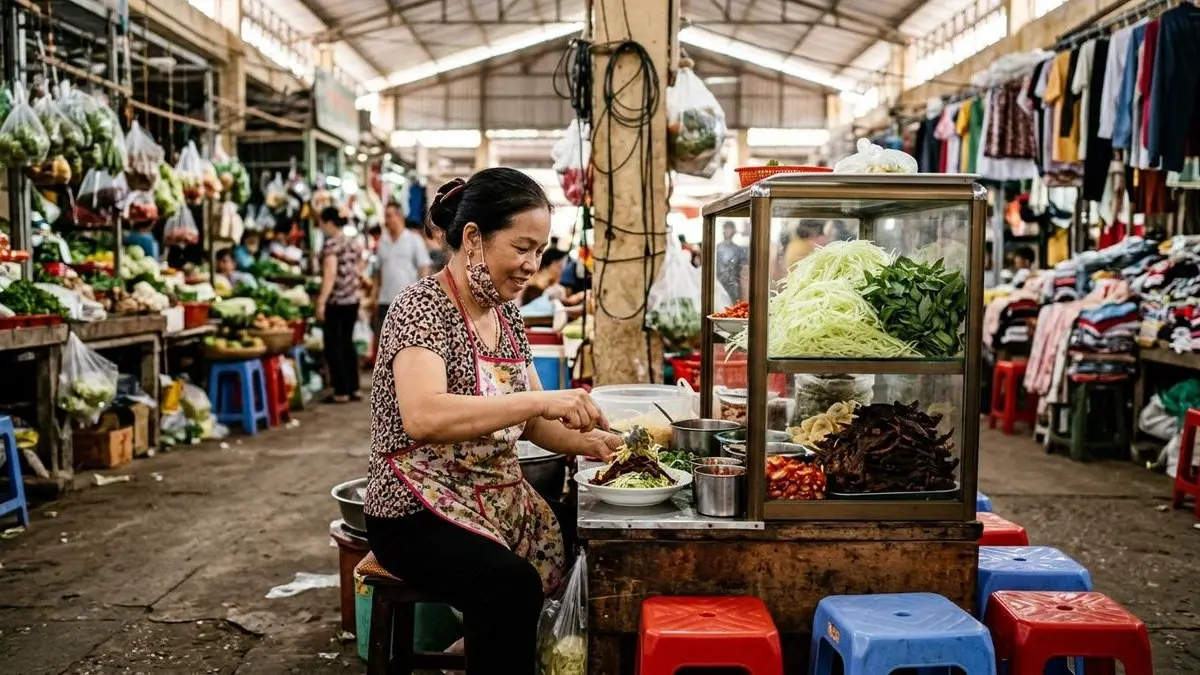
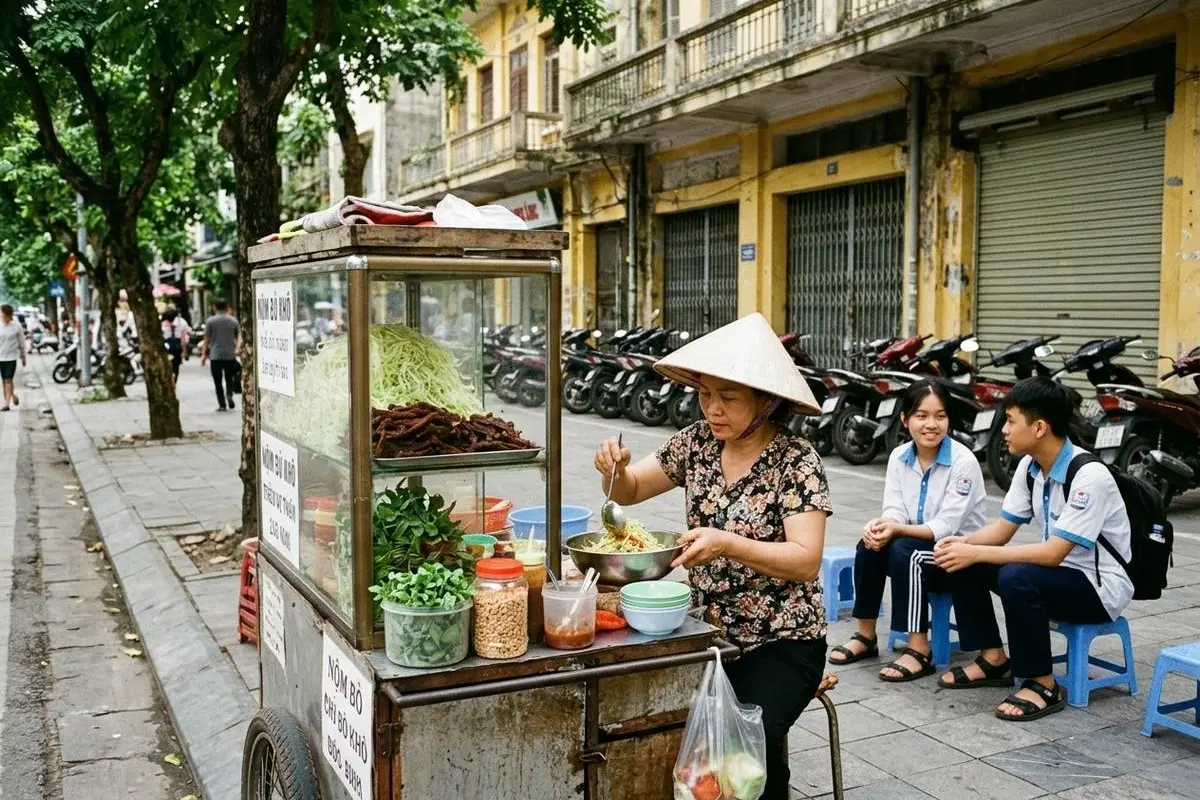
Locals treat nom bo kho as an an vat, a casual snack eaten for fun rather than for nutrition. It is the kind of food students share after class, friends order while chatting on a sidewalk, or office workers grab on the way home. Portions are small, plates are often shared and nobody is in a hurry.
- Typical portion. A small plate or a paper bowl, enough for one person as a snack.
- Typical time. Mid-afternoon to early evening.
- Typical setting. Low plastic stools at a cart or a tiny stall.
- Typical price. Very affordable, usually far cheaper than a restaurant dish. Check the price before ordering.
The First Bite And Its Flavours
Your first forkful of nom bo kho is a small explosion of contrasts. The papaya is cold and crisp, almost like a mild cucumber. Then the dried beef arrives, chewy and savoury with hints of spice. Fresh herbs add a bright, peppery perfume, peanuts bring a roasted crunch and the dressing ties everything together.
Sweet and sour
The dressing is usually based on vinegar or lime, sugar and soy sauce or fish sauce. The result is tangy and lightly sweet, never heavy. It soaks into the papaya so the shreds taste juicy rather than plain.
Salty and savoury
The dried beef carries most of the salt and umami. Many versions are seasoned with spices and chilli before drying, so each strip has a deep, meaty flavour that contrasts with the fresh vegetables.
Spicy and herbal
A little chilli sauce or fresh chilli gives warmth without overpowering the dish. Vietnamese herbs such as basil or Vietnamese balm add an aromatic finish. If you are sensitive to spice, ask for less chilli, as the heat can vary from stall to stall.
If you love trying dishes like this, our list of top dishes to try on a Haiphong food tour will give you plenty more ideas for your trip.
Why It Became A Traditional Street Snack
Nom bo kho is enjoyed across northern Vietnam, and Hanoi has its own famous sellers. In Haiphong, the dish fits perfectly into the city’s strong street food culture. Haiphong people love small, flavourful snacks eaten outdoors, and nom bo kho has been part of that habit for generations of students and families.
Several things explain its lasting popularity:
- It is refreshing. In a hot, humid port city, a cold, tangy salad is very welcome on an afternoon.
- It is affordable. Students and workers can enjoy it every day without worrying about cost.
- It is quick. Vendors assemble each plate in moments, so it suits busy lives.
- It is social. Sharing a plate on a sidewalk is a relaxed way to meet friends.
- It is portable. Many sellers use carts or small stands, so the snack comes to where people are.
Many locals have fond memories of buying nom bo kho outside school gates. For them, the taste is linked to childhood, friendship and the lively streets of their city.
>>> Food Tour Haiphong: 16 Best Must-Try Dishes & Local Eateries
What Goes Into A Plate
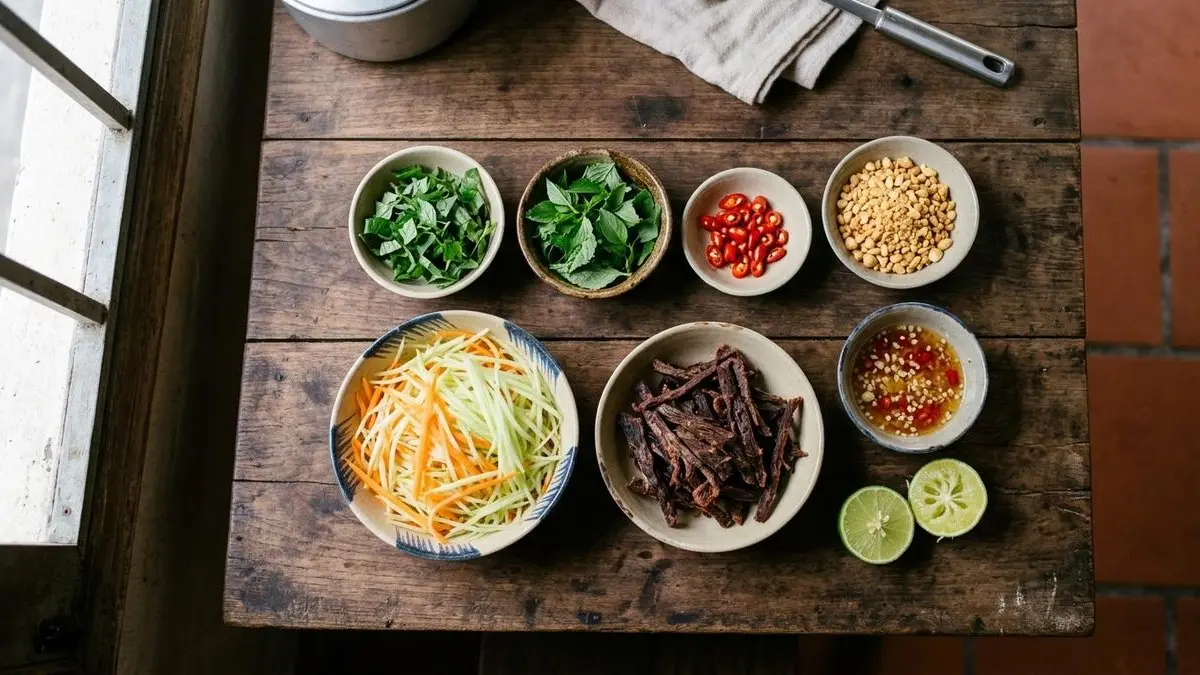
Every seller has a slightly different recipe, but most plates of nom bo kho share the same main elements. You do not need to know them all to enjoy the dish, but recognising them makes the tasting more fun.
| Component | What it adds |
|---|---|
| Green papaya | Cool crunch and a mild, fresh base |
| Carrot (sometimes) | Colour and a touch of sweetness |
| Dried beef | Chewy texture and savoury, spiced flavour |
| Fresh herbs | Peppery, aromatic freshness |
| Roasted peanuts | Nutty crunch |
| Sweet and sour dressing | Tang, sweetness and moisture |
| Chilli sauce | Gentle heat, adjustable to taste |
Some vendors also add other dried meats or a few slices of beef offal, which is common in traditional northern versions. If you prefer to avoid offal, simply ask for only dried beef. Pointing at the ingredients on the cart usually works well.
Recommended tour
The Haiphong Street Food and City Tour
Taste nom bo kho and other local snacks at stalls only locals know, while a guide explains every flavour and the stories behind the old city.
From $85 per person
How To Order And Eat Like A Local
Ordering nom bo kho is easy, even without speaking Vietnamese. Most stalls sell only a few items, so a smile, a pointing finger and a raised hand to show how many plates is usually enough.
Simple ordering phrases
- Cho em mot dia nom bo kho. One plate of nom bo kho, please.
- It cay. Less spicy.
- Khong cay. Not spicy.
- Bao nhieu tien? How much is it?
How to eat it
- Mix gently. Toss the salad so the dressing reaches the papaya at the bottom.
- Take a little of everything. Each bite should include papaya, beef, herbs and peanuts.
- Adjust the heat. Add chilli sauce slowly if there is a bottle on the table.
- Share. Order one or two plates for the group and eat together, the local way.
- Eat it fresh. The papaya is crunchiest right after the dressing goes on.
Most vendors serve nom bo kho with chopsticks or a small fork. Do not worry about technique. Locals often pick up papaya and beef together in one generous bite.
When And Where To Find It In Haiphong
Nom bo kho is easiest to find from mid-afternoon to early evening. That is when students finish classes, office workers head home and the streets fill with snack sellers.
- Near schools and universities. Carts often wait near gates when classes end.
- Around local markets. Snack stalls cluster near busy market entrances and side lanes.
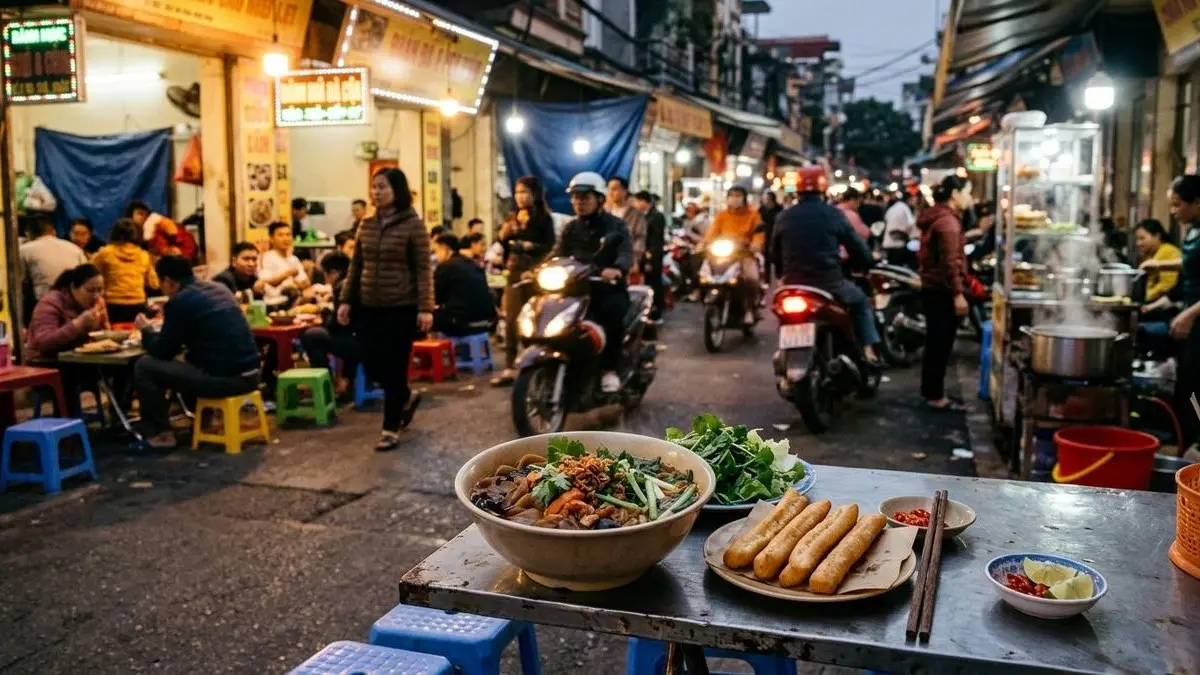
- On food streets in the centre. Small eateries and carts appear along busy streets in the old districts.
- Near lakes and parks. Areas around Tam Bac Lake and other public spaces attract snack vendors in the evening.
Look for a small glass cabinet or tray piled with shredded papaya, bundles of herbs and dark strips of beef. A crowd of young locals sitting on low stools is the best sign of a good stall.
To plan your own snack route, our DIY Haiphong food tour map shows how to connect several food stops on foot.
>>> Haiphong Food Tour Route Exploring Local Markets
What To Drink With Nom Bo Kho
Because nom bo kho is tangy and a little spicy, it pairs well with cold, simple drinks. Here are some local favourites:
- Tra da. Iced green tea, often free or very cheap at street stalls. It cools the palate perfectly.
- Fresh sugarcane juice. Sweet and refreshing, a lovely contrast to the sour dressing.
- Kumquat or lime juice. Bright citrus drinks echo the tangy flavours.
- Vietnamese iced coffee. For a stronger afternoon boost, try ca phe sua da at a nearby cafe after your snack.
- Local beer. In the evening, a cold beer with friends turns the snack into a small party.
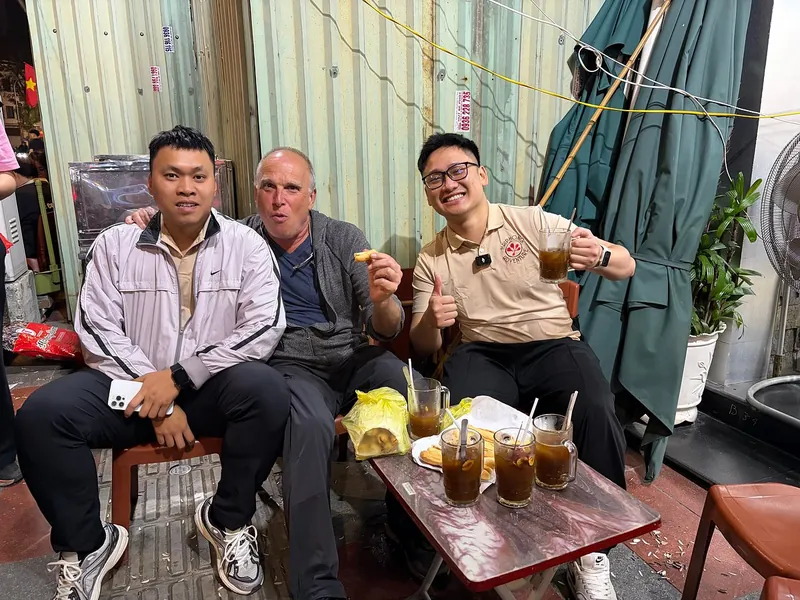
Tips For First-Time Tasters
Street food in Haiphong is generally a joy to explore, and nom bo kho is one of the friendliest dishes to start with. A few simple tips will make your first taste even better.
- Choose busy stalls. High turnover means fresh papaya and herbs.
- Watch it being made. Most vendors assemble each plate in front of you.
- Start mild. Ask for less chilli and add more if you like.
- Mention allergies clearly. The dish usually contains peanuts, and dressings may contain fish sauce or soy sauce. Show a written note in Vietnamese if you have a serious allergy.
- Carry small notes. Street vendors rarely have change for large bills.
- Bring wet wipes. Napkins can be thin, and the dressing is a little sticky.
For more ideas on eating confidently, read our guide to enjoying a real Haiphong food tour, full of practical advice from local guides.
Building A Snack Afternoon Around It
Nom bo kho is even better as part of a relaxed afternoon of grazing. Here is one easy plan for travellers staying in the centre:
- 14:30. Walk through a local market and watch vendors prepare fresh herbs and vegetables.
- 15:30. Stop at a cart for nom bo kho and a glass of iced tea.
- 16:30. Try banh mi cay, the city’s famous mini spicy baguette.
- 17:30. Stroll around Tam Bac Lake as the lights come on.
- 18:30. Finish with dinner of banh da cua or fresh seafood.
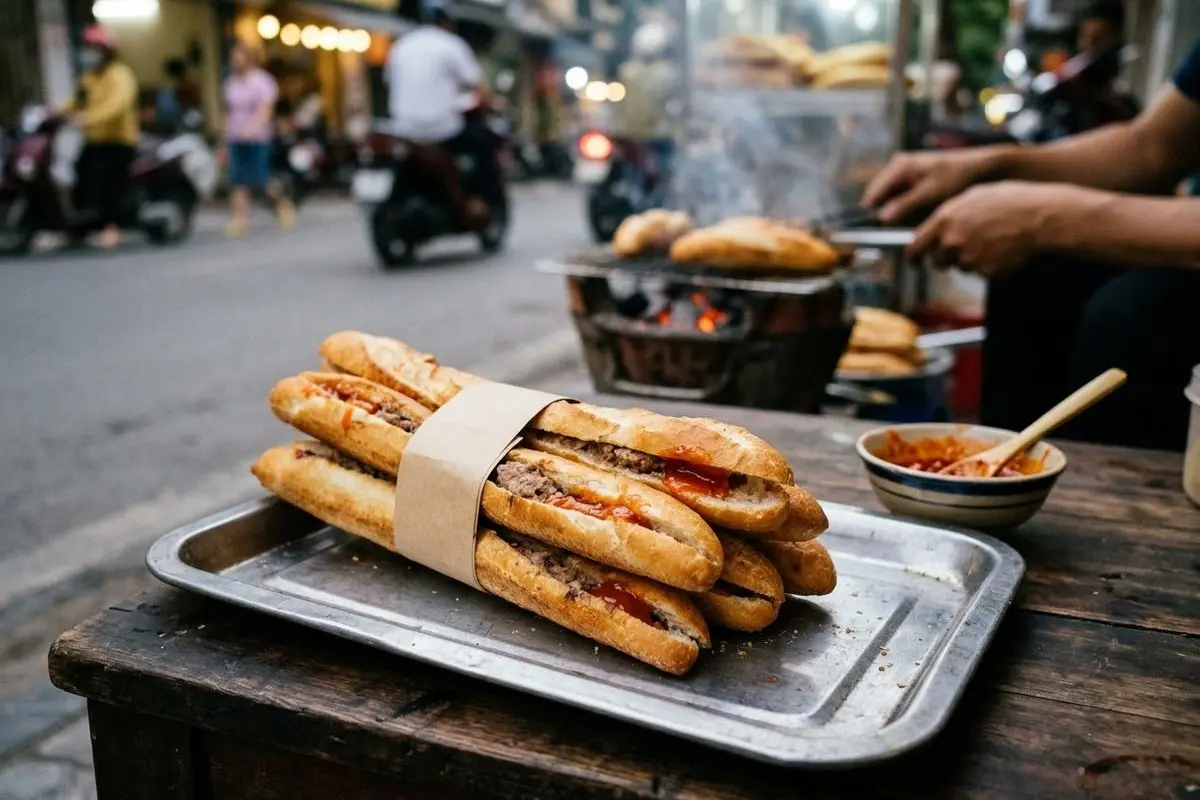
If you would rather have a local lead the way, our haiphong tours include food stops chosen by guides who grew up eating these snacks. It is the easiest way to enjoy a delicious haiphong adventure without worrying about where to go or what to order.
>>> My Haiphong Street Food Adventure Local Taste
Nom Bo Kho Compared With Other Vietnamese Salads
Vietnam has many kinds of nom, and it is interesting to compare them as you travel.
- Nom bo kho. Papaya with dried beef, herbs and peanuts. Tangy, chewy and casual.
- Nom du du tom thit. Papaya with boiled shrimp and pork, often served at family meals or celebrations.
- Goi cuon. Fresh spring rolls rather than a salad, but built on the same love of fresh herbs.
- Som tam. The famous Thai papaya salad. It is usually spicier and more pungent, while nom bo kho tends to be sweeter and milder.
Once you have tried nom bo kho, you will start noticing the same balance of sweet, sour, salty and spicy in many other Vietnamese dishes.
Frequently Asked Questions About Nom Bo Kho
What does nom bo kho taste like?
It is crunchy, chewy, fresh and tangy, with a light sweetness, savoury dried beef, peppery herbs, roasted peanuts and a gentle chilli kick.
Is nom bo kho spicy?
Usually only a little. The heat comes from chilli sauce or fresh chilli, and you can ask for less or none.
When is the best time to eat nom bo kho in Haiphong?
Mid-afternoon to early evening, when snack carts and stalls are busiest and ingredients are freshest.
Is nom bo kho safe for travellers to eat?
Most travellers enjoy it without problems. Choose busy stalls, watch it being made and mention any allergies, especially to peanuts.
Can I try nom bo kho on a food tour?
Yes. Local food tours often include snacks like nom bo kho, and a guide can help you order and explain each ingredient.
Taste Haiphong One Snack At A Time
Nom bo kho may be small and simple, but it captures the spirit of Haiphong street food: fresh ingredients, bold flavours, low prices and good company. Find a busy cart in the afternoon, pull up a plastic stool, order a plate with a glass of iced tea and enjoy the crunch.
If you would like a local guide from Haiphong Adventure to show you the best snack stalls and street food in the city, send us a message. We will help you plan a tasty day that fits your schedule.
WhatsApp, Viber, WeChat: +84(0)934.555.001
KakaoTalk, Line ID: haiphongadventure