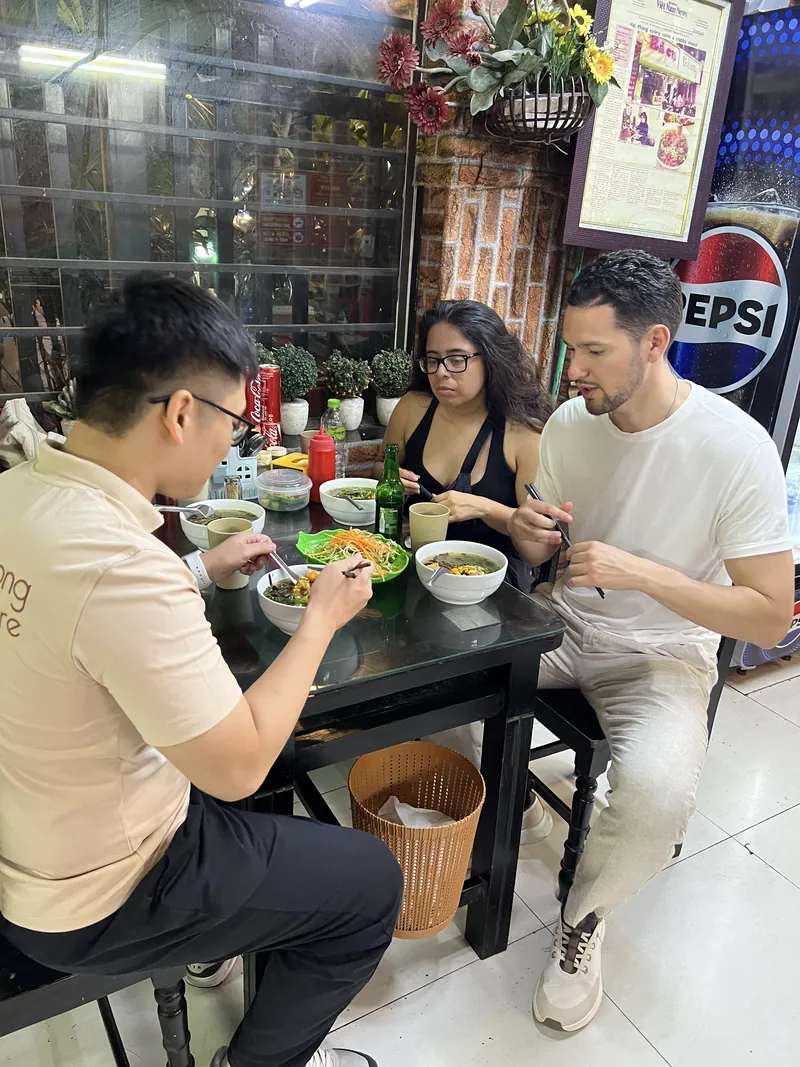
Ingredients In Nom Bo Kho Haiphong Salad Dish
Nom bo kho is built from a short list of simple ingredients: shredded green papaya, a little carrot, strips of spiced dried beef, fresh herbs, roasted peanuts and a sweet, sour and slightly spicy dressing. None of them is rare or expensive, yet together they create one of the most balanced snacks in Haiphong. Understanding each ingredient helps you choose a good stall, order with confidence and even recreate the salad at home.
In this guide, the Haiphong Adventure team breaks down every component of nom bo kho: what it is, why it is there, how local cooks prepare it and what you can use as a substitute if you cook it abroad. Recipes vary from vendor to vendor, so think of this as a description of the typical Haiphong style rather than one fixed formula.
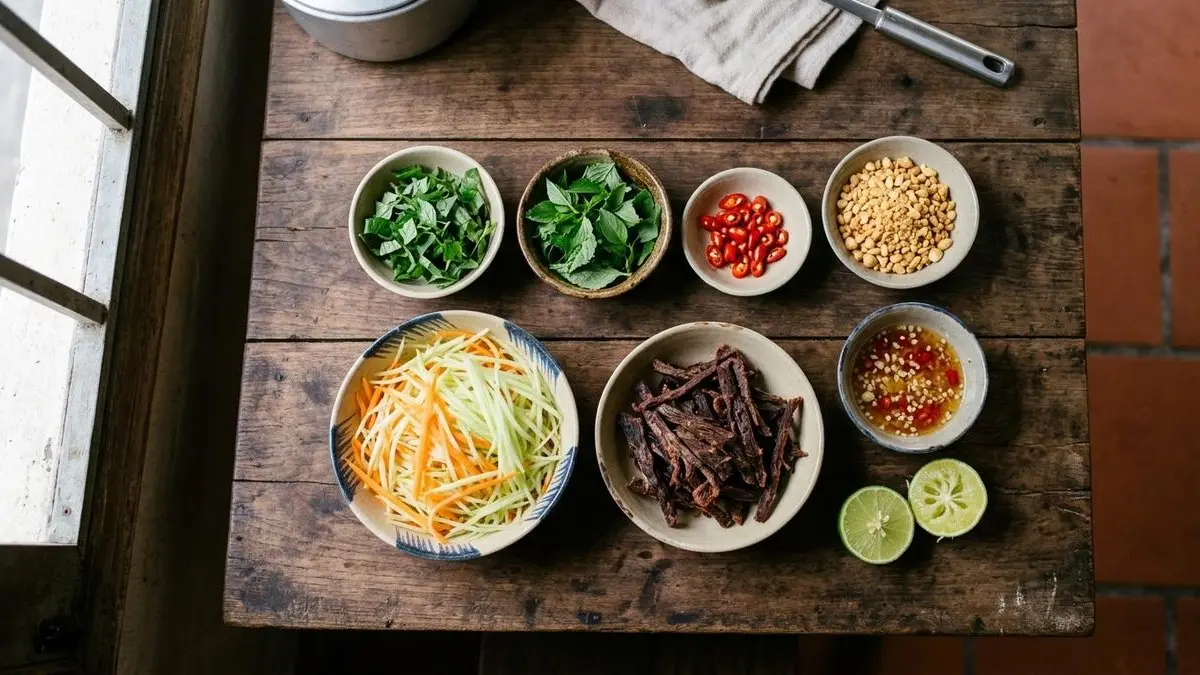
Nom Bo Kho Ingredients At A Glance
Before looking at each element in detail, here is a quick overview of what usually goes into a plate in Haiphong.
| Ingredient | Role in the dish | Always or optional |
|---|---|---|
| Green papaya | Crunchy, neutral base | Always |
| Carrot | Colour and light sweetness | Often |
| Dried beef | Savoury, chewy topping | Always |
| Other dried meats or offal | Extra texture in traditional versions | Optional |
| Fresh herbs | Aroma and freshness | Always |
| Roasted peanuts | Nutty crunch | Almost always |
| Sweet and sour dressing | Brings everything together | Always |
| Chilli sauce or fresh chilli | Heat, to taste | Usually on the side |
| Fried shallots or garlic | Fragrance and crispness | Optional |
The secret is balance. No single ingredient should dominate. A good plate is crunchy but juicy, savoury but fresh and sweet but tangy.
Green Papaya, The Crunchy Base
Green papaya is simply unripe papaya. Instead of the soft orange flesh you know from fruit salads, it is firm, pale and almost flavourless, with a texture similar to a crisp cucumber or a young radish. That neutral crunch is exactly what makes it a perfect base. It soaks up the dressing while staying crisp.
How cooks prepare it
- Peeling and shredding. The papaya is peeled, deseeded and cut into long, thin strands, often with a special serrated peeler or by hand with a knife.
- Rinsing or soaking. Shredded papaya releases a milky sap. Many cooks rinse or briefly soak it in water, sometimes with a little salt, to remove the sap and make it crunchier.
- Draining well. The shreds are squeezed or drained so the dressing does not become watery.
When you look at a stall, the papaya should be bright, pale green and look crisp rather than limp. Fresh papaya is one of the clearest signs of a well-run cart.
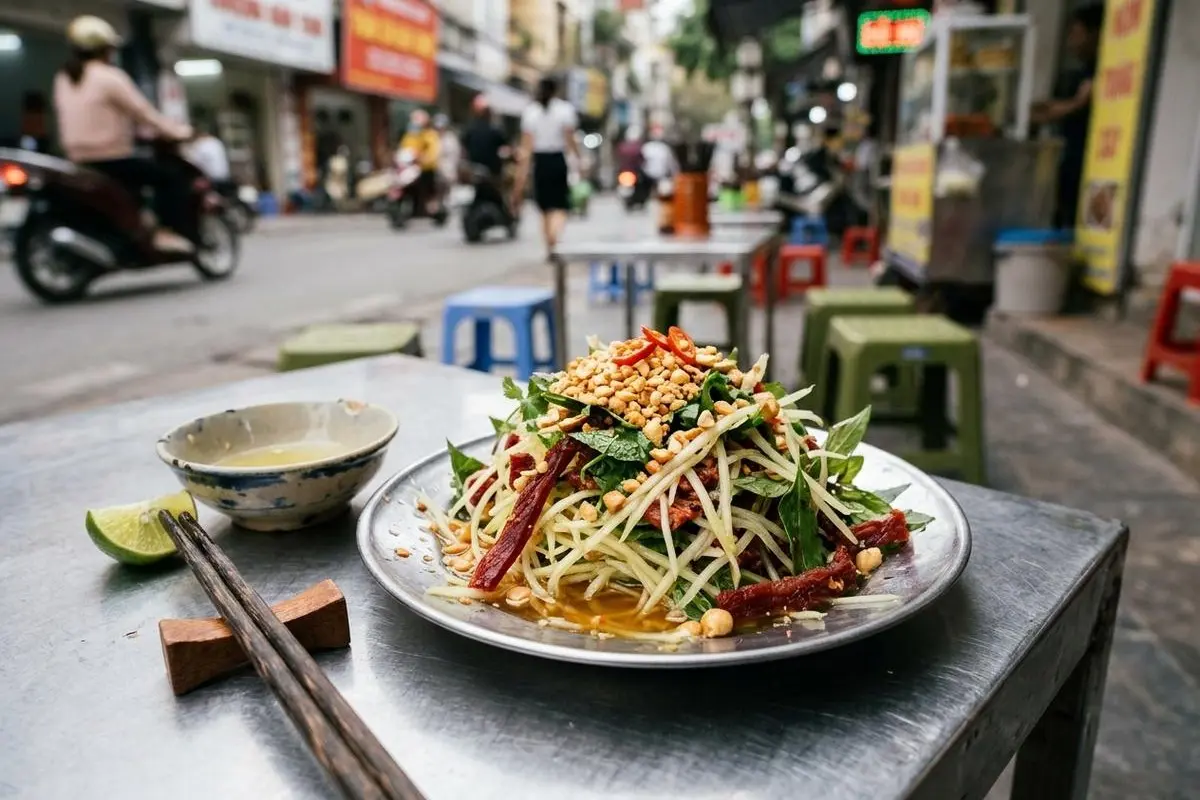
Carrot for colour
Many vendors mix in a smaller amount of shredded carrot. It adds a pop of orange, a little natural sweetness and an extra layer of crunch. Some stalls skip it entirely, which is perfectly traditional too.
Dried Beef, The Heart Of The Dish
Bo kho means dried beef, and this is the ingredient that gives the dish its name and character. The beef is usually lean meat that has been seasoned, cooked and dried until it becomes dark, chewy and intensely flavoured, a little like a spiced beef jerky.
How the beef is seasoned
Each producer has its own blend, but common seasonings include:
- Sugar and fish sauce or soy sauce for a sweet and salty base.
- Garlic and chilli for warmth and depth.
- Warm spices, sometimes including five-spice or similar blends, for aroma.
- A touch of colour, which gives some dried beef its reddish or dark brown look.
The beef is then dried or slowly roasted. Vendors usually tear or cut it into thin strips just before serving, so it stays chewy rather than hard.
Traditional extras
In some traditional northern versions, the topping includes dried beef liver or lung as well as muscle meat. These add a softer, richer texture and are loved by many locals. If you prefer only beef meat, ask the vendor or point at the strips you want. Many modern stalls focus on beef jerky alone for visitors.
If you enjoy discovering what goes into local dishes, our breakdown of banh da cua ingredients explores another Haiphong classic in the same way.
>>> Food Tour Haiphong: 16 Best Must-Try Dishes & Local Eateries
Fresh Herbs That Lift The Flavour
Vietnamese cooking depends on fresh herbs, and nom bo kho is no exception. Herbs turn a simple salad into something bright and perfumed.
- Thai basil (hung que). Sweet, peppery and slightly anise-like. It is one of the most common herbs on top of nom bo kho.
- Vietnamese balm (kinh gioi). Lemony and minty, a classic northern herb that pairs beautifully with dried beef.
- Mint or other leafy herbs. Some vendors add mint or whatever fresh herb is best in the market that day.
Herbs are usually torn or roughly chopped and scattered over the salad at the last moment, so they stay fresh and fragrant. Wilted or dark leaves are a sign the herbs have been sitting too long.
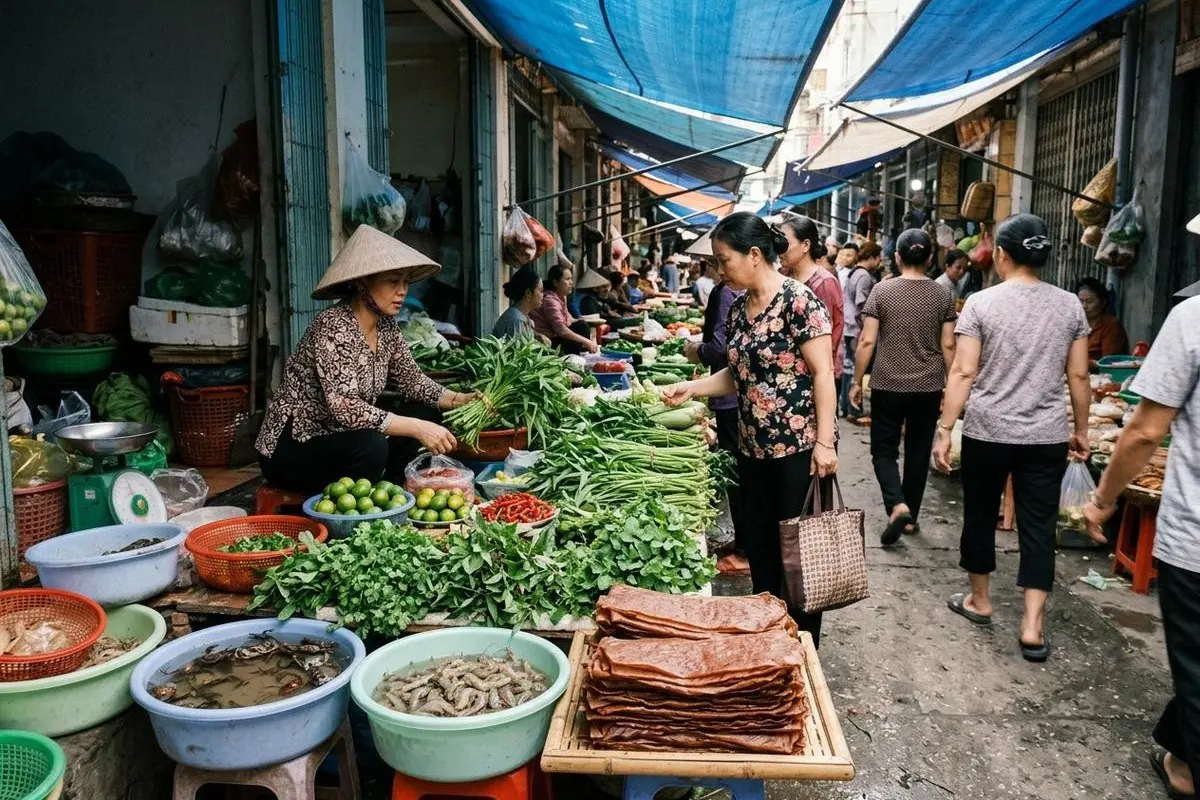
Recommended tour
The Haiphong Street Food and City Tour
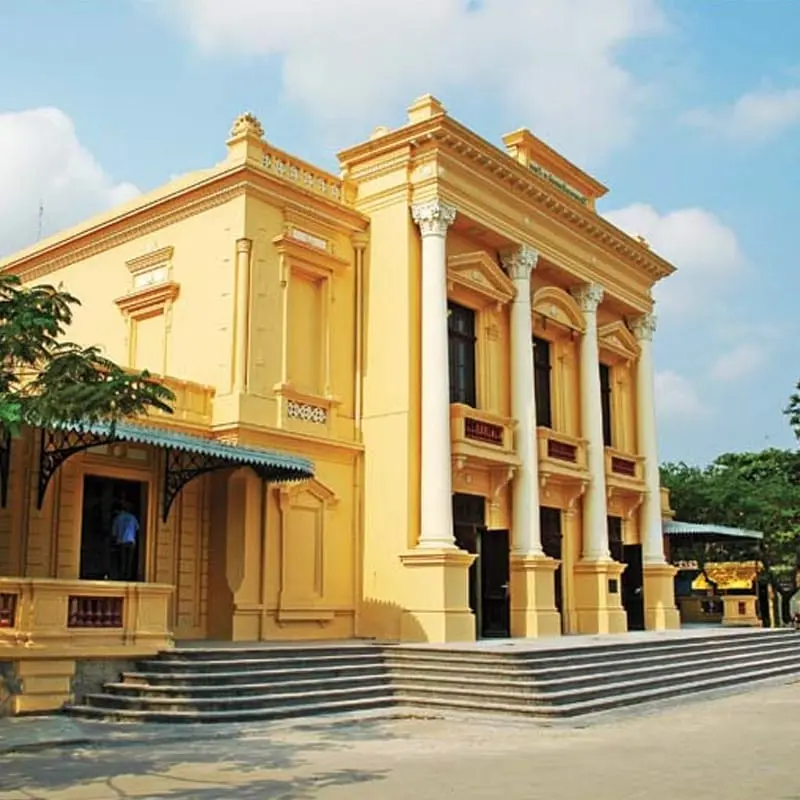
See fresh herbs, papaya and dried beef at a local market, then taste nom bo kho and other Haiphong snacks with a guide who explains every ingredient.
From $85 per person
Roasted Peanuts For Crunch
A generous sprinkle of roasted peanuts finishes most plates of nom bo kho. They are usually dry-roasted until golden, skinned and lightly crushed so you get small crunchy pieces in every bite.
- Texture. Peanuts add a different kind of crunch from the papaya, firmer and richer.
- Flavour. Their nutty, toasty taste softens the sharpness of the dressing.
- Allergy note. Because peanuts are standard, travellers with a peanut allergy should be very careful. Ask clearly for no peanuts and be aware that utensils and bowls may still be shared.
Some stalls also add crispy fried shallots or fried garlic, which bring a sweet, savoury fragrance and extra crispness.
The Dressing That Ties Everything Together
If the beef is the heart of nom bo kho, the dressing is its soul. It is usually a thin, glossy sauce that is sweet, sour and savoury at the same time. Vendors guard their recipes, but most dressings combine a few familiar elements.
Common dressing components
- Vinegar or lime juice for a clean, tangy base.
- Sugar to balance the sourness.
- Soy sauce or fish sauce for depth and saltiness.
- Garlic and chilli, finely chopped, for warmth.
- Water to keep the dressing light so it coats the papaya without making it heavy.
Some sellers make a darker, slightly thicker sauce, while others prefer a light, clear dressing. Both are authentic. A good dressing should make you want another bite immediately, without being too sweet or too sharp.
Chilli on the side
Extra heat usually comes from a bottle of chilli sauce or a dish of fresh sliced chilli on the table. This lets each customer decide how spicy they want their plate. If you prefer mild food, simply leave it out.
>>> Secrets To Enjoying A Real Haiphong Food Tour
How Vendors Put A Plate Together
Watching a vendor assemble nom bo kho is part of the fun. It usually takes less than a minute, and every step has a purpose.
- A handful of papaya and carrot goes into a bowl or onto a plate.
- Dressing is poured over and the vegetables are tossed so every strand is coated.
- Dried beef is torn or snipped with scissors and laid on top.
- Herbs are scattered over the beef.
- Peanuts and crispy toppings go on last so they stay crunchy.
- Chilli is added on request or left for you to add yourself.
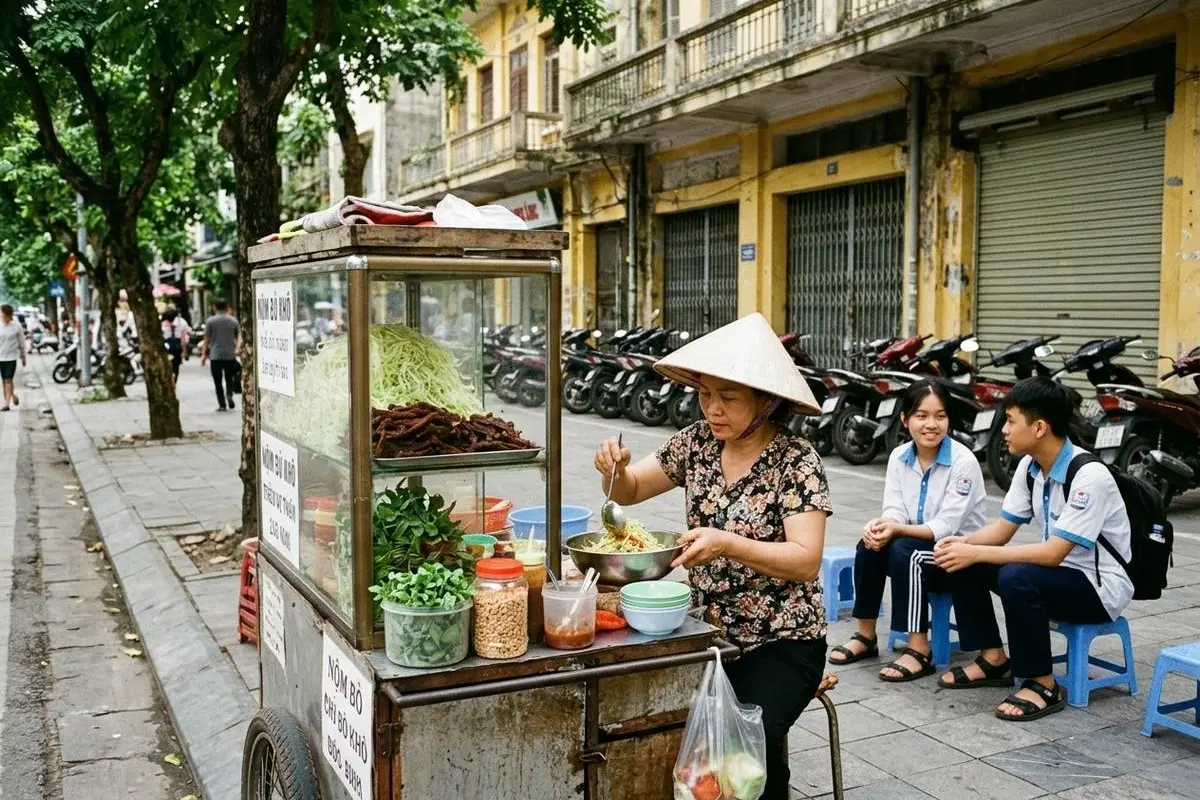
The order matters. Mixing the dressing into the papaya first keeps it juicy, while adding peanuts and herbs at the end keeps them crisp and fresh.
Choosing Good Ingredients At A Stall
You do not need to be a chef to spot a good nom bo kho stall. Look at the ingredients on display and you will learn a lot.
- Papaya should be crisp, pale green and neatly shredded.
- Dried beef should look dark and glossy, not dusty or overly dry.
- Herbs should be green and fragrant, not wilted.
- Peanuts should be golden and smell freshly roasted.
- The stall should be busy, tidy and have covered containers.
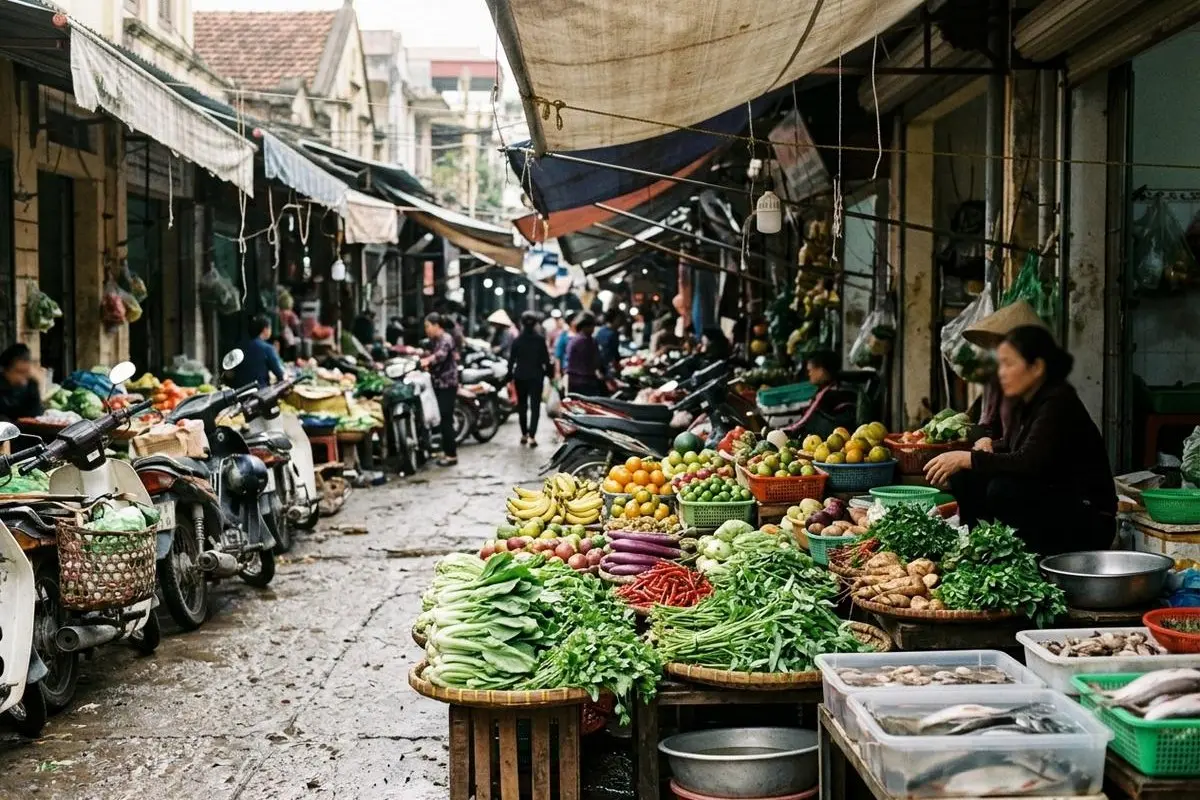
Busy carts sell through their ingredients quickly, which keeps everything fresh. If you want to explore where these ingredients come from, our Haiphong food tour route through local markets is a great place to start.
Making Nom Bo Kho At Home
Once you are back home, you can recreate a version of nom bo kho with ingredients from an Asian grocery store. Here is a simple approach for two people as a snack. Adjust everything to taste.
What you need
- About half a medium green papaya, peeled and finely shredded
- A small carrot, shredded (optional)
- A good handful of beef jerky, torn into thin strips
- A small bunch of Thai basil, plus mint or Vietnamese balm if available
- Two tablespoons of roasted peanuts, lightly crushed
- For the dressing: lime juice or rice vinegar, sugar, soy sauce or fish sauce, a little water, minced garlic and chilli
Simple steps
- Rinse the shredded papaya in cold water, then drain and squeeze it dry.
- Stir the dressing ingredients until the sugar dissolves. Taste and balance sweet, sour and salty.
- Toss the papaya and carrot with most of the dressing.
- Top with beef jerky, herbs and peanuts, then drizzle over the remaining dressing.
- Serve immediately with chilli on the side.
Easy substitutions
- No green papaya? Try shredded green mango, kohlrabi or cucumber without seeds.
- No Vietnamese herbs? Thai basil and mint give a good result.
- No beef jerky? Thin slices of grilled beef or shredded roast beef work, although the texture will be softer.
- Vegetarian? Use crispy tofu or mushroom jerky and soy sauce instead of fish sauce.
For another taste of Haiphong in your own kitchen, try our guide on how to cook banh da cua at home.
Taste The Real Thing In Haiphong
Home versions are fun, but nothing beats eating nom bo kho on a low plastic stool beside a busy Haiphong street. The papaya is shredded that morning, the herbs come from the local market and the dressing follows a recipe the vendor has perfected over years.
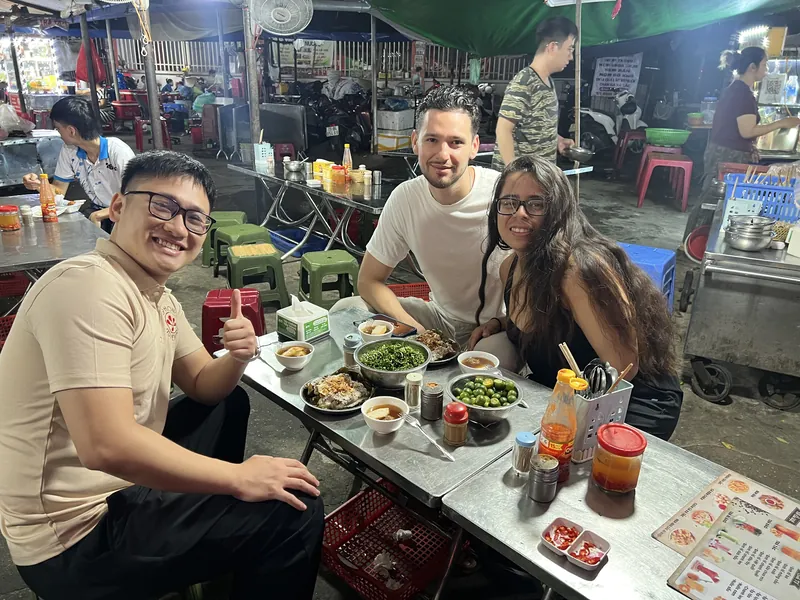
Many travellers try it as part of our haiphong tours, where a local guide explains the ingredients, helps with ordering and introduces other snacks nearby. It is an easy and delicious way to add a food chapter to your haiphong adventure.
Frequently Asked Questions About Nom Bo Kho Ingredients
What are the main ingredients in nom bo kho?
Shredded green papaya, dried beef, fresh herbs such as Thai basil, roasted peanuts and a sweet and sour dressing. Carrot and chilli are common additions.
Is the beef in nom bo kho raw?
No. The beef is seasoned, cooked and dried, similar to beef jerky, so it is ready to eat.
Does nom bo kho contain offal?
Some traditional versions include dried beef liver or lung. If you prefer only beef meat, ask the vendor before ordering.
Is nom bo kho suitable for people with allergies?
It usually contains peanuts, and the dressing may include fish sauce or soy sauce. Travellers with allergies should explain clearly in writing and be aware of shared utensils.
Can I make nom bo kho without green papaya?
Yes. Green mango, kohlrabi or cucumber are good substitutes, although the texture and flavour will be slightly different.
Discover Every Flavour With Haiphong Adventure
Now that you know the ingredients behind nom bo kho, every plate will make more sense: the crunch of papaya, the chew of dried beef, the perfume of herbs, the roast of peanuts and the bright dressing that brings them together.
If you would like to see these ingredients at a local market and taste the salad with a Haiphong guide, send the Haiphong Adventure team a message. We will help you plan a food experience that suits your taste and schedule.
WhatsApp, Viber, WeChat: +84(0)934.555.001
KakaoTalk, Line ID: haiphongadventure