Where To Find Authentic Nom Bo Kho In Market
The most authentic nom bo kho in Haiphong is usually found where locals shop every day: in and around traditional markets. Snack sellers set up near market entrances, in food corners and along the lanes outside, serving papaya salad with dried beef to shoppers, traders and students from mid-afternoon onwards. If you want the real thing at a local price, a market is the best place to start.
This guide from the Haiphong Adventure team explains which kinds of markets to visit, when to go, how to find the snack corner, how to recognise a good nom bo kho vendor and how to order without stress. Stalls move, open and close often, so we focus on how to find them rather than promising one exact address. Treat any practical details as a reference (updated October 2026).
Why Markets Are The Best Place For Nom Bo Kho
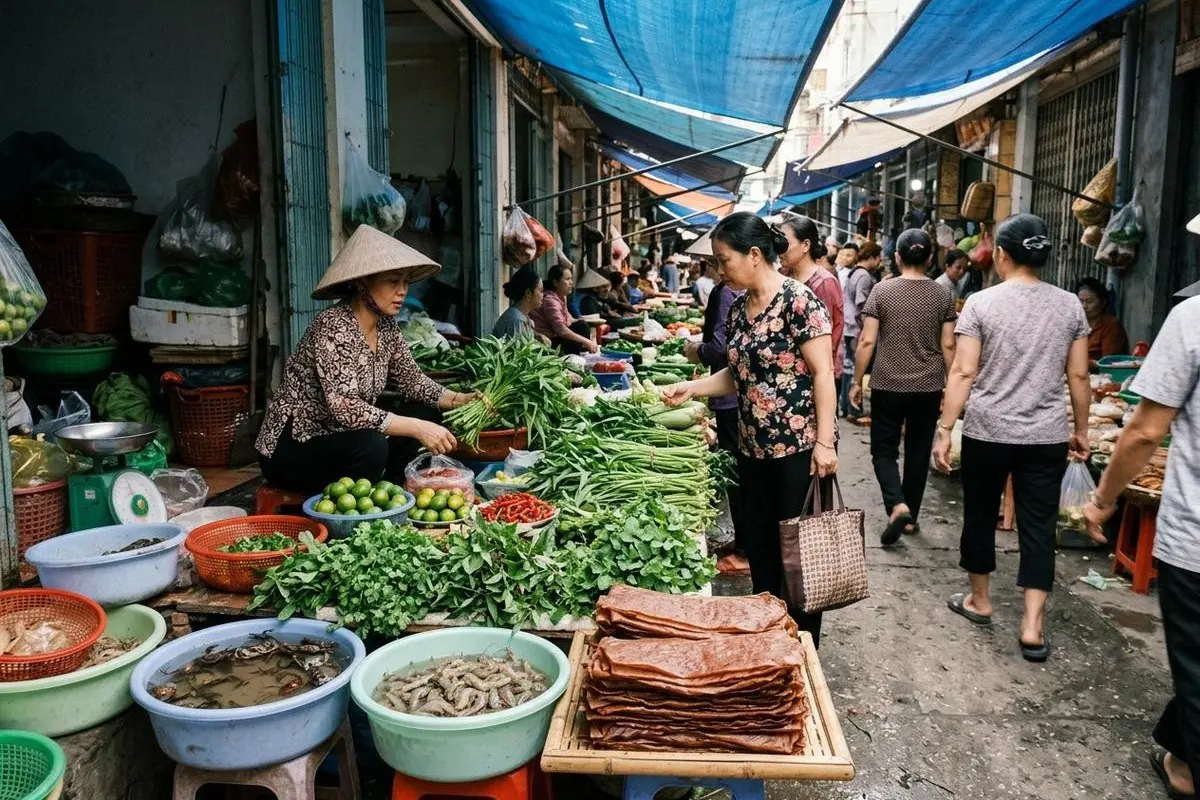
Markets are the beating heart of daily life in Haiphong. Every morning they fill with fresh vegetables, herbs, seafood and meat, and by the afternoon the mood changes as people stop for a snack before heading home. Nom bo kho fits perfectly into that rhythm.
- Fresh ingredients nearby. Vendors can buy papaya and herbs from neighbouring stalls the same day.
- Local customers. Market snack stalls depend on regulars, so quality matters.
- Fair prices. Market snacks are made for local budgets, not tourist menus.
- Real atmosphere. You eat surrounded by everyday Haiphong life, not in a restaurant built for visitors.
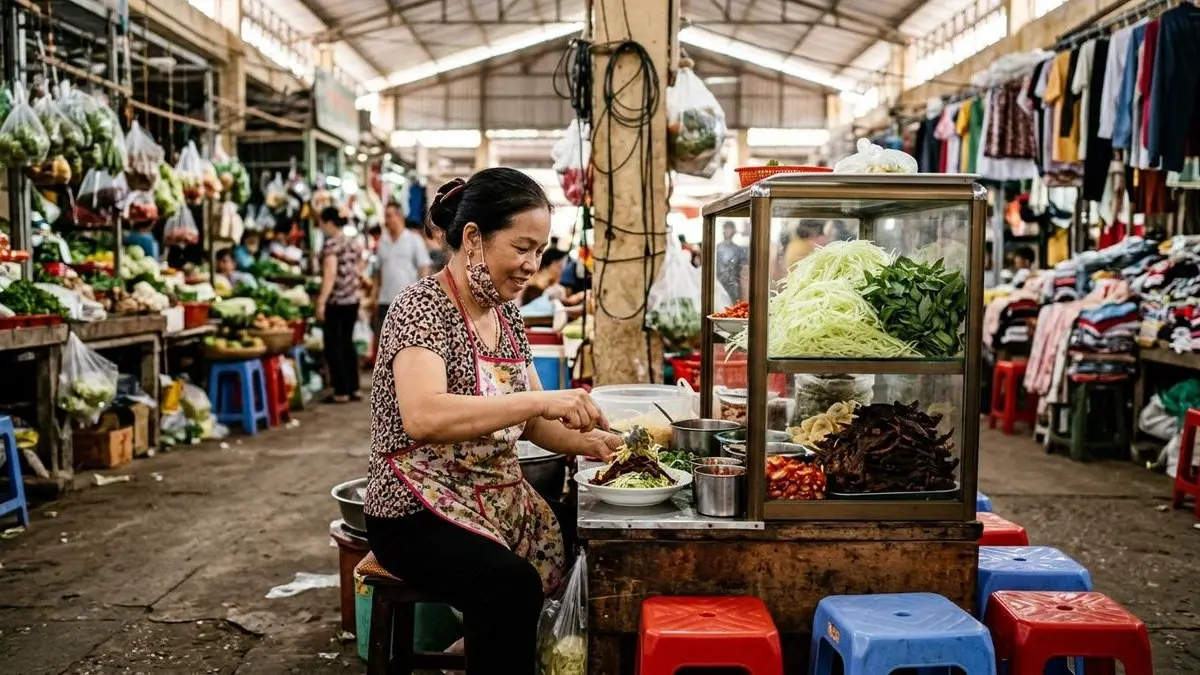
For travellers, a market visit also gives context. You can see the green papaya, the bundles of Thai basil and the strips of dried beef on sale before you taste them together on one plate.
Markets To Explore In Haiphong
Haiphong has many traditional markets, from large city markets in the old centre to small neighbourhood markets in residential streets. Not every market has a nom bo kho seller every day, but the larger, busier markets give you the best chance. These are good places to begin your search.
Cho Sat
Cho Sat is one of the best-known markets in the old centre. It is a large, multi-storey covered market with a long history as a trading hub. The surrounding streets are busy with small eateries and snack sellers, especially around the entrances in the afternoon. It is a great place to combine a market walk with a street food snack.
Tam Bac Market area
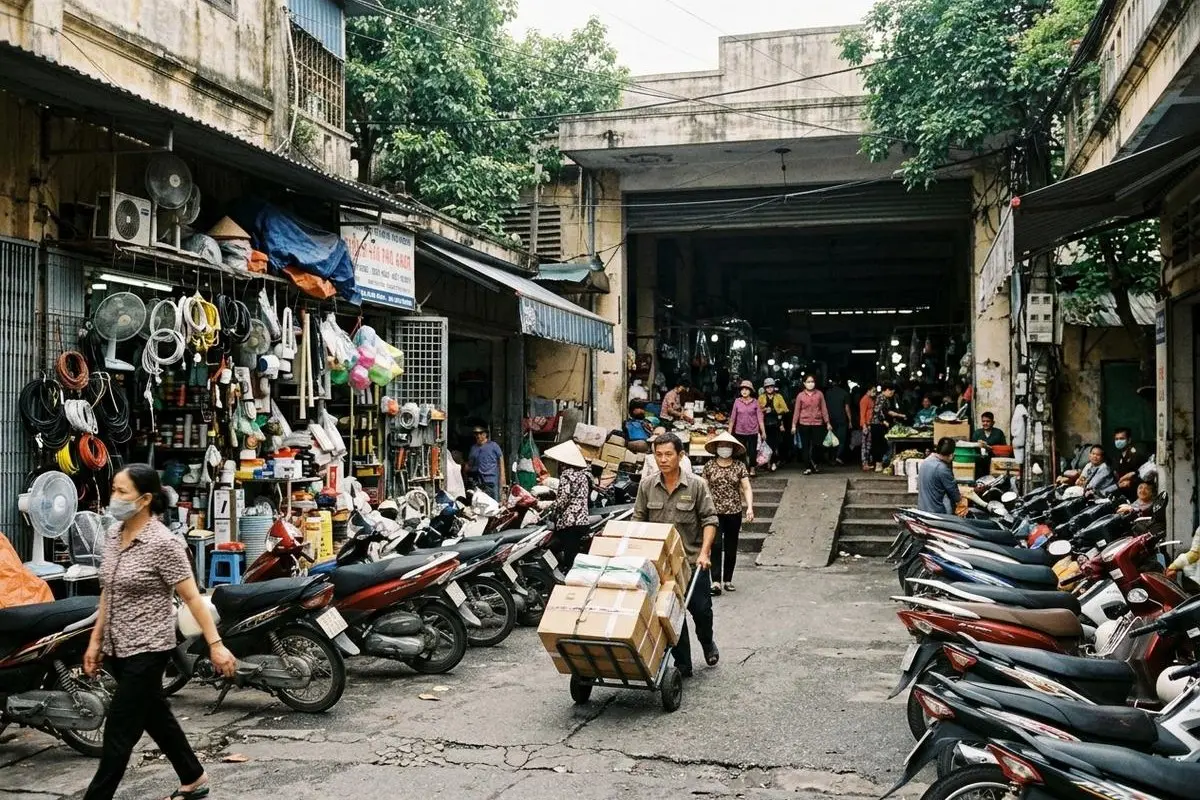
The area around Tam Bac Lake and the nearby market is one of the liveliest parts of the old town. Food stalls, fruit sellers and snack carts gather along the streets, and the lakeside makes a pleasant place to stroll after eating.
An Duong Market
An Duong is a large local market in a busy residential district. It is less visited by tourists and gives a good feel for daily neighbourhood life. Snack stalls and small eateries usually operate around its edges.
Cho Hang
Cho Hang is another traditional market area known for its food stalls and local trade. It is a good option if you want to explore beyond the most central streets.
Neighbourhood markets
Small morning and afternoon markets appear in many residential streets. They are often the most authentic of all. If you see a cluster of vendors under umbrellas with locals on plastic stools, it is worth a closer look.
Our Haiphong food tour route through local markets explains how to link several markets and food stops in one walk.
>>> Top Dishes To Try On Your Haiphong Food Tour Day
When To Go For The Freshest Plate
Timing makes a big difference. Haiphong markets are busiest in the early morning for fresh produce, but nom bo kho is mainly an afternoon snack.
| Time | What you will find |
|---|---|
| Early morning | Fresh herbs, vegetables and papaya being sold; few snack stalls open yet |
| Late morning | Market still busy; some snack sellers begin preparing |
| Mid-afternoon | Best time for nom bo kho; carts and snack corners are open |
| Early evening | Busy with students and workers; popular stalls may sell out |
| Night | Market stalls close; some carts move to food streets and lakesides |
A good plan is to visit a market in the morning to see the ingredients, then return in the afternoon to taste the finished dish. Weekends and school holidays can change the rhythm slightly, so be flexible.
How To Find The Snack Corner
Large markets can feel like mazes. Snack sellers are rarely in the middle of the fabric or hardware sections, so knowing where to look saves time.
- Start at the main entrances. Carts and small stalls often wait just outside the doors.
- Look for the food area. Many covered markets have a ground-floor section with cooked food and snacks.
- Walk the side lanes. Narrow streets around markets often hold the best snack vendors.
- Follow the plastic stools. Low stools and small tables are the universal sign of street food.
- Watch where students go. Groups of young people are a reliable guide to good, cheap snacks.
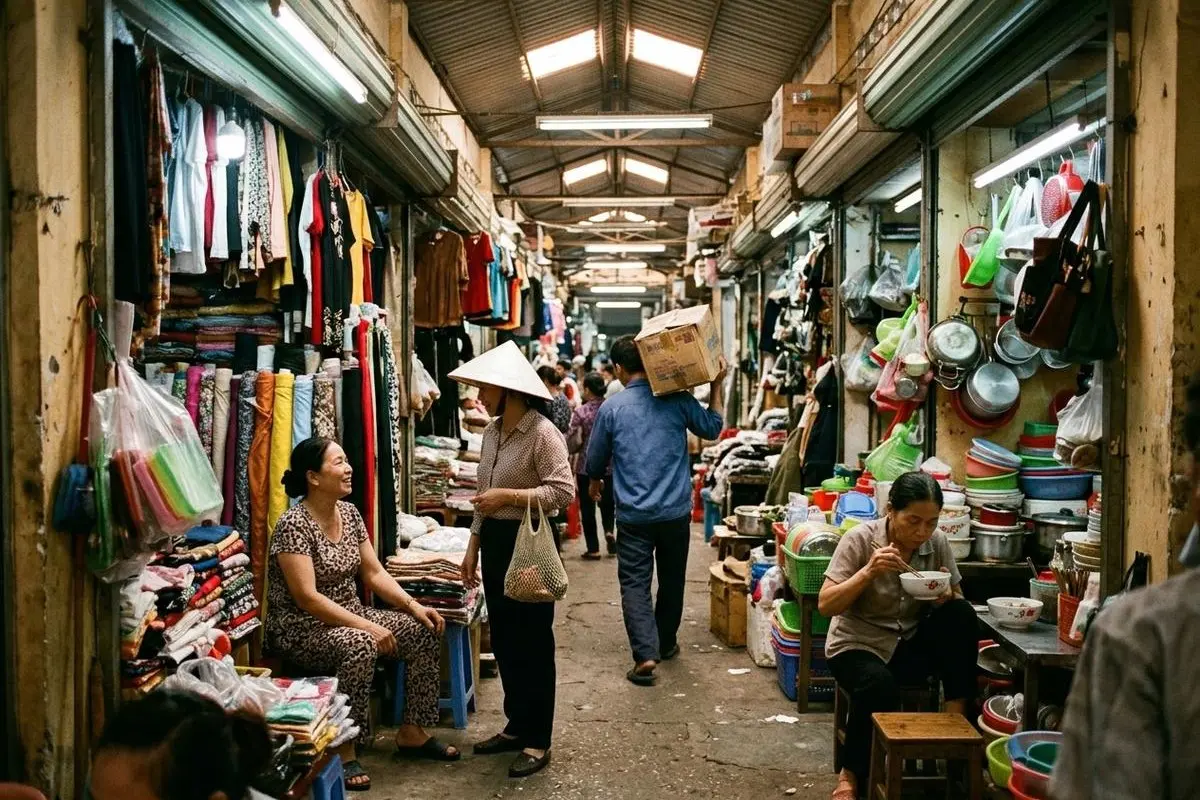
If you get lost, show the words “nom bo kho” on your phone to a friendly vendor. Most people will happily point you in the right direction.
Recommended tour
The Haiphong Street Food and City Tour
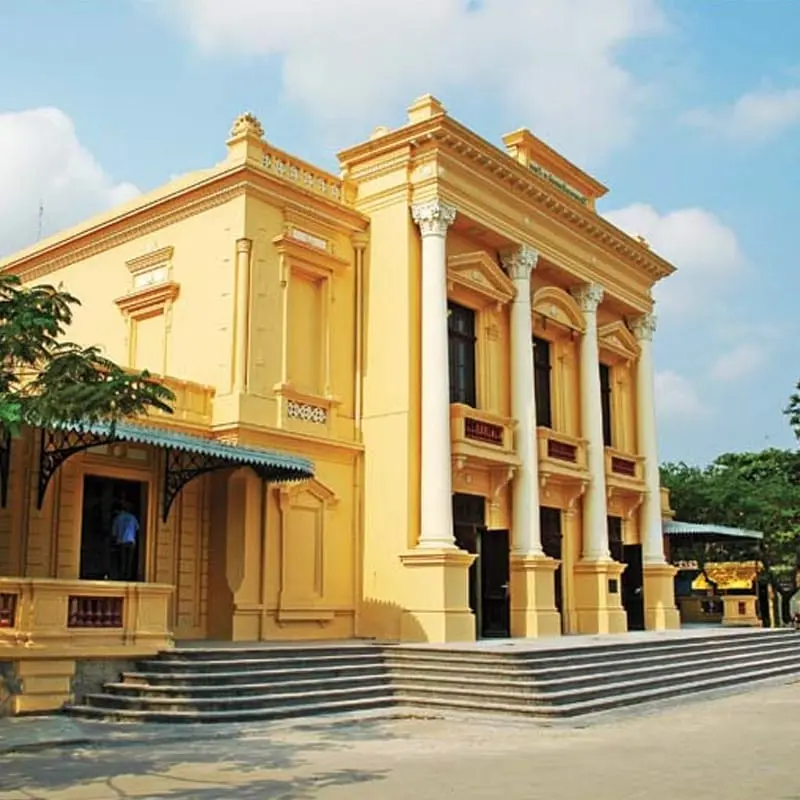
Skip the guesswork: a local guide takes you through busy markets to trusted snack stalls for nom bo kho and other Haiphong favourites.
From $85 per person
Signs Of An Authentic Nom Bo Kho Vendor
Authentic does not mean fancy. The best nom bo kho often comes from the simplest stall. Here is what to look for.
The set-up
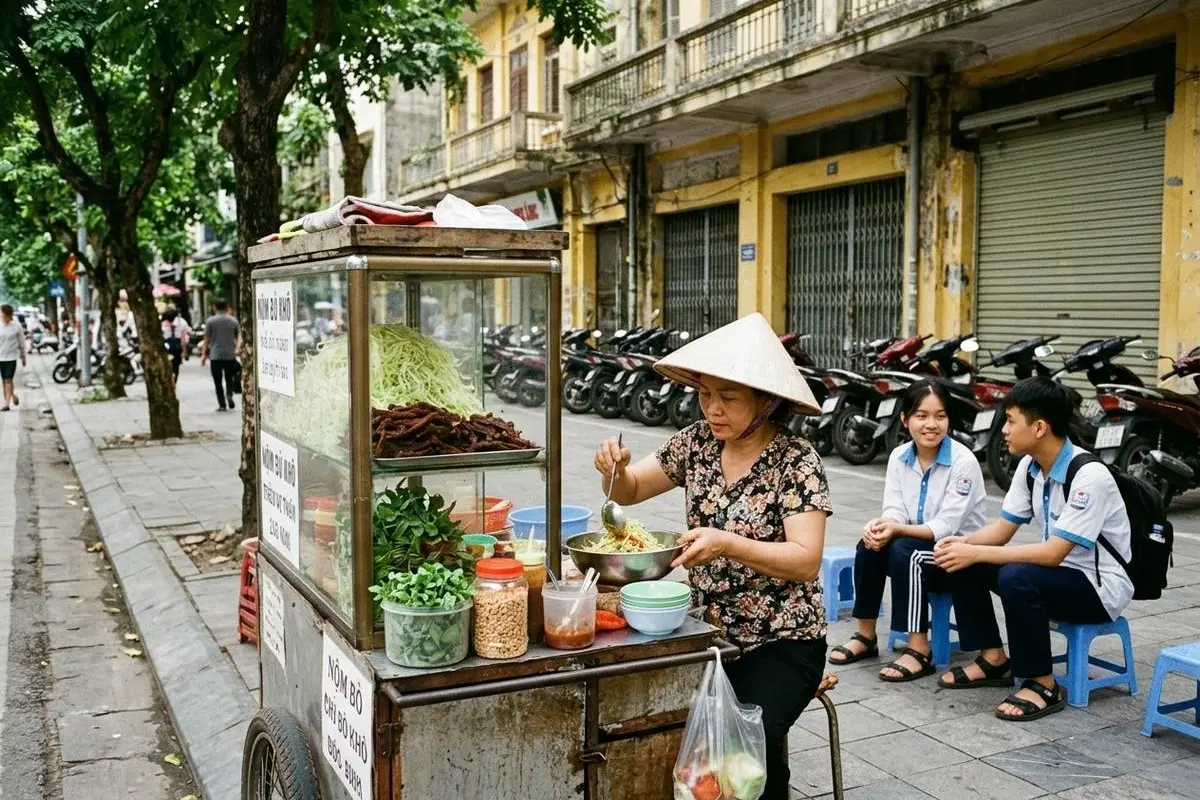
- A small glass cabinet or covered trays holding papaya, beef and herbs separately.
- Fresh papaya that looks crisp and pale green.
- Dried beef hanging or stacked in strips, ready to be torn.
- Bottles of dressing and chilli sauce within easy reach.
The service
- Made to order. Each plate is mixed in front of you, not pre-packed hours before.
- Quick hands. Experienced vendors assemble a plate in under a minute.
- Regular customers. Locals who greet the vendor by name are a very good sign.
The taste
- Balanced dressing, neither too sweet nor too sour.
- Chewy, flavourful beef rather than hard or dry pieces.
- Fresh, fragrant herbs and crunchy peanuts.
>>> My Haiphong Street Food Adventure Local Taste
How To Order And Pay At A Market Stall
Market vendors are used to quick, simple transactions. You do not need much Vietnamese to enjoy your snack.
- Greet the vendor with a smile and a simple “xin chao”.
- Point at the salad and hold up fingers to show how many plates you want.
- Say how spicy you like it. “It cay” means less spicy, “khong cay” means not spicy.
- Ask the price with “bao nhieu tien?” or check before the plate is made.
- Pay in cash with small notes. Some stalls accept bank transfer by QR code, but cash is safest.
- Sit and enjoy. Plastic stools are part of the experience.
Prices at market stalls are usually low and similar to what locals pay. If something feels unclear, simply confirm the price before eating. Most vendors are honest and friendly.
Market Etiquette For Visitors
Markets are workplaces, so a little courtesy goes a long way.
- Keep aisles clear. Step aside for vendors carrying goods and motorbikes passing through.
- Ask before taking close-up photos of people and their stalls. A smile and a gesture toward your camera is usually enough.
- Do not haggle over snack prices. Street food prices are already low and fixed.
- Return stools and plates neatly when you finish.
- Carry a small bag for rubbish if there is no bin nearby.
- Mind your belongings in crowded areas, as in any busy market worldwide.
Beyond The Market Halls
If you cannot find a vendor inside a market, do not give up. Nom bo kho also appears in other places where locals gather.
- School and university gates in the afternoon.
- Lakeside promenades, especially around Tam Bac Lake in the late afternoon and evening.
- Food streets in the old districts, where small eateries sell several snacks.
- Parks and squares where families relax after work.

To plan your own route between these spots, use our DIY Haiphong food tour map, which connects popular food streets in the centre.
A Market And Snack Itinerary
Here is an easy half day built around finding authentic nom bo kho:
- 8:00. Walk through a morning market to see fresh herbs, papaya and dried beef on sale.
- 9:30. Coffee at a sidewalk cafe and a rest at your hotel during the heat.
- 14:30. Visit a large market such as Cho Sat and explore the surrounding lanes.
- 15:30. Find a snack corner or cart for nom bo kho and iced tea.
- 16:30. Stroll toward Tam Bac Lake and try another snack along the way.
- 18:00. Dinner in the old centre.
Travellers short on time often join one of our haiphong tours, where a guide already knows which stalls are open and trusted that day. It turns a search into a relaxed tasting walk and adds a delicious chapter to your haiphong adventure. For a guide’s view of other favourite places, read our review of the best Haiphong food tour spots.
Frequently Asked Questions About Finding Nom Bo Kho
Which market in Haiphong is best for nom bo kho?
Large, busy markets in the old centre such as Cho Sat give you the best chance, along with the lanes around them. Neighbourhood markets can also be excellent.
What time are nom bo kho stalls open?
Most sellers are busiest from mid-afternoon to early evening. Morning visits are better for seeing raw ingredients.
How much does nom bo kho cost at a market?
It is an inexpensive local snack. Prices vary by stall and portion, so check before ordering and carry small cash.
Can I find nom bo kho outside markets?
Yes. Look near school gates, lakesides such as Tam Bac Lake, food streets and parks in the afternoon and evening.
Is it easy to order without speaking Vietnamese?
Yes. Pointing, a smile and a few simple words like “it cay” for less spicy are usually enough.
Find Your Favourite Plate With Haiphong Adventure
Authentic nom bo kho is never far away in Haiphong. Head to a busy market in the afternoon, look for the glass cabinet of papaya and dried beef, follow the locals to the plastic stools and enjoy a crunchy, tangy plate made just for you.
If you would like a local guide to take you through Haiphong’s markets and snack stalls, send the Haiphong Adventure team a message. We will help you plan a food walk that suits your time and taste.
WhatsApp, Viber, WeChat: +84(0)934.555.001
KakaoTalk, Line ID: haiphongadventure