Nom Bo Kho Haiphong Texture And Flavor Profile
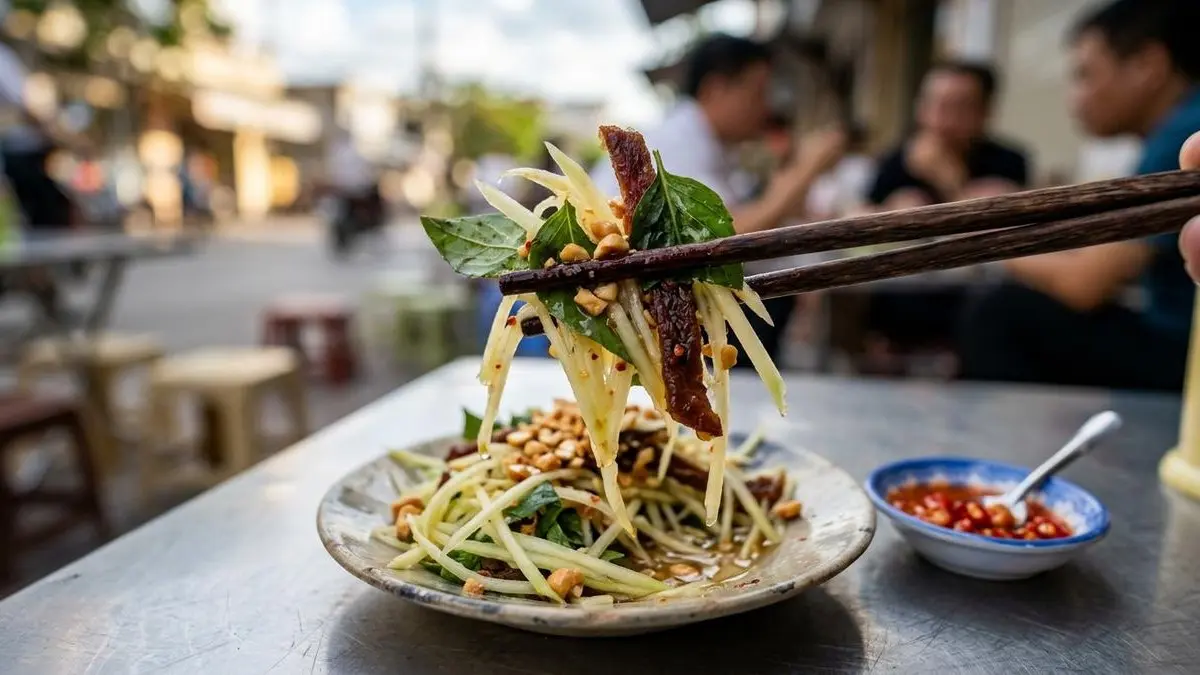
The texture and flavor profile of nom bo kho is all about contrast. In one bite you get cold, crisp papaya, chewy and savoury dried beef, soft fragrant herbs and crunchy roasted peanuts, all coated in a dressing that is sweet, sour, salty and gently spicy at the same time. Nothing is heavy, nothing is bland, and each element makes the others taste better. That balance is why this simple papaya salad has stayed a favourite Haiphong snack for so long.
In this guide, the Haiphong Adventure team takes a closer look at how nom bo kho feels and tastes, layer by layer. We explain each texture, map the five main flavour notes, describe how the experience changes from the first bite to the last and share tips to help you taste it like a local. Every vendor’s version is a little different, so think of this as a tasting guide rather than a strict rule.
Why Contrast Is The Secret Of Nom Bo Kho
Vietnamese cooking often aims for harmony between opposites: hot and cool, soft and crunchy, sweet and sour, rich and fresh. Nom bo kho is a perfect small example of that idea. Each ingredient brings one quality, and the dish works because they are combined in the right proportions.
- Cool against warm. Chilled papaya balances the warmth of chilli and spices.
- Crisp against chewy. Fresh vegetables meet slow-dried beef.
- Light against savoury. A neutral base carries deep, meaty notes.
- Fresh against roasted. Raw herbs sit beside toasted peanuts.
If any part is missing or overdone, you notice right away. Too much dressing makes the salad soggy, too little makes it dry, and old herbs flatten the whole plate. When it is right, every forkful feels lively.
The Textures Layer By Layer
Texture is just as important as taste in nom bo kho. Locals often judge a stall by how the salad feels in the mouth before they even think about the flavour.
Crisp and juicy papaya
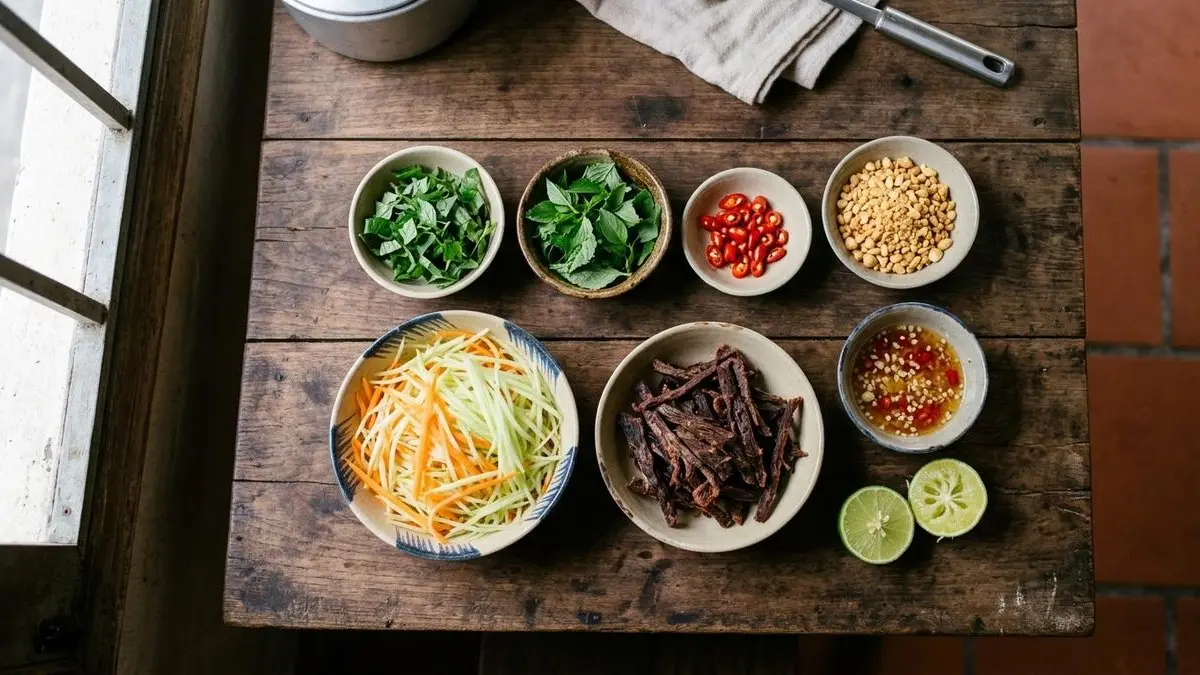
Green papaya forms the bulk of the dish. Well-prepared shreds are thin, firm and snappy, with a refreshing juiciness once they absorb the dressing. Good vendors rinse and drain the papaya so it stays crunchy instead of limp. It should feel almost like biting into crisp cucumber.
Chewy dried beef
The dried beef brings resistance. It should be chewy and slightly springy, releasing more flavour the longer you chew. It should not be rock hard or crumbly. Vendors usually tear it into thin strips so it is easy to eat with chopsticks.
Soft, delicate herbs
Herbs add a tender, leafy texture that softens the contrast between papaya and beef. Torn basil or Vietnamese balm leaves wrap around the other ingredients and make each bite feel more complete.
Crunchy peanuts and crispy toppings
Roasted peanuts give a firm, nutty crunch that is different from the watery crunch of papaya. Some stalls add fried shallots or garlic for extra crispness and fragrance.
>>> My Haiphong Street Food Adventure Local Taste
Mapping The Five Flavour Notes
A good plate of nom bo kho touches almost every part of your palate. Here is a simple flavour map to help you notice each note as you eat.
| Flavour | Main source | How it feels |
|---|---|---|
| Sweet | Sugar in the dressing, spiced beef | Gentle, rounded, never cloying |
| Sour | Vinegar or lime in the dressing | Bright and refreshing |
| Salty and umami | Dried beef, soy or fish sauce | Deep and savoury |
| Spicy | Chilli sauce, fresh chilli, spices on the beef | Warm, adjustable to taste |
| Herbal and nutty | Basil, Vietnamese balm, roasted peanuts | Aromatic and toasty |
Sweet
Sweetness comes mainly from the dressing and sometimes from the seasoning on the beef. In Haiphong-style versions, it is usually noticeable but light, smoothing the edges of the sour and spicy notes.
Sour
Sourness is what makes nom bo kho so refreshing. Vinegar or lime wakes up the papaya and cuts through the richness of the beef. It is the note that makes you reach for another bite.
Salty and savoury
The beef carries most of the salt and umami. Soy sauce or fish sauce in the dressing adds another layer of savoury depth.
Spicy
Heat is usually moderate and easy to control. Chilli sauce or sliced fresh chilli adds warmth, while spices on the beef give a quieter background heat.
Herbal and nutty
Herbs bring peppery, minty or lemony perfume, and peanuts add a toasty finish. Together they keep the dish fresh and complete.
Recommended tour
The Haiphong Street Food and City Tour

Taste the crunch, chew and tang of nom bo kho and other Haiphong snacks side by side, with a local guide explaining what makes each one special.
From $85 per person
From First Bite To Last
Nom bo kho changes as you eat it, which is part of the pleasure. Paying attention to these stages makes the experience more interesting.
- The first bite. Cold crunch and bright acidity hit first. The salad tastes fresh and almost bracing.
- The middle. As you chew the beef, savoury and spicy notes build. Herbs and peanuts fill in the gaps.
- The dressing settles. After a few minutes the dressing pools at the bottom and the papaya becomes juicier and more flavourful.
- The last bites. Many locals save the papaya soaked in dressing for the end, when it has absorbed the most flavour.
Because the papaya slowly softens in the dressing, nom bo kho is best eaten within a few minutes of being made. That is one reason vendors assemble each plate to order.
How The Profile Changes From Stall To Stall
No two vendors make nom bo kho exactly the same way. Trying it at different stalls is a fun way to discover your own favourite style.
- Sweeter or sharper dressing. Some vendors prefer a softer, sweeter sauce. Others go for a punchier, more sour taste.
- Dark or light sauce. A darker dressing often has more soy sauce and a deeper savoury flavour, while a lighter one tastes cleaner and brighter.
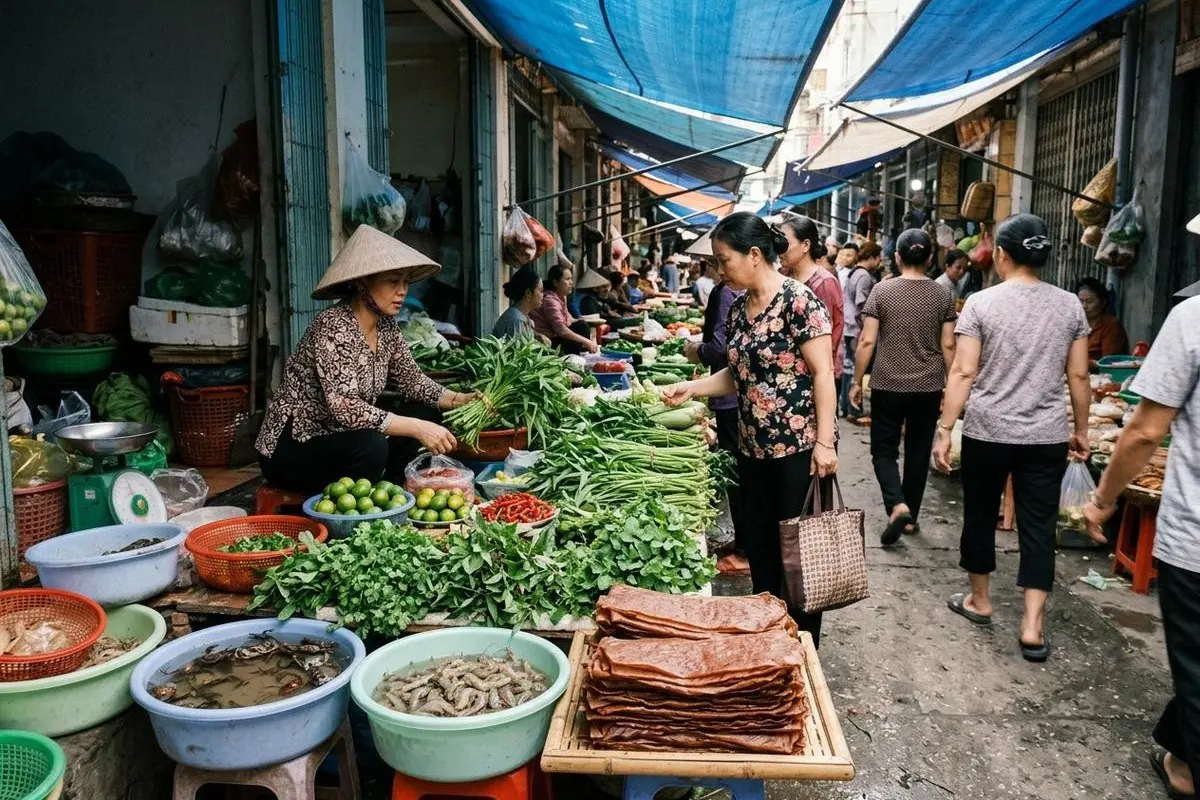
- Type of beef. Lean beef jerky is chewy and meaty. Traditional mixes with dried offal add softer, richer textures.
- Herb choice. Thai basil gives a sweet anise note, while Vietnamese balm brings a lemony freshness.
- Spice level. Some stalls add chilli directly, others leave it entirely to you.
If you enjoy comparing versions of the same dish, our guide to finding the best banh da cua in local alleys shows how much variety can exist in one city.
>>> Top Dishes To Try On Your Haiphong Food Tour Day
How To Taste Nom Bo Kho Like A Local
Locals do not overthink their snack, but they do have habits that make it taste better. Try these simple techniques.
- Toss before eating. Mix gently so the dressing reaches every strand of papaya.
- Build a full bite. Pick up papaya, beef, a herb leaf and a few peanuts together.
- Taste before adding chilli. Try the original balance first, then adjust.
- Chew the beef slowly. Its flavour develops as you chew.
- Eat it fresh. Do not let the plate sit too long or the papaya will lose its crunch.
- Share and compare. Order plates from two stalls and compare the dressing and beef.
For more practical tasting advice, see our secrets to enjoying a real Haiphong food tour, written by local guides.
Drinks That Complement The Flavour
Because nom bo kho is tangy and lightly spicy, the best drinks either refresh the palate or contrast with the sourness.
- Iced green tea. Light and slightly bitter, it resets your palate between bites.
- Sugarcane juice. Its natural sweetness softens the acidity.
- Kumquat or lime juice. Citrus drinks echo the bright notes of the dressing.
- Cold beer. In the evening, a light lager or fresh draft beer pairs well with the salty beef.

Comparing It With Other Salads You May Know
Describing a new flavour is easier when you compare it to something familiar. Here is how nom bo kho relates to a few well-known salads.
- Thai som tam. Both use green papaya, but som tam is usually pounded, more pungent and often much spicier. Nom bo kho is shredded, lighter and sweeter.
- Coleslaw. Similar crunch, but nom bo kho has no creamy dressing. It is tangy and clean instead.
- Beef jerky snacks. The beef will feel familiar, but here it is balanced by fresh vegetables and herbs.
- Other Vietnamese nom. Papaya salads with shrimp and pork share the same dressing style, but the dried beef gives nom bo kho a chewier, more savoury character.
Where To Experience It In Haiphong
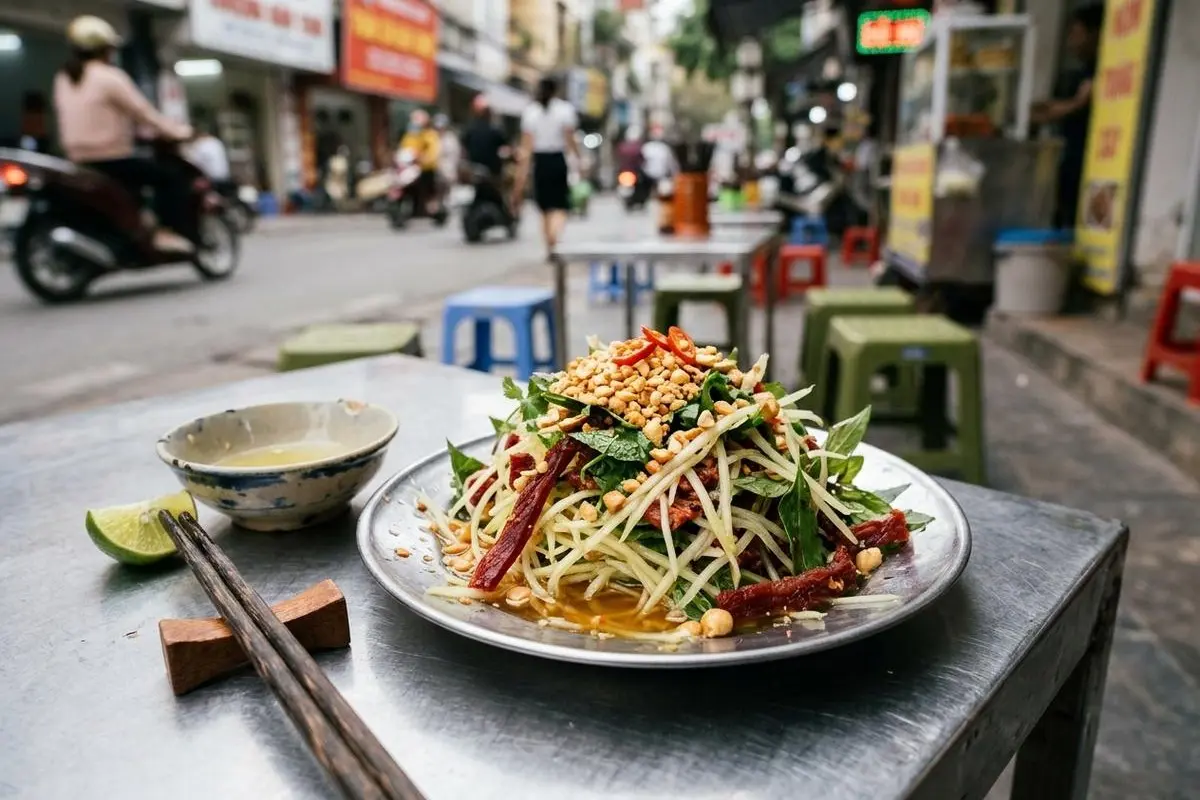
The best way to understand the texture and flavour of nom bo kho is to eat it fresh at a busy street stall. Look for carts and snack corners near markets, school gates and lakesides from mid-afternoon to early evening.
You can plan a snack walk with our DIY Haiphong food tour map, or let a local guide lead the way on one of our haiphong tours. Either way, tasting nom bo kho on a plastic stool beside a busy street is one of the simplest pleasures of a haiphong adventure.

>>> My Review Of The Best Haiphong Food Tour Spots
Frequently Asked Questions About The Taste Of Nom Bo Kho
What is the texture of nom bo kho?
It combines crisp, juicy papaya, chewy dried beef, soft herbs and crunchy roasted peanuts, so every bite has several textures at once.
Is nom bo kho sweet or sour?
Both. The dressing is tangy and lightly sweet, balanced by salty dried beef and a gentle chilli warmth.
How spicy is nom bo kho?
Usually mild to medium. Most heat comes from chilli sauce or fresh chilli, which you can add or skip.
Why does my nom bo kho taste different at each stall?
Every vendor uses their own dressing, beef and herbs. Some prefer sweeter sauces, others sharper or darker ones.
How long does nom bo kho stay crunchy?
It is crunchiest right after mixing. After 10 to 15 minutes the papaya softens as it absorbs the dressing, so eat it fresh.
Taste The Balance For Yourself
Nom bo kho shows how much flavour and texture a simple street snack can hold: crisp papaya, chewy beef, fragrant herbs, crunchy peanuts and a dressing that balances sweet, sour, salty and spicy in every bite. Once you have tasted a fresh plate in Haiphong, you will understand why locals never tire of it.
If you would like to explore Haiphong’s snack culture with a local guide, send the Haiphong Adventure team a message. We will help you plan a food experience full of flavours like this one.
WhatsApp, Viber, WeChat: +84(0)934.555.001
KakaoTalk, Line ID: haiphongadventure