
Eating Banh Da Cua Like A Real Haiphong Local
Eating banh da cua like a Haiphong local comes down to four habits. Arrive hungry and early. Taste the broth before you add anything. Build the bowl with herbs, chilli and lime in small steps. Finish with a cold drink and a slow walk. This guide walks you through each step, so your first bowl in the city feels like your hundredth.
At Haiphong Adventure we run motorbike and walking food routes through the port city, and banh da cua is one of the dishes guests ask about first. Below you will find what goes into the bowl, how locals order, what to avoid, and how to plan a tasting day. If you are comparing options on Haiphong tours, this article also shows where a bowl fits into a longer itinerary.
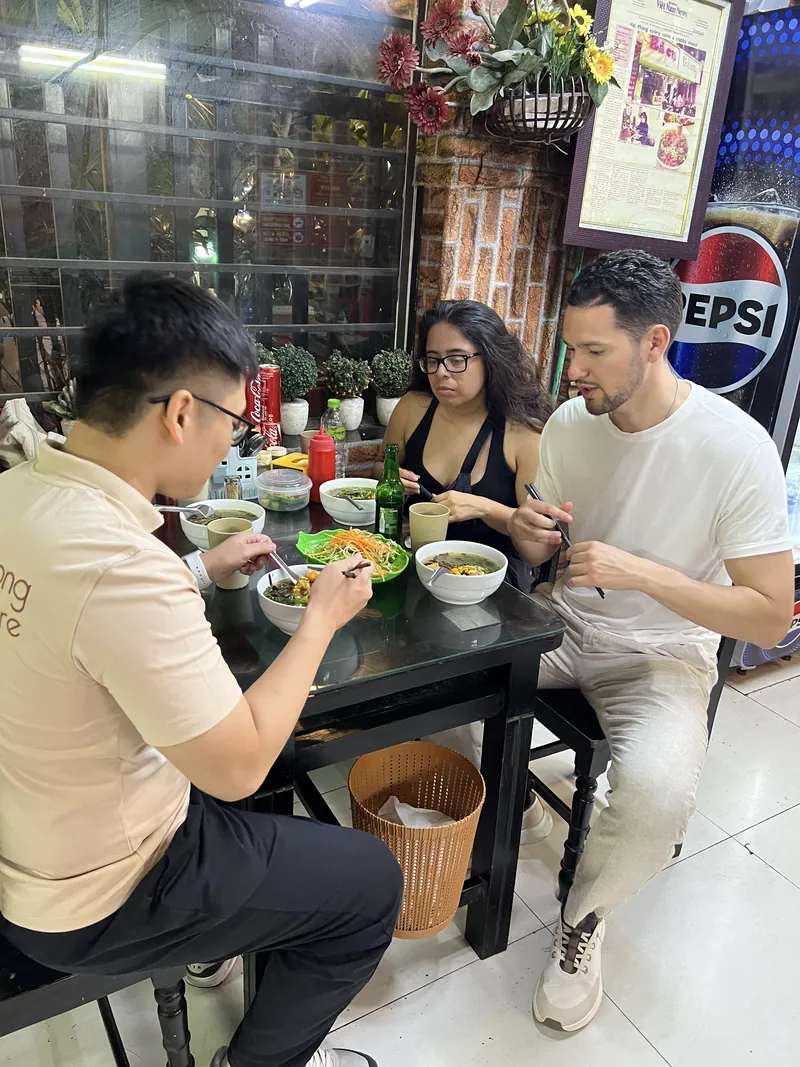
What Banh Da Cua Actually Is
Banh da cua is a noodle soup from Haiphong, the port city about two hours east of Hanoi. The name is simple. Banh da means rice noodle sheets, and cua means crab. Together they describe a bowl of flat noodles in a crab-flavoured broth, topped with a mix of fried and fresh extras.
Most visitors know Hanoi’s pho or the grilled pork of bun cha. Banh da cua feels different. The noodles are wider and chewier, with a reddish-brown tint that surprises first-timers. The broth is lighter than a beef bone broth but carries a deep, sweet seafood note. It is hearty without being heavy, which is why locals eat it for breakfast, lunch or an afternoon snack.
Every cook has a personal version. Some shops lean on the crab, some on the toppings, some on the sweetness of the stock. That variety is part of the fun, and it is why one bowl is never enough if you are serious about understanding the dish.
A Short Look At Where The Dish Comes From
Haiphong has always been a trading and fishing city, so seafood sits at the centre of local cooking. Rice fields surround the city. The paddies supply the small field crabs that flavour this dish, while rivers and tidal flats bring in shrimp and fish. Banh da cua grew from that mix of rice and river produce. Locals describe it as an everyday dish that turned into a symbol of the city’s food identity.
We prefer not to quote exact dates or claim a single inventor, because stories differ from one family kitchen to the next. What you can say safely is that the dish is deeply local, rarely found in the same form outside the city, and proudly defended by the people who cook it. If you ask three residents where the best bowl is, expect three different, passionate answers.
For wider context on the food culture here, our guide to a real Haiphong food tour explains how the city’s dishes connect to each other.
>>> My Haiphong Street Food Adventure Local Taste
Reading The Bowl From Bottom To Top
The noodles
The noodles are flat, soft and slightly springy. Their colour ranges from light brown to deep red-brown depending on the recipe. They are cooked separately and added to the bowl at the last moment, so they stay firm. If the noodles taste mushy, the shop probably let them sit too long. A good bowl keeps a gentle bite from the first mouthful to the last.
The broth
The broth is the heart of the dish. It is built around small rice-field crabs, which cooks usually pound and strain to pull out flavour. Expect a sweet, savoury and slightly earthy taste. Some bowls carry a hint of tomato, which adds a mild tang. The best broths are clear enough to see the noodles, yet rich enough to coat your lips.
The toppings
Toppings change from shop to shop. Common extras include fried items, slices of pork, tofu, small meat rolls and fresh greens. Many cooks add chopped water spinach or other leafy vegetables for crunch. Ask the server what comes standard and what you can add. Pointing at the neighbouring table’s bowl works perfectly well if you share no language.
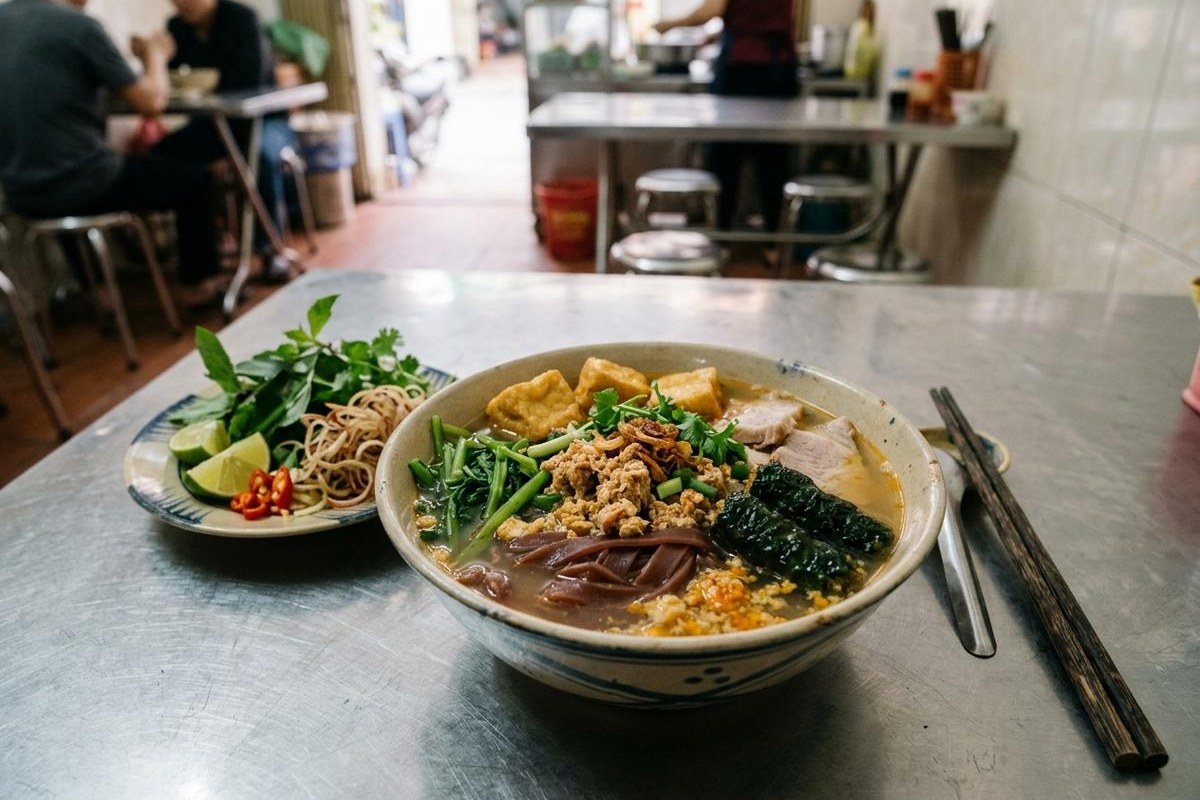
Crab paste or crab fat, when used, gives the broth its orange tint and creamy depth. Quality and quantity vary, so if you love a richer taste, ask politely whether a shop offers extra crab. Prices for extras are usually small, but please treat any price as a rough guide and confirm on the spot, since they change over time.
How Locals Order And Eat Banh Da Cua
Walk in, find a small plastic stool and look around. Most casual shops have no printed menu in English. A simple pattern works almost everywhere. Say the dish name, hold up fingers for the number of bowls, and nod when the cook points at toppings. Within minutes a steaming bowl lands in front of you.
- Taste the broth first with a spoon, without any additions.
- Add a little lime, a few chilli slices or a spoon of the chilli paste on the table, one at a time.
- Tear a handful of herbs and greens into the bowl, then stir gently.
- Use chopsticks for the noodles and the spoon for the broth, alternating between the two.
- Add toppings you saved for later, so they stay crisp until you reach them.
- Finish the broth if you enjoy it, as many locals do.
Locals rarely rush. Slurping is perfectly normal and a compliment to the cook. If the bowl is too hot, wait a minute instead of blowing on it loudly. You will quickly notice that regulars eat steadily, chat a little and leave without fuss.
Table Manners And Little Details That Help
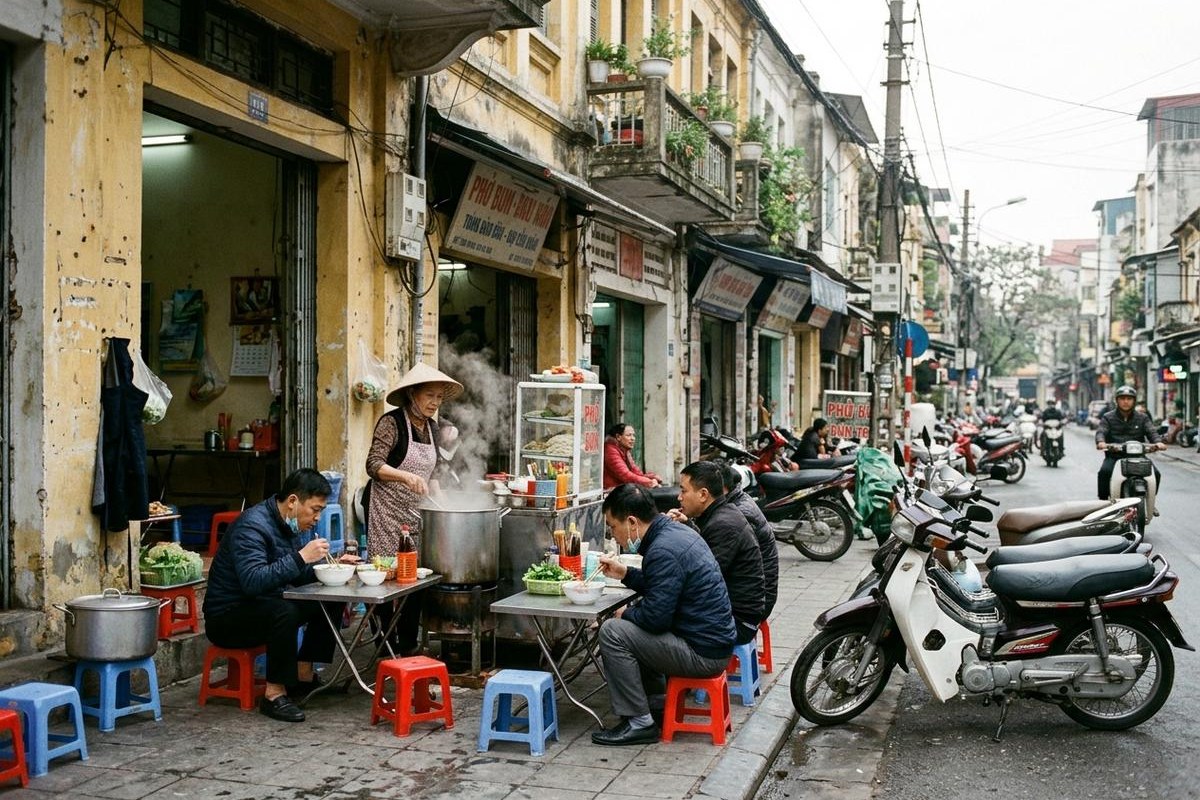
Vietnamese eateries are relaxed, but a few small habits make you look like a thoughtful guest. Keep your voice friendly and low. Put used tissues in the bin or on the table plate instead of the floor, unless the shop clearly lets customers drop them. Pay at the counter or hand cash to the server when you finish.
- Say thank you, or cam on, when the bowl arrives and when you leave.
- Check the pot of condiments before adding extra salt. The broth is already seasoned.
- Wipe your chopsticks with a tissue only if you wish. Many locals simply use them as they are.
- Carry small notes. Small shops sometimes struggle to change large bills.
- Avoid leaving chopsticks standing upright in the bowl. It resembles incense sticks at a funeral.
Hygiene is a common worry for first-time visitors. Pick a busy shop with fast turnover, watch how the cook handles the pot, and trust your instincts. Crowded places are usually crowded for a reason.
Recommended tour
The Haiphong Street Food and City Tour
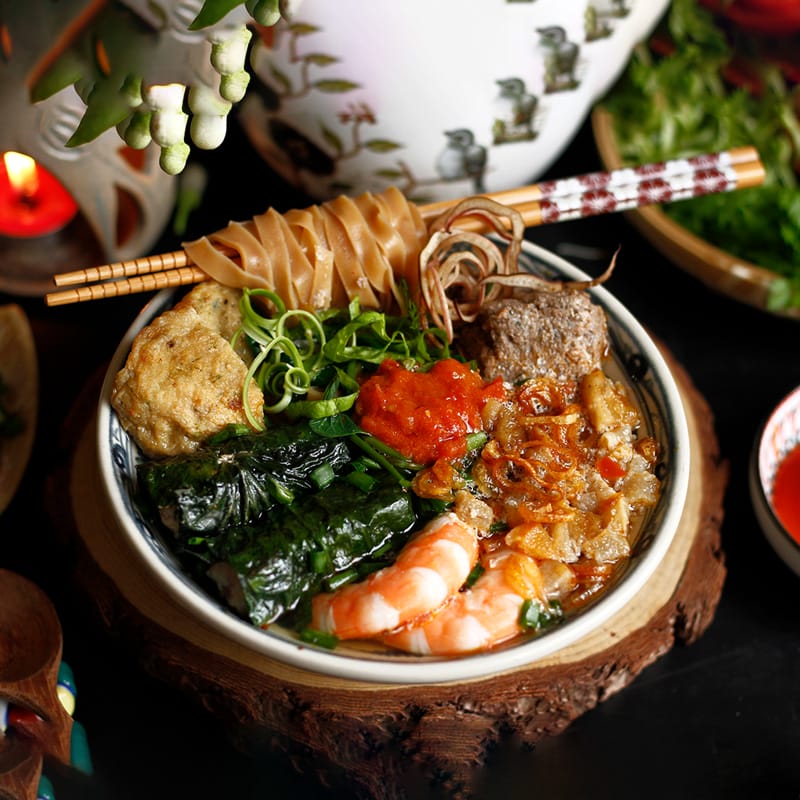
Taste local favourites with a friendly guide and see Haiphong’s streets from the back of a motorbike. A relaxed way to try banh da cua and other signature dishes without hunting for the right shop.
From $85 per person (reference price, updated 10/2026, please confirm when booking)
The Best Time Of Day To Eat It
Locals eat banh da cua at almost any hour, yet the most popular window is breakfast to mid-morning. The broth is freshest, the toppings are crisp and the shop is bustling. Lunchtime is also busy. Some stalls sell out of noodles or toppings by early afternoon, so do not leave your first bowl for the end of the day.
Opening hours differ from shop to shop and change with the season, so we do not publish fixed times here. As a rule of thumb, arrive in the morning and expect some places to close in the afternoon. If a particular shop is on your list, ask your hotel to call ahead or ask your guide to confirm.
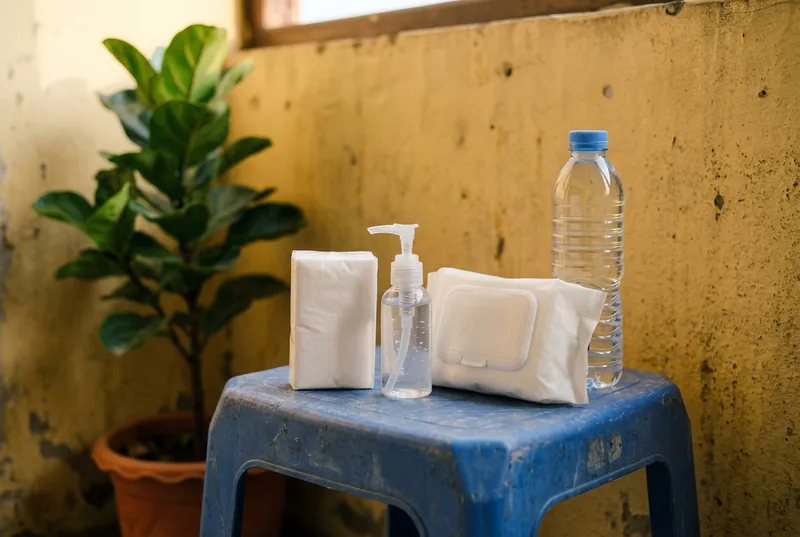
Weather matters too. A hot bowl on a humid summer day sounds odd, but locals do it. On a cool winter morning, nothing beats the steam. Either way, carry a small packet of tissues and a bottle of water.
Finding A Good Bowl Without Falling For A Tourist Trap
Haiphong is not overrun with tour groups, which is a big part of its charm. Even so, a few simple checks help you avoid disappointing bowls.
Look for a short menu and a busy room
A shop that makes one or two noodle dishes usually makes them well. Long menus with pictures of every Vietnamese dish tend to mean average results. A steady line of locals, motorbikes parked outside and a cook who never stops moving are all good signs.
Check the pot
A fresh pot has a clean, sweet smell. If the broth smells flat or sour, move on. Do not be afraid to leave. The next shop may be only a few doors away.
Ask for the house version
Instead of requesting custom changes, ask what the shop is known for. Cooks light up when they are asked about their own recipe, and you often receive a slightly better bowl as a result.
If you want a hand on your first day, our team can point you to reliable neighbourhoods. Several places on our tour list pair food stops with sightseeing, so you eat well and learn the city at the same time.
>>> My Favorite Things To Do In Haiphong On Weekend
What To Eat Alongside Your Bowl
Banh da cua is filling, but Haiphong rewards a second small plate. Locals often combine it with a snack or a drink. A few classic pairings follow, and again, availability and prices change, so treat them as ideas.
- A short, crunchy baguette snack, which the city is famous for, as a lighter side.
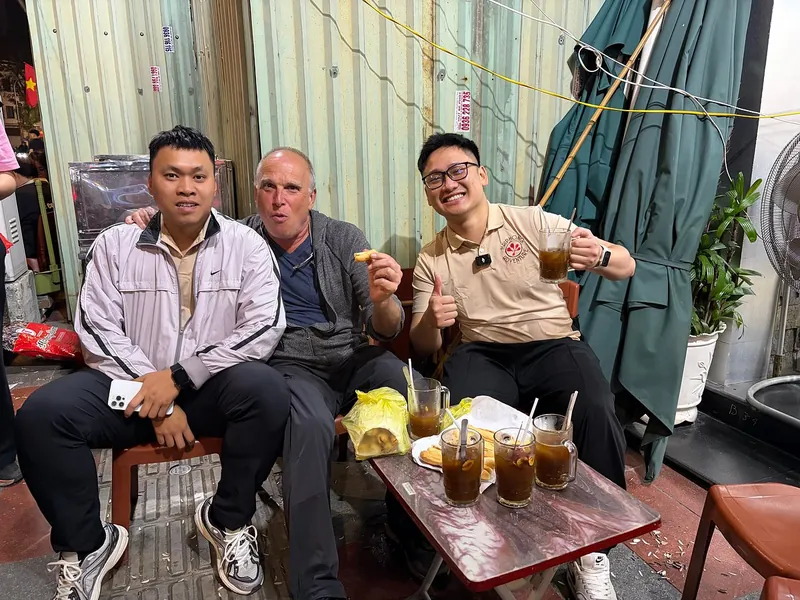
- Fresh sugarcane juice or iced tea to cool the chilli.
- A small plate of fried spring rolls from a neighbouring stall.
- Vietnamese iced coffee afterwards, strong and sweet, to settle the stomach.
Resist ordering too much at once. The smartest approach is to share a few small dishes among friends and move between shops. You taste more, waste less and keep room for the next stop.
Dietary Notes For Travellers
Banh da cua is built on seafood and pork, so it is not vegetarian or vegan by default. Travellers with shellfish allergies should avoid the dish entirely, as crab is the central flavour and cross-contamination is very likely. Use a translated allergy card and ask a guide to explain your needs to the cook.
If you avoid pork, ask before ordering. Some toppings contain it. Gluten-free diners should also be careful. The noodles are rice-based, but sauces and fried toppings may include other ingredients. When in doubt, be direct, polite and specific.
Spice level is entirely in your hands. Chilli comes on the side. Start small, taste, then add more. That makes the dish friendly for children and mild-food lovers too.
Eating With A Guide Versus Eating Alone
Many travellers happily eat banh da cua by themselves with a translation app and a pointing finger. It works. The advantage of a local guide is context. You learn how the broth is built, which side dishes pair best, how to speak to the cook and where to go next. You also avoid wasting time walking between closed shops.
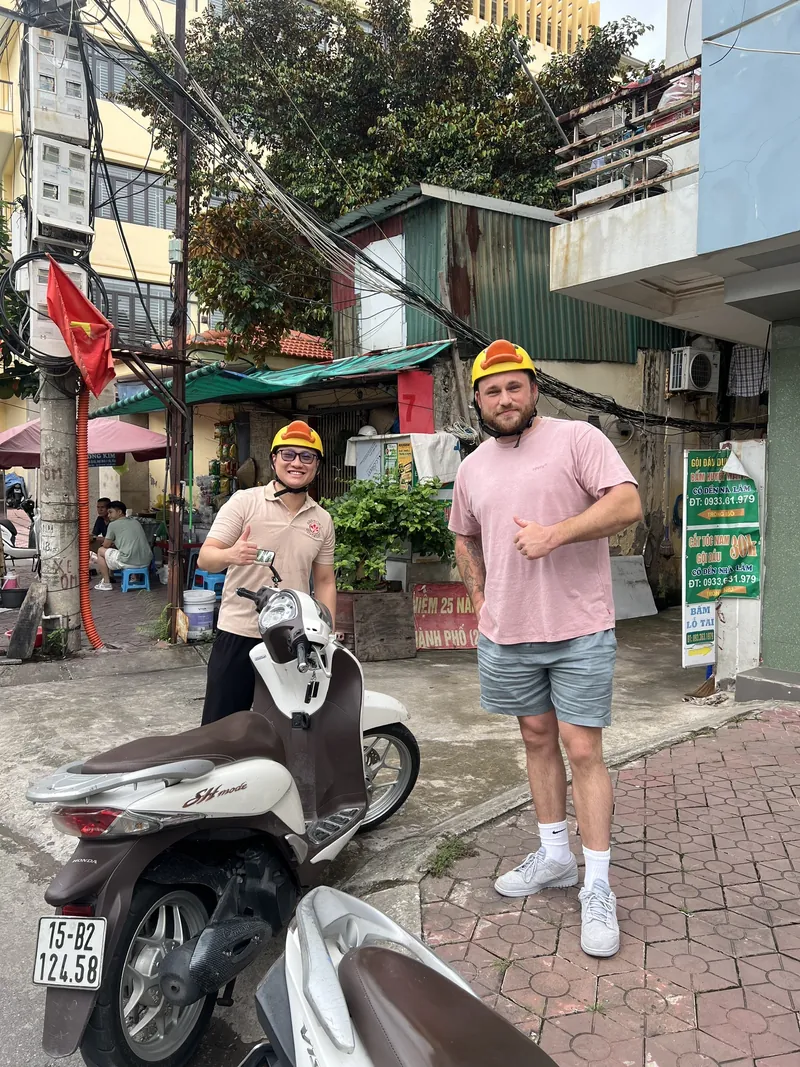
On a motorbike route you move at a relaxed pace, stop at a few kitchens and finish with sights you would struggle to reach on foot. Our riders are local, they know shop owners by name and they adjust the plan to your appetite and schedule. The recommended food and city tour above is a good place to start, and our team can adjust the pace to suit you.
A Simple Half Day Eating Plan
Here is a relaxed way to spend a morning and early afternoon, based on how our guests usually eat. Adjust it to your hotel, mood and the weather. All timings are suggestions only.
- Start with a morning walk around the old streets to build an appetite.
- Eat your first banh da cua in a busy local shop, tasting the broth before adding anything.
- Walk to a nearby cafe and try a strong Vietnamese iced coffee.
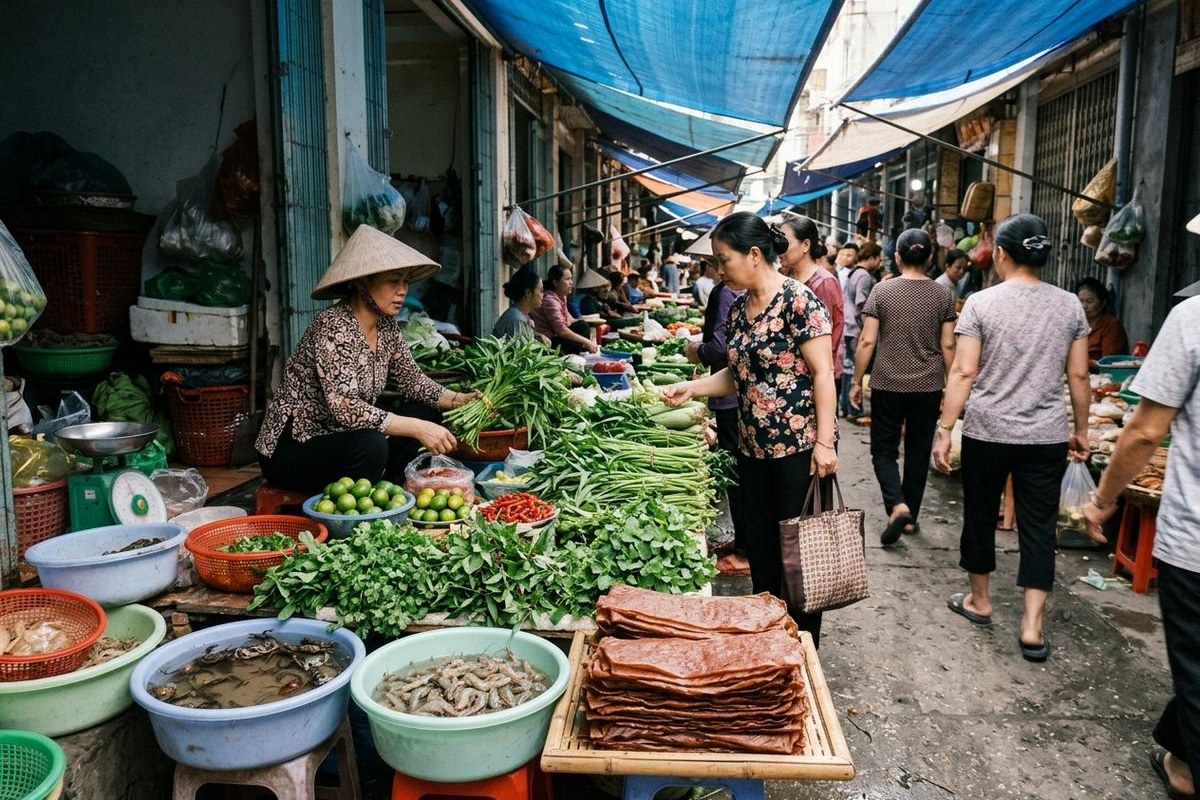
- Visit a local market to see ingredients such as fresh herbs, seafood and rice noodles.
- Try a second small dish, such as a snack or fried roll, at a different stall.
- Rest in the afternoon, then plan an evening walk or ride.
Many guests ask whether they can do a food morning and sightseeing afternoon on the same day. Yes, easily. Haiphong is compact, and the pace is slow enough to combine both without feeling rushed.
>>> Cultural Things To Do In Haiphong You Must Try
Helpful Vietnamese Phrases For The Table
A few words go a long way. Pronunciation does not need to be perfect. The effort alone usually earns a smile.
- Xin chao: hello.
- Cho toi mot to banh da cua: one bowl of banh da cua, please.
- Khong cay: not spicy.
- Cam on: thank you.
- Tinh tien: the bill, please.
- Ngon qua: so delicious.
Learn these before you arrive and your meals become friendlier and more fun. Locals love hearing visitors try, and many will teach you a new word on the spot.
Budget Tips For Food Lovers
Eating well in Haiphong does not require a big budget. Local shops are modest, and portions are generous. For up-to-date price ideas, ask your hotel or guide on the day, because costs change from season to season and from shop to shop.
If you travel on a tight budget, read our guide to free things to do in Haiphong. Combine a cheap bowl, a long walk and a free sight, and you have a full day without spending much.
Carry cash. Cards are rare in small noodle shops. Keep small notes ready and check the change you receive politely.
Frequently Asked Questions
Is banh da cua only found in Haiphong?
It is strongly tied to Haiphong. You may find imitation versions in other cities, particularly Hanoi, but locals insist that the real taste belongs to the port city. If you want the authentic bowl, eat it here.
Is it safe for tourists to eat at street shops?
Most travellers eat in local shops without trouble. Choose busy places, avoid food that has been sitting out and carry hand sanitiser. If you have a sensitive stomach, ease in gradually and drink bottled water.
How spicy is the dish?
The dish is not spicy by itself. Chilli, chilli paste and lime are served on the side, so you control the heat.
Can I eat it if I do not eat pork or shellfish?
Shellfish eaters can enjoy it. People with a shellfish allergy should skip it, because crab is the base flavour. Pork-free travellers should ask about toppings before ordering.
Can I try banh da cua on a guided tour?
Yes. Our food-focused routes include local specialities, and the team can discuss options in advance. Details change by season, so message us for the current plan.
Ready To Taste It Yourself
Banh da cua is simple, honest and full of local character. Taste the broth first, add herbs and chilli slowly, and chat with the cook. That is how locals eat it, and it is how you will remember it.
Want a guide who knows the best kitchens and can handle the ordering for you? Message Haiphong Adventure today and we will help you shape a food day around your dates and tastes.
Contact us
WhatsApp, Viber, WeChat: +84(0)934.555.001
KakaoTalk, Line ID: haiphongadventure