Haiphong Walking Tour Through The Local Markets
If you want to see how Haiphong really lives, plan a Haiphong walking tour through its local markets. Markets are where the city shops, eats, gossips and trades, from early morning wet markets piled with herbs and seafood to the crowded aisles of Cho Sat, the old Iron Market. They are free to enter, easy to reach on foot from the center and full of color, sound and flavor.
In this guide, the Haiphong Adventure team explains which kinds of markets to include, how to link them into a relaxed walking route, what to taste and buy along the way, and how to behave so that traders are happy to have you there. It is written for independent travelers, but it also shows what you can expect on one of our guided Haiphong tours.
For a broader look at the city before you start, our free things to do in Haiphong guide is a good companion.
Why A Haiphong Walking Tour Of The Markets Is Worth It
Haiphong is a working port city, and its markets reflect that. You will see fresh seafood brought in from the coast, vegetables from the surrounding countryside, electronics and hardware in the trading streets and flowers for family altars. Unlike shopping malls, markets are social places where everyone seems to know each other.
Walking between them also shows you the neighborhoods in between: tube houses, sidewalk kitchens, schools letting out and people repairing motorbikes on the curb. The route becomes a slice of everyday life rather than a list of sights.
Who will enjoy this walk
- Food lovers who want to see ingredients before they taste the dishes.
- Photographers looking for color and candid street scenes.
- Curious travelers who prefer real life to staged attractions.
- Families with older children who like to explore.
Start Early At A Neighborhood Wet Market
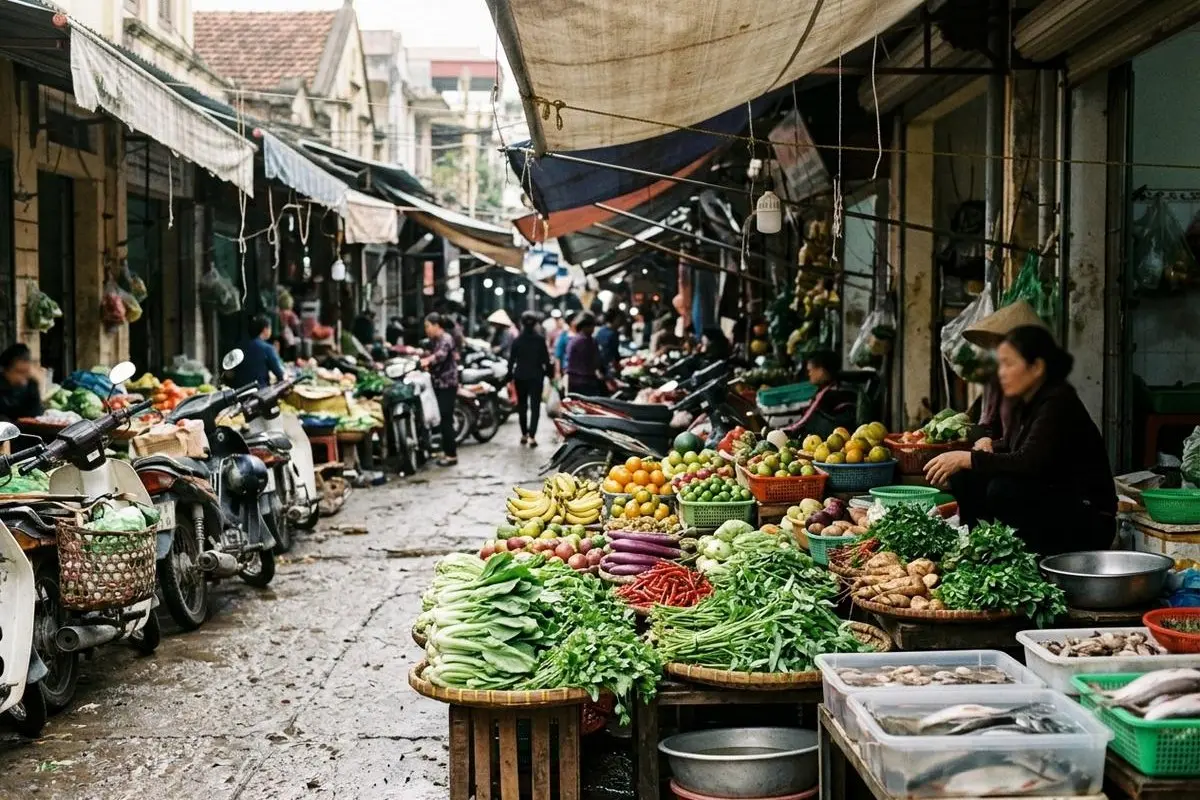
The best market experiences in Haiphong happen early. Neighborhood wet markets are at their liveliest from around dawn until mid-morning, when families shop for the day’s meals. Arriving early means more activity, fresher produce and cooler air.
What you will see
- Mountains of fresh herbs, water spinach and leafy greens.
- Fish, shrimp, crabs and clams from the nearby coast in shallow trays and basins.
- Fresh rice noodles, tofu and homemade sauces.
- Seasonal fruit such as lychees in early summer and pomelos in autumn and winter.
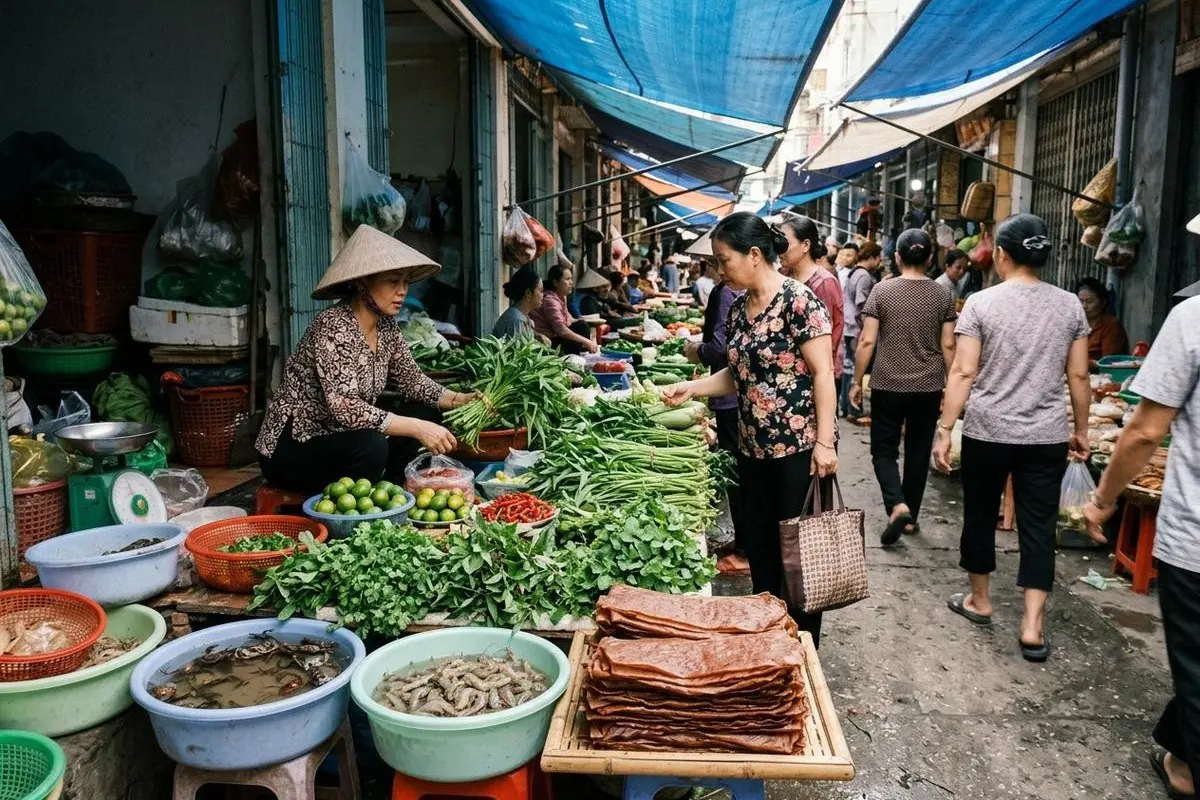
Most wet markets are spread through residential streets, so ask your hotel for the nearest one. Walk on the edges of the aisles, keep your bag in front of you and give way to shoppers on bikes.
>>> Haiphong Food Tour Route Exploring Local Markets
Breakfast Like A Local Near The Market
Where there is a market, there is breakfast. Small stalls around market entrances serve quick, cheap dishes to traders and shoppers. This is your chance to eat the way locals do before the day heats up.
Dishes to look for
- Banh da cua: the city’s signature crab noodle soup with flat brown rice noodles.
- Banh mi cay: thin, crispy mini baguettes with pate and chili sauce.
- Banh cuon: steamed rice rolls with dipping sauce.
- Sticky rice: a filling breakfast with various toppings.
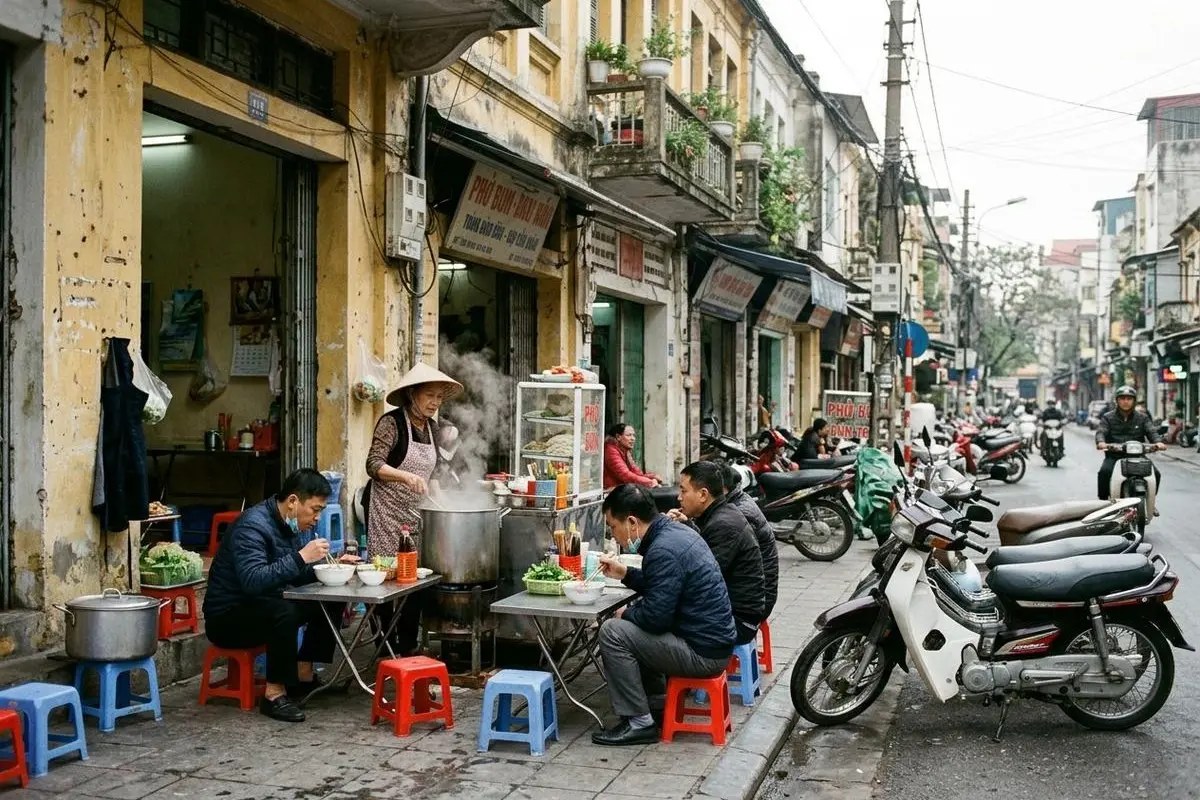
Point at what others are eating if you cannot read the menu. Prices at simple stalls are usually low, but they change, so ask before you order if no price is shown.
Wander The Aisles Of Cho Sat
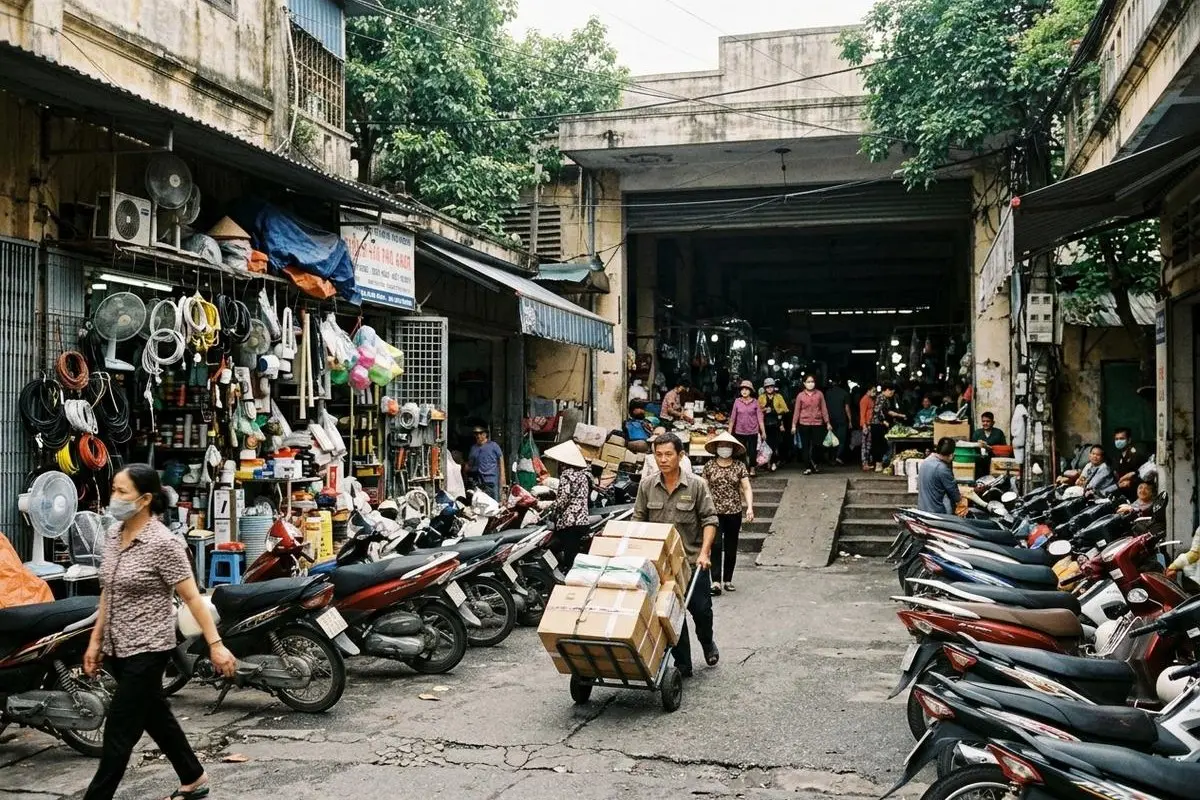
Cho Sat, the old Iron Market, is one of the best-known markets in central Haiphong. Today it is a busy multi-level trading hub where you will find electrical goods, tools, fabric, household items and much more, packed into narrow aisles.
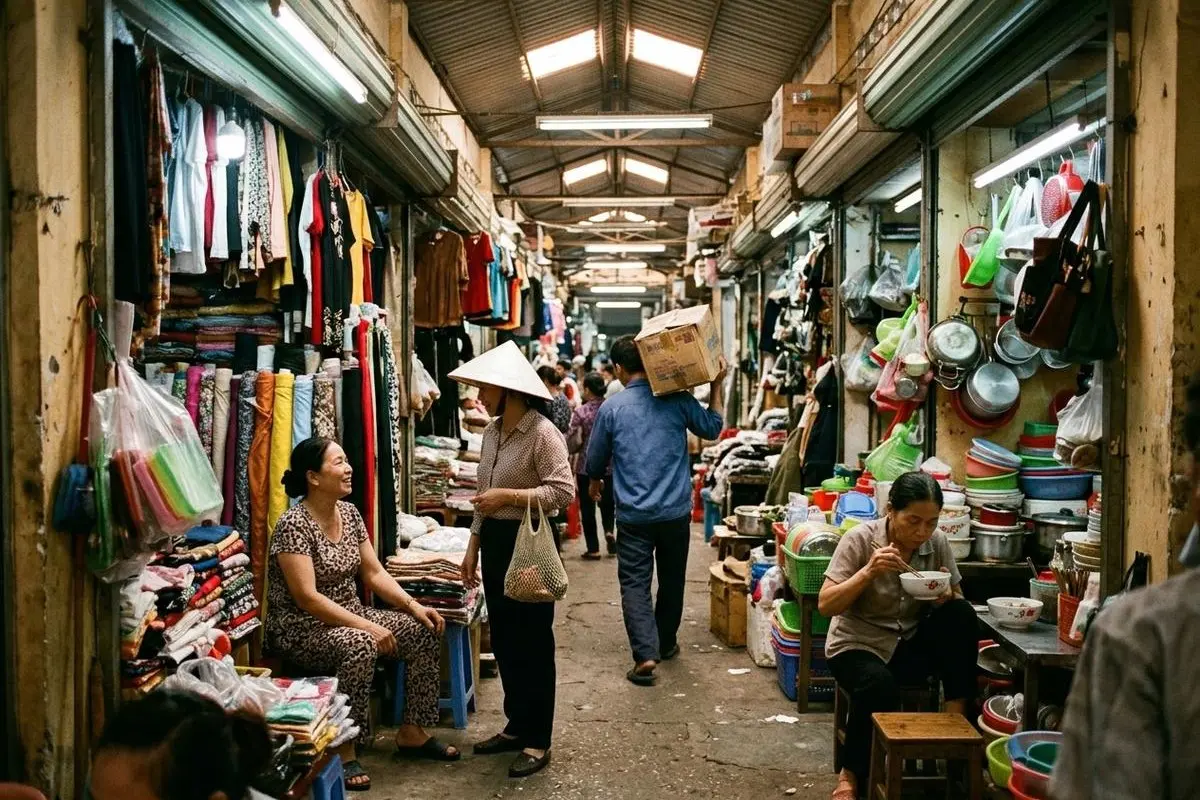
Tips for Cho Sat
- Go mid-morning on a weekday for the full trading buzz.
- Walk slowly and keep to the side when porters pass.
- Look at how goods are stacked, stored and repaired in tiny spaces.
- Ask before taking close-up photos of traders.
The streets around Cho Sat are just as lively as the market itself, with shophouses specializing in particular goods and motorbikes loaded with deliveries.
Pause At Tam Bac Lake
After the bustle of the trading streets, walk to Tam Bac Lake for a breather. The lakeside walkway offers benches, shade and views of the old buildings reflected in the water. It is a good place to review your photos and plan the next stop.
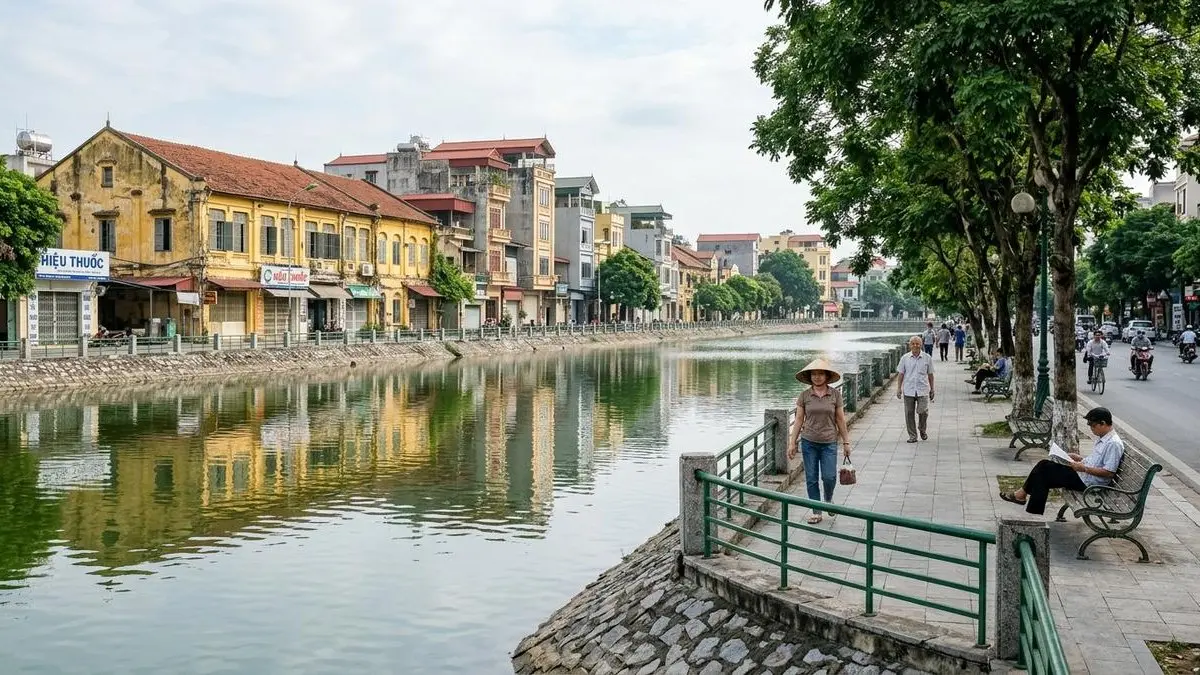
Around the lake you will often see vendors selling snacks, drinks and fruit, and the area becomes livelier in the late afternoon and evening.
For more ideas in this part of the city, read our cultural things to do in Haiphong.
Recommended tour
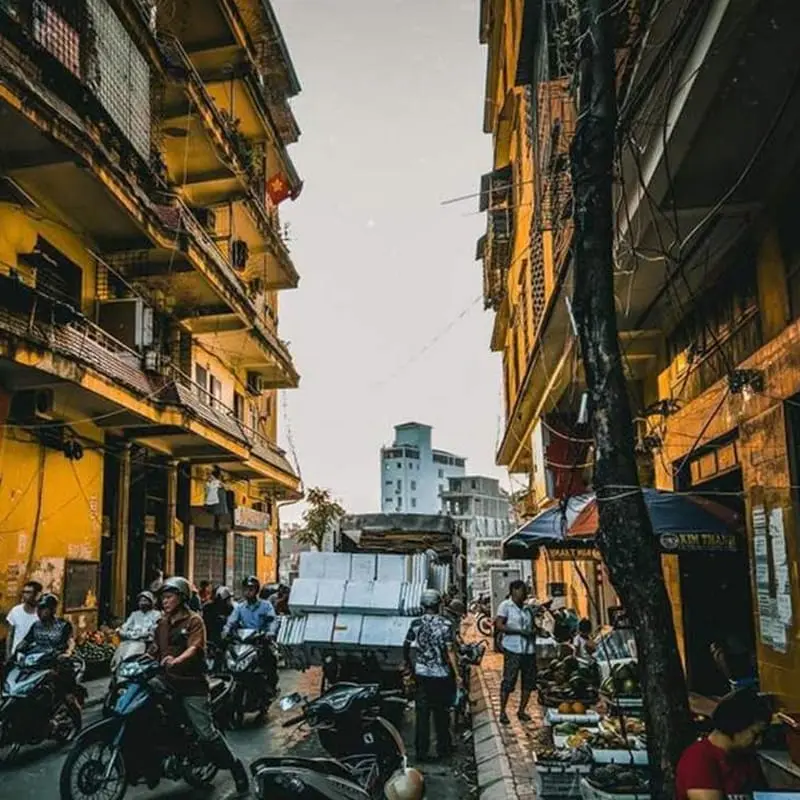
Want to explore the old markets with someone who knows the traders and the stories? This guided tour combines markets, the French quarter, hidden alleys and local food stops.
From $79 per person
Explore The Food Streets In The Afternoon
Markets do not stop at the market gates. Several streets in central Haiphong are lined with sidewalk eateries that turn into open-air food courts in the afternoon and evening. Walking between them is a delicious way to continue your market theme.
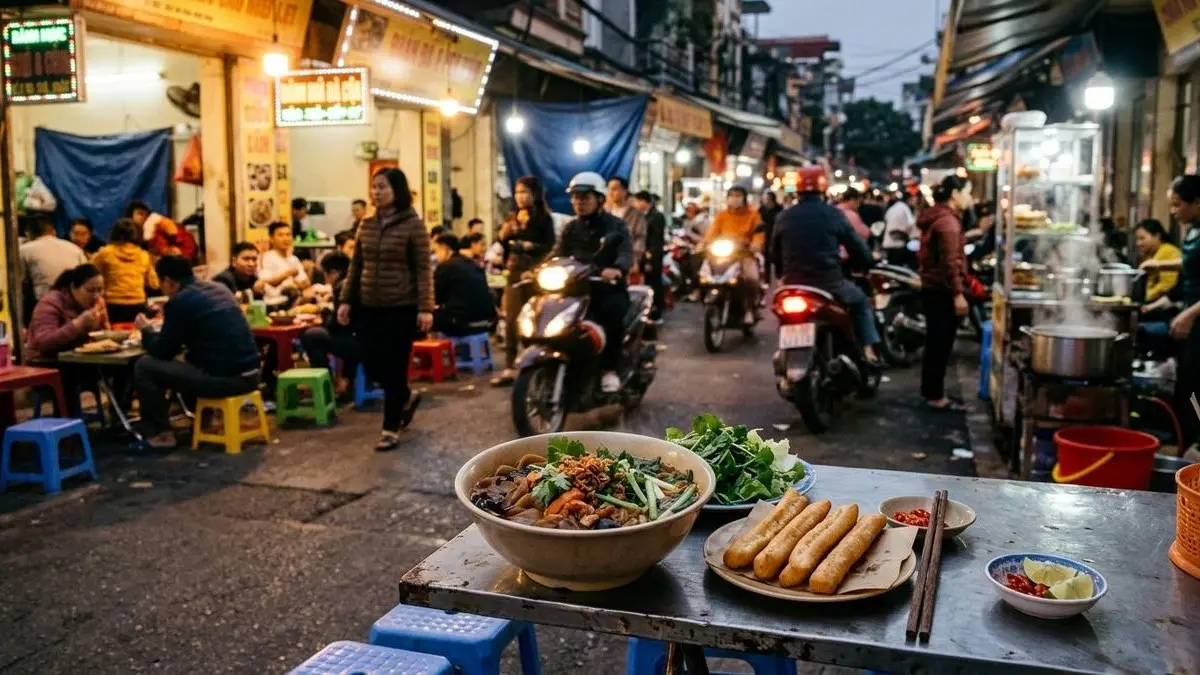
How to choose a stall
- Look for places busy with locals and a quick turnover of food.
- Choose stalls that specialize in one or two dishes.
- Sit on the small plastic stools and share a table if needed.
- Carry tissues and small notes.
Our top dishes for a Haiphong food tour list helps you decide what to order.
>>> DIY Haiphong Food Tour Map For Independent Eater
Visit A Night Food Market Or Sidewalk Stall
As the sun goes down, the city’s snack culture comes alive. Sidewalk stalls serve sweet and savory treats under fluorescent lights, and families gather around low tables. This is a fun way to end a market walk.
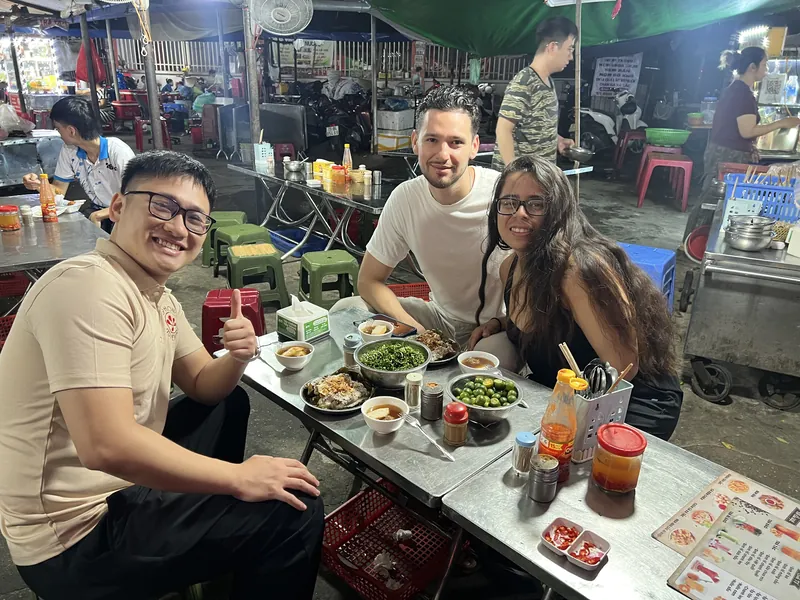
What to try in the evening
- Banh beo and other small rice cakes.
- Grilled snacks and spring rolls.
- Snails and shellfish at specialist stalls.
- Sweet soups and fresh fruit for dessert.
Seasonal Markets Worth Planning Around
Some of the most beautiful markets in Haiphong only appear at certain times of year. The most famous is the flower market before Tet, the Lunar New Year, when sidewalks fill with kumquat trees, peach blossoms and potted flowers for family celebrations.
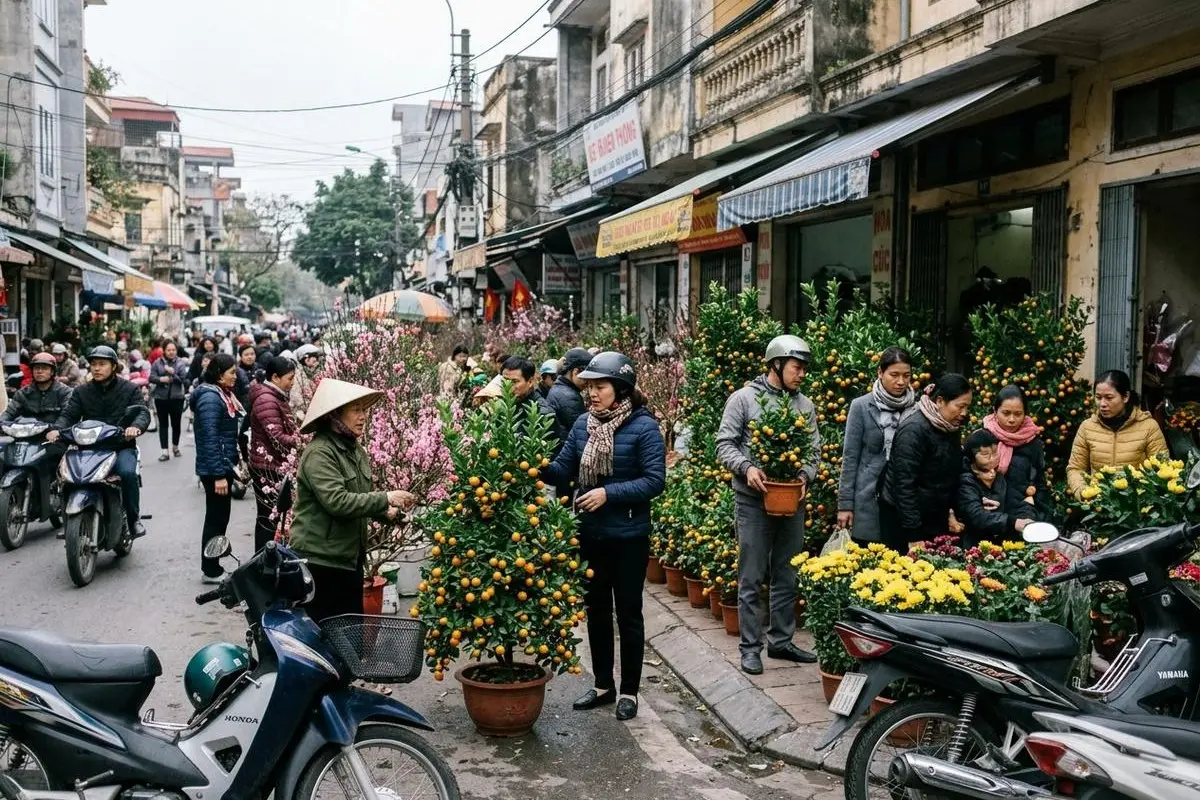
Plan ahead
Tet dates change every year, and many shops and stalls close for several days during the holiday itself. If you visit around this time, check dates in advance and expect busier streets just before the holiday.
>>> Unusual Things To Do In Haiphong Off Beaten Path
Sample Market Walking Route
| Time | Stop | What to do |
|---|---|---|
| Early morning | Neighborhood wet market | See fresh produce and seafood |
| Morning | Breakfast stall nearby | Banh da cua or banh mi cay |
| Mid-morning | Cho Sat and trading streets | Wander the aisles and watch deliveries |
| Late morning | Tam Bac Lake | Rest on the lakeside walkway |
| Afternoon | Food streets | Snacks, coffee and people-watching |
| Evening | Sidewalk stalls | Night snacks and sweet treats |
You do not need to do the whole route in one go. Many travelers split it into a morning walk and an evening food stroll.
Market Etiquette And Practical Tips
- Ask before photographing people. A smile and a gesture toward your camera is usually enough. Accept a no politely.
- Do not touch produce you will not buy. Point instead.
- Bargain gently, if at all. Food prices at markets are often fixed by habit. For goods, a friendly discussion is fine, but keep it light.
- Carry small notes. Traders may not have change for large bills.
- Keep valuables secure. Use a bag that closes and carry it in front.
- Wear closed shoes. Wet market floors can be slippery.

>>> Secrets To Enjoying A Real Haiphong Food Tour
Walking On Your Own Or With A Guide?
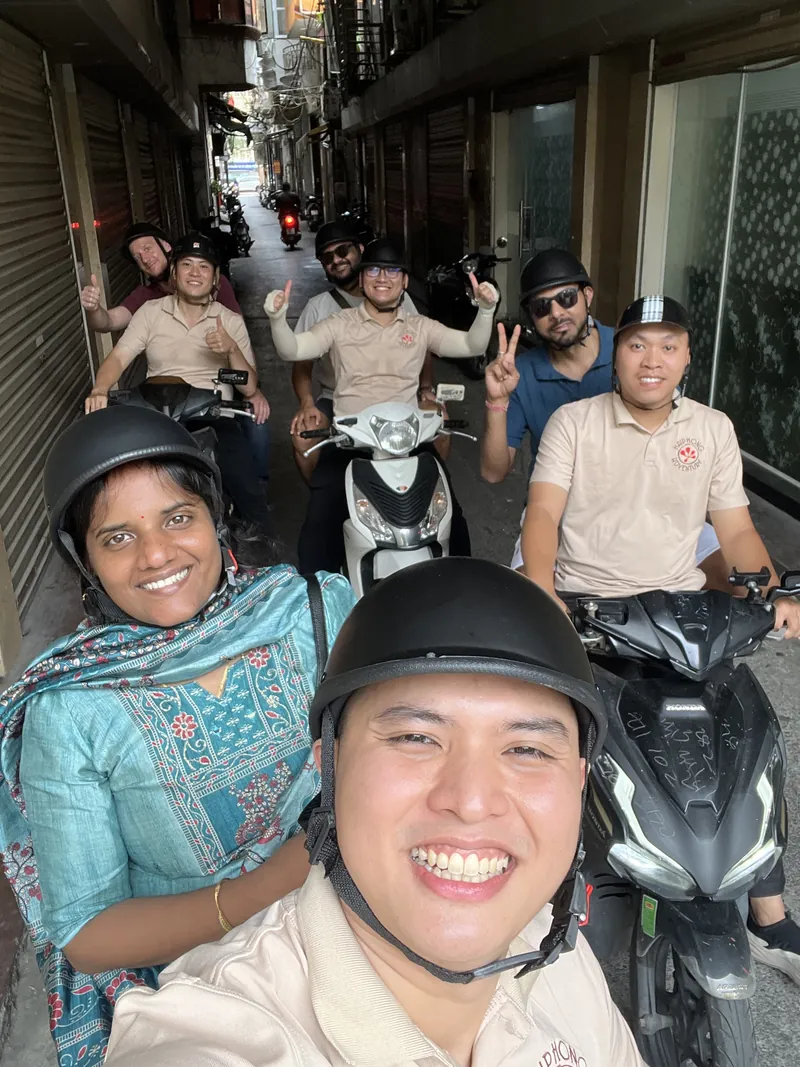
You can follow this route independently with an offline map. A local guide makes the experience richer by translating, introducing you to traders, explaining ingredients and helping you order dishes you might not try alone. If you would like to see markets beyond the center, our motorbike tours can take you to village markets in the countryside as a passenger with an experienced driver.
Frequently Asked Questions
What time do Haiphong markets open?
Wet markets are busiest from early morning until mid-morning. Trading markets like Cho Sat are active through the day, and food stalls are busiest at breakfast, lunch and in the evening.
Is it safe to walk around the markets?
Yes, markets are generally safe. Watch your belongings in crowded aisles and take care with motorbikes around market entrances.
Can I buy souvenirs at the markets?
Local markets focus on daily goods, but you can find snacks, coffee, tea, fabric and small household items. Ask a guide if you want help finding something specific.
Do traders speak English?
Some younger traders speak a little English. Pointing, smiling and using a calculator to show prices works well.
Can Haiphong Adventure include markets on a tour?
Yes. Markets are part of several of our city and food tours, and we can tailor a route to your interests.
Explore Haiphong’s Markets With Haiphong Adventure
A walk through Haiphong’s markets is a walk through the heart of the city. Start early, eat where the locals eat, move slowly and enjoy the conversations along the way. If you would like a local guide to show you around, contact the Haiphong Adventure team:
- WhatsApp, Viber, WeChat: +84(0)934.555.001
- KakaoTalk, Line ID: haiphongadventure
See you at the market.