Haiphong Opera House Photography Tips And Angles
Haiphong Opera House is the most photogenic building in the city. Its cream and white facade, tall columns and grand dome look elegant from almost any angle, and the open square in front gives you room to step back and frame the whole building. Whether you shoot with a phone or a full camera kit, a little planning helps you bring home photos that do this French colonial landmark justice.
In this guide, the Haiphong Adventure team shares practical photography tips for the Haiphong Opera House: the best times of day, our favourite angles, settings for day and night shots, composition ideas and polite photo etiquette around the square. Opening arrangements, events and decorations change through the year, so check locally before a special shoot (updated October 2026).
Why Haiphong Opera House Is A Photographer’s Favourite
Completed in the early 20th century during the French colonial period, the Opera House was designed in a neoclassical style that recalls grand European theatres. More than a century later it is still the centrepiece of the city, surrounded by wide streets, trees and a large public square.
- Symmetry: a balanced facade with columns, arched windows and a central entrance is perfect for clean, centred compositions.
- Detail: balustrades, cornices, mouldings and lamps reward close-up shots.
- Space: the square in front lets you shoot wide without climbing anywhere.
- Life: families, students, dancers and motorbikes add movement and local character.
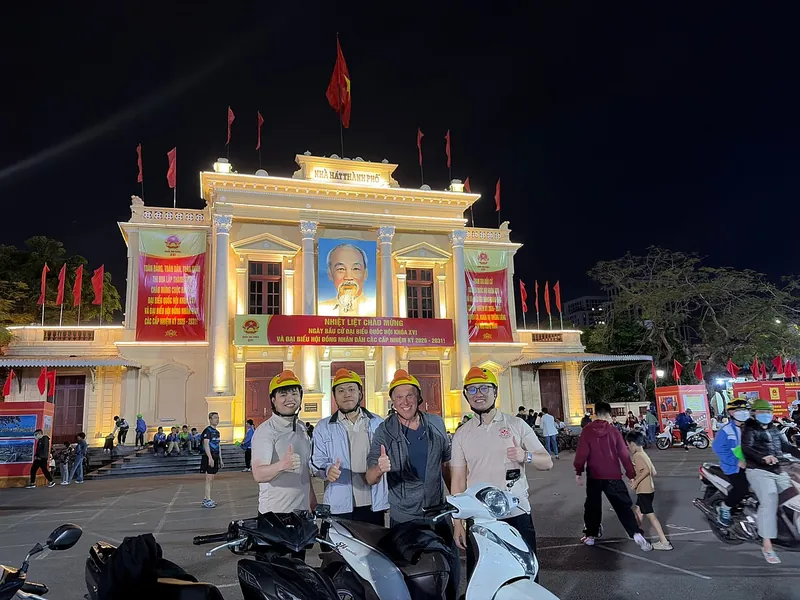
- Light: the pale facade glows softly in the golden hours and looks dramatic when lit at night.
It is also easy to combine with other landmarks. Our half-day Haiphong tour itinerary shows how to fit the Opera House into a short sightseeing loop.
Best Time Of Day To Photograph The Opera House
Light changes the mood of the building completely. Here is how each part of the day tends to look.
| Time | What to expect | Best for |
|---|---|---|
| Sunrise to 8:00 | Soft light, cool air, few people, joggers and exercise groups | Clean facade shots, quiet street scenes |
| 8:00 to 15:00 | Strong light and hard shadows, more traffic | Architectural details in shade, bright sky shots |
| Golden hour | Warm, low light and long shadows | Glowing facade, portraits on the square |
| Blue hour | Deep blue sky, building lights switching on | The most dramatic wide shots |
| Night | Illuminated facade, busy square, motorbike light trails | Long exposures, street life |
Sunrise and sunset times shift through the year. A free sun-position app helps you see where the light will fall on the facade on your exact date.
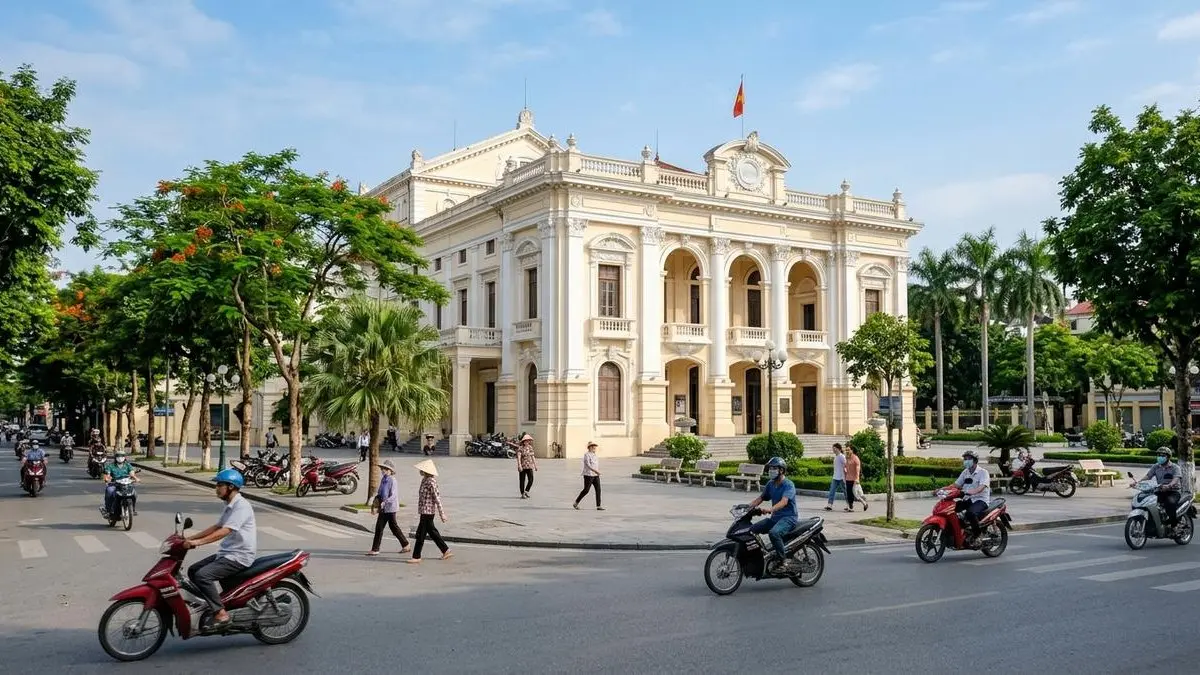
Classic Angles And Where To Stand
You do not need special access to get great photos. These viewpoints from public areas work well for most visitors.
Straight on from the square
Stand in the middle of the square, line up the central entrance with the centre of your frame and keep your camera level. This symmetrical shot is the classic postcard view. Step back far enough to include some sky above the dome and a little foreground.
The diagonal corner view
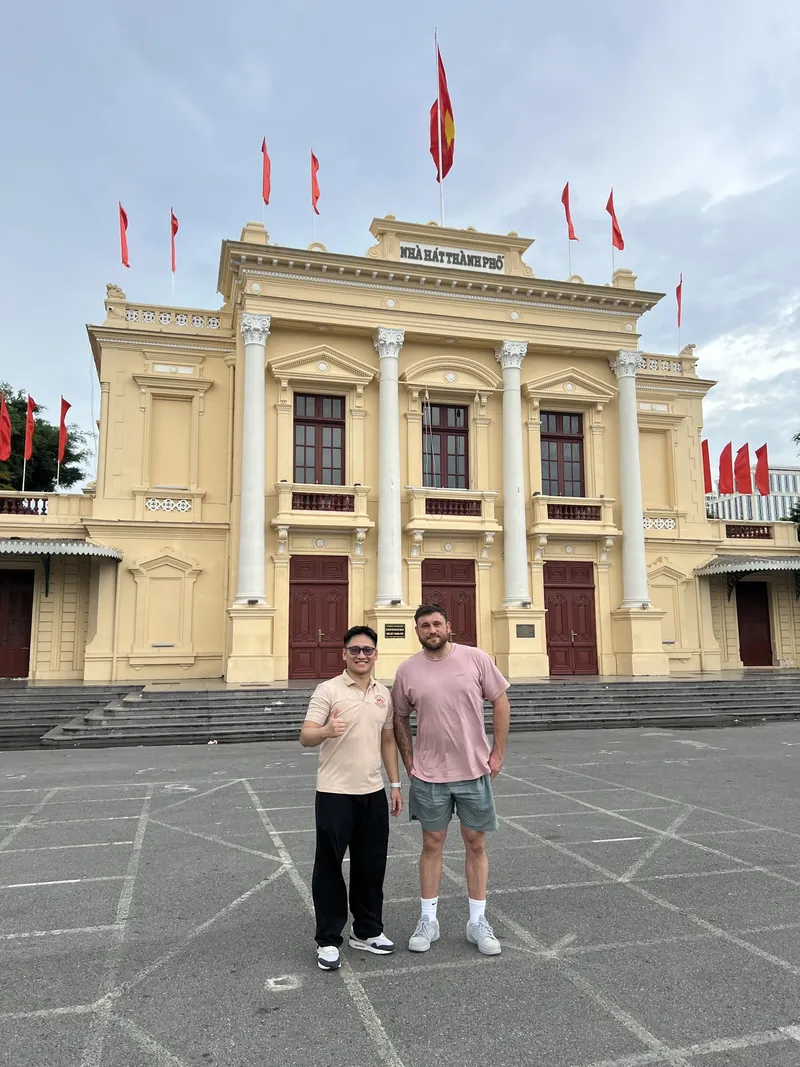
Walk to one front corner of the square and shoot across the building at about 45 degrees. This angle shows both the front and the side, adds depth and makes the columns repeat into the distance.
Low angle from the steps area
Crouch low near the front and point slightly upwards. The columns and roofline appear taller and more heroic. Be careful with converging vertical lines; many phone editing apps can straighten them later.
Framed by trees and lamps
Use branches, flowers or classic street lamps around the square to frame the building. Foreground elements add a sense of place and help your shots stand out from the usual postcard.
>>> Cultural Insights From A Haiphong City Tour Day
Close-Up Details Worth Capturing
Wide shots tell the story, but details give your set character. Look for:
- Rows of columns and the shadows between them
- Arched windows and decorative frames
- Balustrades along the roofline
- Mouldings, cornices and carved motifs
- Old-style lamps and ironwork
- Textures where paint meets stone
A short telephoto setting (2x or 3x on a phone, or 70 to 200 mm on a camera) is ideal for isolating details from across the street without stepping into traffic.
Night Photography Tips
After dark, the illuminated facade and the busy square make the Opera House one of the best night photo spots in Haiphong.
- Arrive for blue hour. The sky still has colour while the building lights come on, giving the best balance.
- Steady your camera. Use a small tripod where it does not block people, or rest your phone on a wall or bench.
- Use night mode. Most modern phones handle the scene well; hold still for the full exposure.
- Try light trails. From a safe spot near the road, a 2 to 5 second exposure turns passing motorbikes into streaks of light.
- Watch highlights. Lower exposure slightly so bright lamps and white walls do not burn out.
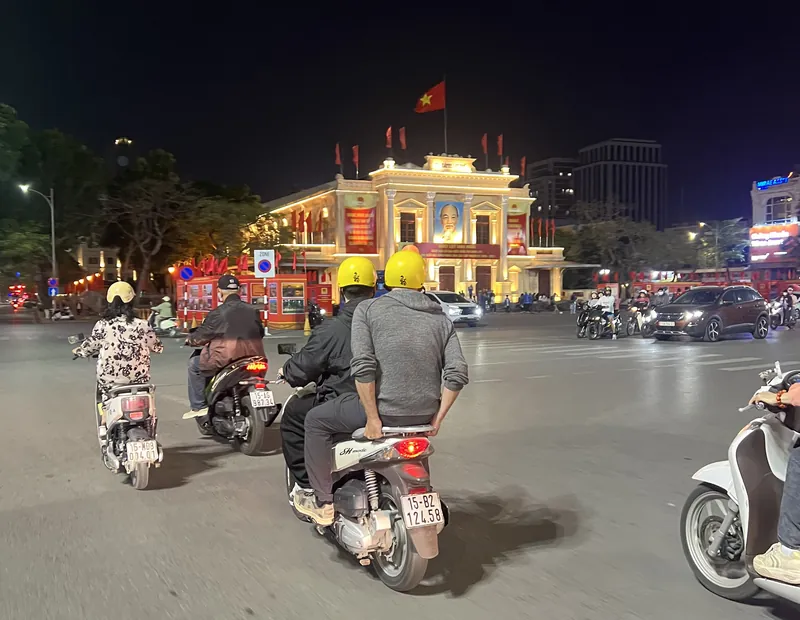
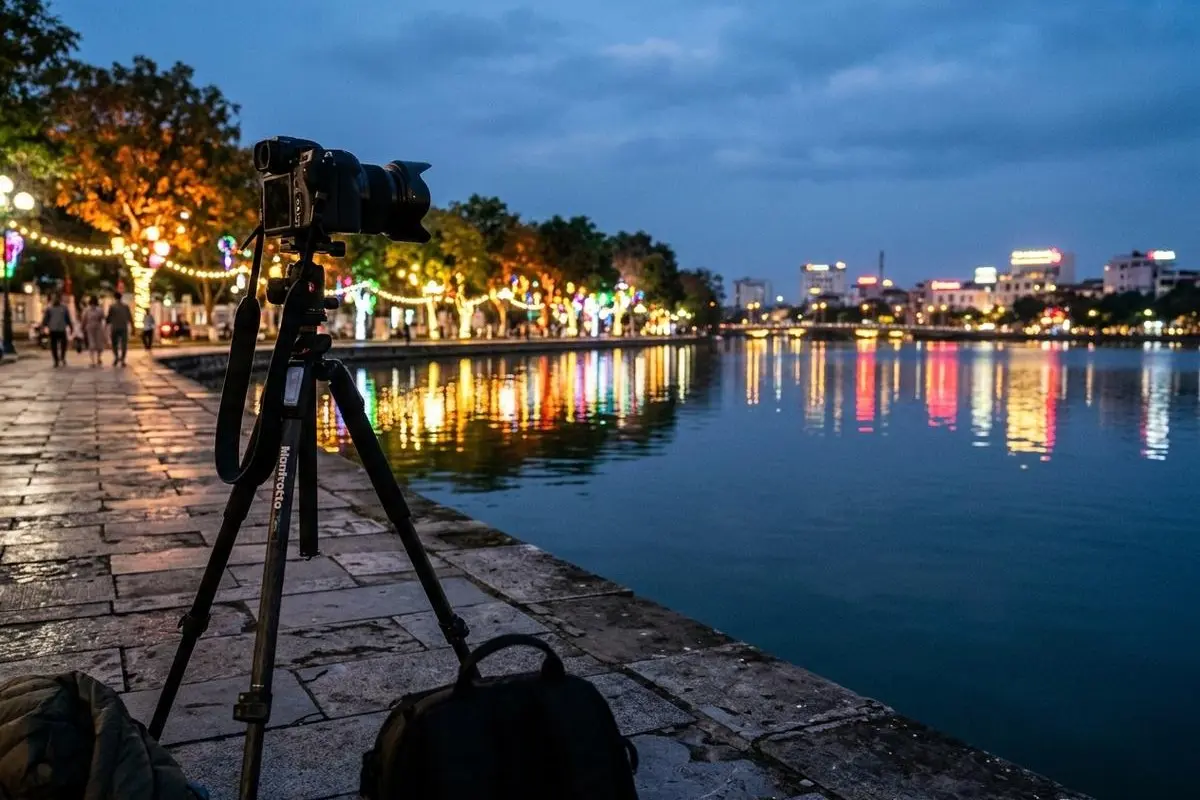
If you love night shots, the lake nearby is another great subject. Pair your Opera House session with an evening walk and our favourite things to do in Haiphong on a weekend.
Recommended tour
The Haiphong Street Food and City Tour
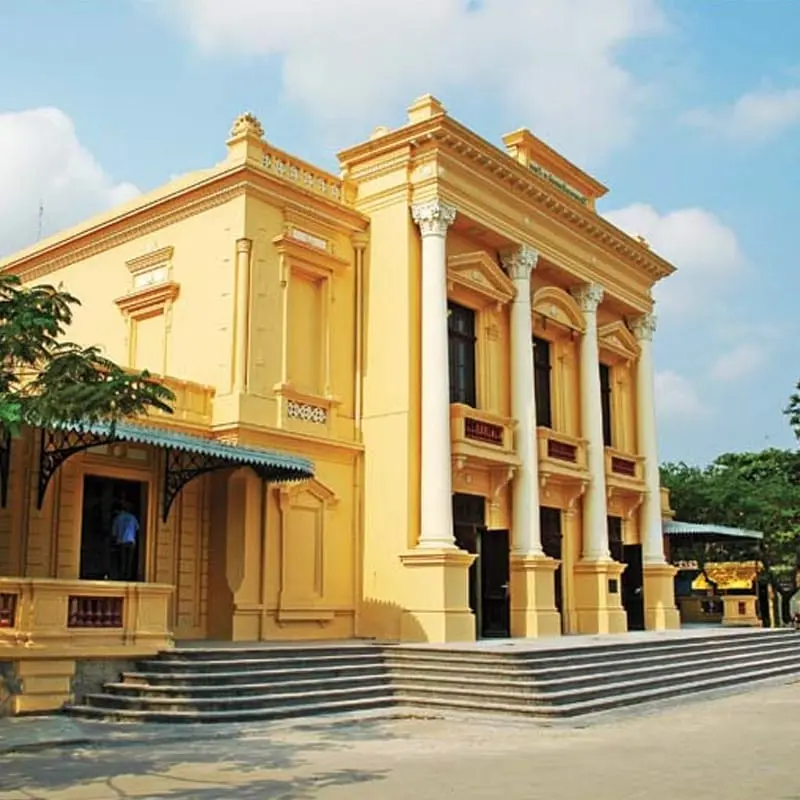
Want photos of the Opera House and the city’s best street food in one trip? A local guide takes you to the landmarks, the best angles and family-run food stalls.
From $85 per person
Camera And Phone Settings
These starting points work for most situations. Adjust to taste and check your screen often.
| Scene | Camera settings | Phone tips |
|---|---|---|
| Bright daytime facade | ISO 100, f/8, fast shutter | Tap to focus on the building, lower exposure slightly |
| Golden hour | ISO 100 to 200, f/5.6 to f/8 | Use HDR, shoot a few frames |
| Blue hour | Tripod, ISO 100, f/8, 2 to 10 seconds | Night mode, keep the phone still |
| Light trails | Tripod, ISO 100, f/11, 3 to 5 seconds | Long exposure or live photo effects |
| Street portraits | f/2.8 to f/4 for a soft background | Portrait mode at 2x zoom |
Shoot in RAW if your camera allows. It gives you more room to recover bright walls and dark shadows later.
Composition Ideas To Try
- Perfect symmetry: centre the entrance and keep vertical lines straight.
- Leading lines: use the paving, road markings or rows of trees to lead the eye to the building.
- Human scale: include a person walking across the square to show the size of the facade.
- Reflections: after rain, puddles on the square can mirror the lit building at night.
- Local life: capture street vendors, cyclists, dancers or children playing with the Opera House in the background.
- Seasonal colour: during flamboyant season, red blossoms around the city add a vivid frame.
>>> Free Things To Do In Haiphong For Budget Travel
Seasonal Moments And Special Occasions
The Opera House looks different through the year, and a little timing can give your photos a unique story.
National holidays
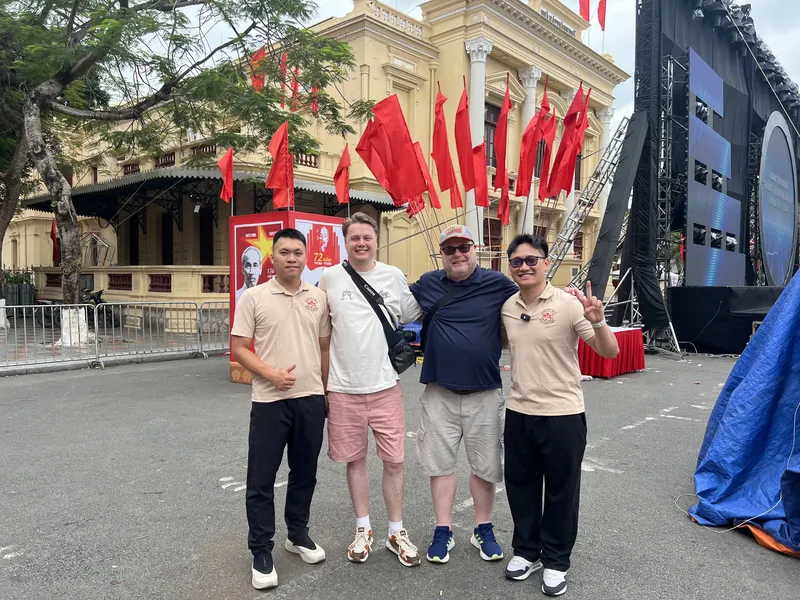
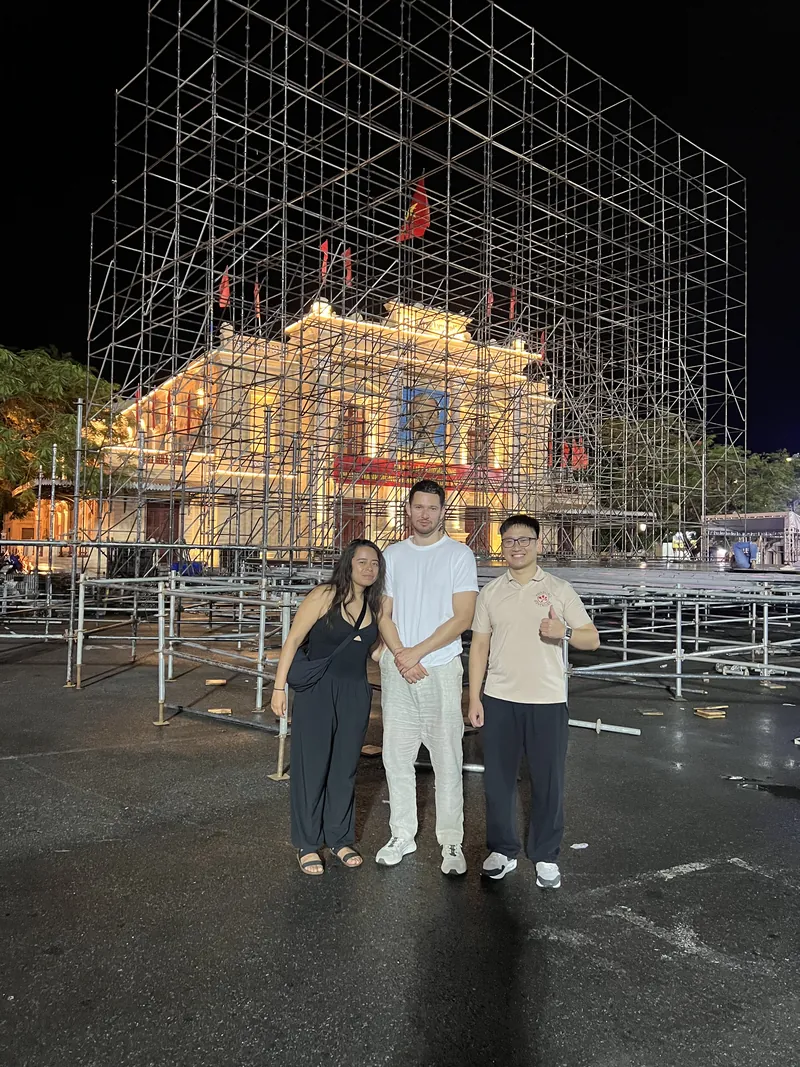
Around major national holidays, the facade is often decorated with red flags and banners, and the square fills with families in their best clothes. Colours are bold and the atmosphere is festive, though crowds are larger.
Lunar New Year
In the weeks before Tet, flower stalls, peach blossoms and kumquat trees appear across the city. Including these seasonal flowers in the foreground instantly tells viewers when and where your photo was taken.
Flamboyant season
Haiphong is known as the city of red flamboyant flowers. In late spring and early summer, bright red blossoms bloom along many streets in the centre, adding vivid colour to wide city shots.
Rainy evenings
Do not put your camera away when it rains. Wet paving reflects the lit facade beautifully, and umbrellas add mood to street scenes. Protect your gear with a simple rain cover or a plastic bag.
Exact dates for events and decorations change every year, so ask your hotel or a local guide what is happening during your stay.
Portrait And Travel Photo Tips
The Opera House is a popular backdrop for travel portraits, wedding photos and graduation shoots. To get a natural, flattering result:
- Place your subject slightly off-centre, with the facade filling the background.
- Shoot in soft light, early or late in the day, to avoid squinting and harsh shadows.
- Use a longer focal length to compress the building behind the person.
- Ask your subject to walk, look up at the building or interact with the scene for candid shots.
- Keep backgrounds tidy by waiting a few seconds for passers-by to move on.
Travelling solo? A local guide on haiphong tours can be your photographer for the day and knows when the square is quietest.
Photo Etiquette Around The Square
The Opera House is a public building and a gathering place for local people. Good manners make your shoot smoother.
- Ask before photographing people close up, especially children and older residents.
- Keep paths clear. Do not block entrances, pavements or other visitors with tripods.
- Respect events. During official ceremonies or performances, follow staff instructions and keep a distance.
- Mind the traffic. Never stand in the road for a better angle; motorbikes come from all directions.
- Drones: do not fly drones in the city centre unless you have checked the current rules and permissions.
Nearby Photo Spots To Combine
Make the most of your time with a short photo walk around the centre.
- Le Chan statue square: a golden statue of the city’s founding heroine, impressive at night.
- Tam Bac Lake: reflections, lamps and evening walkers along the water.
- Colonial streets: old shophouses and French-era buildings within walking distance.
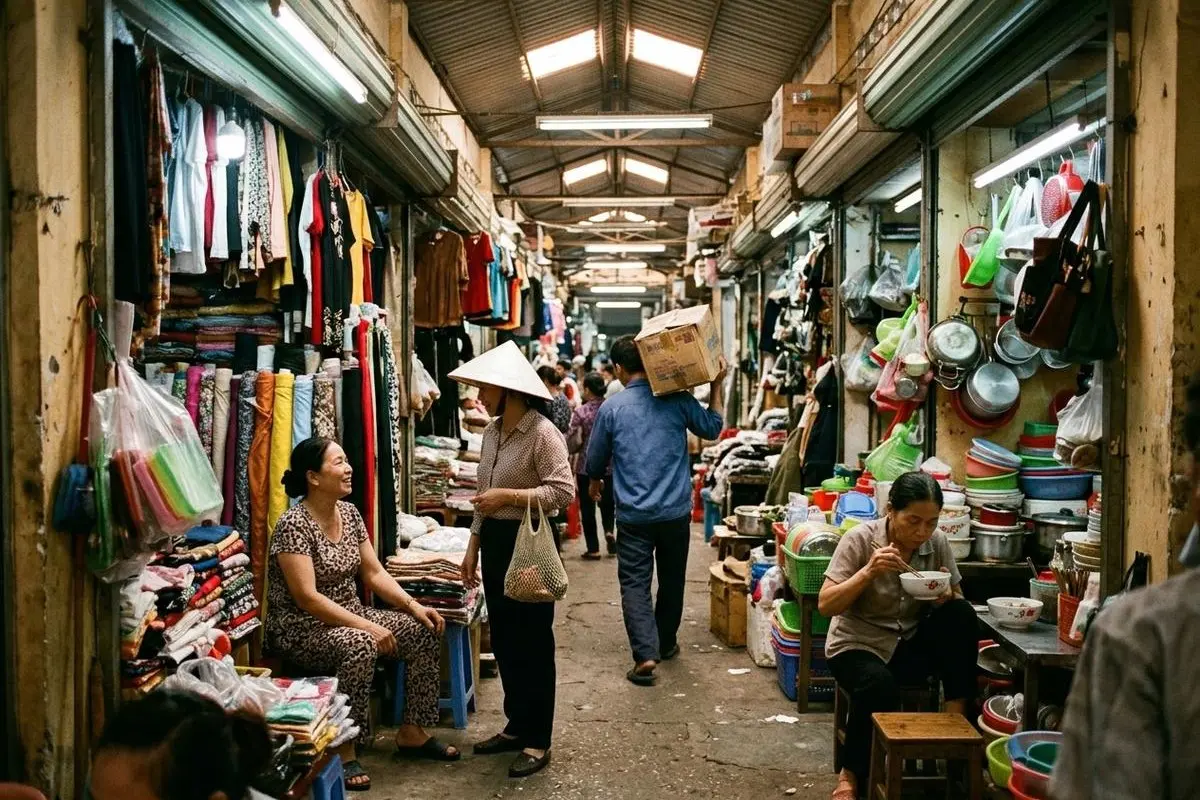
- Local markets: colourful produce and everyday life for street photography.
For more ideas on what to see in the area, our guide to cultural things to do in Haiphong covers the city’s best heritage stops.
>>> 24-Hour DIY Haiphong Tour: The Ultimate Guide
What To Bring For Your Photo Walk
- Phone or camera with a fully charged battery and a spare
- A wide lens or wide phone mode for the full facade
- A short zoom for details
- A mini tripod for night shots
- A lens cloth for humid days
- Water, sunscreen and a hat in the hot months
- A small bag that keeps your gear secure in crowds
Frequently Asked Questions About Haiphong Opera House Photography
What is the best time to photograph Haiphong Opera House?
Early morning and blue hour in the evening give the best light. Mornings are quiet, while evenings bring the lit facade and lively square.
Can I take photos inside the Opera House?
Access inside usually depends on events and performances. When you attend a show, follow the venue’s photo rules, which often restrict photography during performances.
Do I need a permit for photos on the square?
Casual photos from public areas are normally fine. Large commercial shoots, filming crews or drones may need permission, so check locally first.
Is a phone good enough for great photos?
Yes. Modern phones handle the Opera House well, especially with HDR by day and night mode after dark. Hold steady and keep vertical lines straight.
How long should I plan for a photo session?
Allow 45 to 90 minutes to cover several angles, details and the change from golden hour to blue hour.
Capture The Haiphong Opera House With A Local
With soft morning light, a glowing facade at blue hour and a square full of local life, the Haiphong Opera House is a gift for photographers of every level. Plan your timing, try a few different angles and leave room for spontaneous street moments, and you will come home with photos that truly capture the spirit of Haiphong.
If you would like a local guide to show you the best spots and timing, or to combine your photo walk with the city’s street food, the Haiphong Adventure team is happy to help.
WhatsApp, Viber, WeChat: +84(0)934.555.001
KakaoTalk, Line ID: haiphongadventure