History Of Ancient Du Hang Pagoda In Haiphong
Du Hang Pagoda is one of the oldest and most beautiful Buddhist temples in Haiphong. Hidden in a busy residential area south of the city centre, it has quietly survived more than a thousand years of history, from its early origins to royal patronage, colonial times and the revolutionary years of the twentieth century. For travellers, it is a peaceful place to slow down and see a side of the port city that few visitors know.
In this guide, the Haiphong Adventure team tells the story of Du Hang Pagoda: where it came from, how it grew, what to look for in its architecture and gardens, and how to visit respectfully. Historical dates come from the pagoda’s own steles and published local research, and some early details are traditional accounts rather than precise records.
Du Hang Pagoda At A Glance
| Item | Details |
|---|---|
| Vietnamese name | Chua Du Hang, often called Chua Hang |
| Formal name | Phuc Lam Tu (Phuc Lam Pagoda) |
| Location | Du Hang Street, Le Chan area, Haiphong city |
| Origins | Traced by stele inscriptions to the Early Le dynasty (980 to 1009) |
| Buddhist school | Closely linked with the Truc Lam Zen tradition of Yen Tu |
| Recognition | National historical and cultural relic since 1986 |
| Best for | History lovers, architecture, quiet reflection, photography |
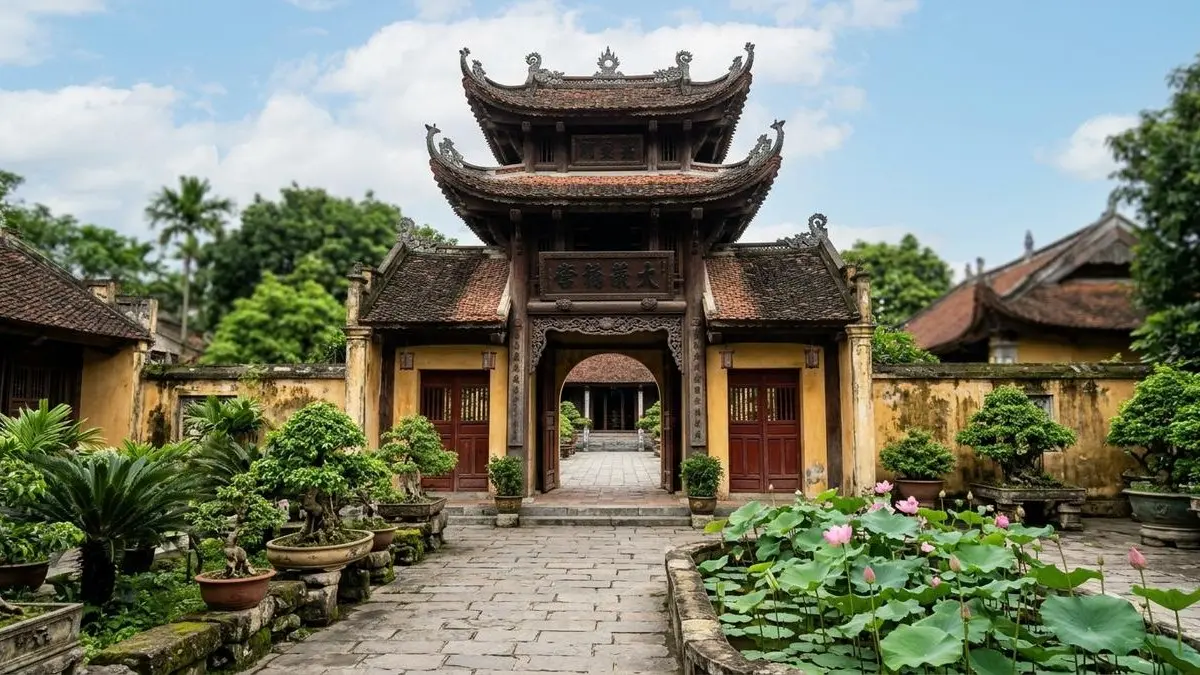
Unlike many famous temples in Vietnam, Du Hang Pagoda is not on a mountain or by a lake. It sits among homes and narrow lanes, which makes stepping through its gate feel like entering another world.
Early Origins Of The Pagoda
According to inscriptions kept at the pagoda, a place of worship existed here as early as the Early Le dynasty at the end of the tenth century. At that time, the land around today’s Haiphong was a coastal area of villages, rice fields and river channels, far from the busy port it later became.
Buddhism was deeply rooted in Vietnamese life during this period. Many village pagodas were built of simple materials and rebuilt several times over the centuries, so the buildings you see today are much younger than the pagoda’s origins. What has continued for a thousand years is the role of the site as a spiritual centre for the local community.
The name Du Hang
The pagoda takes its popular name from the old village of Du Hang, part of the Du Hang Kenh commune that once lay outside the city. As Haiphong expanded, the village was absorbed into the urban area, but locals kept the old name for their pagoda and the street that leads to it.
Links With The Truc Lam Zen School
During the Tran dynasty in the thirteenth and fourteenth centuries, Vietnamese Buddhism flourished. King Tran Nhan Tong, after giving up the throne, became a monk and founded the Truc Lam Zen school on Yen Tu mountain, a uniquely Vietnamese form of Zen Buddhism.
Local tradition and research describe close ties between Du Hang Pagoda and the Truc Lam patriarchs. This connection is still honoured today: the pagoda marks the birthday of King Tran Nhan Tong and the anniversary of the Zen master Huyen Quang, one of the three founding patriarchs of Truc Lam, in the eleventh lunar month each year.
For visitors interested in Vietnamese spirituality, this link makes Du Hang more than a beautiful old building. It is part of a living tradition that connects Haiphong with one of the most important chapters in the country’s religious history. Our list of cultural things to do in Haiphong includes more places where this heritage is still alive.
Growth Under The Later Le Dynasty
The pagoda’s next well documented chapter came in 1672, during the reign of King Le Gia Tong. A senior monk named Nguyen Dinh Sach bought land and rice fields for the pagoda and expanded its buildings. Land donated to pagodas was important, as income from rice fields supported the monks and paid for repairs and ceremonies.
This expansion turned Du Hang into a substantial religious complex. Many of the treasured objects kept at the pagoda, such as bronze bells, gongs and incense burners, reflect the generosity of local families and officials over the following centuries.
Restoration In The Nguyen Dynasty And Early 1900s
Wooden buildings in Vietnam’s humid climate need regular care. In 1899, under King Thanh Thai of the Nguyen dynasty, Du Hang Pagoda was extensively restored. The carved wooden screens and decorative details in the main hall show the style of the late nineteenth and early twentieth centuries.
In 1917, the pagoda added a library for scriptures, a statue garden and a stupa garden. This was a time when Haiphong was growing fast as a French colonial port. While new boulevards, warehouses and the opera house were being built in the city centre, Du Hang kept its traditional Vietnamese character, a quiet counterpoint to the European architecture rising nearby.
>>> Cultural Things To Do In Haiphong You Must Try
A Place In Haiphong’s Twentieth Century History
Du Hang Pagoda was not only a religious centre. In the early twentieth century, it also played a role in the patriotic movements of the time.
- 1926: the pagoda held a memorial ceremony for Phan Chu Trinh, a famous patriotic scholar who had died that year. Such ceremonies were a way for people to express national feeling under colonial rule.
- After the August Revolution of 1945: the pagoda was the place where Haiphong’s Buddhist monks’ association for national salvation was introduced, showing how local monks joined the wider movement for independence.
These events are part of the reason the pagoda is valued today as both a religious and a historical site. In 1986, the Vietnamese state recognised Du Hang Pagoda as a national historical and cultural relic.
Recommended tour
Taste of Old Haiphong
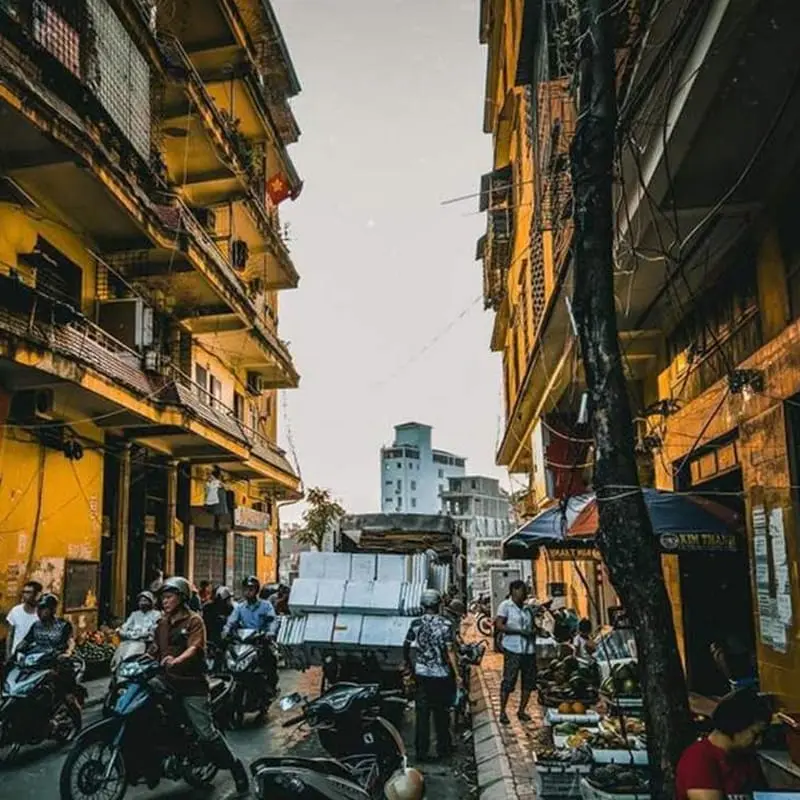
Ride with a local motorbike team through old streets, markets and heritage corners to discover the culture, architecture and living history of Haiphong.
From $79 per person
Architecture Of Du Hang Pagoda
The pagoda follows a classic northern Vietnamese layout, with buildings arranged around courtyards and gardens. Here are the main parts to look for.
The bell tower gate
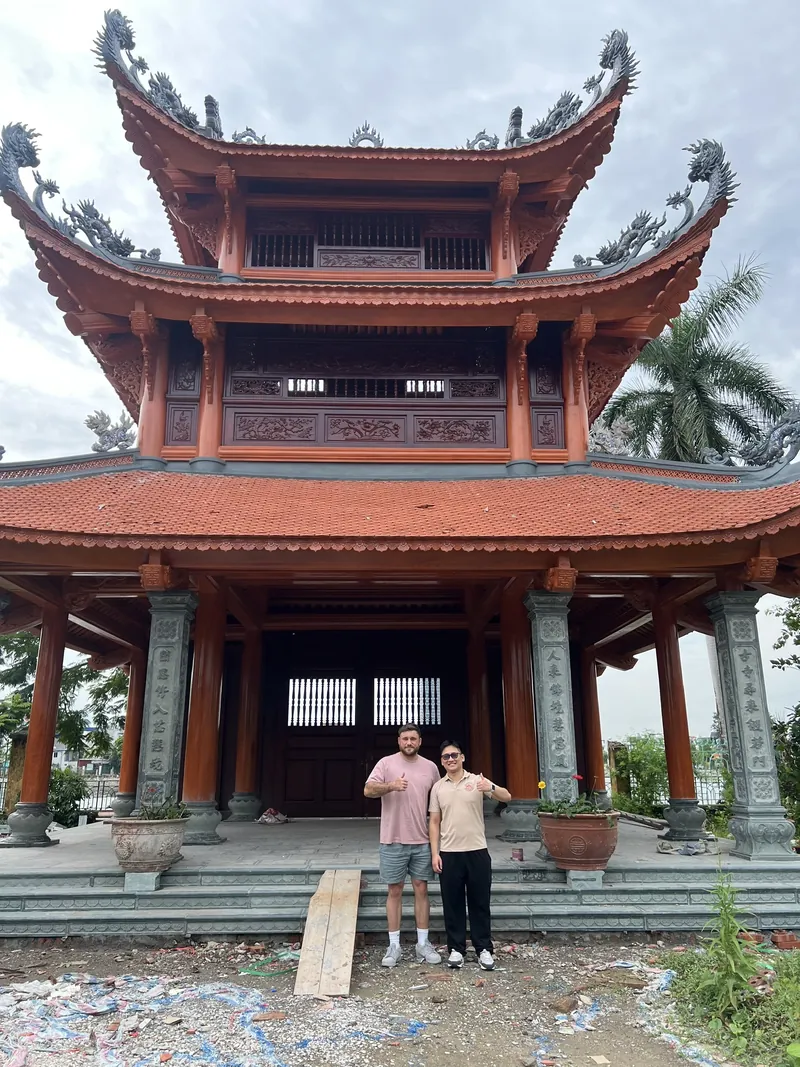
The three-entrance gate is crowned by a bell tower with five bays and three layers of curved tiled roofs. A large bronze bell hangs inside, inscribed with the words Phuc Lam tu chung, meaning the bell of Phuc Lam Pagoda. The upturned roof corners and dark wood make it one of the most photographed pagoda gates in Haiphong.
The main hall
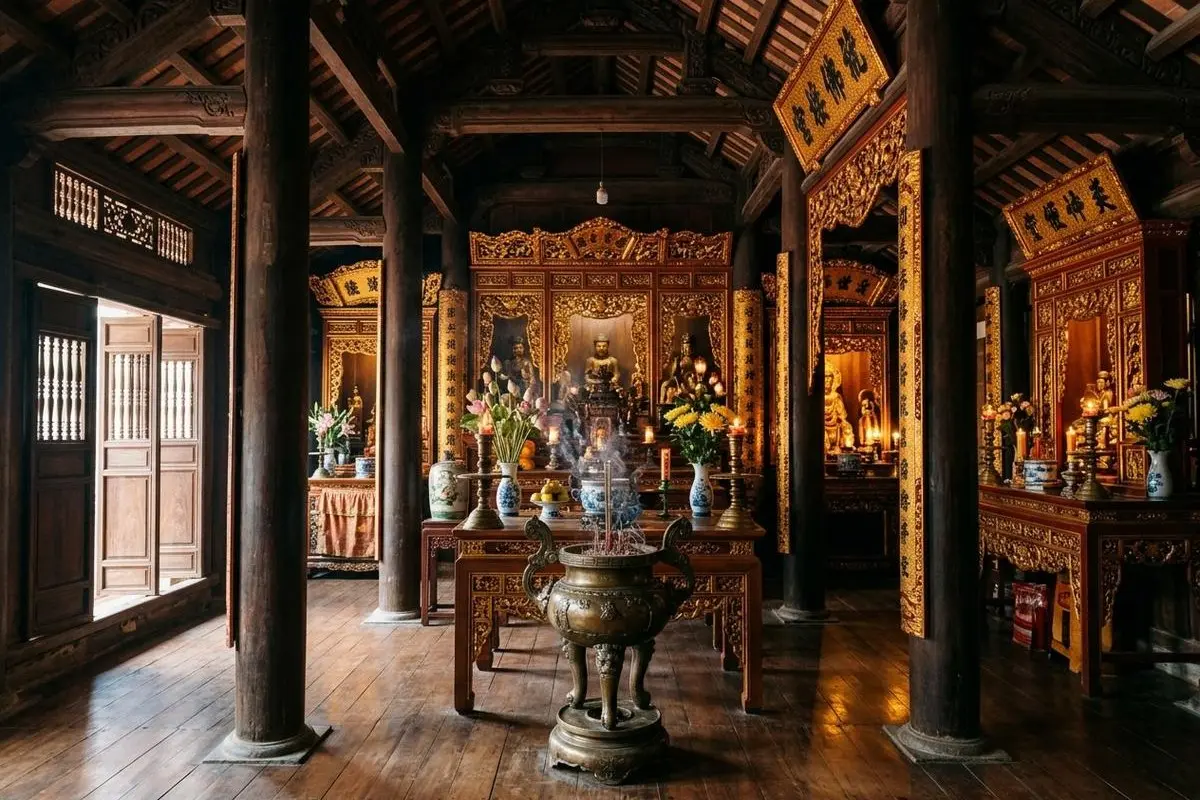
The main worship hall is arranged in the shape of the Chinese character for Dinh, similar to a T, with a front hall leading to the inner sanctuary. It has seven bays built from wood, with a tiled roof supported by sturdy ironwood columns. Look up at the carved and gilded screens above the altars, which show flowers, clouds and mythical creatures in the late Nguyen style.
Other buildings
Around the main hall are a hall for the patriarchs, a hall for the Mother Goddess, a dining hall, the abbot’s quarters and rooms for the monks. Together they show how a pagoda functions as both a temple and a home for its community.
The Statue Garden And Stupa Garden
Two gardens make Du Hang Pagoda feel especially calm and green.
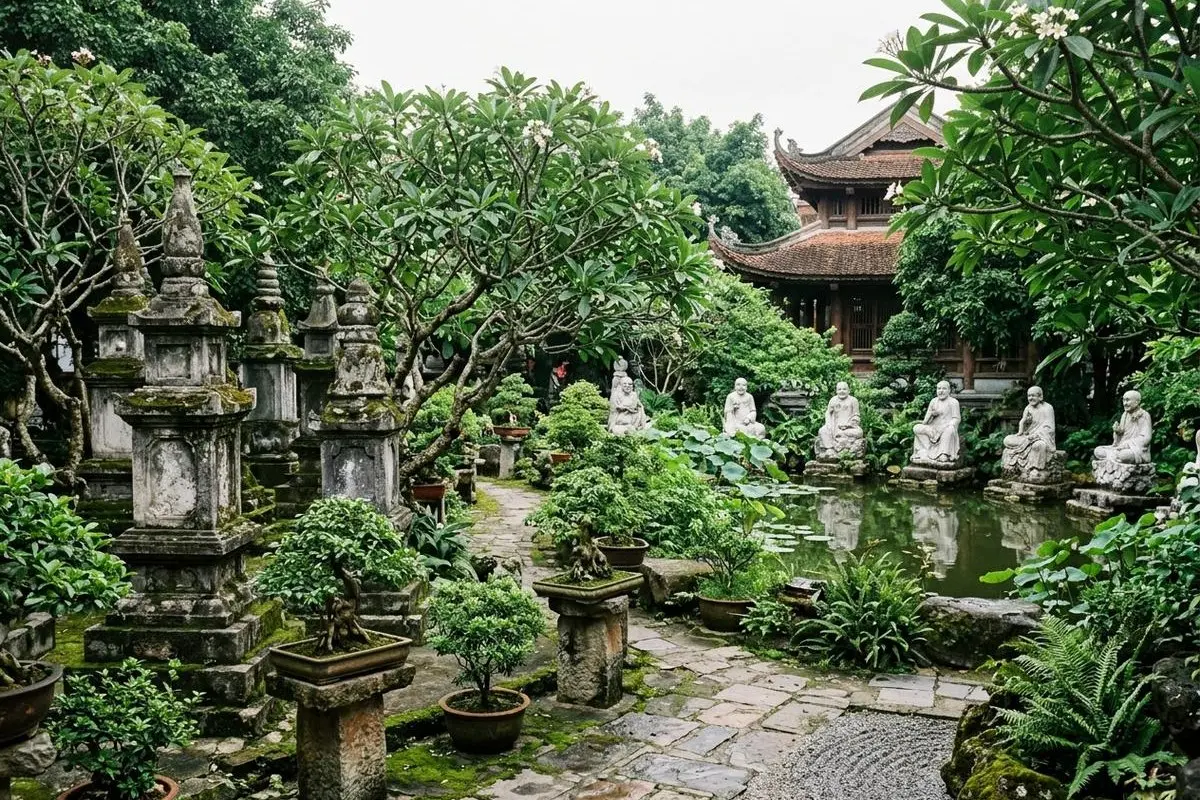
- The statue garden: twelve statues stand around a small pond, including a seated Shakyamuni Buddha on a lotus throne, a dark-coloured statue of Maitreya and ten disciples carved in white stone.
- The stupa garden: eleven stone stupas hold the remains of Truc Lam patriarchs and former abbots. Their weathered stone, moss and quiet setting give the garden a timeless atmosphere.
Take your time here. The gardens are a lovely place to sit for a few minutes and listen to the sounds of bells and chanting drifting from the main hall.
Treasures And Relics Kept At The Pagoda
Over the centuries, Du Hang Pagoda has gathered a remarkable collection of religious objects. These include bronze bells and stone gongs, bronze incense burners, ceramics, sets of bronze statues such as the Buddhas of the Three Times and the Ten Kings of the underworld, and finely carved wooden cabinets.
The most precious item is a set of the Truong A Ham sutra, the Vietnamese name for the Dirgha Agama, one of the early collections of the Buddha’s teachings. Some objects are only shown on special occasions, so do not expect a museum-style display. If you are interested, ask politely whether there is anything you may see.
>>> Free Things To Do In Haiphong For Budget Travel
Festivals And Spiritual Life Today
Du Hang is very much a working pagoda. Monks live and study here, and local families come to pray, light incense and make offerings throughout the year.
- Tet and the first lunar month: the busiest time, when people pray for health, peace and good fortune in the new year.
- The 1st and 15th of each lunar month: many locals visit to make offerings.
- The 2nd and 3rd days of the 11th lunar month: ceremonies commemorate King Tran Nhan Tong and the Zen master Huyen Quang.
- Regular activities: sutra chanting, Dharma talks, life release ceremonies and charity events.
Festival days are colourful and crowded. If you prefer quiet, visit on an ordinary weekday morning.
How To Visit Du Hang Pagoda
Getting there
The pagoda is on Du Hang Street in the Le Chan area, a short ride from the Opera House and the city centre. A taxi, a ride-hailing motorbike or a guided motorbike tour are the easiest ways to reach it. Parking for motorbikes is usually available near the gate.
Opening times and entry
The pagoda generally welcomes visitors from early morning until the evening, and there is no entrance ticket. Donations are welcome but never required. Times can change on festival days, so check locally before you go (reference, updated October 2026).
When to go
Early morning is cool and quiet, with soft light for photos. Late afternoon is also pleasant. Avoid the middle of the day in summer, when the courtyards can be very hot.
Combine with nearby sights
Du Hang fits well into a half-day route with the Opera House, the old French quarter and a street food stop. Our half-day Haiphong tour itinerary shows how to plan it, and after the visit you can explore local flavours with our Haiphong street food adventure guide.
Etiquette For Visiting A Vietnamese Pagoda
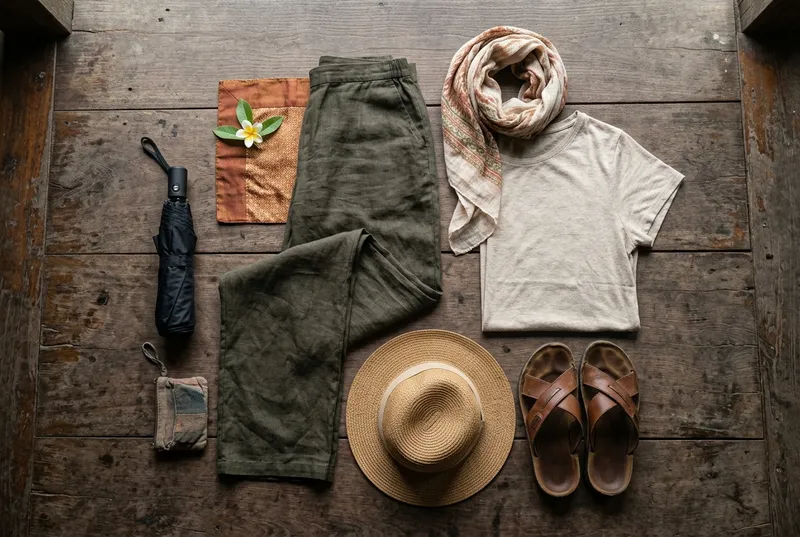
- Dress modestly: cover your shoulders and knees. A light scarf is handy.
- Remove shoes before entering the worship halls if you see others doing so.
- Speak quietly and keep phones on silent.
- Ask before photographing monks, worshippers or ceremonies. Do not use flash inside the halls.
- Do not touch statues, altars or offerings, and never point your feet toward the altar.
- Walk around, not across, the central path and doorway sills.
Why Du Hang Pagoda Is Worth Your Time
Many visitors pass through Haiphong on the way to Cat Ba or Lan Ha Bay and never see the city’s older soul. Du Hang Pagoda offers a thousand years of local history in one compact, beautiful place. It shows the Vietnamese Buddhist tradition, the influence of the Truc Lam Zen school, fine wooden architecture and the role of pagodas in community and national life.
Adding it to your plans is easy, and it pairs well with haiphong tours focused on culture and heritage. If you have only one day in the city, our 24-hour DIY Haiphong itinerary shows how to fit it in.
Frequently Asked Questions About Du Hang Pagoda
How old is Du Hang Pagoda?
Inscriptions at the pagoda trace its origins to the Early Le dynasty, between 980 and 1009, making it more than a thousand years old. Most of the current buildings date from later restorations, especially in 1899 and 1917.
Is there an entrance fee?
No ticket is usually required. Visitors may leave a small donation if they wish.
How long should I spend there?
Around 45 minutes to one hour is enough to see the gate, main hall and gardens at a relaxed pace.
Can I visit during festivals?
Yes, but expect crowds, incense smoke and ceremonies in progress. Be respectful and avoid blocking worshippers.
Can Haiphong Adventure include Du Hang Pagoda in a tour?
Yes. Our team can plan a heritage route by motorbike that includes Du Hang Pagoda along with other historic sights and local food.
Plan Your Visit To Du Hang Pagoda
Whether you are a history lover, a photographer or simply looking for a calm moment in a busy city, Du Hang Pagoda deserves a place on your Haiphong itinerary. If you would like a local guide to share the stories behind its gates, bells and stupas, or to combine it with other heritage sites on a Haiphong Adventure motorbike ride, send us a message and we will help you plan.
WhatsApp, Viber, WeChat: +84(0)934.555.001
KakaoTalk, Line ID: haiphongadventure