Who Was Le Chan, the Founder of Haiphong? Her Story
Who was Le Chan, the founder of Haiphong? Le Chan was a Vietnamese woman general who lived about 2,000 years ago and fought in the Trung Sisters’ uprising against Chinese Han rule in the first century AD. According to local tradition, she settled the coastal land of An Bien, gathered people to clear the land and build a community there, and that settlement is remembered as the earliest root of today’s Haiphong. Her golden statue stands in the heart of the city, a whole district carries her name, and she is honored as Haiphong’s founder and a symbol of courage.
When we guide visitors past her statue, the same question always comes up: who was this woman? Here is her story, told simply, with the places in Haiphong where you can still feel her legacy.
Le Chan at a Glance
| Who | A woman general in the Trung Sisters’ uprising |
| When | First century AD, around 2,000 years ago |
| Known for | Founding the An Bien settlement, seen as the origin of Haiphong |
| Remembered at | Le Chan statue square, temples dedicated to her, Le Chan district |
| Why she matters | A symbol of courage, independence and the strength of Vietnamese women |
Much of what we know about Le Chan comes from legend, temple records and local tradition passed down over many generations, so details can vary between sources. What stays constant is her place in Haiphong’s identity.
Early Life and the Road to the Coast
Le Chan grew up in northern Vietnam at a time when the region was under the rule of the Chinese Han dynasty. Local stories tell that her family suffered at the hands of the Han governor, and that tragedy pushed her to leave home and move toward the coast.
There, near the estuaries of the Red River delta, she found the land of An Bien. Tradition says she gathered local people to reclaim the marshy land, grow rice, raise fish and build a village, while also quietly training a force that could one day fight back.

For a broader view of how this coastal settlement grew into a major city, read our story of Haiphong’s history from fishing port to vibrant city.
Fighting Beside the Trung Sisters
In around 40 AD, the sisters Trung Trac and Trung Nhi led an uprising against Han rule. Le Chan joined them with the people and fighters she had gathered in An Bien. She became one of their trusted generals, and the uprising briefly freed a large part of the region.
The independence did not last. A few years later, a large Han army returned, and the uprising was defeated. Tradition says Le Chan fought to the end rather than surrender. The exact details of her final battle differ between accounts, but all agree on her bravery.
>>> Historical Stories From My Haiphong Walking Tour
Why She Is Called the Founder of Haiphong
Haiphong as a modern city took shape much later, especially from the late 19th century, when its port grew rapidly. But locals trace the city’s roots back to Le Chan’s settlement at An Bien. By building a community on the coast and leading its people, she is remembered as the one who first opened this land.
That is why she holds such a special place here. Her name appears on a central district, streets and schools, and her story is taught to children as part of the city’s identity.
Recommended tour

Hear the stories behind Haiphong’s landmarks, from Le Chan’s statue to colonial streets and local temples, with a guide who grew up here.
From $79 per person
Where to Honor Le Chan in Haiphong Today
Le Chan statue square
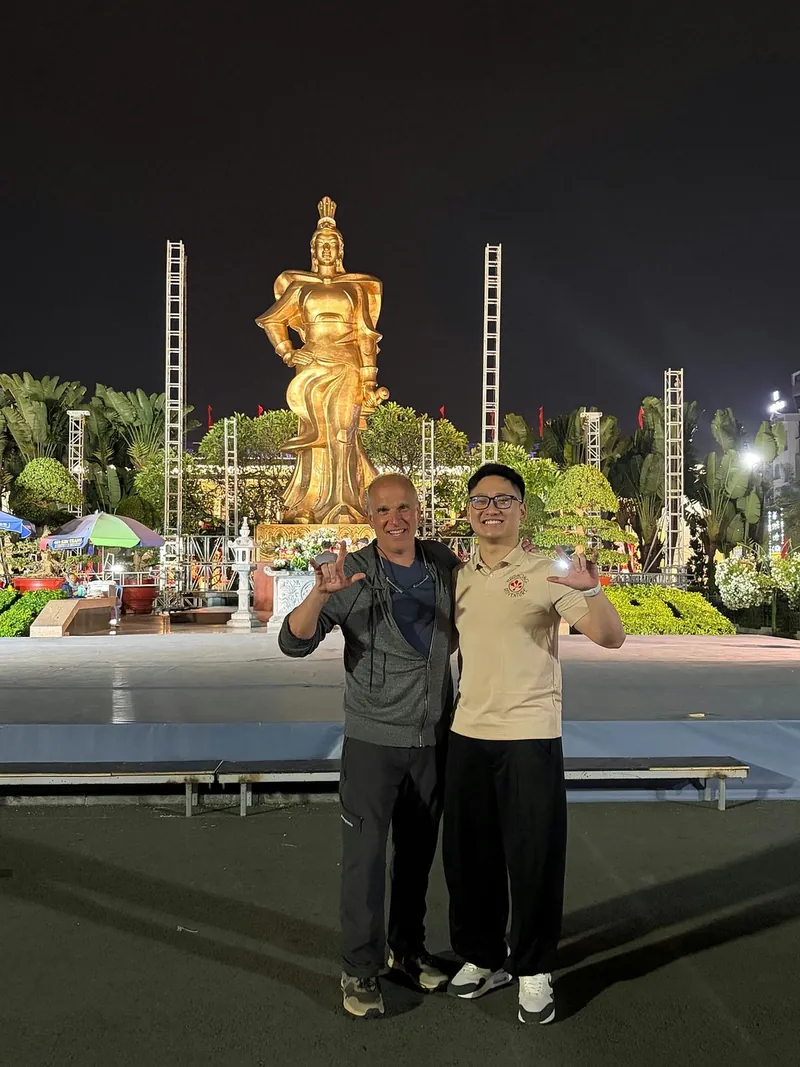
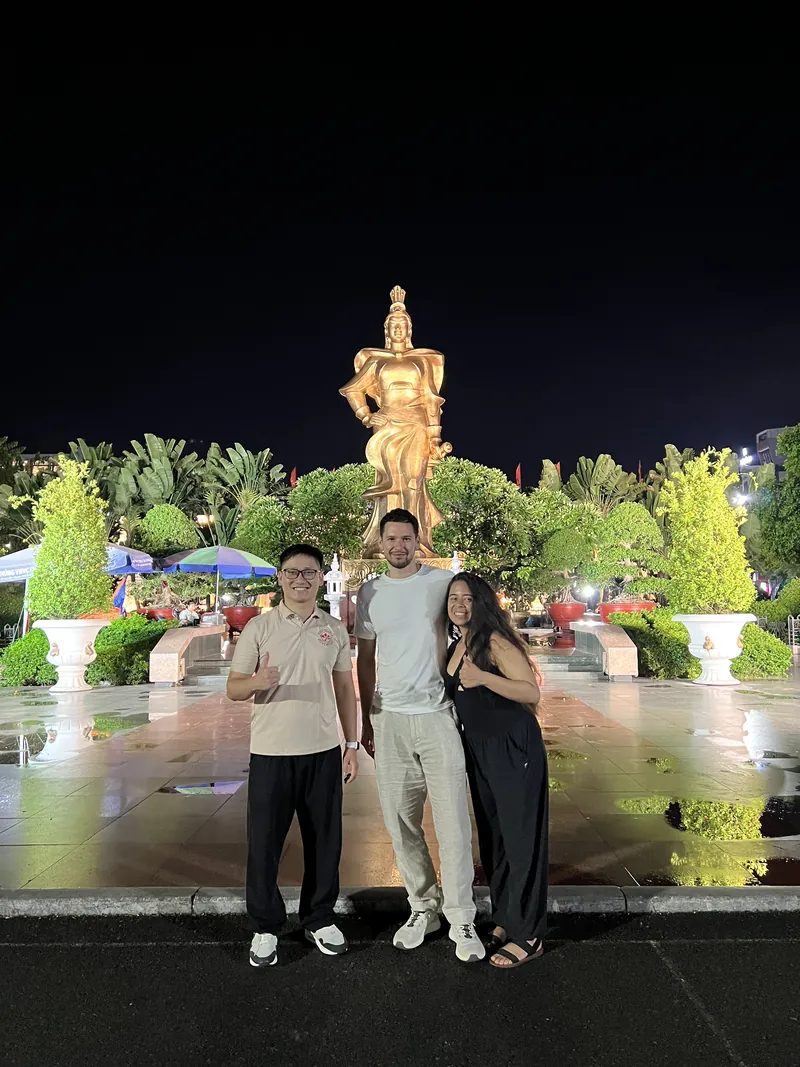
The large golden statue of Le Chan stands in a central square near the Opera House and the city’s main boulevard. It shows her as a confident general, and the square is a favorite gathering place for locals in the evening. It is free to visit at any time and especially beautiful when lit at night.
Temples dedicated to Le Chan
Several temples in Haiphong honor Le Chan. The best known is Nghe Temple in the city center, where locals come to pray and make offerings. Festivals are held there according to the lunar calendar. Dress modestly and behave quietly when visiting. Learn more in our guide to temples and pagodas in Haiphong.
Haiphong Museum
The city museum covers Haiphong’s long history, from ancient times to the modern port. Our guide to history exhibits at the Haiphong Museum helps you plan a visit.
>>> Night View Of Haiphong Opera House Walking Spot
Le Chan’s Legacy for Vietnamese Women
Vietnam has a proud tradition of women leaders in its history, and Le Chan is one of the most famous. Her story is often told alongside the Trung Sisters and Lady Trieu as proof that women played a central role in defending the country. In Haiphong, she is a source of local pride and a reminder that the city was built on courage and hard work.
>>> Historical Significance Of Bach Dang River Site
Tips for Visiting Le Chan Sites
- Visit the statue square in the evening, when it is lit and full of local life.
- Cover shoulders and knees when entering temples.
- Ask before photographing people praying.
- Combine the statue with the Opera House and colonial streets nearby for an easy walk.
- Go with a local guide if you want to hear the legends in detail.
Frequently Asked Questions
Who was Le Chan?
Le Chan was a woman general who fought in the Trung Sisters’ uprising in the first century AD and is honored as the founder of Haiphong.
Why is Le Chan called the founder of Haiphong?
According to tradition, she founded the An Bien settlement on the coast, which locals see as the earliest root of the city.
Where is the Le Chan statue in Haiphong?
It stands in a central square near the Opera House, in the heart of the city.
Is there a temple for Le Chan?
Yes. Nghe Temple in central Haiphong is the best-known temple dedicated to her.
Is the Le Chan district named after her?
Yes. Le Chan district, one of the city’s central districts, carries her name in her honor.
Discover Le Chan’s Haiphong
So, who was Le Chan, the founder of Haiphong? A brave general, a community builder and a symbol of the city’s spirit, whose story still shapes how locals see their home. Stand beneath her statue, visit a temple in her honor and you will understand Haiphong a little better. If you would like a local to share these stories, Haiphong Adventure offers city rides, history walks and food tours with friendly English-speaking guides. Explore our Haiphong tours or message us with your questions.
Contact Haiphong Adventure
- WhatsApp, Viber, WeChat: +84(0)934.555.001
- KakaoTalk, Line ID: haiphongadventure