How To Cook Banh Da Cua Authentic Taste At Home
You can learn how to cook banh da cua at home, even if you have never been to Haiphong. The dish is a bowl of chewy reddish-brown noodles in a savory crab broth, topped with water spinach, crab patties and fresh herbs. It takes a little patience, but nothing in the method is difficult.
This guide gives you a clear home recipe for four people, simple swaps for ingredients that are hard to find abroad, and tips to avoid the most common mistakes. We wrote it for travelers who tasted the dish with Haiphong Adventure or on one of our haiphong tours and now want to bring a little of the city back to their own kitchen.

Before You Start, A Note On Authenticity
Every shop in Haiphong has its own recipe, and many keep their methods private. The version below is a home-cook adaptation based on the traditional idea of the dish: a crab-based broth, chewy noodles and simple toppings. It will not taste exactly like any single shop, and that is fine. Treat it as a base and adjust it to your own taste after the first attempt.
It also helps to know what the real dish looks like before you cook it. If you have not tasted it yet, read our guide on a Haiphong street food adventure for a picture of how locals eat it, or see where it fits among the cultural things to do in Haiphong.
>>> Secrets To Enjoying A Real Haiphong Food Tour
What Makes Banh Da Cua Special
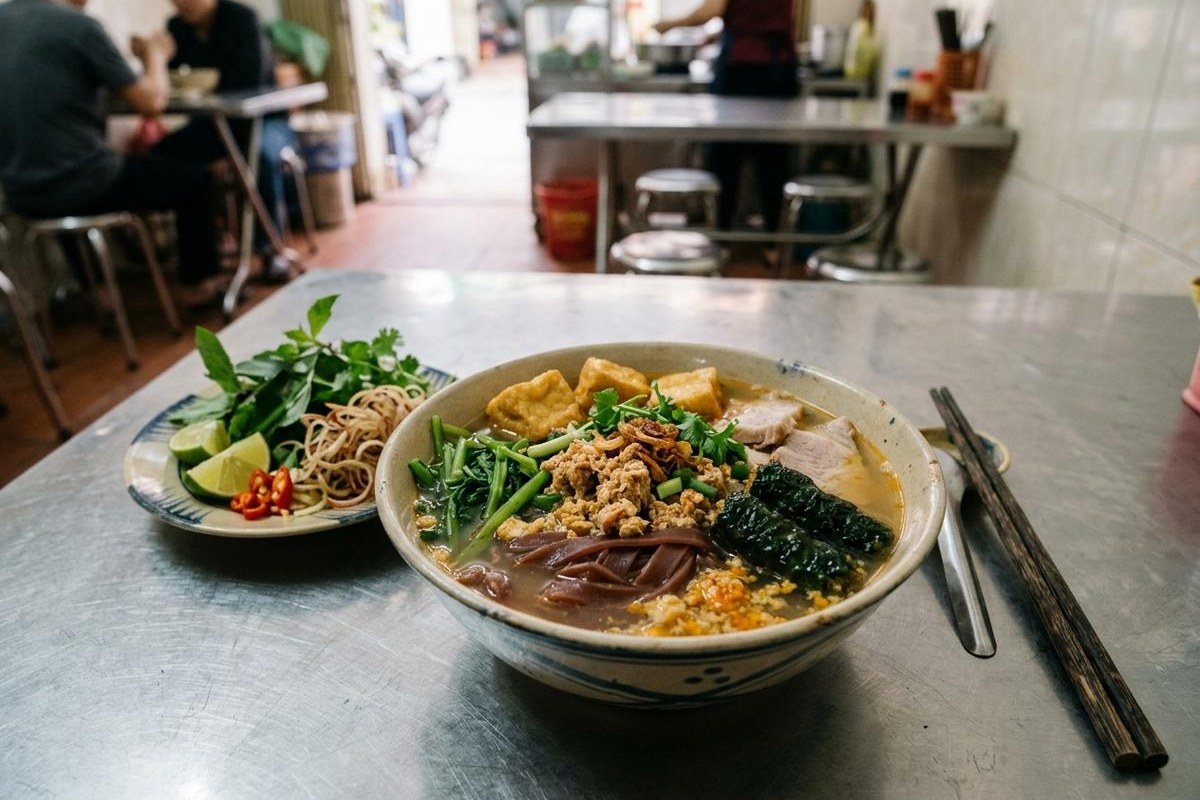
Banh da cua is one of the best-known dishes of Haiphong. The name roughly means “crab and banh da noodles”. Banh da are flat dried rice noodles with a reddish-brown color, and they stay pleasantly chewy even after they sit in hot broth. The soup is built around crab, which gives the broth a gentle sweetness and a deep, savory flavor.
A typical bowl has four parts working together:
- The broth: light, clear and crab-flavored, often helped along by pork bones and tomato.
- The noodles: thick, flat and chewy, quite different from soft white rice noodles.
- The toppings: crab and pork patties, water spinach and sometimes other local extras.
- The seasoning at the table: lime, chili, fried shallots and fresh herbs, so each person finishes the bowl their own way.
Understanding these four parts makes cooking easier. If one is missing or weak, the bowl feels incomplete, so spend your effort on the broth and the noodle texture first.
Ingredients For Four Bowls
For the broth
- About 1 kg small whole crabs, or crab shells plus 300 g crab meat
- 500 g pork bones
- 2 shallots
- 2 ripe tomatoes
- Fish sauce, salt and a little sugar to taste
- About 2.5 liters of water
For the crab patties
- 200 g ground pork
- 150 g crab meat
- 1 egg
- 1 shallot, minced
- A pinch of pepper and a little fish sauce
For the bowls
- 400 g dried reddish-brown banh da noodles, or a similar flat dried rice noodle
- 1 bunch water spinach, cut into short pieces
- Fried shallots, fresh herbs, lime wedges and chili
Quantities are a guide. Adjust them to the size of your pot and the saltiness of your fish sauce.
Equipment you will need
You do not need special tools. A large stockpot, a fine sieve, a blender or mortar, a skimming ladle and a frying pan are enough. A second pot for the noodles keeps the broth clear, because noodle starch clouds the soup if you cook them together.
Where To Find The Ingredients Abroad
Many Asian grocery stores sell dried Vietnamese noodles, fish sauce and fried shallots. Look for reddish-brown or brown flat rice noodles labeled for crab noodle soup. If you cannot find them, a thick, flat dried rice noodle is a reasonable substitute, although the texture will be different.
Freshwater field crabs are hard to find outside Vietnam. Good swaps include whole small crabs from a fishmonger, crab shells saved from another meal, or cooked crab meat. The broth will be less sweet and earthy than the original, but it will still taste of crab. Water spinach is available in many Asian markets. If not, use spinach or another leafy green and add it just before serving.
If you shop online, check the ingredient list and the best-before date on the noodle package, and buy a fish sauce you already like, since it flavors the whole pot.

How To Cook Banh Da Cua At Home, Step By Step
Prepare the broth
- Blanch the pork bones in boiling water for five minutes, then rinse them well to keep the broth clear.
- Clean the crabs thoroughly. Remove the top shell and any parts you do not want to use, and keep the shells and the meat.
- Pound or blend the crab with a little water, then strain through a fine sieve to collect a crab-flavored liquid.
- Put the bones in a large pot with the water and bring to a boil, then lower the heat and simmer gently for about an hour, skimming the surface.
- Add the strained crab liquid and the tomatoes. Keep the heat gentle and do not stir too much so the broth stays clear.
- Season with fish sauce, salt and a little sugar. Taste and adjust.
The crab liquid will form soft clumps as it warms. This is normal and is what gives the soup its traditional look and flavor, so leave the clumps alone and do not stir them apart.
Make the patties
Mix the ground pork, crab meat, egg, minced shallot, pepper and fish sauce until sticky. Shape small flat patties. Fry them in a little oil until golden on both sides and fully cooked through, or steam them for about ten minutes. Pork and crab must be cooked thoroughly before serving.
Cook the noodles and greens
Cook the noodles following the instructions on the package. Drain and rinse them briefly. Blanch the water spinach in boiling water for about one minute and drain it well.
Assemble the bowls
Put noodles in each bowl, add water spinach and patties, then ladle the hot broth over the top. Finish with fried shallots and fresh herbs. Serve with lime, chili and extra fish sauce on the side.
>>> My Favorite Things To Do In Haiphong On Weekend
Recommended tour
The Haiphong Street Food and City Tour
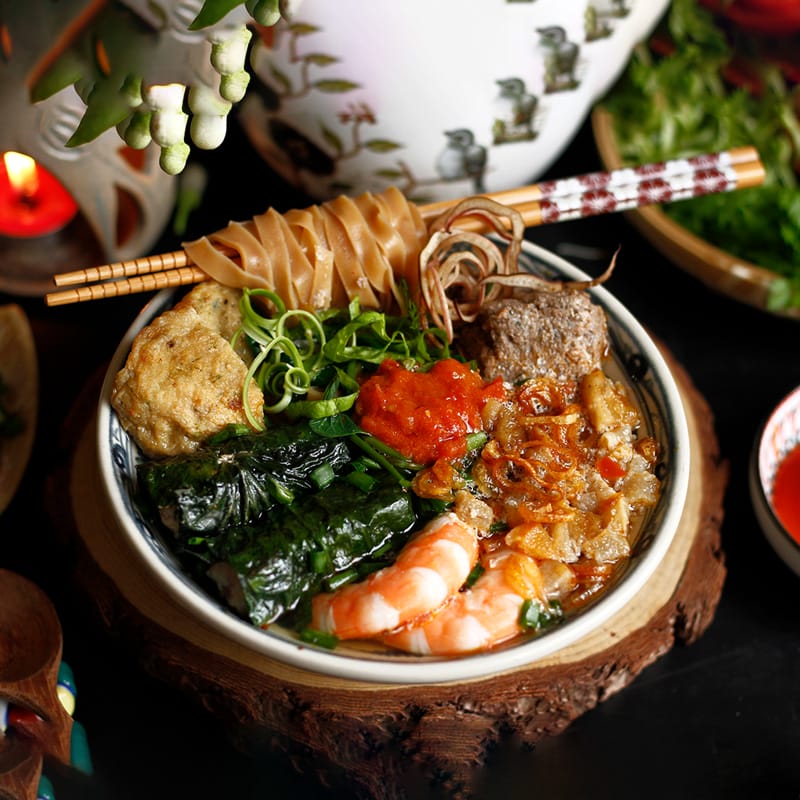
Taste banh beo, banh da cua and sweet local treats with a local guide, with stops at Linh Quang Pagoda, the Opera House and the Le Chan statue in between.
From $85 per person
A Simple Cooking Timeline
Banh da cua looks like a long project, but most of the time is hands-off simmering. Here is a relaxed schedule that works well for a weekend lunch.
- Two hours before eating: blanch the pork bones, rinse them and start the pot. While it comes to a boil, clean the crabs.
- One hour and thirty minutes before: blend and strain the crab, then add the crab liquid and tomatoes to the simmering pot.
- One hour before: mix the patty mixture and let it rest in the refrigerator so the flavors meet.
- Thirty minutes before: fry or steam the patties, slice the herbs and lime, and warm the bowls.
- Ten minutes before: cook the noodles in a separate pot, blanch the greens and taste the broth one last time.
Working in this order means everything is hot at the same moment, which is the secret to a good bowl. If you cook for guests, do the first three steps in the morning and finish the rest just before they sit down.
The broth is also the part that forgives you most. If it tastes weak after an hour, simmer it a little longer. If it is too salty, add a splash of hot water. Small corrections are far easier than starting again.
Tips For A Better Bowl
- Keep the broth at a gentle simmer. A hard boil makes it cloudy.
- Do not overcook the noodles. They should stay chewy.
- Cook the greens at the last minute so they stay bright.
- Season in small steps. Fish sauce brands differ in saltiness.
- Serve immediately. The dish is best piping hot.
One more habit worth copying from the shops: warm your bowls before serving. A hot bowl keeps the soup hot for much longer, and the noodles stay at the right texture while you eat.
Common Mistakes To Avoid
A cloudy or greasy broth
Skipping the blanching step or boiling too hard is the usual cause. Skim the surface often and keep the heat low.
Soft noodles
Noodles keep cooking in hot broth. Cook them slightly firm, keep them separate from the pot until serving and assemble the bowls right before eating.
A flat flavor
If the broth tastes plain, add a little fish sauce or a pinch of sugar. A squeeze of lime at the table also brightens the whole bowl.
How To Balance The Flavors
Good banh da cua is not strongly spiced. The flavor comes from balance, and each condiment on the table has a job.
Salt and sweetness
Fish sauce gives salt and depth, while a little sugar rounds off the sharp edges. Add both slowly and taste after each change, because crab, pork bones and tomatoes already bring their own sweetness.
Acid and heat
Lime juice lifts the whole bowl and cuts through the richness of the patties. Chili adds a clean heat. Because people differ on both, serve them separately and let each person decide.
Texture and freshness
Fried shallots add a crisp, sweet top note, while fresh herbs and water spinach bring a green freshness. Add them last so they keep their color and bite.
When you taste the soup, think about whether one element dominates. If it tastes only of fish sauce, add a little hot water or more tomato. If it tastes flat, add a pinch of salt before reaching for more fish sauce.
Easy Variations And Serving Ideas
Once you are comfortable with the base recipe, you can adapt it without losing the spirit of the dish.
- Lighter version: use only crab shells and a small amount of pork bones, and skip the fried patties.
- Extra toppings: add a few slices of cooked pork or fried tofu if your guests like a heartier bowl.
- More heat: serve sliced fresh chili and a little chili sauce on the side instead of adding it to the pot.
- Make ahead: prepare the broth and patties the day before, then cook only the noodles and greens when guests arrive.
For a relaxed dinner, serve the toppings and condiments on the table so everyone builds their own bowl. It turns the meal into a small tasting session, much like sitting on a low plastic stool at a Haiphong eatery.

>>> Unusual Things To Do In Haiphong Off Beaten Path
Serving, Storage And Food Safety
Serve each bowl with lime, chili and fresh herbs so that guests can season to taste. Banh da cua is a complete meal, so you do not need much on the side. A glass of iced tea or a small coffee afterward fits the local rhythm.
Leftover broth can be cooled quickly and kept in the refrigerator for a short time, then reheated until steaming hot. Keep noodles and toppings separate. Because the dish contains crab and pork, follow standard safe-handling rules: keep raw and cooked foods apart, wash your hands and cook thoroughly. Official food safety guidance from your local health authority is a good reference for storage times.
The broth also freezes well in portions. Reheat it until steaming hot and always cook fresh noodles and greens, since they do not keep their texture. Store-bought stock works as a shortcut, but simmer it with crab shells and tomatoes for at least thirty minutes to bring back the crab flavor. If anyone at your table has a shellfish allergy, do not serve this dish.
Taste The Real Bowl In Haiphong First
In Haiphong, many people eat banh da cua for breakfast or a quick lunch at small sidewalk shops. Sitting down to one real bowl in the city teaches you more than any written recipe can.
What to notice when you taste it
- The broth: look at its color and clarity, and notice how sweet or savory it tastes before you add anything.
- The noodles: pay attention to how chewy they are, because this is the texture you will try to match at home.
- The condiments: watch how locals add lime, chili and herbs, and in what order.
Take a photo of your bowl and write a few quick notes. Back home, compare your first attempt with those notes and adjust one thing at a time.
If food is a big part of your trip, joining one of the haiphong tours run by Haiphong Adventure is an easy way to find a good bowl. A local guide can explain each part of the dish and help you order like a local.
Frequently Asked Questions
Can I make banh da cua without field crab?
Yes. Use small whole crabs, crab shells or cooked crab meat. The flavor will be a little different but still good.
What noodles can I use if I cannot find red ones?
A thick flat dried rice noodle is the closest substitute. The texture will be softer than the original.
How long does it take to cook?
Plan for roughly two hours from start to finish, most of it unattended simmering.
Can I make it vegetarian?
The dish is built on crab and pork, so a vegetarian version would be a different soup. You can use a vegetable broth with mushrooms and tofu, but it will not taste like the original.
Is it better to taste it in Haiphong first?
Tasting a real bowl gives you a target to aim for. Browse our haiphong tours to find a route that includes it, or message us and we will help you plan a food stop.
Final Thoughts On Cooking Banh Da Cua
Cooking banh da cua at home is a simple way to keep your Vietnam trip alive. Start with the basic method, taste as you go and make small adjustments each time. The first bowl may not match your memory, but the third one probably will.
If you would like to taste the real thing with a local guide before you cook it, the team at Haiphong Adventure is ready to help you plan your visit.
WhatsApp, Viber, WeChat: +84(0)934.555.001
KakaoTalk, Line ID: haiphongadventure