Inside Hospital Cave Cat Ba Historical Insights
Hospital Cave Cat Ba is one of the most unusual historical sites in northern Vietnam. Hidden inside a limestone mountain on Cat Ba Island, it was turned into a secret, bomb-proof hospital during the war years of the 1960s and 1970s. Walking through its concrete corridors and small rooms today gives you a rare look at how people lived, worked and cared for the wounded under constant threat of air raids.
In this guide, the Haiphong Adventure team takes you inside Hospital Cave Cat Ba: its history, how it was built, what each part of the cave was used for and what to notice on your visit. Figures and dates follow the information commonly shared at the site and by local guides, and some details are told slightly differently by different sources (updated October 2026).
What Is Hospital Cave Cat Ba
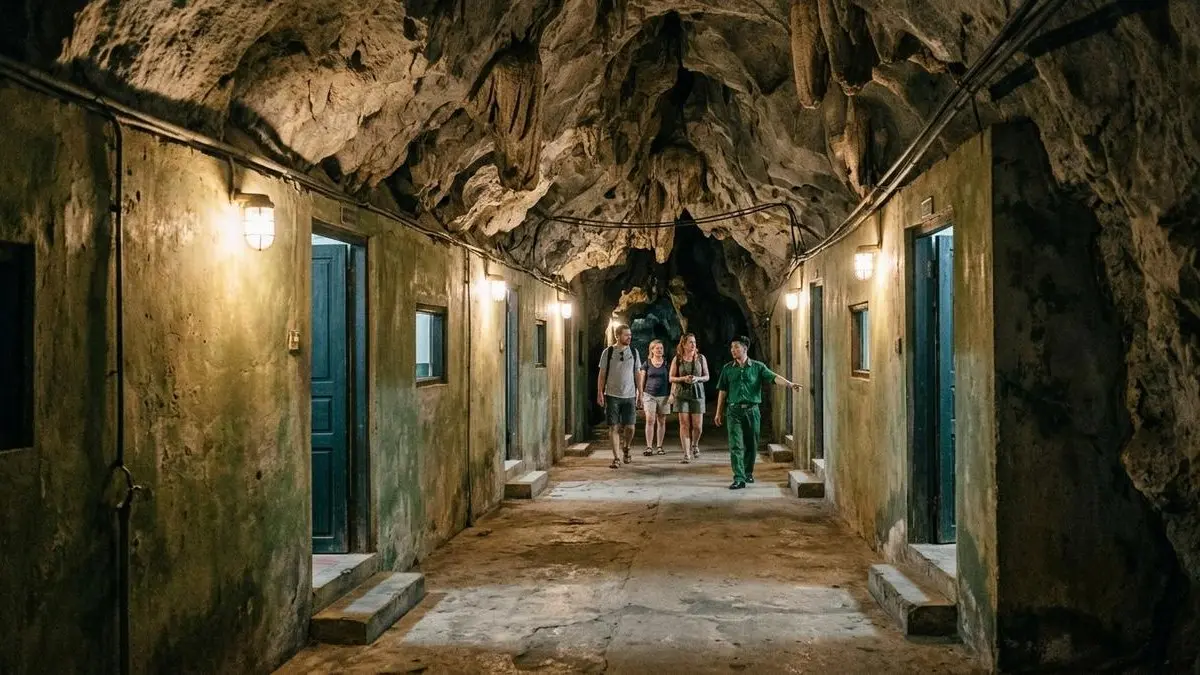
Hospital Cave, called Hang Quan Y in Vietnamese, is a natural cave that was reinforced with concrete and divided into rooms to serve as a hidden military hospital. It sits in the hills of Cat Ba Island, along the road between Cat Ba town and the national park area.
From the outside, you see only a modest entrance in the rock surrounded by forest. Inside, a network of corridors, stairs and chambers spreads over several levels. The cave was designed to keep patients, doctors and leaders safe from bombing, and to stay hidden from the air.
- Type of site: wartime hospital and shelter inside a limestone cave.
- Period of use: built in the 1960s and used during the war until the mid-1970s.
- Layout: concrete rooms on several levels, linked by corridors and stairs.
- Today: a historical site open to visitors, with simple displays and information boards.
The History Behind The Hospital
A strategic island under threat
During the war, Haiphong was northern Vietnam’s main port and an important target. Cat Ba Island, close to the shipping routes and the coast, needed medical care that could keep working during air raids. Building in the open was too dangerous. The answer was to go inside the mountains.
Building inside the rock
According to the information usually shared at the site, construction took place in the mid-1960s, with support from Vietnam’s allies at the time. Workers enlarged the natural cave, poured thick concrete walls and floors and created separate rooms for different purposes. The limestone above formed a natural roof strong enough to resist bombs.
Years of service
Once complete, the cave served as a hospital for wounded soldiers and local people, and also as a safe place for officials. It remained in use until the end of the war in 1975. Afterwards it stood quiet for many years before being opened to visitors as a historical site.
If you enjoy places where nature and history meet, our guide to beautiful caves and beaches on a Cat Ba Island tour lists other caves worth combining with this visit.
>>> Review Of Popular Cat Ba Tours Activities Guide
How The Cave Was Designed
Hospital Cave Cat Ba is often described as having three levels and around 17 rooms. Even without exact numbers, the design is impressive. Everything was planned around three needs: safety, secrecy and keeping a hospital running with very limited resources.
| Design feature | Why it mattered |
|---|---|
| Thick limestone overhead | Natural protection against bombs |
| Concrete walls and floors | Kept rooms dry, clean and stable |
| Narrow, hidden entrances | Hard to see from the air |
| Several levels | Separated treatment, rest and command areas |
| Multiple exits | Escape routes in an emergency |
| Ventilation openings | Fresh air in a closed space |
Inside Hospital Cave Room By Room
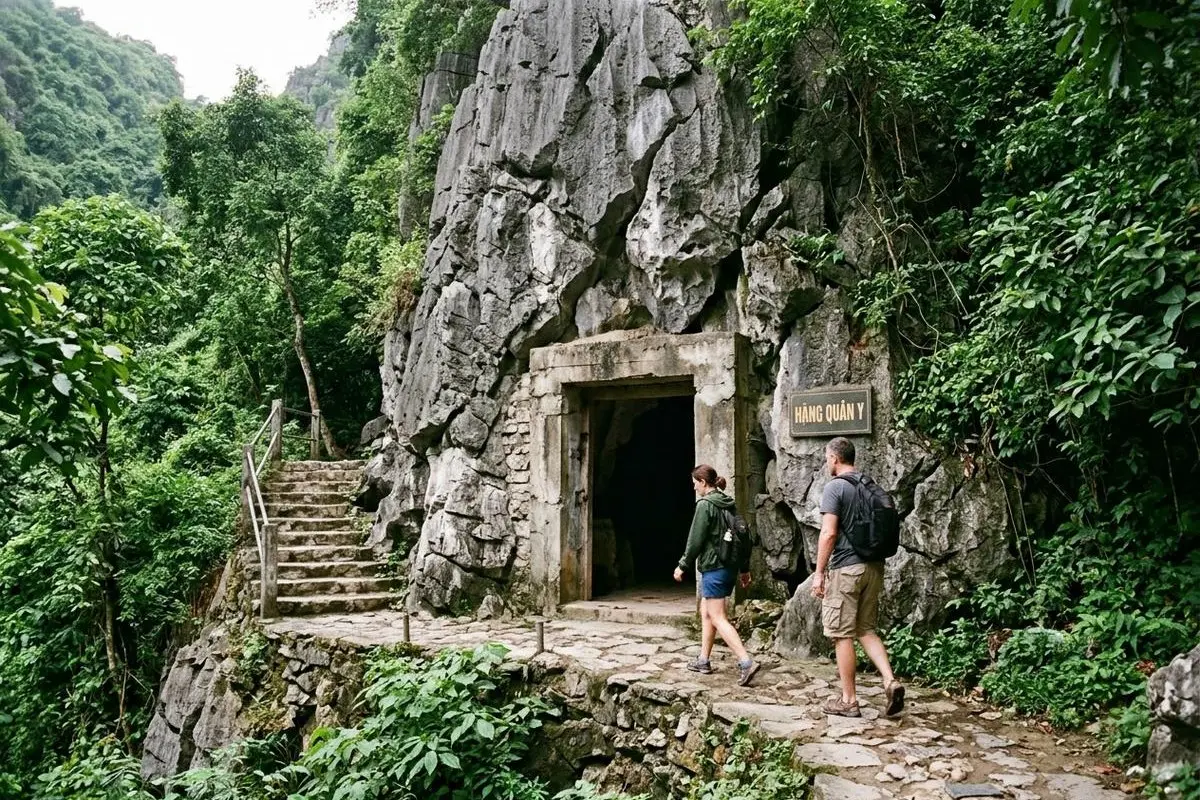
Your visit follows a route through the main corridors and rooms. Signs are simple, so a guide or a little background knowledge helps you imagine what happened in each space.
Operating and treatment rooms
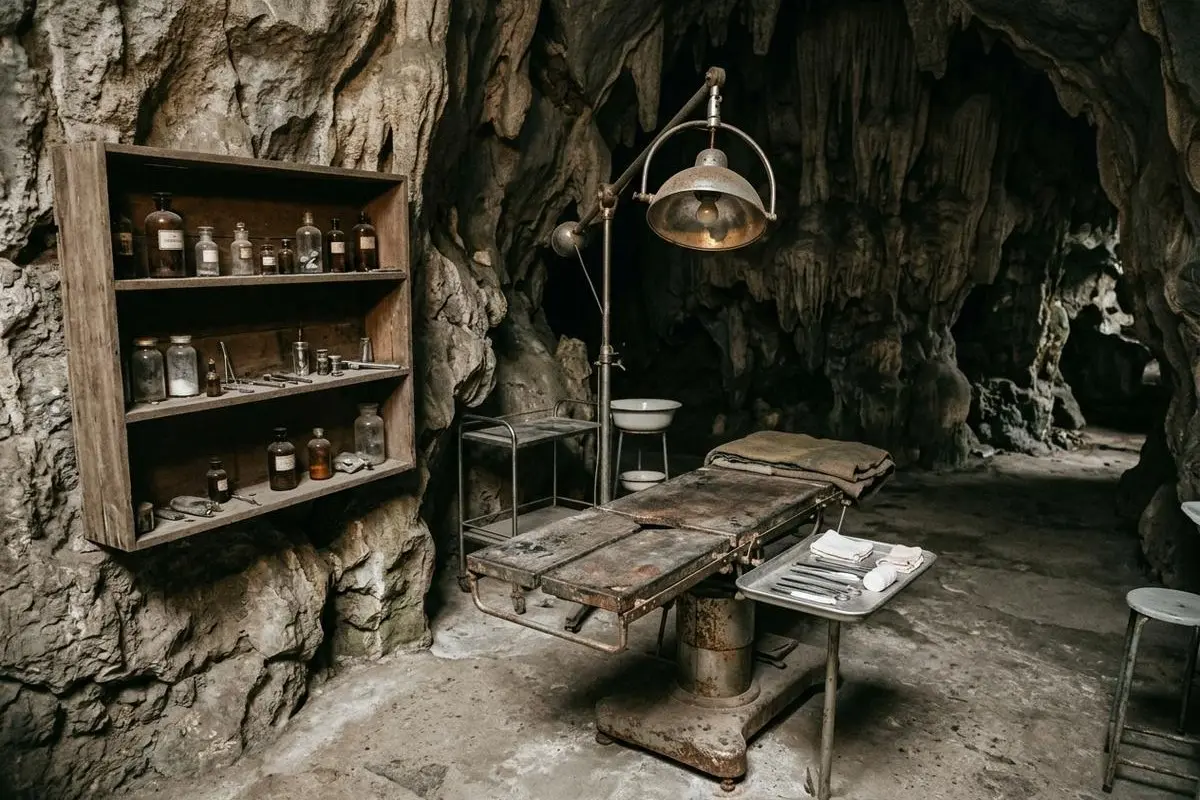
These were the most important rooms in the cave. Surgeons worked here with basic equipment and limited light, treating injuries from bombing and fighting. Standing in these small concrete rooms, you understand how hard and stressful their work must have been.
Patient wards
Larger rooms served as wards where patients rested and recovered. They were cool and dark, far from the heat and noise outside, but also cramped and damp at times.
Doctors’ and staff rooms
Medical staff lived and slept inside the cave for long periods. Their small rooms show how simple daily life was, with little privacy and few comforts.
Command and meeting areas
Some rooms were used by officials and commanders who needed a safe place to work and meet. This dual use as hospital and shelter is part of what makes the site historically significant.
Kitchen, storage and a small pool
Supporting rooms stored food, medicine and supplies. Many visitors are surprised to see a small pool area, often explained as a water reserve or a place for staff to relax. It is one of the more unexpected details inside the cave.
The large hall
A bigger hall served for meetings and gatherings. Guides sometimes mention that films or performances were shown here to keep spirits up during hard times.
Recommended tour
The Luxury Halong Bay Tours

Want to see more caves among the limestone islands? Cruise the bay with an experienced crew, explore caves, kayak in calm water and enjoy lunch on board.
From $109 per person
Life Inside The Cave During The War
Behind the concrete and rock are human stories. While details differ between sources, local guides often highlight these points:
- Constant readiness. Staff had to treat patients quickly and quietly, often while bombing continued outside.
- Limited supplies. Medicine, equipment and electricity were scarce, so doctors improvised.
- Damp and darkness. Life underground meant little sunlight and high humidity for long periods.
- Community support. Island residents helped bring food, carry supplies and care for the wounded.
- Resilience. People kept working, studying and even finding moments of rest in the small pool or the hall.
These stories help visitors see the site not only as a military structure, but as a place where ordinary people showed courage and care.
>>> Cat Ba Island Tour Experience Into The Jungle
Why Hospital Cave Matters Today
- A unique wartime site. Few hospitals in the world were built entirely inside a natural cave.
- A window into island life. It shows how Cat Ba’s people lived through difficult years.
- Engineering under pressure. It combines natural geology with careful human design.
- Remembering peace. Many visitors leave reflecting on the cost of war and the value of peace.
For travellers interested in history beyond the beaches and bays, Hospital Cave Cat Ba adds real depth to a trip to the island.
Tips For Getting The Most From Your Visit
- Go with a guide or read up first. Signs are brief, and context makes the rooms come alive.
- Wear good shoes. Floors and stairs can be damp and uneven.
- Bring a light jacket. The cave is cooler than outside, which feels great in summer.
- Take your time. Most visitors spend around 30 to 60 minutes inside.
- Be respectful. Keep voices low and do not touch displays.
- Check opening details locally. Hours and ticket prices can change, so ask your hotel before you go.

Combining Hospital Cave With Other Cat Ba Sights
Hospital Cave sits on the main road through the island, which makes it easy to combine with other stops in one day:
- Cat Ba National Park. Trekking trails, forest and viewpoints a short ride away.
- Trung Trang Cave. A natural cave with interesting rock formations.
- Cannon Fort. Another wartime site with sweeping views over the bay.
- Beaches and the bay. Relax on the Cat Co beaches or take a boat into Lan Ha Bay.
Our Cat Ba itinerary for nature lovers and the guide to trekking routes in Cat Ba National Park help you plan the rest of the day. If you are coming from the mainland, see our tips on the Haiphong to Cat Ba ferry and bus journey.
Many guests also spend a few days on our haiphong tours before or after Cat Ba, to see the city’s colonial streets, food and countryside.
Frequently Asked Questions About Hospital Cave Cat Ba
What was Hospital Cave Cat Ba used for?
It was a secret hospital and safe shelter during the war, treating wounded soldiers and local people and protecting officials from air raids.
When was Hospital Cave built?
It was built in the 1960s and used until the end of the war in 1975, according to information shared at the site.
How long does a visit take?
Most visitors spend around 30 to 60 minutes inside, plus travel time from Cat Ba town.
Is Hospital Cave suitable for children?
Yes, for most children who are comfortable in enclosed spaces. Keep an eye on them on stairs and damp floors.
Do I need a guide?
It is not essential, but a guide explains the history and the purpose of each room much better than the short signs.
Step Inside A Hidden Chapter Of Cat Ba History
Hospital Cave Cat Ba is more than a cave. It is a reminder of how people on a small island adapted, cared for each other and kept going through years of war. A short visit inside its corridors and rooms is one of the most memorable history experiences in the Haiphong region.
If you would like help planning your Cat Ba days, transfers or a local guide, the Haiphong Adventure team is happy to help.
WhatsApp, Viber, WeChat: +84(0)934.555.001
KakaoTalk, Line ID: haiphongadventure