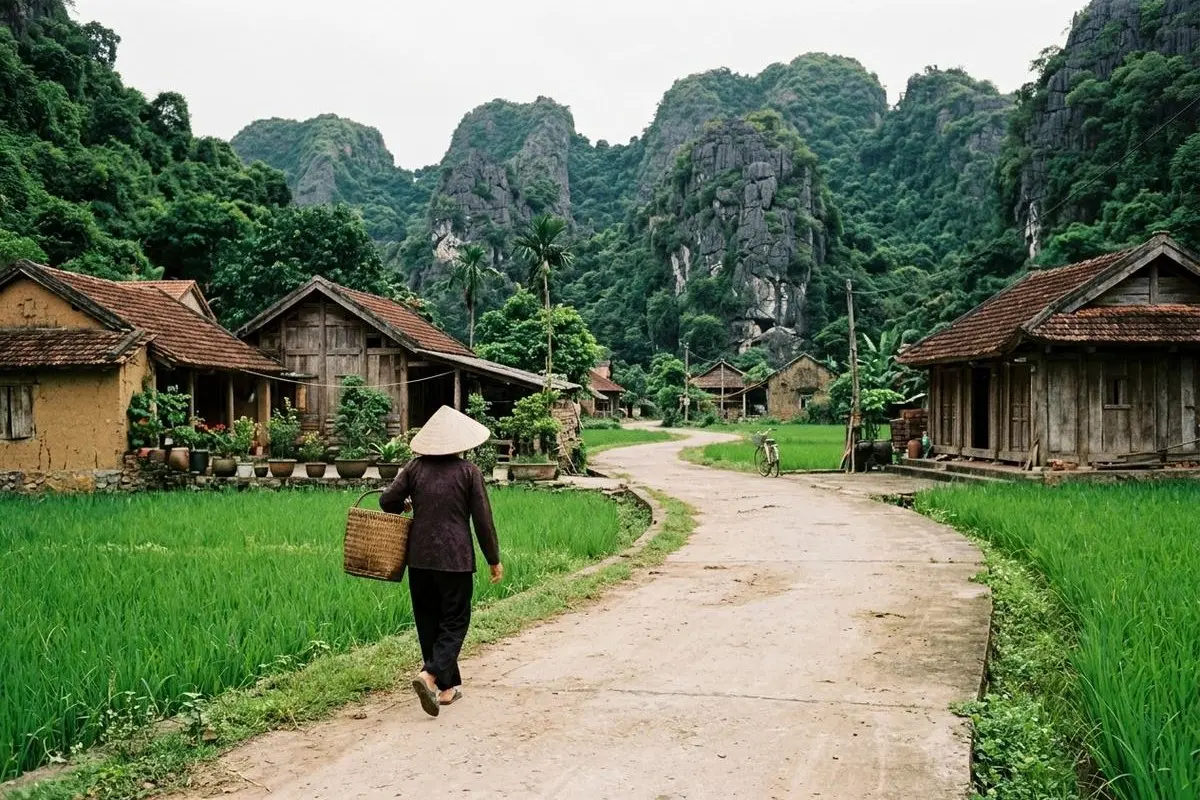
Self Guided Haiphong City Tour Walking Itinerary
A self guided Haiphong city tour is one of the easiest and most rewarding ways to meet Vietnam’s great port city. The historic centre is compact, flat and full of French-era facades, busy sidewalk cafes, pagodas and riverside promenades, so you can see a lot in one day on foot with only a short taxi ride or two. This walking itinerary gives you a clear route, realistic timings, food stops and the small local tips that make the day feel easy.
We are Haiphong Adventure, a small local team that runs motorbike and city experiences in our hometown every week. The route below is the same order of stops we suggest to friends who prefer to explore alone. Follow it step by step, shorten it, or mix it with a guided ride later in your trip. Opening hours and prices change often, so treat the details as a friendly guide and check on the day.
How This Self Guided Haiphong City Tour Works
The walk is built around the old centre, the area between the Opera House, the museum district and the Cam River. Most stops sit within a few hundred metres of each other, which is why the city works so well for walkers. In total you will walk roughly five to seven kilometres, depending on how much you wander, with long breaks for coffee, lunch and rest.
We split the day into three parts. The morning covers the grand French-era buildings while the air is still cool. Midday is for lunch and a proper rest, the local way. The late afternoon and evening take you to the river, a pagoda and the lit-up squares, when the whole city comes outside.
Who this walking route suits
- First-time visitors who want a calm introduction to northern Vietnam.
- Travellers on a stopover between Hanoi, Cat Ba and Lan Ha Bay.
- Photographers and slow travellers who like to sit, watch and take their time.
- Families with older children who are happy to walk a few kilometres.
What you need before you start
Bring comfortable shoes, a refillable water bottle, sunscreen, a light scarf or shirt to cover your shoulders at the pagoda and some small cash for coffee and street food. A phone with an offline map and a ride-hailing app is useful for the one or two longer hops. If you are arriving from the capital, our story about taking the train from Hanoi to Haiphong explains why the station drop-off is a nice place to begin.
Start With Sidewalk Coffee And A Local Breakfast
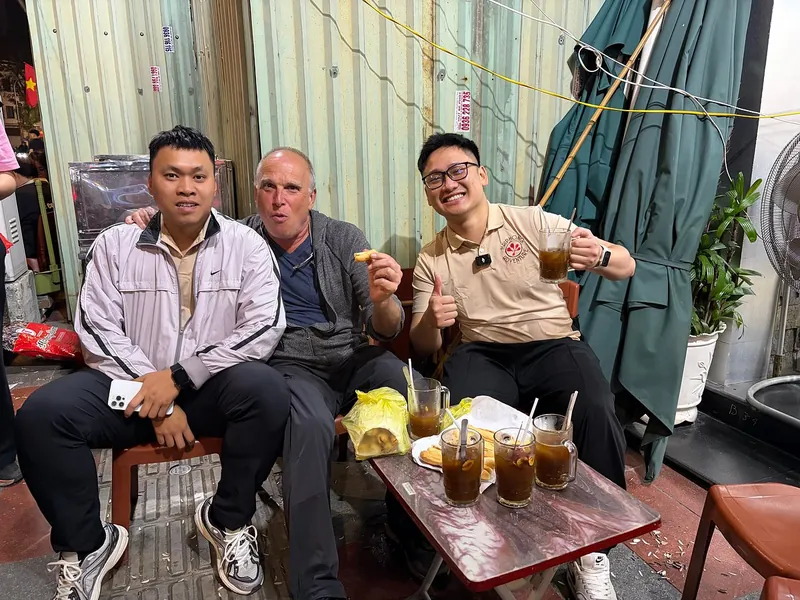
Begin at around 7:00 or 7:30. This is when Haiphong feels most like itself. Shop owners sweep the pavement, office workers queue for breakfast and the first glasses of iced coffee appear on tiny tables. Find a busy sidewalk cafe near the centre, sit on a low plastic stool and order cà phê sữa đá, iced coffee with condensed milk, or cà phê đen đá if you like it strong and black.
For breakfast, look for banh da cua, the city’s signature crab noodle soup with flat brown rice noodles, field crab broth and fresh herbs. Locals eat it early and many good pots are finished by mid-morning. If you would like something to carry while you walk, buy a few banh mi cay, the thin little baguettes with pâté and chilli sauce. We wrote about these morning favourites in our Haiphong street food adventure if you want more ideas.
Simple ordering tips
- Point and smile. Many stalls sell only one or two dishes, so ordering is easy.
- Say “không cay” if you cannot handle chilli, and add sauces yourself.
- Pay after you eat. Small notes make life easier for everyone.
Haiphong Opera House And Theatre Square
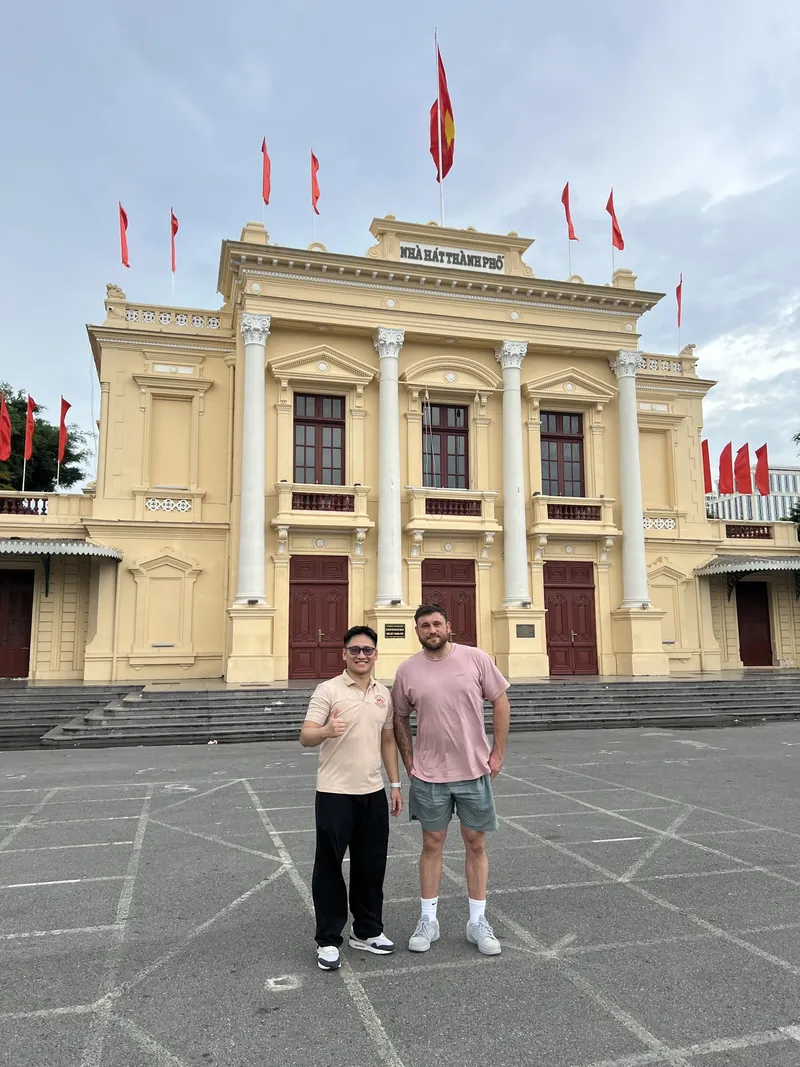
Walk to the Haiphong Opera House, officially the Municipal Theatre, the most recognisable building in the city. It was built in the early twentieth century in a French style, with a pale facade, tall columns and arched windows. The square in front of it is the heart of the old centre and a good place to get your bearings for the rest of the walk.
The theatre is usually open to the public only for events, so plan to admire it from the outside. Walk slowly around the building and notice how the surrounding streets fan out from it, lined with shophouses, banks and cafes from different decades. Morning light from the east is pleasant on the main facade, and the square is still quiet before 9:00.
Look closer at the details
Before you move on, stand back and look up. The decorative mouldings, wrought-iron balconies and shuttered windows are typical of colonial buildings adapted to a hot, humid climate. Then turn around and look at the modern shopfronts and motorbikes flowing past. That contrast between old and new is the story of Haiphong in one view.
>>> Half-Day Haiphong Tour: The Ultimate 4-Hour Itinerary
Le Chan Statue And The Central Flower Garden
From the theatre, follow the long strip of gardens and walkways that runs through the centre towards Tam Bac Lake. This green belt is where locals jog in the early morning, play badminton, sit with friends and sell flowers or snacks. It is one of the most pleasant places in the city to simply walk and watch daily life.
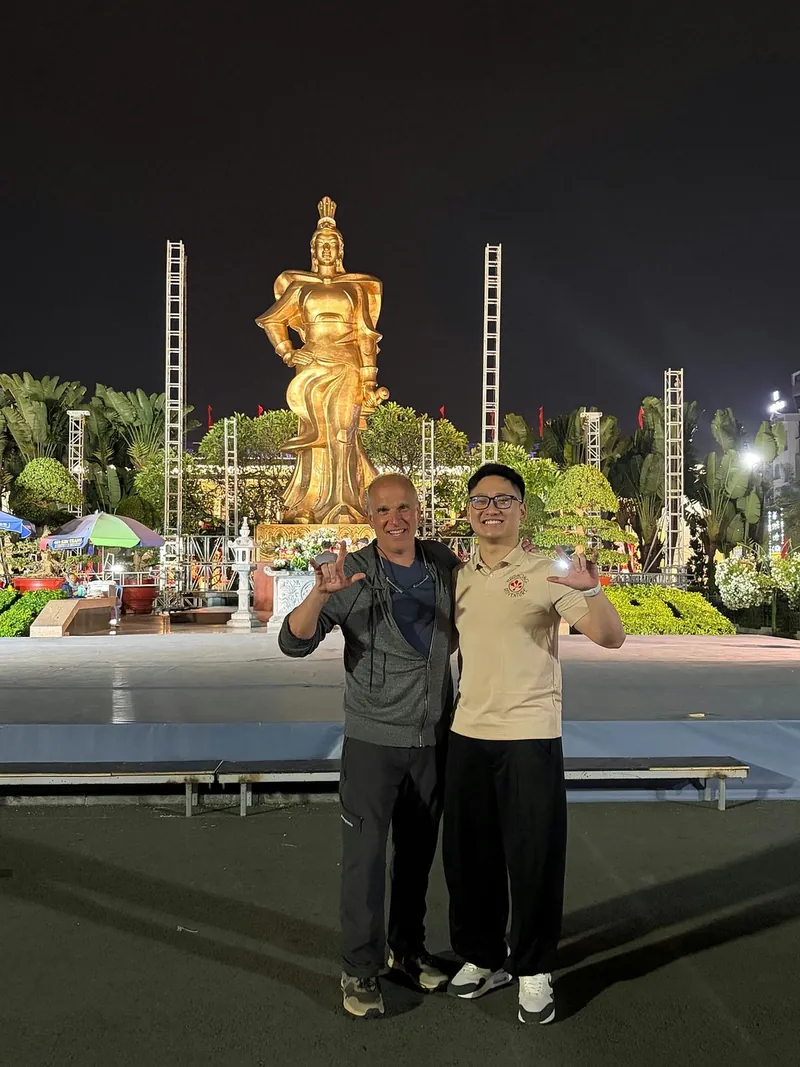
At one end stands the large statue of Le Chan, the female general who, according to local history, fought alongside the Trung Sisters and is remembered as a founder of the area that became Haiphong. Locals feel real pride in her story, and the statue is a popular meeting point. Come back after dark if you can, because the square is softly lit and full of families in the evening.
Haiphong Museum On Dien Bien Phu Street
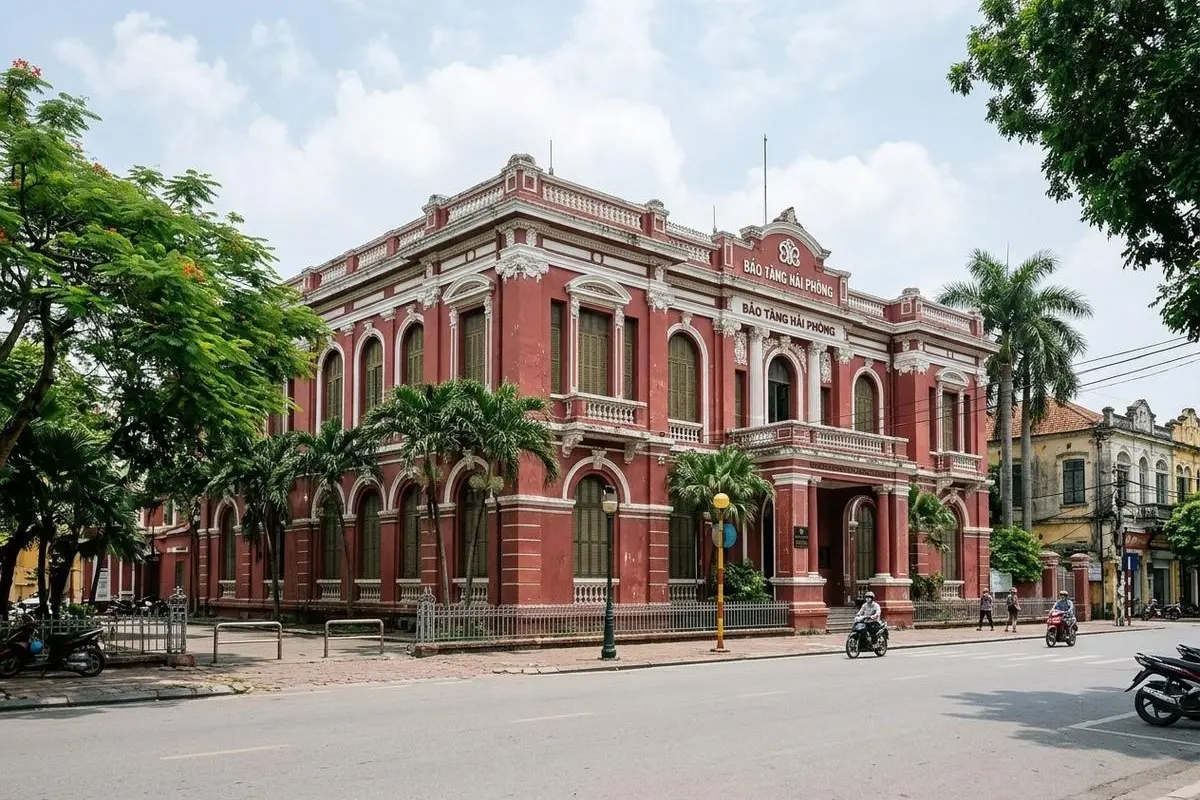
Next, walk to Dien Bien Phu Street, one of the city’s most elegant boulevards. The Haiphong Museum is housed in a striking French colonial building with a deep red facade, and it is worth a visit even if you only spend thirty minutes inside. The exhibits introduce the history of the port, from early settlements and trade to the wars of the twentieth century and the city’s rebuilding.
Labels are not always translated in full, so a translation app on your phone helps. Like most museums in Vietnam, it may close for a long lunch break and on certain days of the week, so check the current hours before you go. If it is closed, the building is still a beautiful photo stop from the pavement.
Take a break on Dien Bien Phu
This street is lined with tall trees, old villas and plenty of cafes, so it is a natural place for a second coffee or a fresh juice. Sit by a window and watch the slow traffic. Many travellers tell us this is the moment they fall in love with the city, because it feels calm, green and very lived-in.
The French Colonial City Post Office
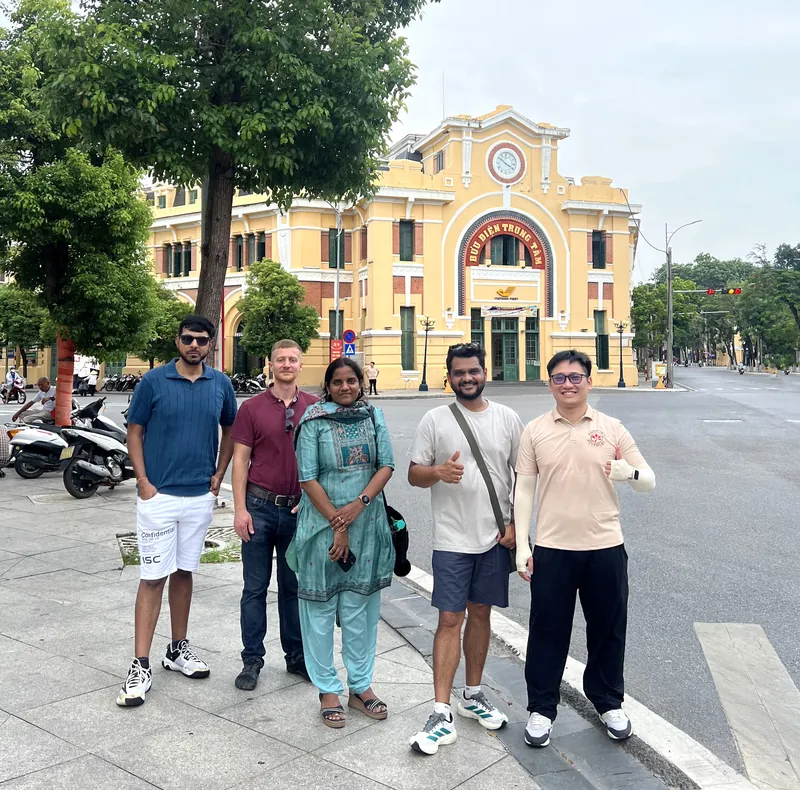
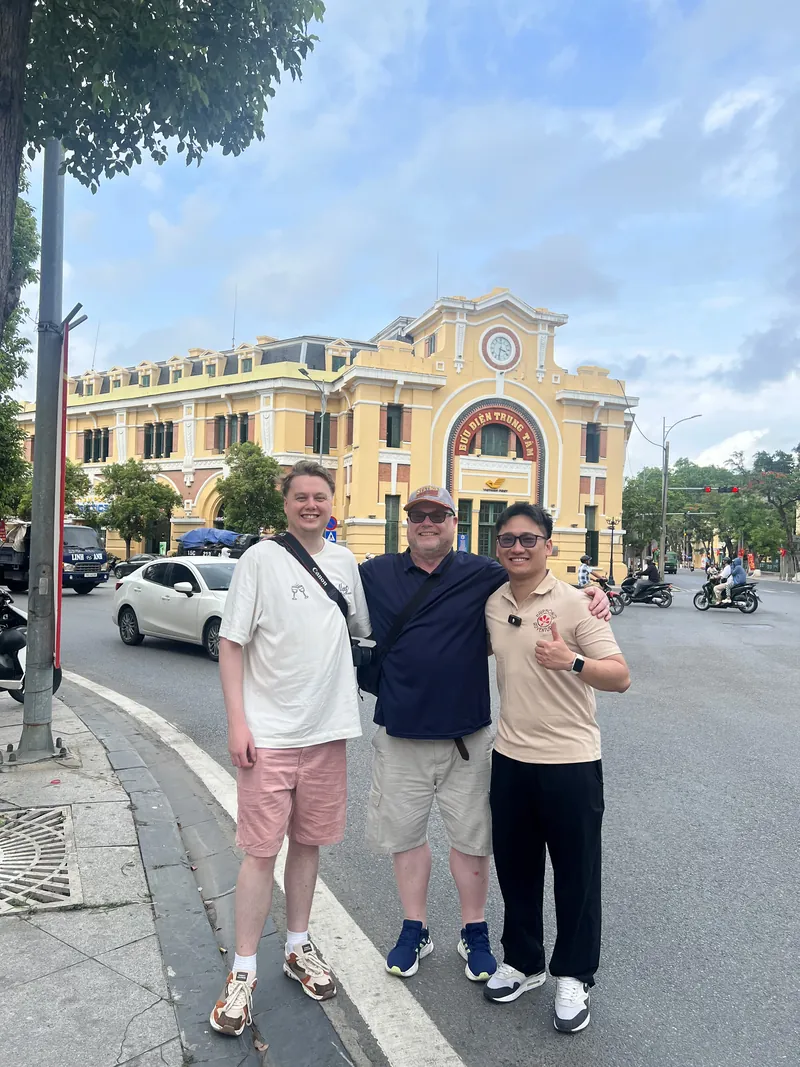
A short walk away is the Haiphong City Post Office, another landmark from the French period. The building has a classic yellow facade, high windows and a dignified corner position. It is still a working post office, so you can step inside during business hours, buy a stamp or send a postcard home, which is a small and charming souvenir of your Haiphong city tour.
Please remember that people inside are doing their daily business. Keep your voice low, ask before photographing staff and do not block the counters for pictures. Outside, the street corners around the building offer good angles of the facade, especially in the soft light of mid-morning.
Recommended tour
Taste of Old Haiphong
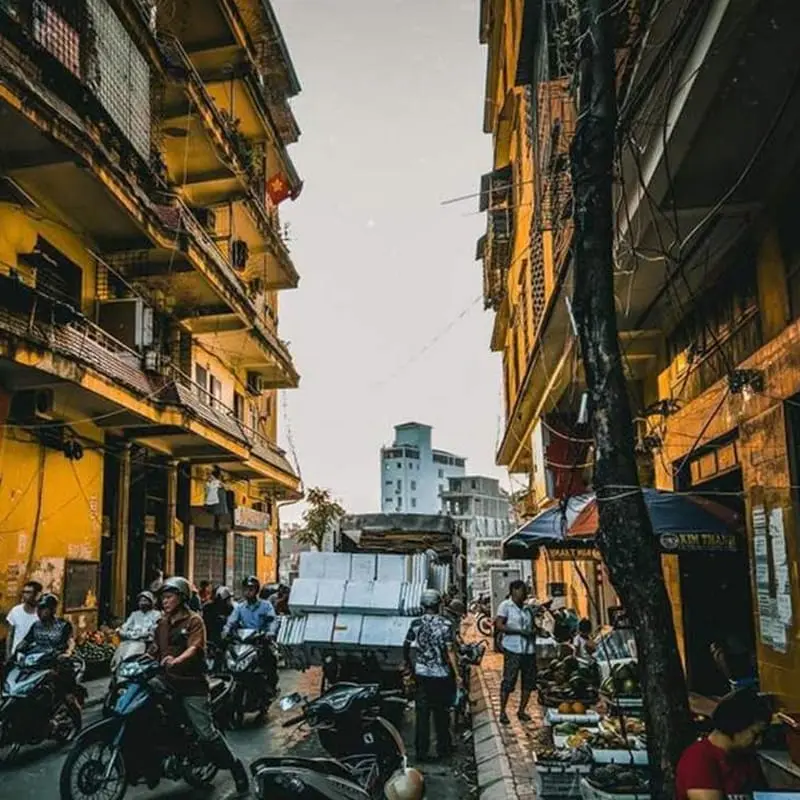
Prefer a local to lead the way? Ride through the old streets, architecture and markets with our team and hear the stories behind each stop.
From $79 per person
Cau Quay Swing Bridge And The Mural Street
Late morning is a good time to head towards the river and Cau Quay, the old swing bridge that has become one of the most photographed spots in the city. Depending on how far you have wandered, it is a longer walk or a short taxi hop from the post office. The iron structure, old rails and colourful murals nearby make a memorable backdrop.
Be careful and respectful here. The area is linked to working railway infrastructure, so follow any signs, move when local staff ask you to and never block the tracks for a photo. Weekday mornings are usually calmer than weekend afternoons, when local couples and photographers arrive in numbers.

>>> Unusual Things To Do In Haiphong Off Beaten Path
Long Lunch And A Proper Midday Rest
Between roughly 11:30 and 14:00 the city slows down. The sun is strong, many small shops close and locals enjoy a big lunch followed by a nap. Do the same. A simple cơm bình dân restaurant, where you point at dishes laid out on a counter, is easy, cheap and filling. If you love seafood, Haiphong is a port city, and grilled squid, steamed clams and crab dishes are local favourites.
After lunch, go back to your hotel or find a cool cafe for an hour or two. You will enjoy the afternoon and evening much more with fresh legs. If you want to plan your meals in more detail, our guide to 16 must-try Haiphong dishes and local eateries is a handy list to screenshot.
Du Hang Pagoda In The Afternoon
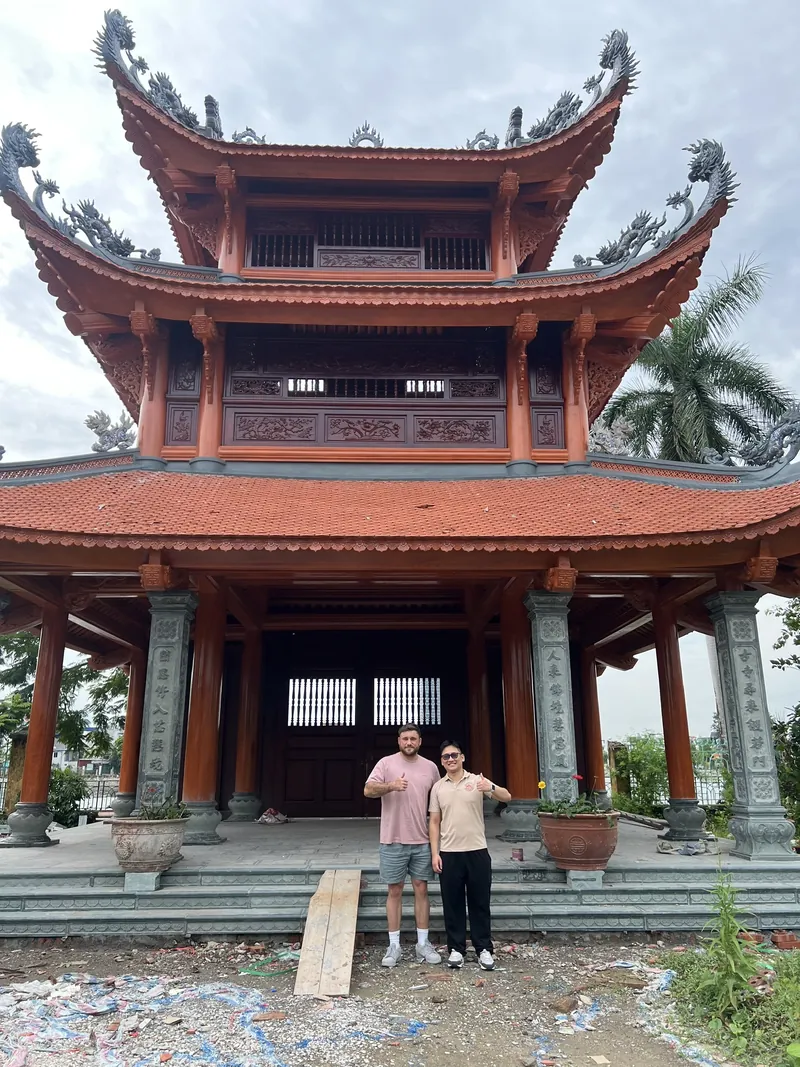
Once the heat softens, take a taxi or ride-hailing car to Du Hang Pagoda, one of the oldest and most respected Buddhist pagodas in the city. It sits a few kilometres south of the centre, so this is the one hop where walking all the way is not practical. The pagoda is known for its graceful roofs, carved wooden halls, quiet courtyards and bonsai trees.
Du Hang is an active place of worship, so behave as a guest. Cover your shoulders and knees, take off your hat in the main hall, speak softly and never point your feet towards an altar. A small donation in the box is a kind way to say thank you, and the amount is up to you. Photos are usually fine in the courtyard, but check signs or ask before taking pictures inside.
A quieter alternative
If you would rather stay closer to the centre, choose a smaller neighbourhood pagoda such as Linh Quang, with its red-roofed bell tower. It is less famous than Du Hang, but the calm atmosphere and the chance to watch locals light incense make it just as memorable.
>>> Cultural Things To Do In Haiphong You Must Try
Sunset On The Cam River Promenade
From the pagoda, head north to the Cam River for sunset. The riverside promenade near Hoang Van Thu Bridge is where Haiphong relaxes after work. Joggers, families, couples and street vendors selling grilled corn or cold drinks fill the pavement, and the breeze from the water is the best air conditioning in town.
There is no ticket and no fixed schedule. Walk slowly, buy a snack from a cart and find a bench to watch cargo boats and the bridge lights coming on. Sunset is noticeably earlier in winter than in summer, so check the time on your phone and arrive about forty minutes before.

Street Food Dinner And An Evening Stroll
Finish your walking day the way locals do, with dinner on the sidewalk. As evening falls, low tables appear along many streets in the centre and the smell of grilled food drifts everywhere. Good dishes to try include banh beo, small steamed rice cakes with a shrimp topping, nem cua bể, the square crab spring rolls Haiphong is proud of, snails cooked in different sauces and chè, the sweet dessert soups.
The simplest rule for choosing a stall: go where the locals are, where the turnover is fast and where only one or two dishes are on offer. After dinner, walk back to the Opera House and the Le Chan square to see them lit up. It is a peaceful, friendly way to close the loop of your walk.
>>> 24-Hour DIY Haiphong Tour: The Ultimate Guide
Your Walking Itinerary At A Glance
Here is the full day in one table. Times are approximate, and in summer it is wise to start earlier and rest longer at midday.
| Time | Stop | How to get there |
|---|---|---|
| 7:00 – 8:30 | Sidewalk coffee and banh da cua breakfast | Walk in the old centre |
| 8:30 – 9:15 | Opera House and Theatre Square | Walk |
| 9:15 – 9:45 | Central flower garden and Le Chan statue | Walk |
| 9:45 – 10:45 | Haiphong Museum and coffee on Dien Bien Phu | Walk |
| 10:45 – 11:15 | City Post Office | Walk |
| 11:15 – 11:45 | Cau Quay swing bridge | Longer walk or short taxi |
| 11:45 – 15:00 | Lunch and midday rest | Walk or taxi to hotel |
| 15:30 – 16:30 | Du Hang Pagoda | Taxi or ride-hailing app |
| 17:00 – 18:00 | Cam River promenade at sunset | Taxi or ride-hailing app |
| 18:30 onwards | Street food dinner and evening stroll | Walk |
Shorter half-day version
Only have a morning? Do breakfast, the Opera House, the flower garden, the museum and the post office, then finish with lunch. You will see the core of the French-era centre in about four hours.
Practical Tips For Walking In Haiphong
- Cross the road slowly and steadily. Walk at an even pace and let motorbikes flow around you. Do not run or stop suddenly.
- Use the pavement with care. Sidewalks are often used for parking and cafes, so you will sometimes step into the street edge. Stay alert.
- Time the light. Early morning and the hour before sunset are best for photos and for avoiding the heat.
- Dress for the season. Summers are hot and humid, while evenings from about December to February can feel cool near the water.
- Carry small cash. Coffee shops, street stalls and markets usually prefer cash.
- Check opening hours on the day. Museums, pagodas and events change their schedules, especially around public holidays.
If walking in traffic feels stressful, there is no shame in mixing your day with a guided ride. Many travellers explore on foot in the morning and join one of our haiphong tours in the evening. Read our Haiphong motorbike tour safety tips to see what riding as a passenger is like.
Frequently Asked Questions About A Self Guided Haiphong City Tour
Is Haiphong walkable for tourists?
Yes. The old centre around the Opera House, Dien Bien Phu Street and the City Post Office is compact and flat. You only need a taxi or ride-hailing car for longer hops such as Du Hang Pagoda and the riverside.
How long does a self guided Haiphong city tour take?
A relaxed full day with breaks takes about eight to ten hours. A shorter morning route covering the main French-era buildings takes around four hours.
Is it safe to walk around Haiphong alone?
The city centre generally feels friendly and safe for walkers. The main challenge is traffic, so cross slowly, keep your bag in front of you in busy areas and use a taxi when heading back late.
Do I need tickets for the stops on this route?
Most stops, such as the squares, the flower garden, the river promenade and the outside of the Opera House, are free. The museum and some special areas may charge a small fee, and prices can change, so bring a little cash.
When is the best time of year for a walking tour?
Spring and autumn are usually the most comfortable, with milder temperatures. Summer is hot and humid, so start very early, and winter mornings can be cool and grey.
Plan Your Haiphong City Tour With Us
We love helping travellers discover our hometown, whether you explore alone or with a local by your side. If you would like this route adjusted to your hotel location, your dates or your energy level, or you want to add a guided evening food ride, just message the Haiphong Adventure team. We reply quickly and we are happy to share honest tips even if you are not booking a tour.
WhatsApp, Viber, WeChat: +84(0)934.555.001
KakaoTalk, Line ID: haiphongadventure