How Nu Nuong Haiphong Is Prepared And Cooked
If you are searching for nu nuong Haiphong, you are probably after one of the northern port city’s best loved street snacks: nam nuong, thin slices of marinated pork udder grilled over charcoal until golden and smoky. It sounds unusual on paper. On a plastic stool beside a glowing brazier, with a plate of herbs and a bowl of chili dip in front of you, it makes perfect sense. This guide explains how the dish is prepared and cooked, from the first rinse of the meat to the final dip, so you know exactly what you are eating and how to order it with confidence.
We run Haiphong tours every week at Haiphong Adventure, and this is a dish our guests ask about more often than almost anything else. The short answer is that the cooking is simple, but the details that matter, such as cleaning, slicing, marinating and fire control, take real skill. Below you will find the whole process step by step, plus practical tips for trying it yourself.
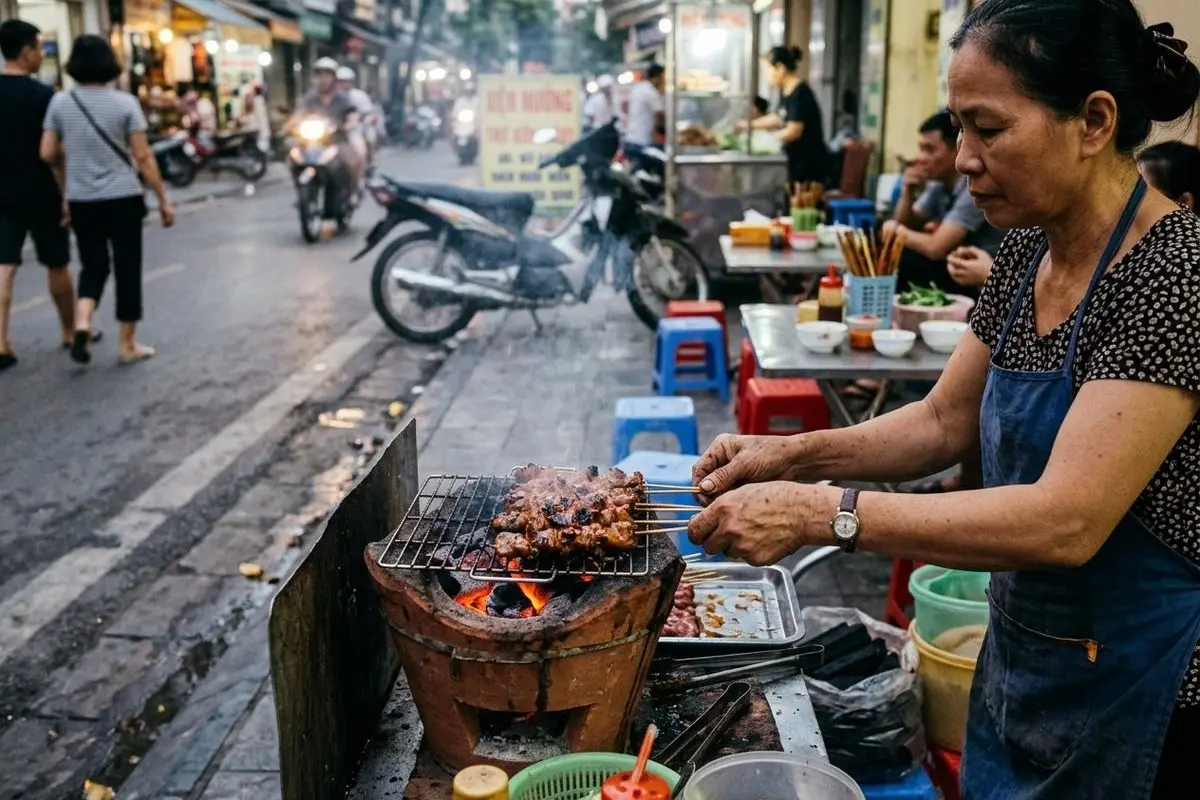
What Nu Nuong Haiphong Actually Is
The name you will see most often on menus is nam nuong, and visitors frequently type it as nu nuong when they search online. Either way, the idea is the same. Pork is sliced thin, seasoned, grilled over hot coals and served in bite-size pieces with fresh herbs, pickles and a dipping sauce. In Haiphong it is a casual evening food rather than a restaurant meal. Most stalls open late afternoon and stay busy until well after dark.
The texture is the surprise. Done well, the meat is springy and slightly crisp at the edges, with a clean, savory flavor that comes from the marinade and the smoke rather than from heavy fat. If you have tried grilled pork neck or crunchy tendon in other Asian cuisines, think of something in that family: chewy in a pleasant way, never tough.
It is worth knowing that this is a local, working-class snack. Prices are low, portions are shared, and nobody will hurry you. That relaxed pace is a big part of the charm, and it is why we often include a stop like this on our evening food routes.
Choosing And Cleaning The Meat
Everything starts at the market. Vendors usually buy their pork early in the morning from trusted suppliers, because freshness matters more here than with almost any other cut. Fresh meat should look pale pink, feel firm and smell clean. Anything sour or sticky is rejected.
Why cleaning takes so long
This is the step that separates a good stall from a mediocre one. The meat is rinsed several times and rubbed with coarse salt, then often with a little rice vinegar or lime juice, to remove any strong odor. Many cooks also blanch it briefly in hot water with a few slices of ginger. The goal is a neutral, clean base so that the marinade, not the meat, defines the flavor.
Resting and drying
After cleaning, the pork is drained and patted dry. Wet meat steams instead of grilling, so it will not brown properly. Some cooks leave it uncovered in a cool place for a short while so the surface tightens, which also makes slicing easier.
Slicing For The Right Bite
The meat is sliced across the grain into thin, even pieces, usually a few millimeters thick. Thin slices cook fast over strong heat, pick up more marinade and stay tender. Thick slices turn rubbery, which is the most common reason a poorly made version disappoints.
A sharp knife and steady hands are essential. At busy stalls you can watch the vendor slice a tray in a couple of minutes, laying the pieces out neatly so they can be threaded or lined up on a grill basket. If you are curious, stand nearby for a minute. Most vendors are happy to be watched and will nod or smile when you take a photo.
The Marinade Behind The Flavor
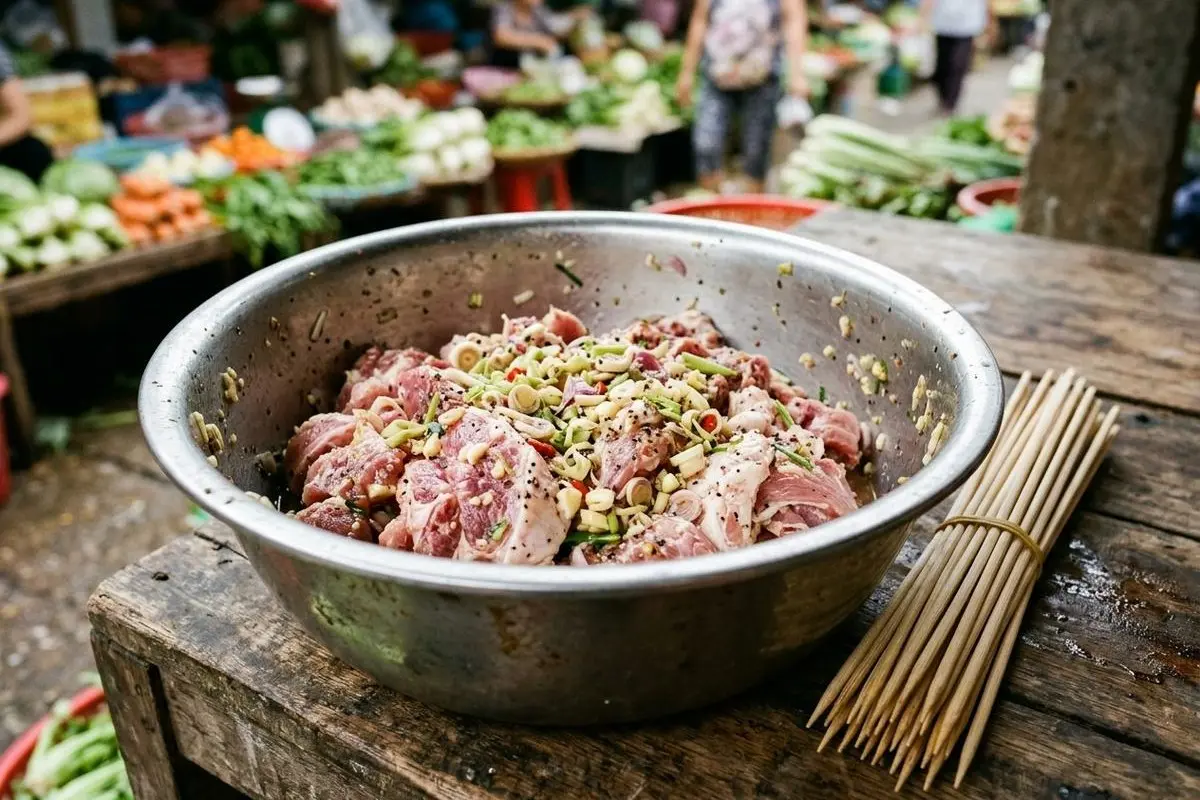
Every family and stall guards its own marinade, but the foundation is familiar across northern Vietnamese grilling. Expect a mix of the following ingredients, in proportions that vary from cook to cook.
- Finely chopped garlic and shallots, which give sweetness and depth.
- Lemongrass, minced or crushed, for a fresh citrus note.
- Fish sauce for salt and savory umami.
- A little sugar or honey to help the surface caramelize on the grill.
- Black pepper and sometimes a touch of five-spice or chili.
- A splash of cooking oil so the pork does not stick.
The pork is massaged with the marinade by hand so the seasoning gets into every slice. It then rests for a few hours, and some vendors prepare it the night before. Marinating time is flexible, but most cooks agree that at least two to three hours gives noticeably better flavor than a quick coating.
The exact recipe at any given stall is their own, so treat the list above as a general guide rather than a fixed formula. If you want to know a particular stall’s secrets, ask politely; many are proud to share the broad strokes even if they keep the proportions private.
>>> Top Dishes To Try On Your Haiphong Food Tour Day
Building The Charcoal Fire
Fire control is the real craft. Nu nuong Haiphong is traditionally cooked over charcoal, and the quality of the coals shapes the final taste. Vendors light the charcoal early and wait until the flames die and the coals glow evenly orange with a light gray ash on top. Cooking over flames instead of embers would burn the marinade before the meat is done.
A small clay or metal brazier is common at street stalls. Vendors fan the coals with a hand fan or a small electric blower to adjust the heat during the evening. Because the meat is thin, the grill needs to be hot and the cooking quick. A cooler fire gives pale, dry meat, while a roaring fire chars the outside too fast.
Smell is part of the experience. The aroma of garlic and lemongrass smoke drifting down a Haiphong street at dusk is one of the best advertisements any stall could have, and it is usually how first-time visitors find them.
Grilling Step By Step
Once the coals are ready, the grilling itself takes only a few minutes per batch. Here is what you will usually see.
Laying the meat on the grill
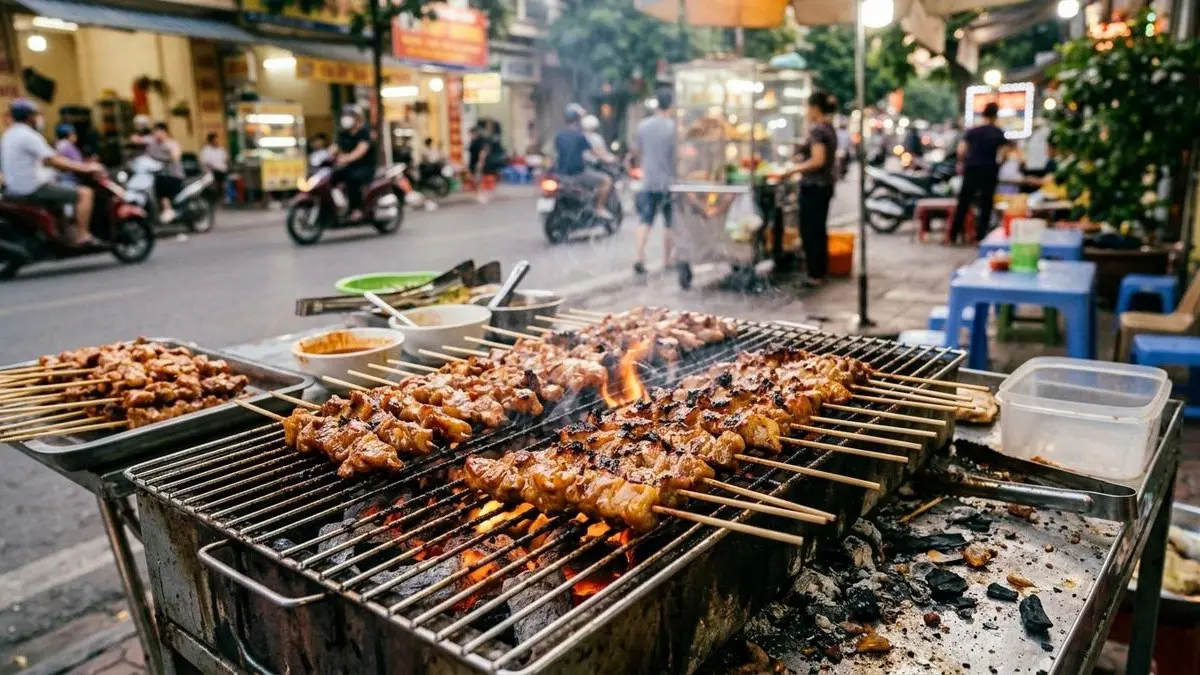
The slices are placed on a wire rack or threaded onto bamboo skewers and laid over the hottest part of the fire. Some stalls use a hinged grill basket that lets the vendor flip many pieces at once.
Turning and basting
The pork is turned every 30 to 60 seconds so it cooks evenly. Many vendors brush on a little leftover marinade or oil to keep the surface glossy and to build color. The edges begin to brown and curl slightly, which is the signal that the meat is almost ready.
Knowing when it is done
Good nu nuong is golden brown with lightly charred edges, juicy but fully cooked. Because pork must be properly cooked, vendors err on the side of a few extra seconds. The meat comes off the grill, rests briefly, and is cut into bite-size pieces if it was not already.
Dipping Sauces And Fresh Sides
The grilled meat is only half the plate. What surrounds it makes the dish.
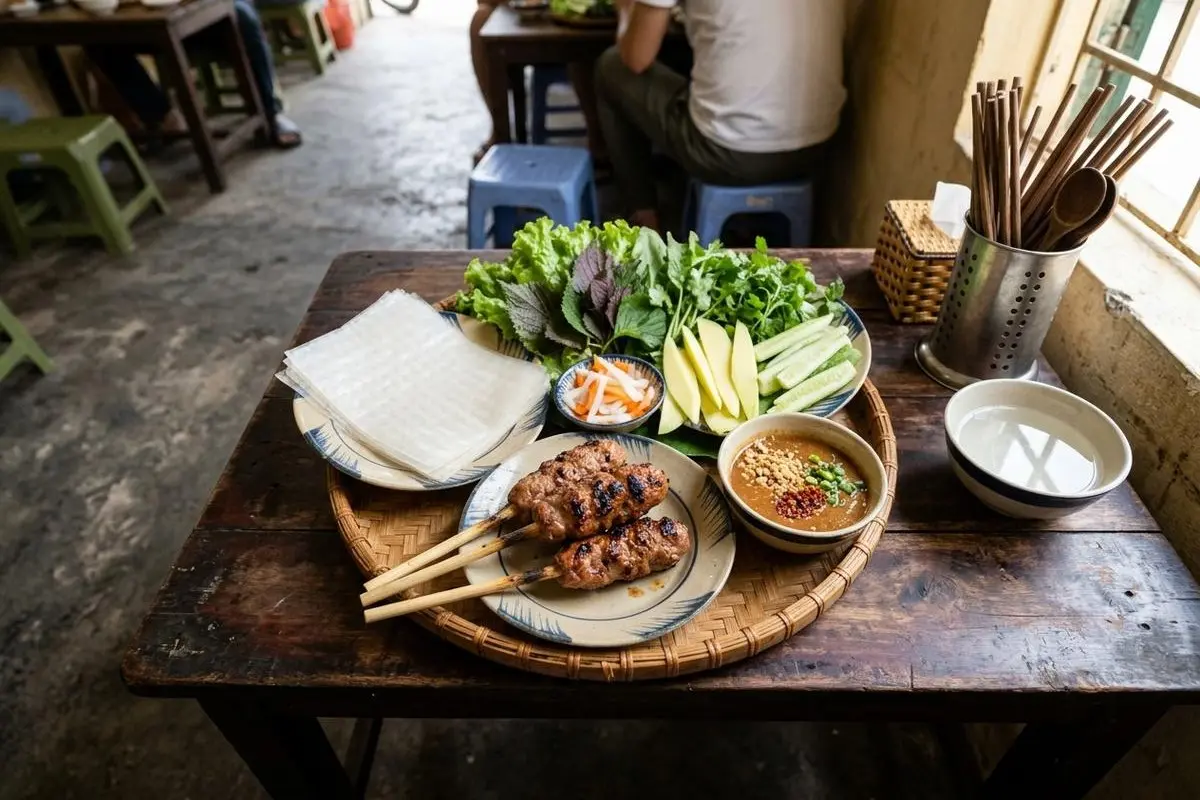
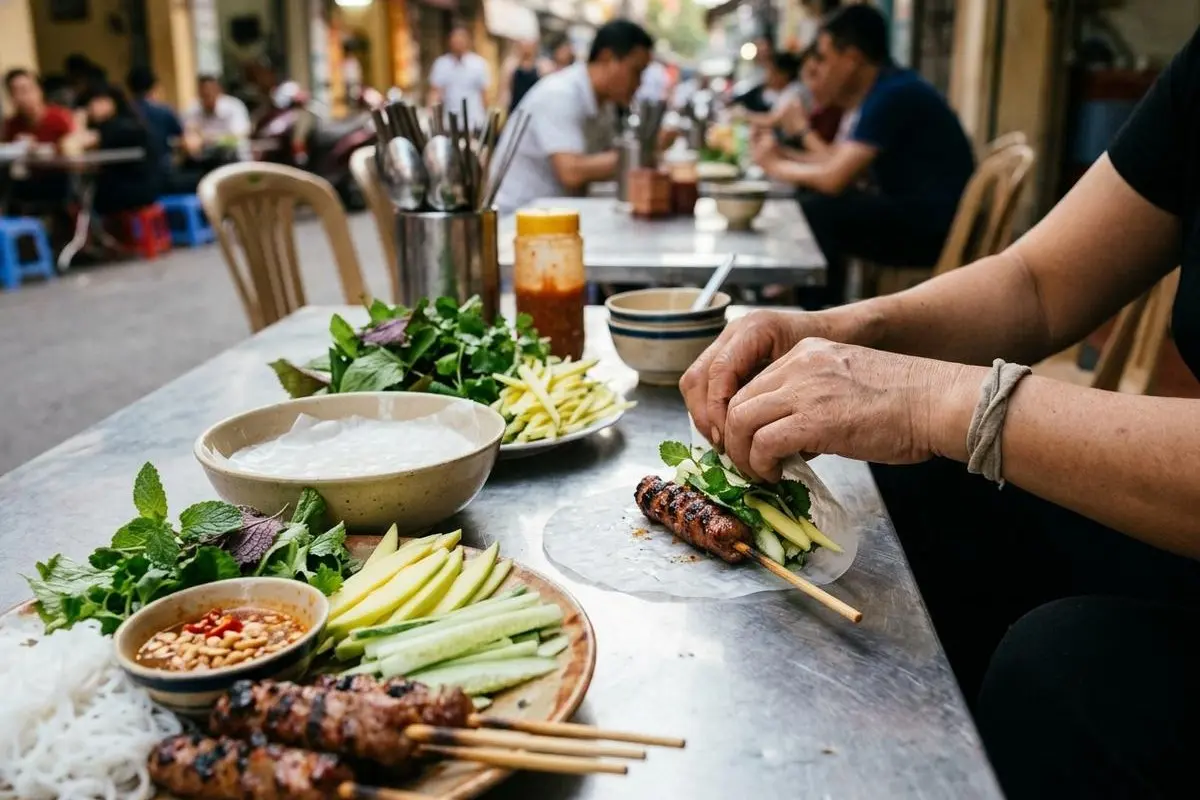
A typical serving arrives with a bowl of dipping sauce, often built on fish sauce, lime, sugar, garlic and chili, sometimes thickened with a little ground peanut. A second option may be a salty-spicy chili paste that adds heat. Alongside you will usually find a plate of fresh herbs such as perilla, mint and lettuce, sliced cucumber, and pickled carrot or green papaya. Some stalls add green mango slices when in season.
The herbs are not decoration. Their freshness cuts through the richness of the grilled meat and the smoky char. Take a piece of pork, add a leaf or two, dip, and eat it in one bite. Many stalls also serve bread, rice paper or cold rice noodles so you can turn the plate into a wrap or a light meal.
How To Eat It Like A Local
There is no strict rule, but a few habits will make your first plate more enjoyable.
- Share. Order one plate for two people first, then add more if you want.
- Dip lightly. The sauce is strong, so a quick touch is enough.
- Pair each bite with herbs or pickles to balance the flavor.
- Eat while it is hot. The texture is best straight from the grill.
- Use the wipes or tissue on the table. Fingers are normal, and no one will mind.
Rolling your own wrap
If your stall provides rice paper, wet it lightly, lay a piece of pork, a few herbs, a slice of cucumber and a little pickle on top, then roll it into a small bundle. Dip and enjoy. It takes a try or two to roll neatly, and the vendor will often smile and show you how.
>>> Haiphong Food Tour Route Exploring Local Markets
Where And When To Find It
You will find nu nuong Haiphong at small street stalls and casual grill eateries throughout the city, especially in the evening. Smaller streets near markets and busy local neighborhoods often have the best options. Instead of listing specific addresses that may change, here is how to spot a good one.
- Look for a stall with locals sitting on low stools, not only tourists.
- Check that the coals are glowing and the grill is hot.
- Watch how fast meat sells. High turnover usually means fresher meat.
- Choose a stall with a clean prep area and covered raw meat.
Opening hours and prices change, so treat any guide as a starting point and ask locally. A fair price for a shared plate is usually modest by international standards, but confirm the price before you order, as you would at any street stall.
If you prefer not to hunt for the right stall alone, an evening food route with a local guide is a good way to do it. You can also browse our Haiphong tours to see which routes fit your trip.
Recommended tour
The Haiphong Street Food and City Tour
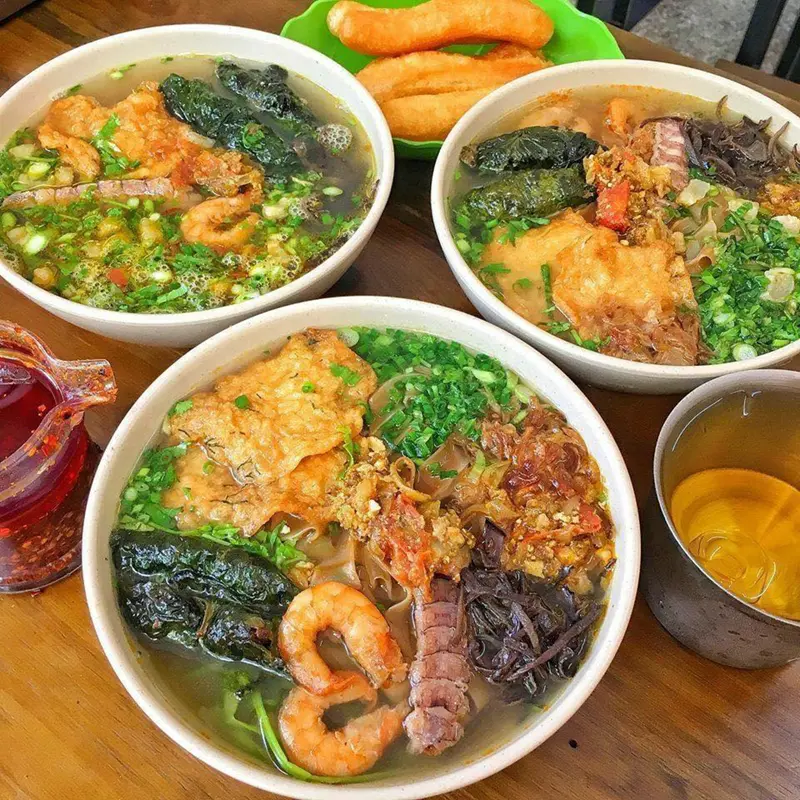
Taste Haiphong’s signature dishes such as banh da cua and banh mi cay, and see landmarks like the Opera House and Swing Bridge, with a friendly local driver.
From $85 per person
Food Safety Tips For Visitors
Street grills are safe for most travelers when you choose carefully. Grilled meat served hot is generally a good choice because the heat does the work, but a few habits help.
- Pick a busy stall where food does not sit around.
- Make sure the pork is cooked through and served hot.
- Be cautious with raw herbs and ice if you have a sensitive stomach.
- Carry hand sanitizer and some tissues.
- If you have allergies, tell your guide or the vendor before ordering. Fish sauce, peanuts and shellfish paste are common ingredients.
Pork udder is an offal-style cut, so some visitors prefer to try one small plate first. If you are unsure, ask for a mixed grill that includes more familiar cuts such as pork belly or neck, and you will still enjoy the same smoky flavors and dipping sauces.
What To Drink With It
Locals rarely eat grilled snacks without a drink. A cold glass of fresh draft beer, known as bia hoi, is the classic pairing in Haiphong, and the light, crisp flavor suits the smoke and salt. If you prefer something without alcohol, iced green tea, fresh lime juice or sugarcane juice all work well. Hot tea is also common and helps cleanse the palate between bites.
Whatever you choose, drink slowly and enjoy the evening atmosphere. The point of a stop like this is not only the food. It is the street, the stools, the chatter and the glow of the coals.
>>> DIY Haiphong Food Tour Map For Independent Eater
Can You Cook It At Home
You can get close to the flavor in your own kitchen, though a charcoal fire makes a real difference. If you want to try, here is a simple approach based on the traditional method.
- Choose pork slices, such as neck or belly, if you cannot find udder, and slice them thinly across the grain.
- Mix garlic, shallot, lemongrass, fish sauce, a little sugar, pepper and a splash of oil, then massage it into the meat.
- Marinate for at least two to three hours in the refrigerator.
- Heat a charcoal grill or a very hot grill pan until it is smoking.
- Cook the slices for a minute or two per side until golden with lightly charred edges and no pink inside.
- Serve with herbs, cucumber, pickles and a bowl of garlic-chili fish sauce dip.
Home cooking will not match the stall exactly, but it is a great way to remember the trip and share it with friends.
Fitting It Into Your Haiphong Itinerary
Because grill stalls come alive in the evening, the best plan is to save nu nuong for dinner or a late snack. A simple day could start with a morning of sightseeing, a relaxed lunch of the city’s famous crab noodle soup, an afternoon walk around the French colonial center, and an evening grill crawl.
If you are staying only a short time, combine it with an evening street food route so you can taste several dishes in one night. Our guides know which stalls are busy on which nights, and they can explain what you are eating as you go. For more ideas on how to plan your meals, read our guide on enjoying a real Haiphong food tour.
>>> My Review Of The Best Haiphong Food Tour Spots
Frequently Asked Questions
What does nu nuong Haiphong taste like?
It is smoky, savory and slightly sweet from the marinade, with a springy, lightly crisp texture. The dipping sauce and fresh herbs add brightness and heat.
Is nu nuong spicy?
The meat itself is usually mild. Heat comes from the chili in the dipping sauce, so you can control it by dipping lightly or asking for the sauce on the side.
Is it safe for tourists to eat?
Freshly grilled meat served hot is generally a good street food choice. Pick a busy stall, check that the meat is fully cooked, and take normal precautions with raw herbs and ice.
When is the best time to eat it?
Late afternoon and evening, when stalls light their charcoal and the meat is freshest.
Can I try it if I do not eat offal?
Yes. Many stalls also grill pork belly, neck or skewers, and you can ask for those instead while still enjoying the same sauces and sides.
Taste Haiphong With A Local Guide
Now you know how nu nuong Haiphong is prepared and cooked, the next step is to taste it. At Haiphong Adventure we design Haiphong tours around real local food, from morning noodle soup to evening charcoal grills, and our guides can take you straight to busy, trusted stalls. Message us to plan your trip or ask any question.
WhatsApp, Viber, WeChat: +84(0)934.555.001
KakaoTalk, Line ID: haiphongadventure