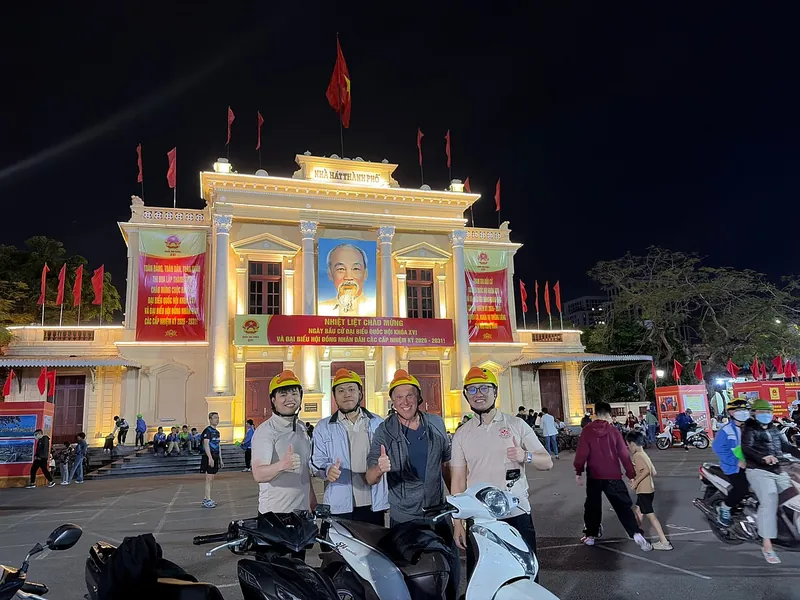
Motorbike Rental Haiphong Traffic Rules Advice
If you are planning a motorbike rental in Haiphong, the most useful thing to pack is not a phone mount or a rain poncho. It is a clear picture of the traffic rules and the unwritten habits of local riders. Haiphong is calmer than Hanoi or Ho Chi Minh City, with wide boulevards and leafy streets, but it is still a busy port city where trucks, scooters, cars and cyclists share the same space.
This guide from the Haiphong Adventure team explains the legal rules that matter most for visitors, how traffic actually flows in the city, and practical advice for riding safely. Rules and fines in Vietnam change from time to time, so treat this as a starting point and check the latest information before you ride (reference, updated October 2026).
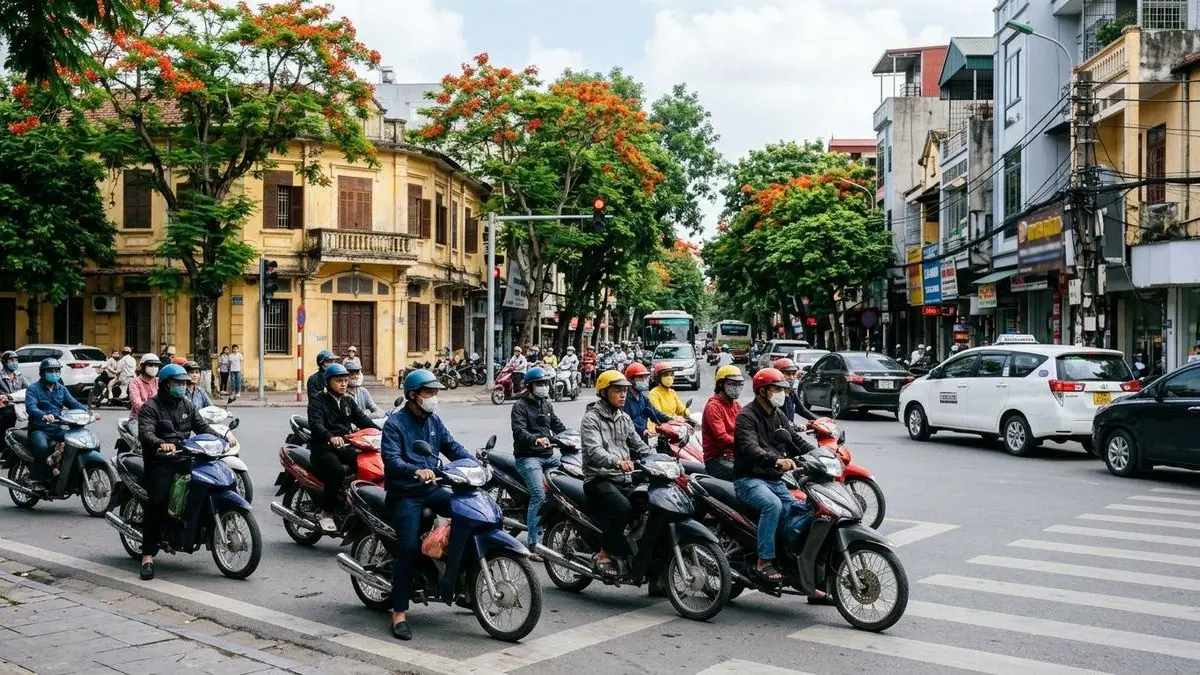
Why Traffic Rules Matter For Motorbike Rental Haiphong
Many travellers rent a scooter because it feels like the most natural way to explore. It is flexible, cheap and fun. But riding in Vietnam without understanding the rules can lead to fines, a confiscated bike, an insurance claim that is refused, or worse, an accident.
Three reasons to take the rules seriously:
- Enforcement has become stricter. Vietnam introduced a new road traffic order and safety law and a new decree on fines from 2025, and penalties for many common offences are now much higher than a few years ago.
- Insurance depends on it. Most travel insurers will not cover a motorbike accident if you ride without a valid licence for that class of vehicle, without a helmet, or after drinking.
- Local habits are different. Even if you ride at home, the rhythm of Vietnamese traffic takes a few days to understand.
If you are still choosing a shop, read our guide to scams to avoid with motorbike rental in Haiphong before you hand over a deposit.
Licence And Documents You Must Carry
The legal starting point is simple: to ride a motorbike above 50cc in Vietnam you need a licence that covers motorcycles and is recognised in Vietnam.
Which licence is valid
- A Vietnamese motorbike licence, or a foreign licence converted into a Vietnamese one, is the clearest option, especially for long stays.
- An International Driving Permit (IDP) issued under the 1968 Vienna Convention, carried together with your home licence, is generally accepted for short visits. The IDP must show the motorcycle category.
- IDPs issued under the 1949 Geneva Convention, used by some countries, may not be recognised. Check with your licensing authority before you travel.
Engine size
Most scooters rented to tourists in Haiphong are automatic 110cc to 125cc bikes, which fall into the basic motorcycle class. Larger manual bikes may need a higher licence class. Mopeds of 50cc or less do not need a motorcycle licence, but riders must still be old enough and follow all traffic rules.
Papers to keep with you
- Your licence and IDP (originals, not photos)
- Passport or a clear copy, depending on what your rental shop keeps
- The bike registration paper, or the copy the shop provides
- Proof of compulsory motorbike insurance, usually supplied by the shop
Ask the rental shop to show you these papers before you leave and keep them in a dry pocket or pouch.
Core Traffic Rules In Vietnam
These are the rules most often enforced and most relevant to visitors on a rented scooter.
Ride on the right
Vietnam drives on the right. Motorbikes usually keep to the right-hand lanes, and on many boulevards there is a lane or area marked for two-wheelers. Overtake on the left only when it is safe.
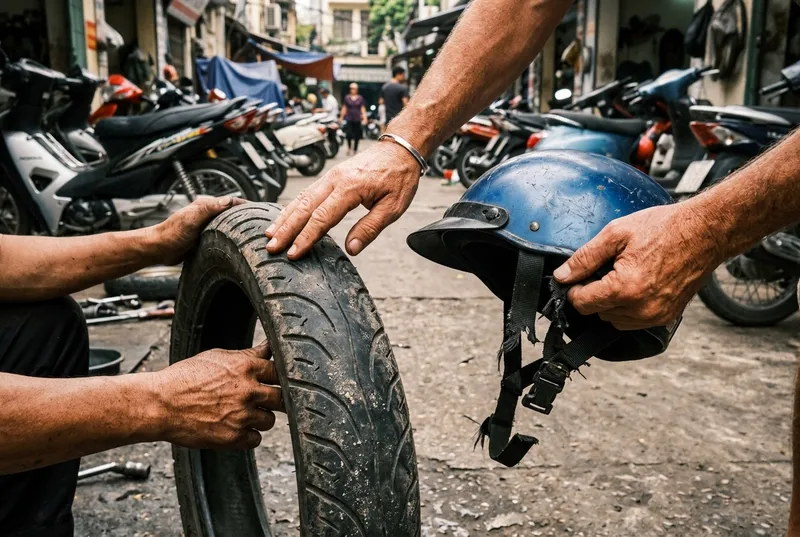
Helmets are compulsory
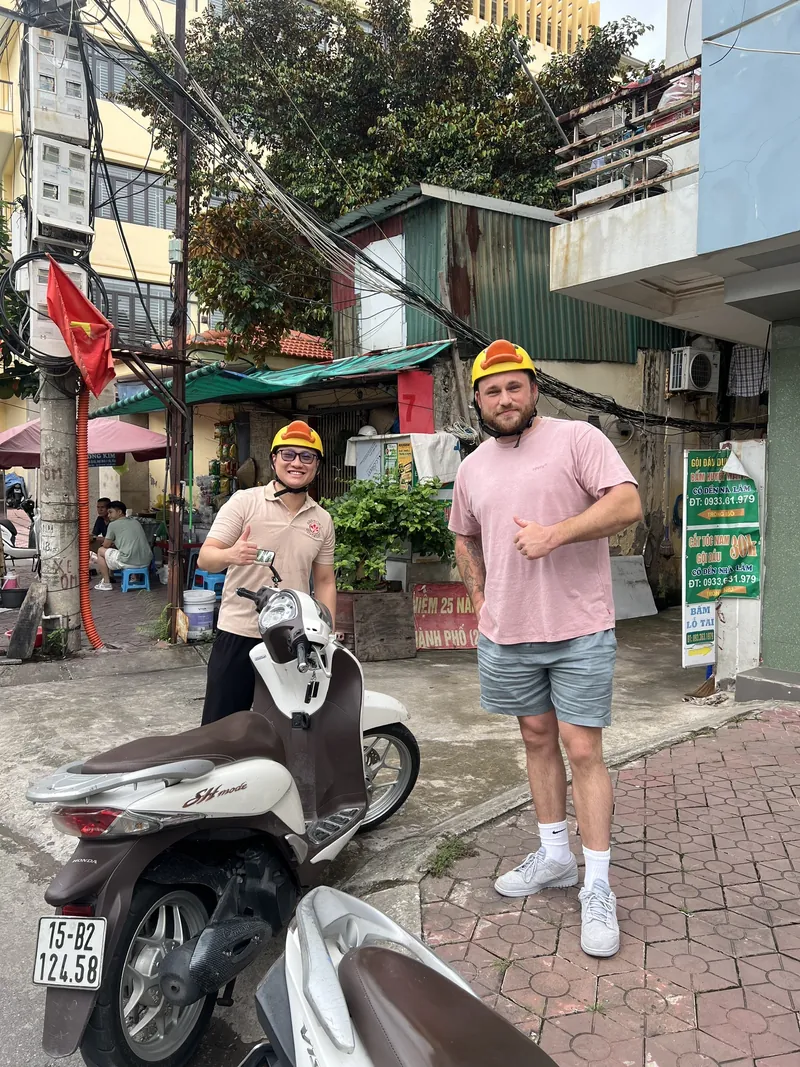
Both rider and passenger must wear a properly fastened helmet on every road, including short trips around the block. A helmet resting on your head with the strap open counts as not wearing one.
Zero alcohol
Vietnam has a zero tolerance policy for alcohol when driving any vehicle, including a motorbike. Even one beer can lead to a heavy fine and the loss of your right to ride. Police often run breath tests in the evening.
Traffic lights and turning
Stop on red behind the stop line. Turning right on a red light is only allowed where a sign or a separate green arrow permits it. Many intersections in Haiphong have countdown timers, which helps you judge when to slow down.
Two people per bike
A motorbike may carry the rider and one passenger. Some exceptions exist for small children, but as a visitor you should plan on two people at most.
No phone in hand
Using a phone while riding, including holding it for navigation, is prohibited. Mount it on the handlebar and set your route before you start.
Lights and horn
Use your headlight from dusk until dawn and in rain or fog. In residential areas, the horn should not be used late at night, roughly from 10pm to 5am, except in emergencies.
Speed Limits And Road Types
Speed limits depend on the type of road and whether it is inside a residential area. As a rule of thumb, in central Haiphong you will rarely ride faster than 40 to 50 km/h because of traffic and intersections. Signs always take priority over general limits.
| Road type | What to expect | Tip |
|---|---|---|
| Old quarter streets | Narrow, many one-way streets, parked bikes and pedestrians | Ride slowly and watch for one-way signs |
| City boulevards | Wide, divided roads with traffic lights and countdown timers | Keep to the motorbike lane on the right |
| Port and industrial routes | Heavy container trucks and fast cars | Give trucks a lot of space and avoid riding beside them |
| Rural roads | Narrow lanes, farm vehicles, animals and children | Slow down near villages and schools |
| Expressways | Fast motorway traffic | Motorbikes are not allowed, including on the Hanoi to Haiphong expressway |
If you plan to ride from the capital, our guide to the road trip from Hanoi to Haiphong by motorbike explains which roads motorbikes can use.
>>> Travel From Hanoi To Haiphong Local Traffic Tips
Recommended tour
The Insider’s Haiphong

Prefer to enjoy the city without worrying about rules and routes? Ride on the back with an experienced local driver and discover Haiphong’s hidden corners.
From $79 per person
How Haiphong Traffic Really Flows
The written rules are only half the story. Local riders follow a set of shared habits that make the traffic work. Understanding them makes you more predictable, and predictable riders are safe riders.
- Smooth and steady beats fast. Traffic moves like a river. Keep a constant speed, avoid sudden braking and do not swerve.
- The horn is information, not anger. A short beep usually means I am here or I am passing. Use it the same way, briefly.
- Bigger vehicles take priority in practice. Buses, trucks and cars expect smaller vehicles to make room. Do not argue with a container truck.
- Watch what is in front of you. Local logic is that you are responsible for what is ahead. Riders may pull out from side streets without looking, so scan side alleys and driveways.
- Indicators are not always used. Watch a rider’s head and body position to guess where they are going.
- Pavements are for parking. In many streets, scooters park on the pavement, and pedestrians walk in the road. Expect people stepping out.
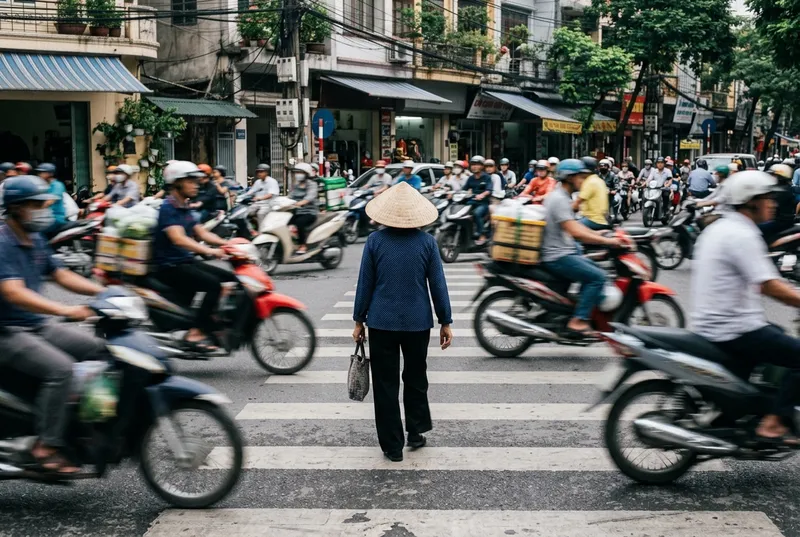
Roundabouts and big intersections
Haiphong has several large roundabouts and multi-lane junctions. Enter slowly, keep to the outer side if you are turning right, and move with the flow rather than stopping in the middle. If a junction has traffic lights, follow them even when local riders seem to ignore them.
Left turns
Turning left across a busy road is the trickiest manoeuvre for newcomers. Slow down early, signal, and move gradually toward the centre of the road. At large intersections, it is often safer to wait for the light or a gap in traffic than to cut across.
>>> Riding Haiphong Motorbike Tour Safety Tips Guide
Police Checkpoints And Fines
Traffic police in Vietnam wear yellow-green or khaki uniforms and often set up checkpoints at the roadside, especially in the evening and on main routes. They may wave you over for a document check or a breath test.
What to do if you are stopped
- Pull over safely, turn off the engine and remove your helmet if asked.
- Stay calm and polite. A smile goes a long way.
- Show your licence, IDP, registration paper and insurance when asked.
- If there is a fine, ask for an official record. Fines are increasingly paid by bank transfer or at an official office rather than in cash on the spot.
Common offences for visitors
- Riding without a valid licence for the bike
- Not wearing a helmet or not fastening it
- Running a red light or turning where it is not allowed
- Riding the wrong way on a one-way street
- Any amount of alcohol in your breath
- Using a phone while riding
Fines for these offences were raised significantly from 2025, and in some cases the bike can be held for days. We do not list exact amounts here because they depend on the offence and can change, so check current figures if you need them.
Practical Advice Before You Ride
Start small
Spend your first ride on quiet streets early in the morning or on a Sunday. Practise starting, braking and turning before you join rush hour traffic around 7am to 8.30am and 4.30pm to 6.30pm.
Plan your route
Check your route on a map before you leave and note one-way streets. Our post on Haiphong motorbike tour routes for scenic views suggests rides that avoid the busiest roads.
Dress for the road
- Closed shoes rather than flip-flops
- Long trousers and a light jacket to protect your skin
- Sunglasses or a visor against dust and sun
- A rain poncho in the wet season, roughly May to September
Check the bike
Test brakes, lights, horn and indicators. Look at the tyres and make sure the mirrors are fitted, as riding without mirrors can also be fined. Take photos of any scratches before you leave the shop.
Fuel and parking
Petrol stations are common in the city. Pay attention to parking signs and use guarded parking where available. Parking attendants usually give you a ticket that you return when collecting the bike.
Weather, Night Riding And Rural Roads
Weather changes the rules of the road in practice. During heavy rain, streets can flood quickly and visibility drops, so slow down, increase your distance and avoid deep water that might hide potholes. In summer, the midday heat is tiring, so plan rides for the morning or late afternoon.
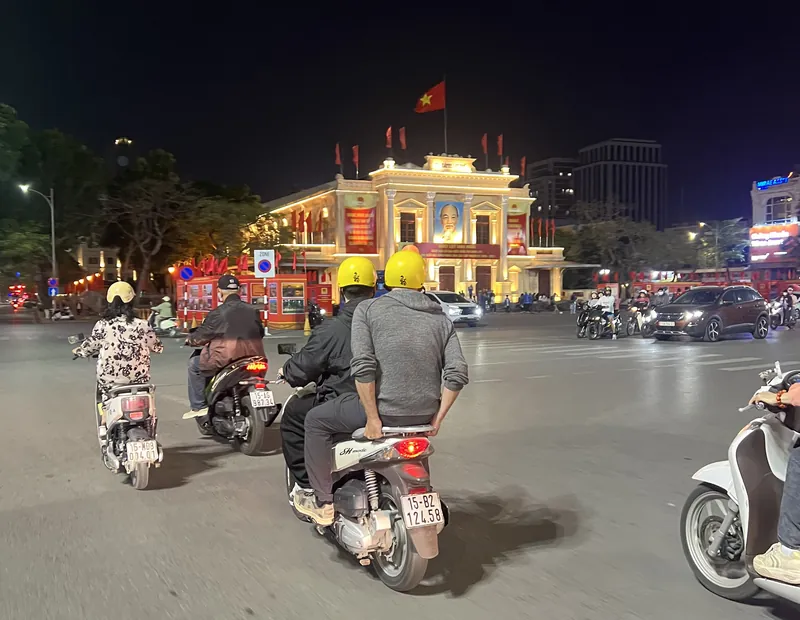
At night, the city looks beautiful, but there are more people who may have been drinking, more trucks on port routes and less light on side roads. If you are new to Vietnamese traffic, keep night rides short and stick to well-lit streets.
Outside the city, rural roads are narrower and shared with tractors, bicycles, buffalo, dogs and children playing. Slow down when you see a village sign, a school or a market. Our story about exploring rural villages on a Haiphong motorbike tour gives a good idea of what to expect.
When To Choose A Guided Ride Instead
Renting a motorbike is not for everyone. A guided tour with a local driver is often the better choice if:
- You do not have a licence or IDP that covers motorcycles
- You have never ridden in Asian city traffic
- You want to drink a beer with dinner or try local rice wine
- You prefer to look around and take photos instead of watching the road
- You are short on time and want to see the highlights efficiently
With haiphong tours by motorbike, you sit on the back while an experienced driver handles the traffic, and a guide explains the history, food and daily life of the city. It is the same feeling of freedom, without the legal and safety worries. If you are curious about how a guide changes the experience, read why a private Haiphong tour with a local guide is worth it.
>>> Scams To Avoid With Motorbike Rental Haiphong
Quick Checklist For Riding Legally In Haiphong
- Valid licence for motorcycles plus a 1968 Convention IDP, or a Vietnamese licence
- Registration paper and insurance from the rental shop
- Helmet on and fastened for rider and passenger
- Zero alcohol before riding
- Phone mounted, never in hand
- Headlight on from dusk
- Stop on red, follow one-way signs
- Keep right and give trucks plenty of space
- No riding on expressways
- Slow down in rain, at night and near villages
Frequently Asked Questions About Motorbike Rental Haiphong Traffic Rules
Can I ride a rented scooter in Haiphong with only my home licence?
Usually not for bikes above 50cc. You generally need a 1968 Convention IDP that covers motorcycles together with your home licence, or a Vietnamese licence. Check the rules for your country before travelling.
Is there any legal limit for alcohol?
No. Vietnam applies a zero alcohol rule for all drivers and riders. If you plan to drink, take a taxi, a ride-hailing car or join a guided tour.
Can I turn right on a red light?
Only when a sign or green arrow allows it. Otherwise, wait for green like other vehicles.
Are motorbikes allowed on the Hanoi to Haiphong expressway?
No. Motorbikes must use national and provincial roads instead of expressways.
What happens if I am stopped by traffic police?
Stay calm and polite, show your documents and ask for an official record if you receive a fine. Riding with the correct papers and a fastened helmet avoids most problems.
Ride Smart And Enjoy Haiphong
Haiphong is a rewarding city to explore on two wheels, with colonial streets, flamboyant trees, busy markets and quiet countryside roads just outside the centre. Knowing the traffic rules, carrying the right papers and riding calmly will keep your trip safe and stress free. If you would rather leave the traffic to a local expert, the Haiphong Adventure team offers guided motorbike rides around the city and beyond, and we are happy to answer questions about your plans.
WhatsApp, Viber, WeChat: +84(0)934.555.001
KakaoTalk, Line ID: haiphongadventure