Best Time To Join Cat Ba Tours Weather Advice
The best time to join Cat Ba tours is usually spring, from roughly March to May, and autumn, from roughly September to November, when the air is comfortable and the sea is calmer. Summer is hot, lively and good for swimming but can bring storms. Winter is cool, grey and quiet, with moody scenery that photographers love. This guide explains what each season really feels like on the island and the bay, how weather affects boats, and how to plan a flexible trip. Weather changes from year to year, so use these patterns as a guide and always check the forecast before you travel. The advice comes from the Haiphong Adventure team, who work on these roads and waters all year round.

How Northern Vietnam Weather Shapes Cat Ba Tours
Unlike southern Vietnam, the north has four distinct seasons. Winter is cooler and often damp, spring is mild and changeable, summer is hot and humid, and autumn is typically the most stable. Cat Ba sits on the coast, so the sea softens the extremes a little, but wind and humidity are strong factors all year.
The main weather risk for boat trips is not rain but wind and storms. Tropical storms usually affect the northern coast somewhere in the middle of the year and into autumn, and when one is forecast the authorities may suspend boat operations in the bay. Vietnam’s national hydro-meteorological service publishes official forecasts and storm warnings, and it is wise to check it a few days before you travel and again the evening before your tour.
Spring From March To May
Spring is a favourite with many of our guests. Temperatures are mild, the humidity builds slowly and the bay often looks soft and hazy in the morning. Early spring can still be drizzly and cool, while late spring brings warmer days that are perfect for kayaking and swimming.
What to expect
Light rain and mist are common in March and sometimes April, which can make the scenery look like a painting but may reduce long-distance visibility. By May the sun is stronger and the water starts to feel inviting. Crowds are moderate outside public holidays.
Pros and cons
- Pros: comfortable temperatures, fewer crowds than summer, green hills and good light.
- Cons: some drizzly or hazy days early in the season, and water that can still feel cool for swimming.
Summer From June To August
Summer is high season for domestic tourism, with warm water and long days. It is the best time for swimming and beach stops, and the bay can feel festive. It is also hot, humid and busy, especially at weekends and during school holidays.
Plan early starts to avoid the midday heat and bring plenty of sun protection and water. Expect thunderstorms in the afternoon on some days, and be prepared for schedule changes if a storm approaches. Because room prices and boat availability change quickly in peak weeks, book earlier than you would in other seasons. In peak weeks, a route that skips the busiest stops makes the day far more relaxed.
>>> Lan Ha Bay Tour Route Avoiding The Crowded Spots
Autumn From September To November
Autumn is often the most reliable season in the north. The summer heat fades, the air feels cleaner and the light turns golden. Early autumn can still bring storms, so keep an eye on the forecast, but October and November tend to offer a good balance of comfort, calm sea and moderate crowds.
This is a wonderful time for combining a bay cruise with forest walks or an island loop. Evenings are pleasant, sunsets can be spectacular and the water is still warm enough for many people to swim in the early part of the season. If your dates are flexible, aim for late September to November and keep a spare day in the plan.
Recommended tour

A comfortable Ha Long Bay day cruise among the limestone islands, with caves, kayaking options and lunch on board, a good choice in the settled weeks of spring and autumn.
From $109 per person
Winter From December To February
Winter is the quiet season. Days can be cool, grey and misty, and on some mornings the bay almost disappears in fog before the sun burns through. It is not a swimming season, and many travellers skip the north at this time of year. That is a mistake if you enjoy atmosphere, because the limestone islands look dramatic in the mist and the crowds are thin.
Bring warm layers, a windproof jacket and a hat, since it feels colder on a moving boat than on land. Some activities may be limited or cancelled in cold or windy weather, and sunsets can be hidden by cloud. If you are a photographer, read our photography guide for your Lan Ha Bay tour trip before you go.

Storms, Wind And Boat Suspensions
When a storm is forecast, boat tours may be postponed or cancelled for safety. This is not the operator being difficult: it is a rule to protect passengers. A good company will tell you early, explain the reason and offer a new date or a refund according to its policy. Ask about this before you pay, and keep your booking terms in writing.
Even without a storm, strong wind can make the open water uncomfortable. Sheltered routes inside the islands are often calmer, and a good captain will adjust the route. If you easily get seasick, take medication before the trip, sit near the middle of the boat and look at the horizon. Do not drink heavily the night before.

How much buffer to build in
A spare day in your schedule is the cheapest weather insurance you can buy. If you have only one chance to do a bay cruise, schedule it early in your trip so that you have a second day available if conditions are poor. Before you pay, ask whether a weather cancellation means a new date or a refund, and consider travel insurance that covers delays.
Best Time For Different Activities
Different activities suit different seasons, so match your plans to the weather.
- Swimming and beaches: late spring, summer and early autumn.
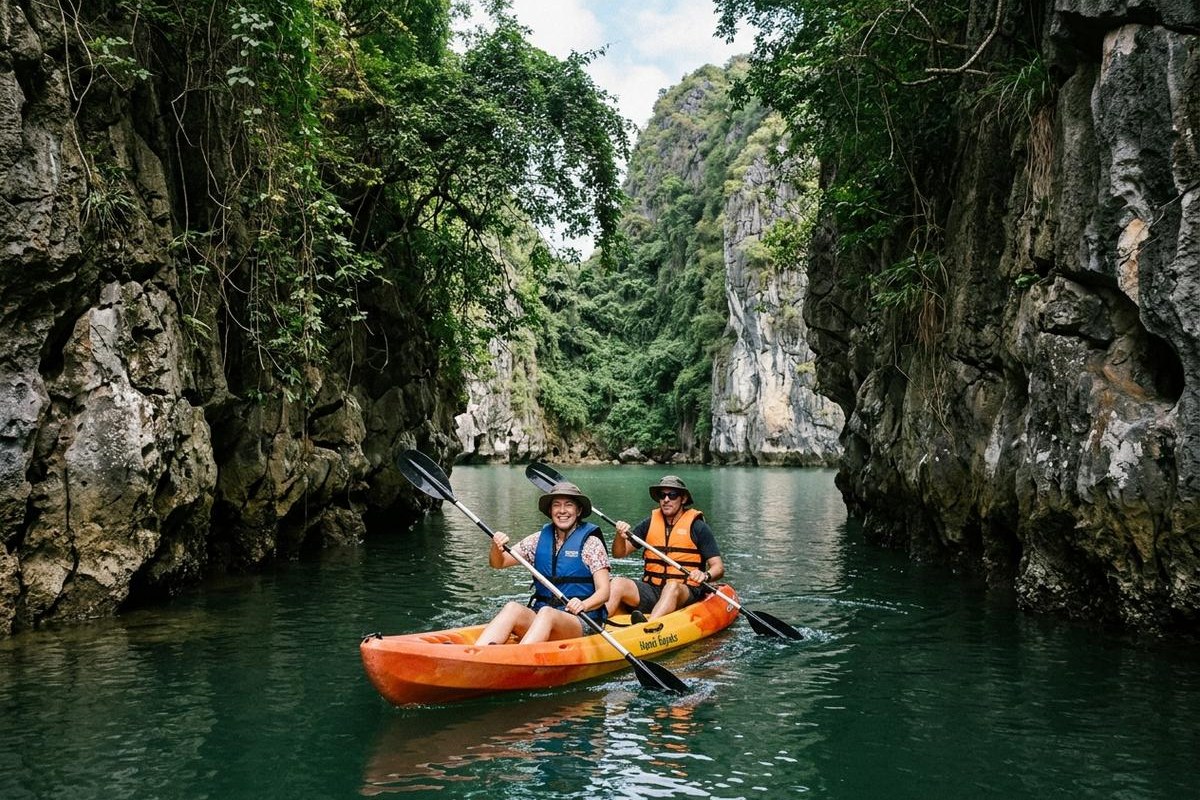
- Kayaking: spring and autumn for calm water and comfortable temperatures.
- Trekking in the national park: autumn and spring, with cool mornings and drier trails, but check conditions after heavy rain.
- Photography: autumn for golden light, winter for mist and mood.
- Quiet, uncrowded visits: winter and shoulder weeks outside holidays.
For more on land-based activities, see our Cat Ba activities guide to trekking, hiking and swimming.

Holidays, Weekends And Crowds
Weather is only half the story, because the calendar matters too. Vietnamese public holidays, long weekends and school breaks bring many domestic visitors to the coast, and prices and crowds climb. If you want a calm trip, aim for weekdays and avoid major holiday periods. If you must travel on a busy weekend, book transport, rooms and boats early and expect queues.
Holiday dates change each year, so check an up-to-date Vietnamese holiday calendar before you set your dates. Mid-week travel in shoulder months often gives the best mix of weather, space and value.
>>> Planning A Perfect Cat Ba Tour From Haiphong City
A Month By Month Snapshot
The table below is a rough guide based on typical patterns, not a forecast. Weather varies each year, so treat it as a starting point for your planning.
| Months | Typical conditions | Best for |
|---|---|---|
| January and February | Cool, often misty or drizzly, quiet bay | Atmosphere and photos, with warm layers |
| March | Changeable, with drizzle and haze | Moody scenery and fewer people |
| April and May | Warming up, longer days | Kayaking and island walks |
| June and July | Hot and humid, busy at weekends, afternoon storms possible | Swimming and a lively atmosphere |
| August | Still hot and lively, storm risk to watch closely | Swimming, with a flexible schedule |
| September | Transition month, can be excellent | Cruising, after checking storm forecasts |
| October and November | Often the most settled weather, golden light, comfortable days | Kayaking, trekking and cruising |
| December | Cooling down, calmer crowds, increasingly misty mornings | Quiet visits and photography |
If you must pick two shoulder windows, consider late March to May and October to November. Both offer a good mix of comfort, space and scenery.
Time Of Day Matters As Much As Season
Morning is almost always the best time on the water. The air is cooler, the wind is usually lighter and the light is soft, which makes for calmer kayaking and better photographs. By early afternoon the wind may rise, the sun is strongest and other boats arrive in numbers. If you can choose, book a morning departure and plan a relaxed afternoon.
Sunset is the other magic hour, especially in autumn. If you stay overnight on the island or on a boat, keep your evening free and walk to a viewpoint or sit on the deck. The sky often changes quickly, so be ready with a camera or simply put the phone away and watch.

Tides and water levels
Tides influence which lagoons, caves and channels are accessible. A cave passage that is easy at one time of day may be blocked at another. This is another reason to trust your guide: if a stop is changed, it is usually because the water level makes it unsafe or impractical, not because the operator wants to cut the programme.
How To Read A Forecast Like A Local
Do not rely on a single icon on a phone app. Look at the wind speed and direction, the chance of storms, the visibility and the sea state if it is given. A day with light rain but gentle wind can be lovely on the water, while a dry day with strong wind can feel rough. If the local authorities issue a warning, follow it, and do not pressure your operator to sail.
Compare two sources, such as the national service and a trusted international app, and check them again on the morning of your trip. If your operator says the trip is on, ask about the planned route and the plan B. A professional team will have an answer ready.
>>> Essential Tips Before Booking Your Cat Ba Tour
Weather And Families, Older Travellers Or Solo Visitors
Different travellers have different comfort levels. Families with young children are usually happiest in spring and autumn, when the temperature is mild and the sea is calmer. Older travellers often prefer cooler months for walking, but should avoid slippery trails after rain. Solo travellers can enjoy any season, though winter can feel lonely on a quiet island, while summer is sociable.
Whatever your group, bring sun protection in every season and confirm that life jackets, shade and drinking water are available on the boat. If anyone in your group has a medical condition, tell the operator in advance and carry any medication in a waterproof bag.

Seasonal Scenery And Small Details
Each season shows a different face of the island. Spring brings fresh green on the hills and soft haze over the water. Summer has deep blue skies and the brightest greens in the bay. Autumn offers crisp air, long views and golden evenings. Winter turns the limestone islands into layers of grey in the mist, a look many photographers prefer.
These differences do not decide whether a trip is good or bad. They decide which kind of beauty you will see. If you arrive with the right clothes, a flexible mind and a reliable operator, you will enjoy the visit in any month.
What To Pack For Each Season
Spring and autumn
Light layers, a thin rain jacket, sun protection and sturdy sandals or trainers. Mornings can be cool on the water, so keep a long-sleeve top handy.
Summer
Breathable clothes, a wide-brim hat, reef-safe sunscreen, a refillable water bottle and a dry bag. Pack a light rain poncho for afternoon storms.
Winter
A warm jacket, a windproof layer, closed shoes, gloves and a scarf if you feel the cold. Avoid cotton if you expect rain, because it dries slowly.

Getting There In Any Season
The route from Haiphong to the island depends on road and sea conditions, and times vary with the season, traffic and ferry schedules. In winter fog can slow crossings, and in summer queues build at the weekend. Leave extra time and avoid scheduling tight connections on the day of your tour. Our article on Haiphong to Cat Ba travel time and schedule offers a starting point, and you should confirm current timetables locally.

A Simple Way To Decide
If you want comfort and the least risk, choose October or November. If you want swimming and a lively atmosphere, choose late May to early July and accept some heat and crowds. If you love atmosphere and photography, consider December to February with warm layers. If your dates are fixed, do not worry: a good plan and an honest operator can make almost any season enjoyable.
Whatever you choose, treat the forecast as a living document. Look again the evening before, speak to your operator in the morning, and be ready to switch from the bay to a land activity if needed. Flexibility turns bad weather into a different, and sometimes better, kind of day.
Frequently Asked Questions
What is the best month for Cat Ba tours?
October and November are often the most comfortable, followed by April and May. Conditions change from year to year, so check the forecast.
Is winter a bad time to visit?
Not at all, if you like cool, misty scenery and fewer crowds. It is not a swimming season, so bring warm layers.
Can tours be cancelled because of weather?
Yes. Boats may be suspended during storms or strong winds. Ask about the policy before you pay.
When are Cat Ba tours most crowded?
Weekends, school holidays and public holidays, especially in summer. Mid-week trips are quieter.
Should I book far ahead?
For peak weeks and holidays, yes. In shoulder seasons you often have more flexibility, but booking a few days early is still wise.
Plan Your Season With Our Local Team
If you are unsure when to go, tell us your dates and interests and we will suggest the best match for the season, along with a backup plan for bad weather. Our team works with local boats and drivers every week and can combine island time with one of our Haiphong tours on the mainland. Prices and schedules are for reference only and may change, so we will confirm current details with you before you pay.
WhatsApp, Viber, WeChat: +84(0)934.555.001
KakaoTalk, Line ID: haiphongadventure