Rock Climbing in Cat Ba for Beginners and What to Expect on Your First Climb
Thinking about rock climbing in Cat Ba for beginners? Good news: you do not need any experience, special fitness or your own gear. Guided beginner sessions on Cat Ba Island use top ropes, so the rope is always above you and your guide catches every slip. In a half day you learn how to tie in, how to move on limestone and how to lower off safely, all with a view of jungle hills or the sea. This guide walks first-timers through what to expect, how to prepare, the words you will hear at the crag, how to handle nerves and how to choose a good guide.
Cat Ba is the largest island in Lan Ha Bay and part of Haiphong. Its limestone cliffs have made it one of the best known climbing spots in Vietnam, and local outfitters in Cat Ba town run sessions for complete novices almost every day in suitable weather.

Can Complete Beginners Climb on Cat Ba?
Yes. Most people who climb on Cat Ba have never touched real rock before. Beginner programs are built around three ideas:
- Top-rope safety: the rope runs through an anchor at the top of the route and back down to your guide, who takes in slack as you climb. If you let go, you only drop a short distance.
- Easy routes first: guides start you on slabs and walls with big holds, then add harder routes only when you feel ready.
- Full instruction: knots, commands, footwork and lowering are taught step by step on the ground before you leave it.
You do not need to be strong or flexible. Climbing is mostly about balance and using your legs, which is why many first-timers are surprised by how far they get. If you can climb a ladder and walk uphill for 15 to 20 minutes, you can enjoy a beginner session.
If you are still choosing your island activities, our overview of Haiphong adventure activities for thrill seekers shows how climbing compares with kayaking, trekking and motorbike rides.
What a First Climbing Session Looks Like
Each outfitter runs its own program, but most beginner half days follow a similar pattern.
Meeting and Gear Fitting
You meet your guide in Cat Ba town, usually in the morning. The shop fits you with climbing shoes, a harness and a helmet. Climbing shoes should feel snug, much tighter than trainers, but not painful. Tell the guide if your toes are curled so hard that you cannot stand comfortably.
Getting to the Crag
The crag is the climbing area. Transfers are by van, motorbike or boat, followed by a short walk. Paths can be rocky and slippery, so wear shoes with grip for the approach and save your climbing shoes for the wall.
Ground School
Before anyone climbs, your guide explains how the harness should sit, ties or checks your figure eight knot, and practices the basic calls you will use. You may also try a few moves just off the ground to feel how the shoes grip the rock.
Your First Routes
You will usually climb three to six short routes, resting between each one while others in the group climb. Reaching the top is a great feeling, but it is not the only goal. Many people enjoy simply getting halfway and learning to trust their feet.
Lowering Off
Coming down is part of the skill. You lean back into the harness, keep your feet flat on the wall, and walk down as the guide lowers you. It feels strange the first time and easy by the third.

>>> Solo Cat Ba Island Tour Guide Safe And Fun Trip
Basic Climbing Words You Will Hear
Guides on Cat Ba usually speak English and use standard climbing calls. Learning them in advance helps you relax.
| Word or call | What it means |
|---|---|
| Crag | The cliff or climbing area |
| Route | A defined line up the wall, usually with a grade |
| Belay / belayer | Managing the rope to protect the climber / the person doing it |
| On belay? | The climber asks if the belayer is ready |
| Climbing! | The climber is about to start |
| Take! | Pull the rope tight, I want to rest on it |
| Slack | Give me a little more rope |
| Lower me | I am finished, bring me down |
| Rock! | Something is falling, look down and stay close to the wall |
Your guide will confirm the exact calls they use. If you ever feel unsure, simply say “stop” and wait for instructions.
Simple Technique Tips for First-Timers
You will learn most of this on the wall, but a few ideas make a big difference from the first route:
- Use your legs, not your arms. Push up with your legs like climbing stairs. Your arms are mainly for balance.
- Keep arms straight when you rest. Hanging on straight arms uses your skeleton instead of your muscles, so you tire less.
- Look for footholds first. Before reaching up, find where your next foot goes.
- Place feet carefully. Stand on the front edge of the shoe and keep your heel still. Quiet feet are confident feet.
- Keep hips close to the wall. This puts weight over your feet and makes holds feel bigger.
- Breathe. Many beginners hold their breath. Slow breathing calms nerves and saves energy.
- Rest on the rope. Saying “take” and sitting back in your harness is completely normal, even for experienced climbers.
Limestone on Cat Ba has pockets, edges and rough texture. It grips well when dry, but some popular routes have polished holds that feel slippery. Your guide will point these out.
Dealing With Fear of Heights
Feeling nervous is normal, and many climbers started out scared of heights. A few strategies help:
- Test the system low down. Climb a couple of meters, say “take” and sit back in the harness. Feeling the rope hold you builds trust quickly.
- Set small goals. Aim for the next bolt or a ledge rather than the top.
- Look at the rock, not the ground. Focus on your hands and feet in front of you.
- Talk to your guide. Good guides adjust the pace and choose shorter or easier routes for nervous climbers.
- Celebrate progress. Getting a little higher on each attempt is success.
If you decide climbing is not for you after one route, that is fine. Most crags are pleasant places to sit, watch and take photos while the rest of your group climbs.

Recommended tour
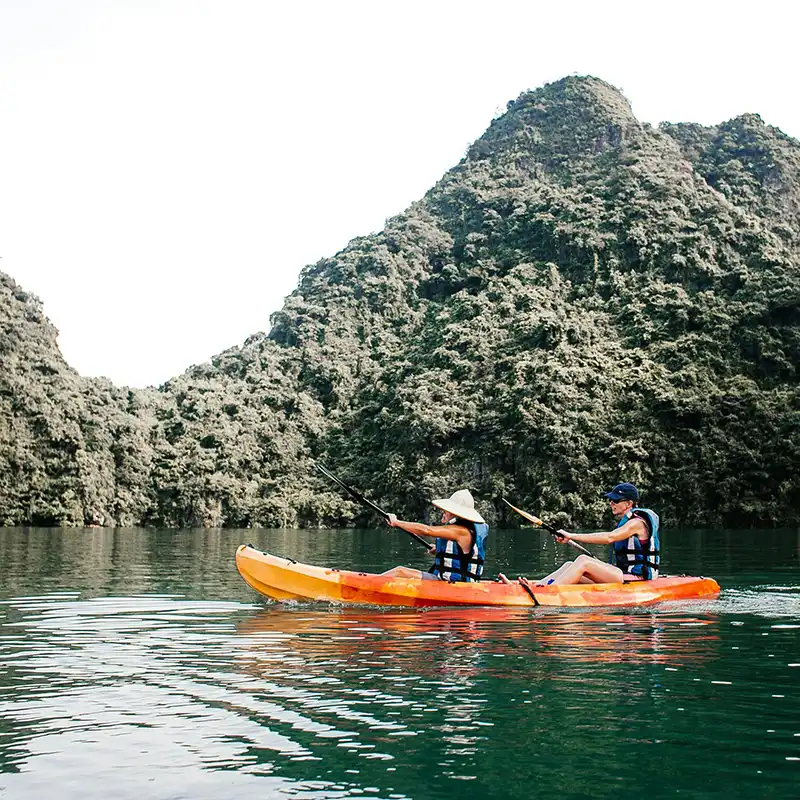
Want to see the same dramatic karsts from the water on your rest day? This day cruise heads toward the quieter Gia Luan area near Cat Ba, with kayaking or a bamboo boat ride among the limestone islands.
From $109 per person
How to Prepare Before You Arrive
You do not need to train, but a little preparation makes your first day more fun.
Physical Preparation
- Walk, hike or take the stairs regularly in the weeks before your trip.
- If you have access to a climbing gym at home, one or two sessions will teach you the basics.
- Stretch your hips and calves, which helps with high steps.
- Keep fingernails short, as long nails catch on the rock.
Health and Insurance
Tell your guide about any injuries, heart conditions, pregnancy or medication before you start. Check that your travel insurance covers rock climbing, as some policies exclude it or require an add-on. Our checklist of safety gear for your Haiphong adventure trip covers what to carry on active days.
Plan for Weather
Wet rock is slippery and climbing may be cancelled during heavy rain or storms. Keep your schedule flexible and, if climbing is a priority, stay at least two nights on the island.
What to Wear and Bring
Outfitters provide technical gear: shoes, harness, helmet, ropes and chalk. You bring the comfort items:
- Light, stretchy clothes such as sports shorts or leggings and a breathable top. Avoid very loose trousers that cover your feet.
- Closed shoes or sports sandals with grip for the walk in.
- At least 1.5 to 2 liters of water, plus a snack.
- Sunscreen, a cap and sunglasses for breaks.
- Insect repellent for jungle crags.
- A small backpack and a dry bag if you travel by boat.
- Swimwear and a quick-dry towel for sea crag days.
Leave jewelry at your hotel and tie back long hair.

>>> Essential Items To Pack For Lan Ha Bay Tour Day
Choosing a Beginner Friendly Guide
The guide is the most important part of a safe first climb. Before you book, ask a few questions:
- Experience: how long have the guides been climbing and guiding on Cat Ba?
- Group size: how many beginners does one guide look after? Smaller groups mean more coaching.
- Gear: how often are ropes and harnesses checked and replaced?
- Safety: is there a first aid kit at the crag, and what is the plan if someone is hurt?
- Inclusions: are transport, water, lunch and photos included?
- Weather policy: what happens if the session is cancelled?
Prices change by season and by operator, so compare current quotes and read what is included. Very cheap offers sometimes cut corners on guide ratios or equipment.
Best Season for a First Climb
For beginners, comfort matters more than anything. In general, autumn and spring are the most pleasant times to climb on land, with milder temperatures and lower humidity. Summer is hot and humid, so sessions start early and finish before midday heat. Winter can be cool, grey and damp, which sometimes leaves the rock moist.
Weather varies from year to year. For a month by month view of the island’s climate, see our guide to the best time to join Cat Ba tours.

What About Deep Water Soloing?
Deep water soloing means climbing sea cliffs without a rope and dropping into the water when you finish or fall. Lan Ha Bay is famous for it, and many visitors want to try. For true beginners, it is usually better to do at least one roped session first. You learn how to move on limestone and how your body reacts to height before adding the sea.
Deep water soloing is only offered when tide, water depth and sea conditions are right, always with a support boat and an experienced guide. You should be a confident swimmer. Never try it on your own.
>>> Tips For Kayaking On A Lan Ha Bay Tour Safely
Getting to Cat Ba and Planning Your Stay
Most beginners base themselves in Cat Ba town, where the climbing shops, guesthouses and restaurants are. From Haiphong, travelers usually reach the island by road and ferry or by speedboat, depending on schedules. If you are flying in, our guide on getting from Cat Bi Airport to Cat Ba compares the options, and our comparison of whether to stay in Haiphong or Cat Ba helps you pick a base.
A relaxed beginner plan looks like this:
- Day 1: travel to Cat Ba, settle in and enjoy sunset over the harbor.
- Day 2: beginner climbing session in the morning, beach or cafe in the afternoon.
- Day 3: rest your arms with kayaking, cycling or a bay cruise, then a second climb if you are hooked.

For more ideas on a short island trip, see our 2 days in Haiphong and Cat Ba itinerary.
>>> Cycling To Viet Hai Village Experience The Nature
Climbing With Kids or Mixed Groups
Many operators welcome children on beginner sessions, often from around school age, though minimum ages vary. Kids usually love climbing because they are light and fearless. A parent or guardian should stay at the crag, and smaller harnesses and shoes must be available, so ask when booking.
If some of your group do not want to climb, they can relax at the crag, take photos or spend the morning on a kayak or bike instead and meet you for lunch. Cat Ba is easy to enjoy at different activity levels.

Frequently Asked Questions
Is rock climbing in Cat Ba good for beginners?
Yes. Cat Ba has many easy routes, experienced local guides and top-rope sessions designed for people who have never climbed. It is one of the most beginner friendly places in Vietnam to try outdoor climbing.
Do I need to be fit or strong?
A basic level of fitness is enough. Climbing is mainly about balance and legs, and your guide chooses routes that match your ability.
How long is a beginner session?
Most beginner programs are half day or full day. A half day usually includes transfers, ground school and several short routes.
What if I get scared halfway up?
Say “take”, sit back in your harness and rest. When you are ready, continue or ask to be lowered. Guides are used to nervous beginners.
Can I go climbing if it rains?
Light rain may be manageable on sheltered walls, but heavy rain makes the rock slippery and sessions are often moved or cancelled. Keep a spare day in your plan.
Start Your Climbing Story on Cat Ba
Rock climbing in Cat Ba for beginners is one of the most memorable things you can do in northern Vietnam. With a good guide, a top rope and a little courage, you can go from zero experience to standing high on a limestone wall above jungle or sea in a single morning. Plan around the season, pack light and give yourself time to enjoy the island in between climbs. Haiphong Adventure helps international travelers plan trips across Haiphong, Cat Ba and Lan Ha Bay. Browse our Haiphong tours or message us with your dates for a plan that fits your group.
Contact Haiphong Adventure
- WhatsApp, Viber, WeChat: +84(0)934.555.001
- KakaoTalk, Line ID: haiphongadventure