Interacting With Monkeys On Monkey Island Tips
Seeing wild monkeys up close is one of the main reasons travellers visit Monkey Island Cat Ba. The macaques that live on this small limestone island in Lan Ha Bay are curious, clever and often very photogenic. They are also wild animals that have learned to associate tourists with food, which means some of them will happily grab your sunglasses, open your bag or snatch a drink out of your hand.
The good news is that a few simple habits make almost every encounter safe and fun. In this guide, the Haiphong Adventure team shares practical tips for interacting with the monkeys respectfully: how to behave, what to carry, how to take great photos without getting too close, how to keep children safe and what to do if something goes wrong. Animal behaviour and island arrangements can change, so always follow the advice of your boat crew or resort staff on the day (notes updated October 2026).
Meet The Monkeys Of Monkey Island Cat Ba
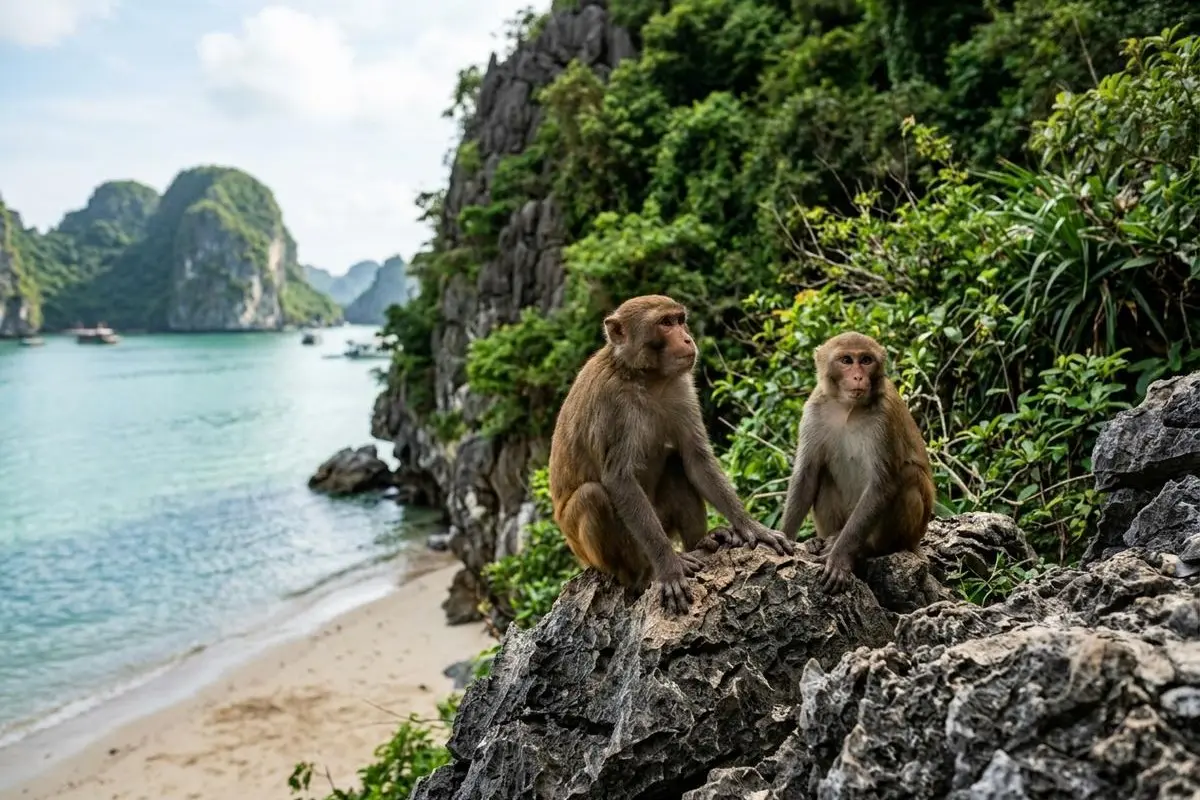
The monkeys on the island are macaques, a group of medium-sized monkeys common across much of Asia. They live in social troops with a clear hierarchy, spend much of the day foraging on the rocky slopes and often come down to the beach when boats arrive. Over years of contact with visitors, many of them have become bold around people.
It helps to understand that what looks like playful behaviour is usually about food and status. A monkey that stares, opens its mouth wide or shows its teeth is often giving a warning, not smiling. A monkey that suddenly runs towards you may be testing whether you will drop something. Reading these signals makes it much easier to stay relaxed and safe.
Why the monkeys approach people
- They have learned that tourists carry snacks, fruit and drinks.
- Plastic bags and rustling packaging sound like food to them.
- Shiny or loose items, such as sunglasses and phones, attract their curiosity.
- Some visitors still feed them, which encourages more bold behaviour.
The Golden Rules For Interacting With Monkeys
If you remember only one section of this guide, make it this one. These rules protect you, your belongings and the monkeys themselves.
- Never feed the monkeys. Feeding makes them aggressive towards the next visitor and harms their health.
- Do not carry food or drinks in your hands. Keep them in a closed bag, or leave them on the boat.
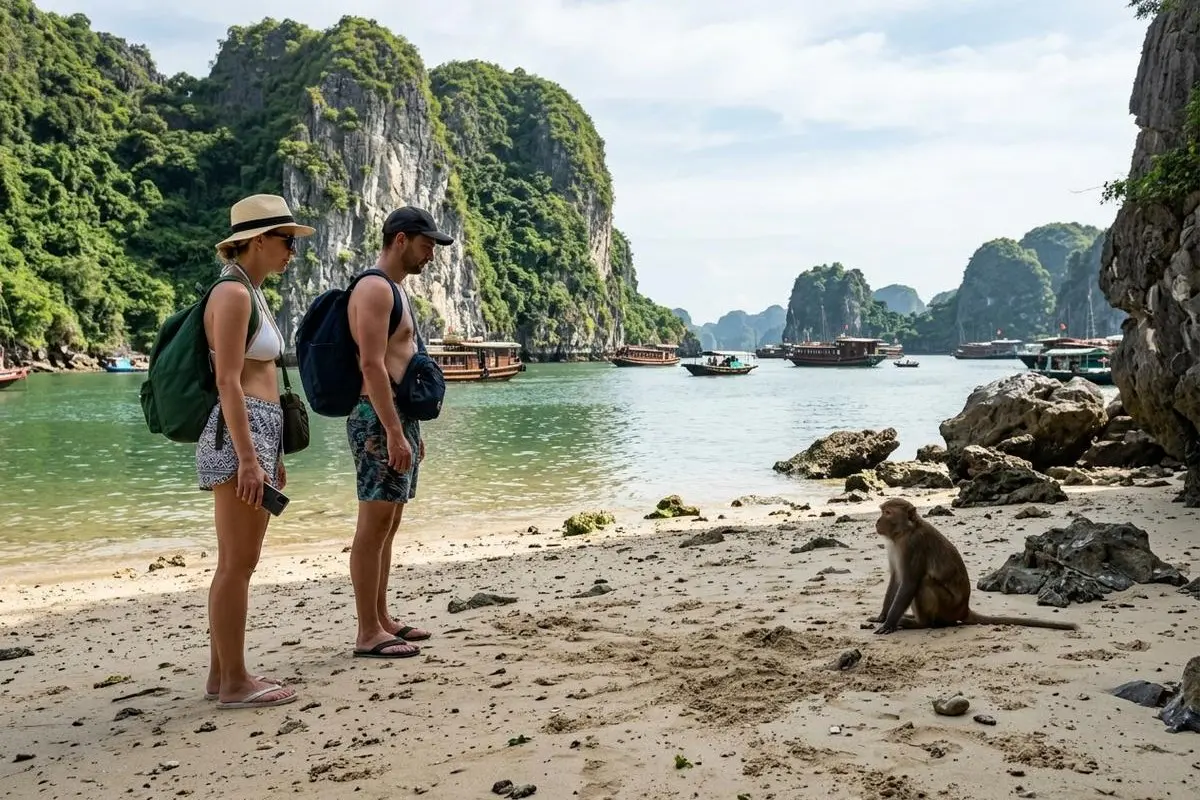
- Keep a distance of a few metres. Let the monkeys come and go on their own terms.
- Do not touch, chase or tease them. Even a friendly-looking monkey can bite if it feels cornered.
- Avoid long, direct eye contact. Staring can be read as a challenge.
- Stay calm and move slowly. Running or screaming can trigger a chase.
- If a monkey grabs something, let it go. No phone or hat is worth a bite.
Our guides repeat these rules on every trip to the island, and guests who follow them almost always come back with good photos and no problems.
How To Protect Your Belongings
Most problems on Monkey Island are not bites but stolen items. Monkeys are quick, strong for their size and surprisingly good at opening zips and bags. A little preparation before you step off the boat saves a lot of stress.
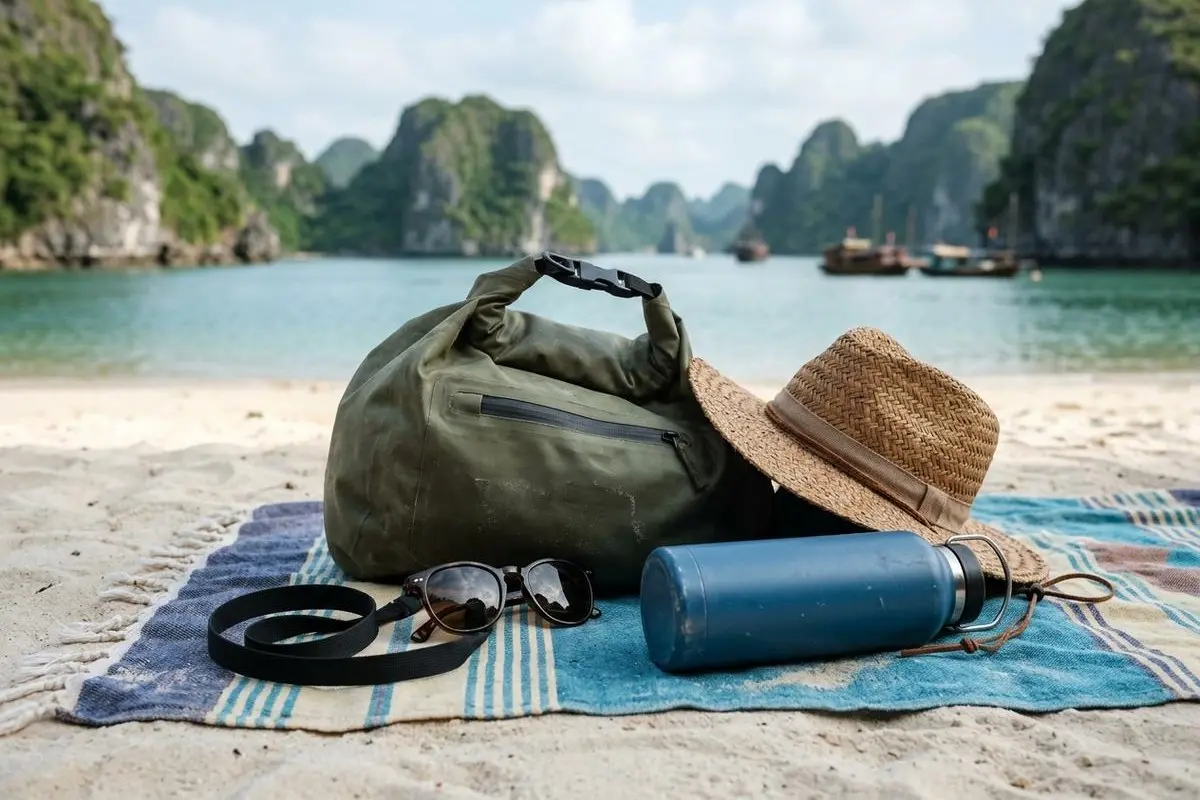
- Pack everything into one zipped bag or dry bag and keep it on your body, not on the sand.
- Wear sunglasses on a strap, or keep them in a case inside your bag.
- Put your phone on a lanyard or wrist strap when taking photos.
- Leave plastic bags, open snacks and fruit on the boat.
- Do not leave towels, shoes or bags unattended while you swim. Ask a friend to watch them.
- Bring only what you need for the visit: water, sunscreen, phone and a little cash.
>>> Best Way To Go Haiphong To Cat Ba With Luggage
Recommended tour
The Luxury Halong Bay Tours
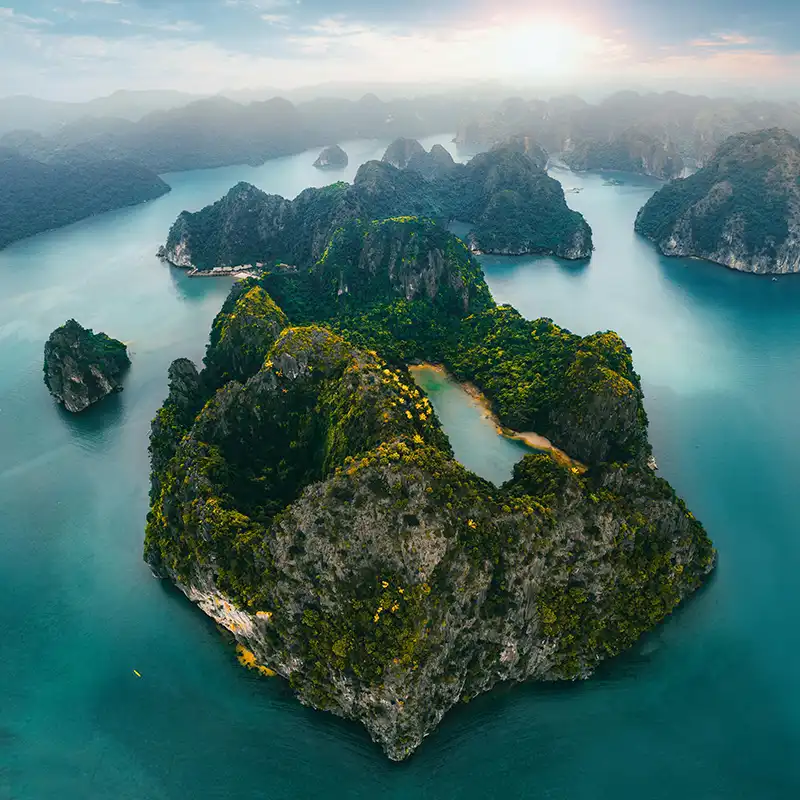
Want a relaxed day among the limestone islands with an experienced crew? Cruise Ha Long Bay with caves, kayaking options and lunch on board.
From $109 per person
Reading Monkey Body Language
You do not need to be an expert to recognise when a monkey is relaxed and when it wants space. These simple signs help you decide whether to stay where you are or slowly move away.
| What you see | What it often means | What to do |
|---|---|---|
| Grooming, resting, eating leaves | Relaxed and busy | Watch quietly from a distance |
| Staring at you or your bag | Interest in food or items | Hold your bag close and look away |
| Wide open mouth, showing teeth | A warning or threat | Back away slowly, do not stare |
| Raised eyebrows, head bobbing | Feeling challenged | Give more space and stay calm |
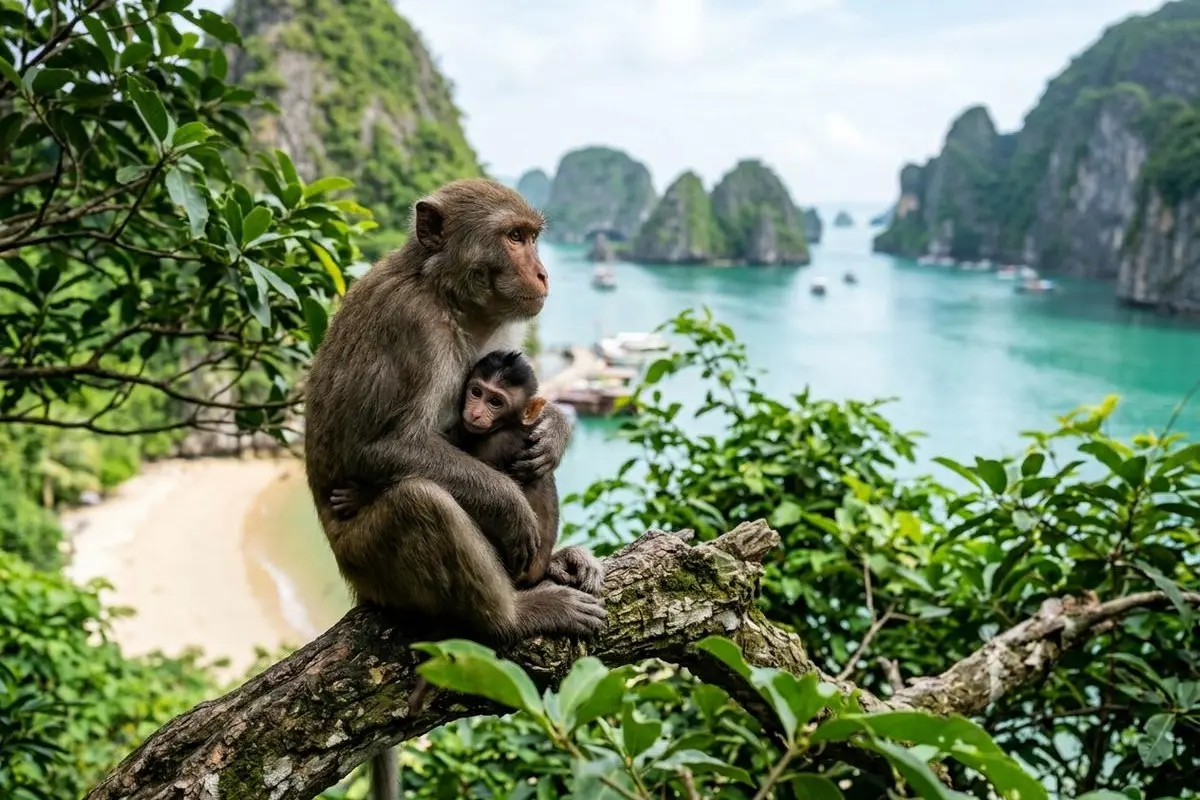
| Mother carrying a baby | Protective behaviour | Keep extra distance |
| Several monkeys moving towards you | Possible group interest in food | Walk away calmly towards the boat or staff |
Monkeys rarely attack without warning. Most bites happen when people ignore these signals, hold food, try to touch the animals or stand between a mother and her baby.
Taking Great Monkey Photos Safely
You can take wonderful photos of the macaques without ever getting close. In fact, the most natural shots often come from a distance, when the monkeys are grooming, playing or watching the boats, not reacting to you.
- Use zoom. A phone with a 2x or 3x lens, or a small camera with a zoom, lets you fill the frame from a safe distance.
- Avoid selfies with monkeys. Turning your back and holding a phone at arm’s length is exactly when items get snatched.
- Shoot at eye level from a distance. Crouch slightly rather than walking closer.
- Look for natural moments. Mothers with babies, young monkeys playing and monkeys on rocks with the bay behind them make the best images.
- Keep your strap on. Camera and phone straps should always be around your wrist or neck.
For more ideas on capturing the bay itself, our Lan Ha Bay photography guide covers light, angles and gear on the water.
Visiting Monkey Island With Children
Children usually love the monkeys, and the monkeys are often curious about children, who are closer to their height and more likely to carry snacks. That combination needs extra care, but it does not mean families should skip the island.
- Explain the rules before you land: no feeding, no touching, no running towards the monkeys.
- Keep young children within arm’s reach on the beach and near the rocks.
- Leave sweets, crisps and fruit on the boat.
- Carry small children when monkeys are nearby, rather than letting them walk past.
- Choose a calm time of day, such as early morning or late afternoon, when there are fewer boats.
For more ideas on choosing family-friendly trips in the region, see our guide to choosing the best Haiphong tours for a family trip.
>>> Review Of Popular Cat Ba Tours Activities Guide
What To Do If A Monkey Bites Or Scratches You
Bites and scratches are uncommon when visitors follow the rules, but you should know what to do just in case. Any break in the skin from a monkey should be taken seriously, because wild animals can carry infections.
- Wash the wound immediately with plenty of clean water and soap for several minutes.
- Apply antiseptic and cover the wound with a clean dressing.
- Tell your guide or boat crew straight away so they can help you get back to Cat Ba town.
- See a doctor as soon as possible, even for a small scratch. A doctor can advise on rabies treatment and any other care you may need.
- Contact your travel insurance and keep receipts for any treatment.
If you have had pre-travel rabies vaccination, tell the doctor, as it may change the treatment you need. Do not wait until you return home to seek advice.
Being A Responsible Visitor
How visitors behave shapes how the monkeys behave. Every time someone feeds a monkey or lets it steal food, the animals learn that people are an easy source of snacks, and they become bolder with the next visitor. Responsible habits help the monkeys stay wild and keep the island enjoyable for everyone.
- Do not feed the monkeys, even if other visitors do.
- Take all rubbish, especially food packaging, back to the boat.
- Keep noise down and do not throw stones or sand.
- Choose operators who brief guests on wildlife rules. Our tips before booking your Cat Ba tour explain what to ask.
Fitting The Monkeys Into Your Lan Ha Bay Day
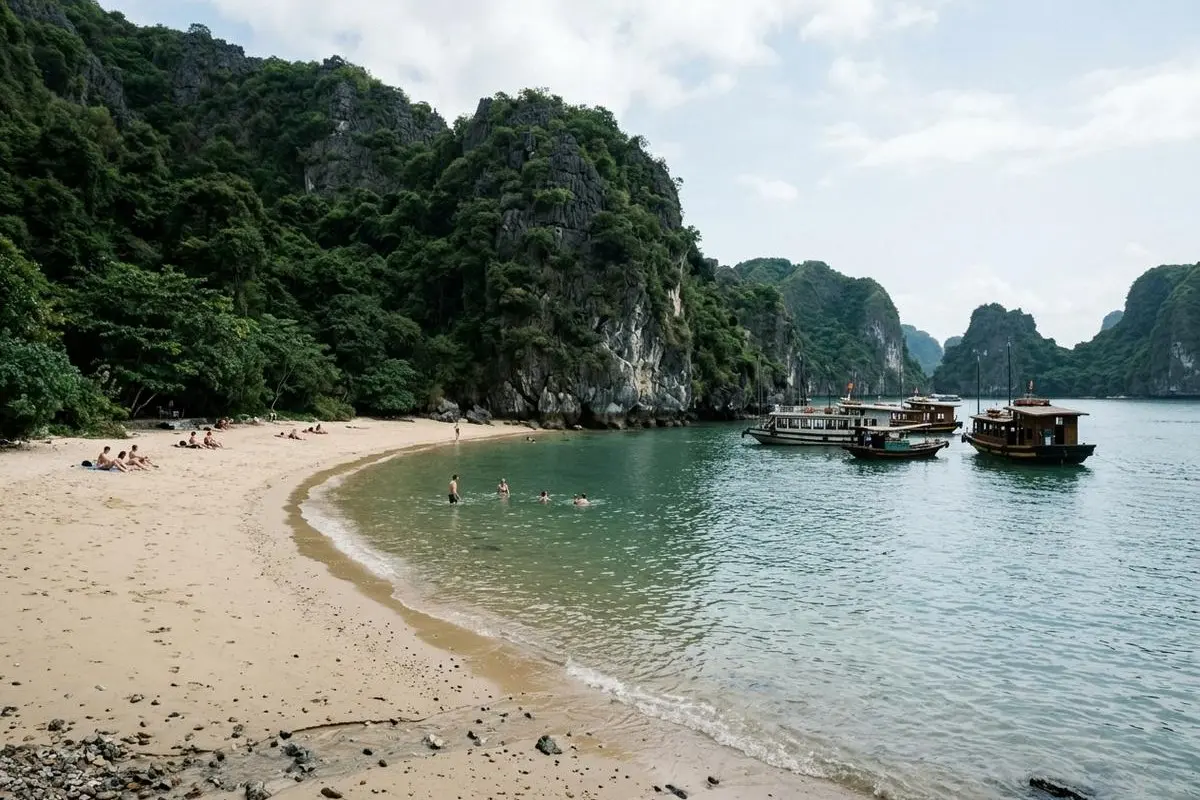
Most visitors meet the monkeys during a stop on a Lan Ha Bay cruise, often after kayaking and lunch. The monkeys tend to be more active around the beach when boats arrive, so you may see them as soon as you land. If you prefer a calmer encounter, ask your operator whether the island can be visited early or late in the day, when fewer groups are around.
To see how a full day on the water usually flows, read our Lan Ha Bay tour experience guide. If you have more time on Cat Ba, the Cat Ba itinerary for nature lovers adds national park trails and quiet villages to your trip.
>>> Lan Ha Bay Tour Route Avoiding The Crowded Spots
Final Thoughts On The Monkeys Of Monkey Island Cat Ba
The monkeys are a big part of what makes Monkey Island special. Watching a troop groom each other on the rocks, with the karst islands of Lan Ha Bay behind them, is a memorable moment of any Cat Ba trip. Treat them as the wild animals they are, keep your food and belongings out of reach, and give them space. Do that and your encounter is likely to be fun, safe and full of great photos. If you are travelling through the region, combine the island with a few days of haiphong tours on the mainland for street food, history and countryside rides.
Frequently Asked Questions About The Monkeys
Are the monkeys on Monkey Island dangerous?
They are wild and can bite or scratch, especially if people feed them, hold food or try to touch them. Following the basic rules keeps the risk low.
Can I feed the monkeys on Monkey Island?
No. Feeding makes the monkeys more aggressive, can harm their health and is the main cause of bites. Keep food out of sight.
What should I do if a monkey takes my belongings?
Let it go and do not chase the monkey. Ask your guide or boat crew for help. Often the monkey drops the item once it realises there is no food inside.
Is it safe to bring children to see the monkeys?
Yes, with close supervision. Keep young children within reach, leave snacks on the boat and explain the rules before landing.
Do I need a rabies vaccine to visit Monkey Island?
That is a personal medical decision. Ask a travel health clinic before your trip, and always see a doctor promptly if a monkey bites or scratches you.
Plan Your Cat Ba Trip With Haiphong Adventure
Want to visit Monkey Island at a quieter time, combine it with kayaking in Lan Ha Bay or link your island days with the best of Haiphong city? The Haiphong Adventure team is happy to share honest advice and arrange transfers, boats and guides. Send us your dates, group size and interests, and we will suggest a plan that fits.
WhatsApp, Viber, WeChat: +84(0)934.555.001
KakaoTalk, Line ID: haiphongadventure