Cat Ba Rock Climbing: Best Crags, Tours and Tips for Visitors
Cat Ba rock climbing is one of the most rewarding outdoor experiences in northern Vietnam: steep limestone cliffs, jungle-covered crags and sea walls rising straight out of Lan Ha Bay. Beginners can try their first top-rope climb in a single morning, while experienced climbers will find sport routes and deep water soloing that feel world class. This guide explains where people climb, how to book a guided session, the best season, what to bring and how to stay safe, so you can plan a climbing day that fits your level.
Cat Ba Island sits in the Gulf of Tonkin, part of Haiphong city, and is the main gateway to Lan Ha Bay. Many travelers combine a climbing day with kayaking, a bay cruise or a jungle trek, which makes the island a natural add-on to Haiphong tours or a longer trip through the north.

Why Cat Ba Rock Climbing Is Special
Most of the island and the surrounding bay is made of limestone karst. Over millions of years, rain and sea water carved this rock into towers, overhangs, caves and sharp ridges. For climbers, that means textured holds, pockets and tufas, all set in a landscape that looks like a postcard from every angle.
Climbing on Cat Ba developed from the early 2000s, when visiting climbers began bolting routes on the island and on the karst islets in the bay. Today there is a small but active climbing community, with local guides and outfitters based in Cat Ba town. You do not need to bring your own gear or know the area. A guide will choose a crag that matches your level and the weather on the day.
Three things make climbing here different from a gym or a typical European crag:
- Setting: you climb above jungle, beaches or open sea, often with no other groups in sight.
- Variety: sport climbing on land, deep water soloing over the sea and boat-access crags you can only reach by water.
- Easy combination: the same day can include kayaking, swimming and a seafood dinner in town.
Main Types of Climbing on Cat Ba
Before you book, it helps to know the three styles you will hear about. Each suits a different level and a different type of traveler.
Top-Rope Climbing for Beginners
This is how most first timers start. The rope is already anchored at the top of the route, and your guide holds it from the ground (this is called belaying). If you slip, the rope catches you after a short drop. Top-rope climbing is the safest way to learn movement, trust your feet and enjoy the view without worrying about technique.
Sport Climbing for Experienced Climbers
Sport routes have fixed bolts along the wall. The leader clips quickdraws into each bolt while climbing, then lowers off an anchor at the top. Cat Ba has routes across a wide range of grades, from easy slabs to steep overhangs. If you already lead outdoors, ask for a guided day or a crag briefing so you understand local conditions, rock quality and which bolts are in good shape.
Deep Water Soloing Over the Sea
Deep water soloing, often shortened to DWS, means climbing sea cliffs without a rope. When you finish or fall, you drop into deep water below. Lan Ha Bay is one of the best known places in Asia for this style. It is thrilling, but it depends on tide, water depth and sea conditions, so it is only offered on suitable days and always with an experienced guide and a support boat.
Best Crags and Climbing Areas
Crag names and access can change over time as new routes are bolted or areas are rested. Treat the list below as an overview and let your guide choose the exact spot on the day.
Butterfly Valley
Butterfly Valley is the best known inland crag on Cat Ba. It sits in a quiet valley surrounded by forest and rice fields, a short drive from Cat Ba town. Walls here offer many routes, which makes it a favorite for both first-time climbers and groups with mixed levels. Shade from the cliffs and trees helps on warm days.
Sea Cliffs and Beach Crags
Several crags lie close to beaches and coves around the island and in the bay. Some are reached on foot, others only by boat. Climbing next to the sea, with the sound of waves below, is a highlight of a Cat Ba trip. These areas are more exposed to sun and wind, so timing matters.
Lan Ha Bay Islets
The karst islets of Lan Ha Bay host both bolted routes and deep water solo walls. A typical day combines a boat ride, climbing on one or two walls, swimming breaks and lunch on board. Note that access rules for parts of the bay can change, so a licensed local operator is the best way to know which areas are open.

>>> Lan Ha Bay Cruise Activities Kayak And Swimming
How a Guided Climbing Day Works
Most visitors book a half day or full day session with a local climbing outfitter in Cat Ba town. Programs vary, but a typical beginner day looks like this:
- Meet and gear up: you meet the guide in town, try on shoes and a harness, and get a helmet.
- Transfer: a short ride by car, motorbike or boat to the crag.
- Safety briefing: how to tie in, basic commands and how to lower off.
- Climbing: several routes of increasing difficulty, with rest breaks in between.
- Belay practice (optional): some guides teach you to belay a partner under supervision.
- Return: back to town in the afternoon, often with time for a swim or a coffee by the harbor.
Full day trips usually add lunch and more climbing time, while boat-based days include swimming and sometimes kayaking. Group size, inclusions and prices change by season and by operator, so always confirm what is included before you pay.

Recommended tour
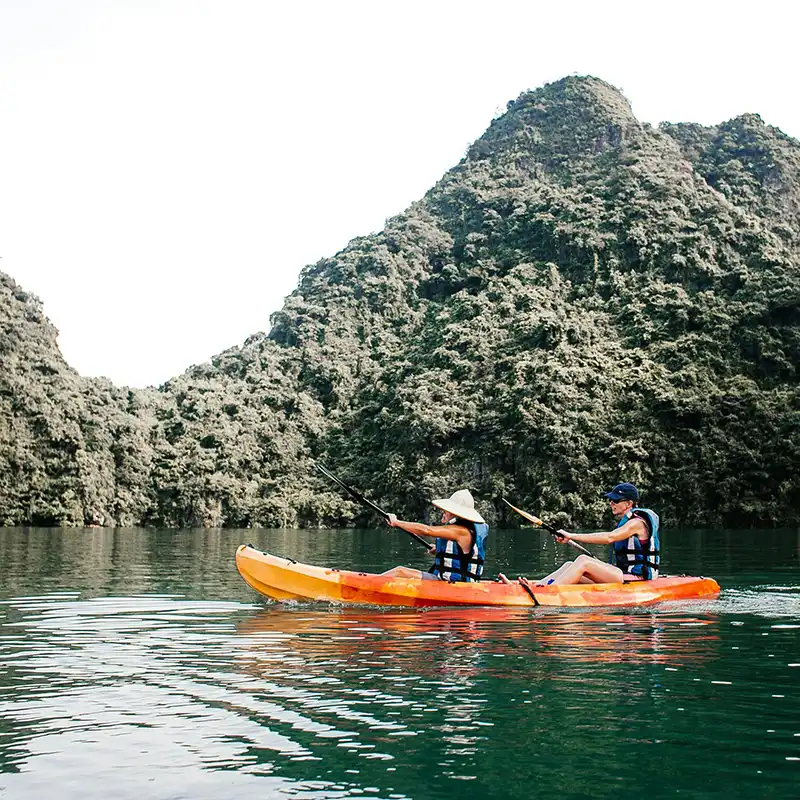
Not ready to climb, or traveling with family who prefer the water? This day cruise sails toward the quieter Gia Luan area near Cat Ba, with kayaking or a bamboo boat ride among the same dramatic karsts.
From $109 per person
Best Time for Rock Climbing in Cat Ba
Northern Vietnam has clear seasons, and they affect climbing more than most activities. Use the table below as a general guide. Weather varies from year to year, so check the forecast close to your trip.
| Period | Conditions | Good for |
|---|---|---|
| October to December | Drier air, cooler temperatures, comfortable for long days | Sport climbing and beginner sessions |
| January to February | Cool, often grey and damp, rock can stay moist | Climbing on dry days, fewer crowds |
| March to May | Warming up, humidity rising, generally pleasant | All climbing styles, start of DWS season |
| June to September | Hot, humid, risk of storms and rain | Deep water soloing, early morning sessions |
Many climbers consider autumn the most comfortable time on land, while summer is the season for deep water soloing because the sea is warm. During the storm season, boat trips can be cancelled at short notice for safety. Keep a spare day in your plan if climbing is the main reason for your visit.
What to Bring and What to Wear
Outfitters provide technical gear such as harness, helmet, rope, shoes and chalk. Your job is to pack for comfort, sun and water. Here is a simple checklist:
- Light, stretchy clothes you can move in (shorts or leggings and a breathable top)
- Sports sandals or trainers with good grip for the approach walk
- Sunscreen, sunglasses and a cap for breaks
- At least 1.5 to 2 liters of water per person, more in summer
- Insect repellent for jungle crags
- Swimwear, a quick-dry towel and a dry bag for boat or DWS days
- Small snacks and some cash in small notes
- Any personal medication, plus basic plasters for scraped fingers
If you wear glasses, bring a strap. Remove rings and large earrings before climbing, as limestone holds can catch them.

>>> Essential Items To Pack For Lan Ha Bay Tour Day
Safety Tips Every Climber Should Know
Climbing with a professional guide on Cat Ba is a well established activity, but it still carries risk. These habits keep your day safe and enjoyable:
- Choose an experienced operator. Ask about guide training, how often gear is checked and how they handle emergencies.
- Always wear a helmet at the base of the crag as well as on the wall, because small stones can fall.
- Double check knots and buckles with your guide before every climb, even if you have done it already that day.
- Respect the heat. Drink regularly, rest in the shade and avoid climbing in the hottest midday hours in summer.
- Be honest about your level. Tell your guide about past injuries, fear of heights or medical conditions.
- Check your insurance. Some travel policies exclude climbing or deep water soloing, so read the conditions before you go.
Deep water soloing has its own rules: only climb where your guide confirms the water depth, fall feet first with arms close to your body, and never climb alone. Tides in the bay change through the day, and a wall that is safe at high tide may not be at low tide.
>>> Safety Gear For Your Haiphong Adventure Trip
Getting to Cat Ba and Where to Stay
Most climbers base themselves in Cat Ba town, where the climbing outfitters, guesthouses, cafes and restaurants are concentrated. From Haiphong city, travelers usually reach the island by a combination of road and ferry or by speedboat, depending on the season and schedules. If you are flying in, our guide to getting from Cat Bi Airport to Cat Ba compares the main options.
Ferry and boat timetables change with the season and weather, so confirm departure times a day ahead. If you are deciding between a city base and an island base, read our comparison on whether to stay in Haiphong or Cat Ba. For climbing, staying at least two nights on the island gives you a buffer for weather and time to rest your arms.

Combine Climbing With Other Adventures
Your forearms will need a break, and the island has plenty to fill a rest day. Popular pairings include:
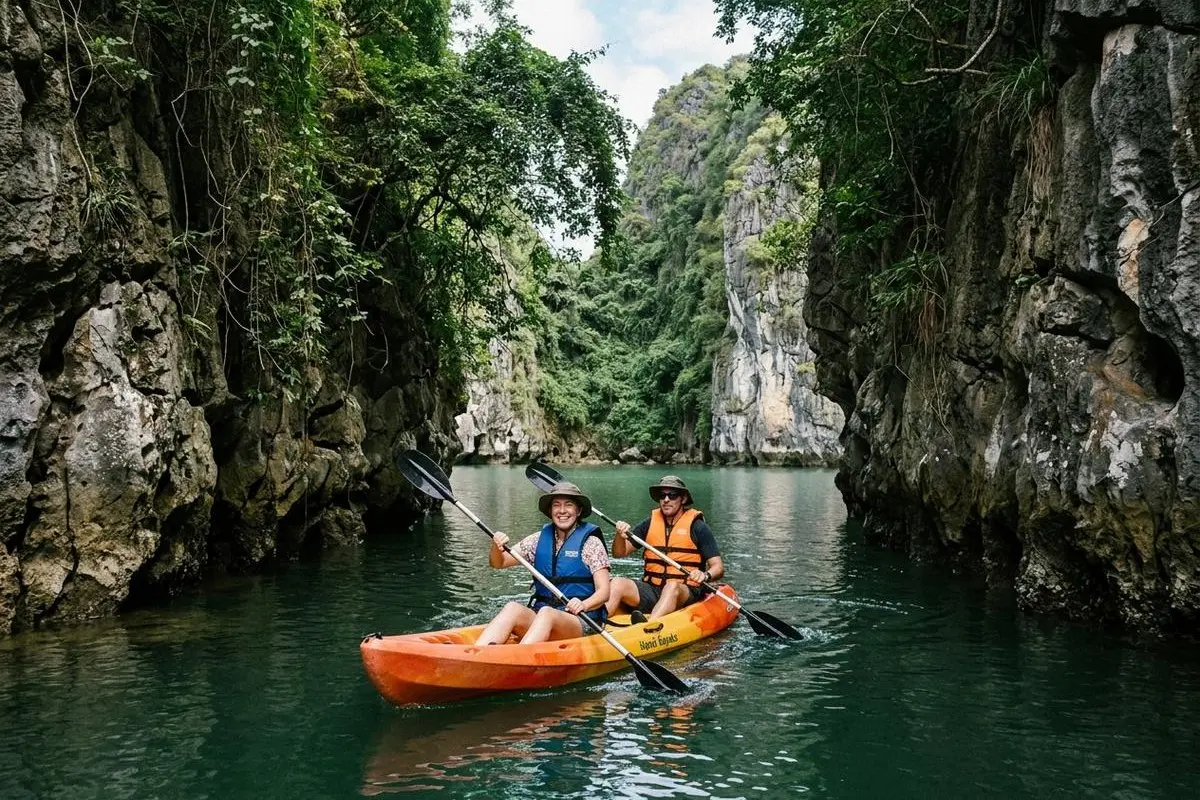
- Kayaking in Lan Ha Bay through hidden lagoons and past floating fishing villages.
- Trekking in Cat Ba National Park on forest trails with viewpoints over the island.
- Cycling to Viet Hai village, a quiet community surrounded by limestone hills.
- Beach time and sunset viewpoints around Cat Ba town.
If you love an active trip, our list of Haiphong adventure activities for thrill seekers has more ideas on the mainland, from motorbike rides to countryside trails.
>>> Trekking Through Jungle To Viet Hai Village
Sample 2-Day Climbing Itinerary
Here is a simple plan for travelers who want a taste of Cat Ba rock climbing without rushing. Adjust it to your level and the weather.
Day 1: Inland Crag and Town Evening
- Morning: travel from Haiphong to Cat Ba, check in and have an early lunch.
- Afternoon: half day guided session at an inland crag such as Butterfly Valley.
- Evening: seafood dinner by the harbor and an early night.
Day 2: Bay Day and Return
- Morning: boat trip into Lan Ha Bay with sea cliff climbing or deep water soloing if conditions allow, or kayaking if not.
- Afternoon: swim, lunch on board and return to town.
- Late afternoon: travel back toward Haiphong or continue your journey.
Want to add the city as well? Our 2 days in Haiphong and Cat Ba itinerary shows how to balance food, culture and island time.

Frequently Asked Questions
Do I need experience to go rock climbing in Cat Ba?
No. Beginner sessions use top ropes and include full instruction, gear and a guide. Most reasonably fit travelers can enjoy a first climb, and children can often join with a parent depending on the operator.
Is Cat Ba rock climbing safe?
Guided climbing with a reputable operator is considered safe when you follow instructions, wear a helmet and check your knots. Risks rise with heat, wet rock and poor equipment, so choose your guide carefully and be honest about your level.
What is the best month for deep water soloing in Lan Ha Bay?
The warmer months from late spring to early autumn are usually best, when the water is pleasant to fall into. Sessions still depend on tide and weather, so the exact days are decided by your guide.
How much does a climbing day cost?
Prices depend on half day or full day, group size and whether a boat is included. Rates change by season, so ask several operators for a current quote and confirm what is included before booking.
Can I climb if I am traveling with non-climbers?
Yes. Non-climbers can relax at the crag, join a kayak trip or take a bay cruise while you climb, and you can meet up for lunch or dinner in town.
Plan Your Cat Ba Adventure With Local Help
Cat Ba rock climbing gives you a rare mix of adrenaline and scenery: limestone walls, jungle, sea and a friendly island town to come back to each evening. Whether you are trying your first top-rope route or chasing deep water solo walls, a bit of planning around season, safety and logistics will make the trip smooth. Haiphong Adventure helps international travelers explore Haiphong and plan onward trips to Cat Ba and Lan Ha Bay with guided tours and flexible itineraries. Browse our Haiphong tours, see our Cat Ba tours page, or message us with your dates and we will suggest a plan that fits your level.
Contact Haiphong Adventure
- WhatsApp, Viber, WeChat: +84(0)934.555.001
- KakaoTalk, Line ID: haiphongadventure