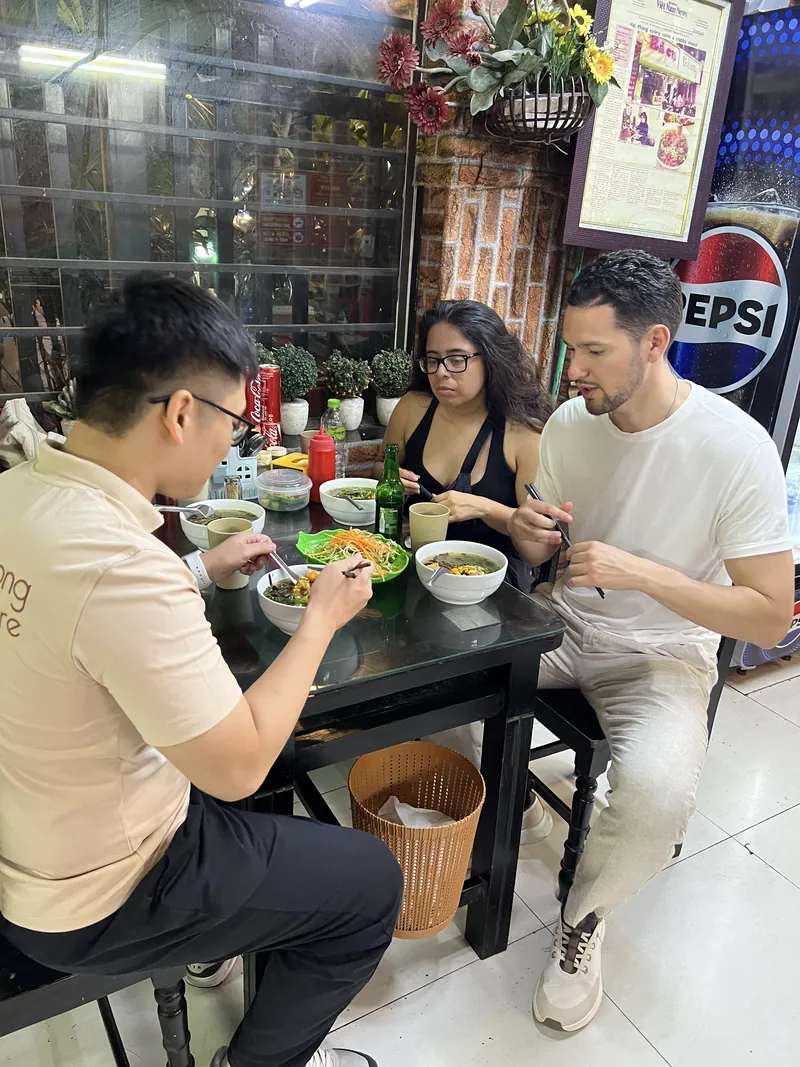
Haiphong Desserts and Che to Try on a Sweet Food Tour
If you have a sweet tooth, these are the Haiphong desserts and che to try: mixed che with crushed ice and coconut milk, black bean che, pomelo che, warm sticky rice balls in ginger syrup, silken tofu pudding (tao pho), creamy caramen, homemade yogurt and the much-loved fruit cup hoa qua dam. This guide explains what each dessert is, when locals eat it, how to order, and how to plan your own sweet food tour around the city.
We are Haiphong Adventure, a local tour team in the port city. Dessert stops are a favorite part of our food walks, and the tips below come from the shops and stalls we visit with travelers, not from a brochure.
What Is Che and Why Locals Love It
Che is a big family of Vietnamese sweet soups, puddings and dessert drinks. It can be served hot or cold, thick or thin, in a bowl or a tall glass. The base is usually beans, grains, fruit, jelly or tubers, sweetened with sugar and often finished with coconut milk and crushed ice.
In Haiphong, che is not a restaurant dessert eaten after dinner. It is a snack in its own right. Students stop for a glass after school, friends meet at che shops in the evening, and families share bowls on weekend nights. On hot summer days a cold che is the city’s favorite way to cool down, while in the cooler months warm che and ginger syrups take over.
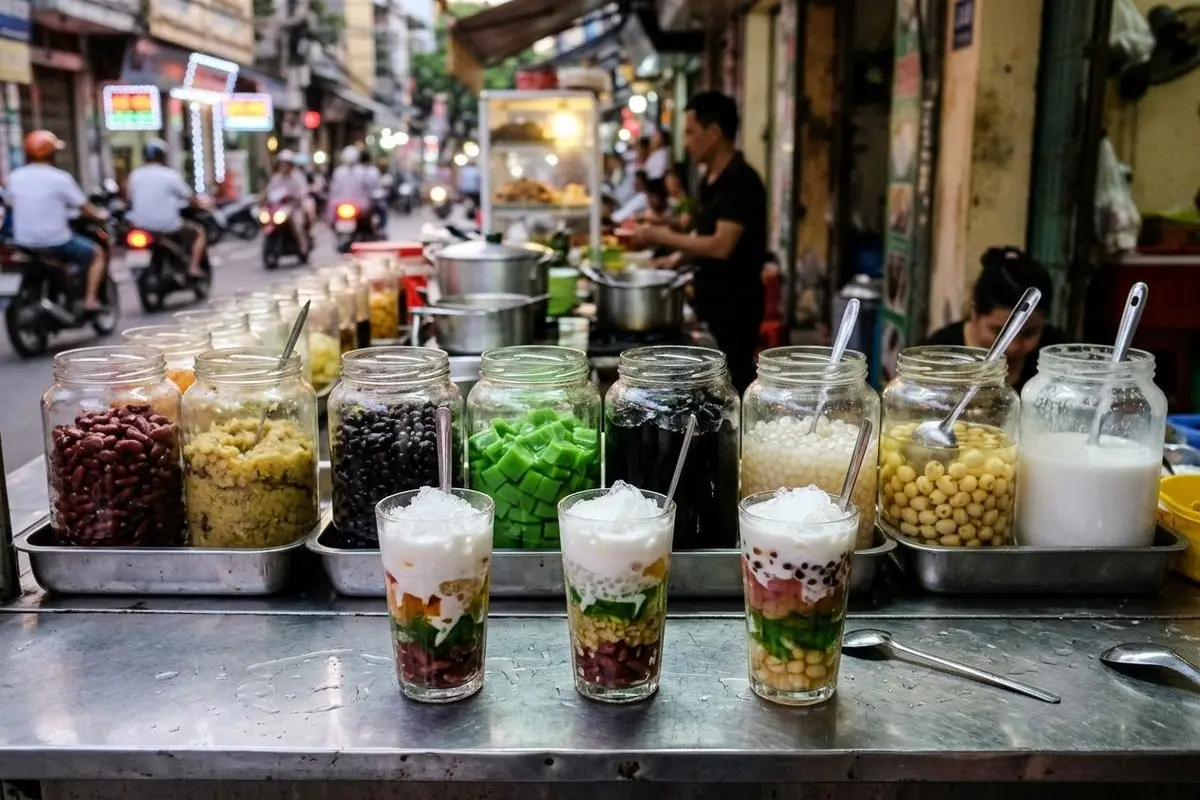
Most che shops display their ingredients in jars or trays at the front, so even without speaking Vietnamese you can point and choose. It is one of the easiest and friendliest food experiences in the city.
Che Thap Cam, Mixed Che
If you only try one, start with che thap cam, which simply means mixed che. A tall glass is layered with several ingredients, such as red beans, mung bean paste, black beans, green pandan jelly, grass jelly, tapioca pearls and coconut milk, then topped with crushed ice. You stir it all together and eat it with a long spoon.
Every shop has its own mix, so it is fun to compare. The texture changes with each spoonful: soft beans, chewy jelly, creamy coconut and crunchy ice.
How to order
- Say mot coc che thap cam, which means one glass of mixed che.
- Ask for it ngot if you prefer it less sweet, or it da for less ice.
- Point at the jars if you want to add or remove an ingredient.
Che Dau Den, Black Bean Che
Che dau den is a northern Vietnamese classic. Black beans are cooked until soft but still whole, then served in their sweet, dark cooking liquid. In summer it comes with crushed ice and sometimes a little coconut milk. In winter some shops serve it warm.
It tastes earthy and gently sweet, and many locals consider it refreshing and good for cooling the body on hot days. It is a good choice if you find mixed che too rich.
>>> My Haiphong Street Food Adventure Local Taste
Che Buoi, Pomelo Che
Che buoi is a clever dessert made from the white inner pith of pomelo, which is soaked, cut into small cubes, coated in tapioca starch and cooked until translucent and chewy. It is served with mung bean paste, coconut milk and sometimes crushed peanuts or sesame.
The pomelo pieces are pleasantly crunchy and chewy at the same time, and they carry a faint citrus note. Not every shop sells it, so if you see it on the menu, give it a try.
Che Troi Nuoc and Banh Troi, Sticky Rice Balls
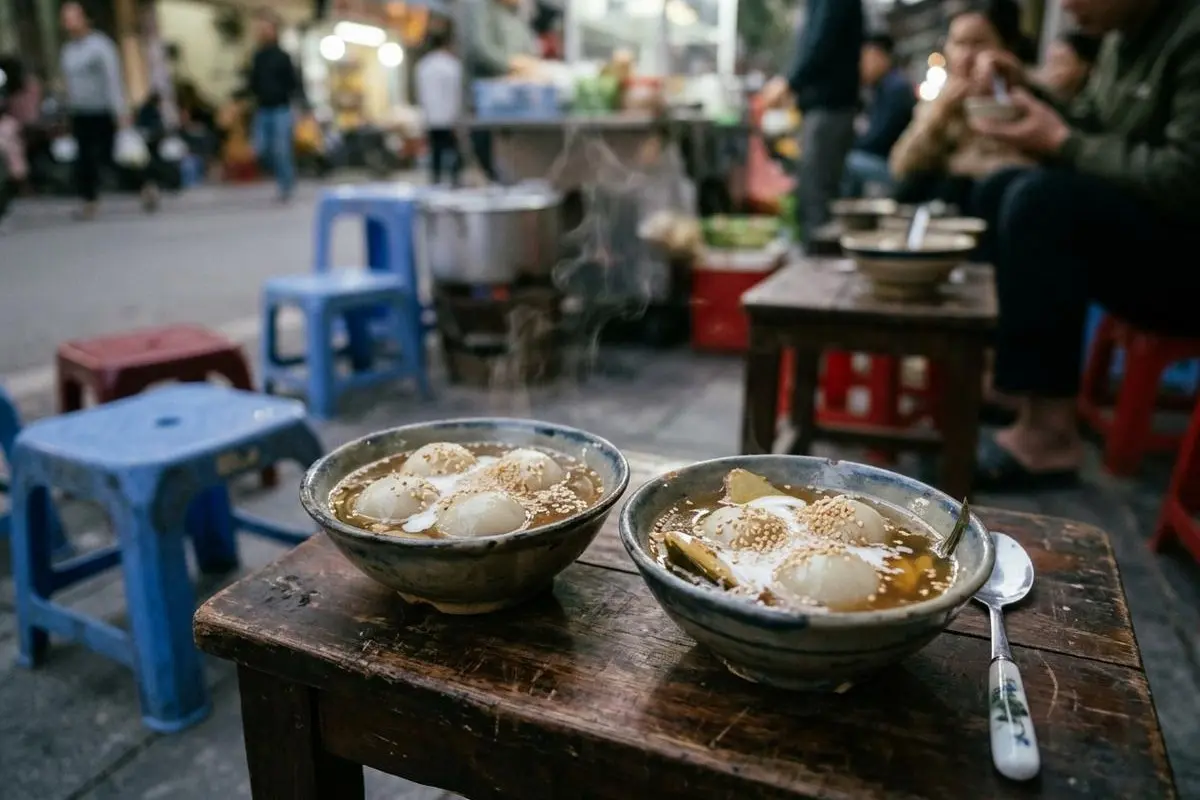
When the weather turns cool, look for che troi nuoc: soft glutinous rice balls filled with mung bean paste, served warm in a clear syrup flavored with fresh ginger. The bowl is usually finished with toasted sesame seeds and a little coconut milk.
A related treat, banh troi and banh chay, is traditionally made at home for the Cold Food Festival in the third lunar month. Small balls of sticky rice dough are filled with palm sugar or mung bean and boiled. You may find them at markets around that time of year.
How to order
- Say mot bat che troi nuoc for one bowl.
- Eat slowly. The filling can be very hot right after cooking.
Tao Pho, Silken Tofu Pudding
Tao pho is one of the oldest street desserts in northern Vietnam. Very soft, warm silken tofu is scooped into a bowl in thin layers and covered with a sweet syrup flavored with ginger or jasmine. In summer you can also find it cold, sometimes with tapioca pearls.
It is light, smooth and not too sweet, perfect if you want something gentle after a spicy meal. Vendors used to carry it in wooden barrels on shoulder poles, and you may still see mobile sellers on bicycles or small carts, as well as fixed stalls.
For more context on how desserts fit into a day of local eating, see our Haiphong food tour route through local markets.
Recommended tour
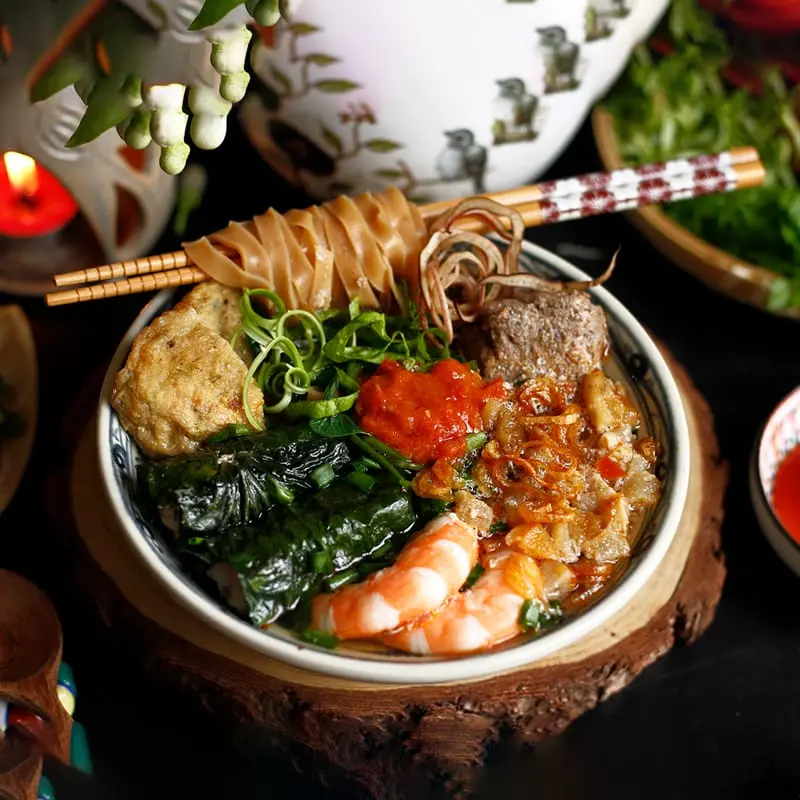
The Haiphong Street Food and City Tour
Taste Haiphong’s savory classics and finish with a sweet che stop, guided by a local who knows where the city eats and orders for you.
From $85 per person
Che Sen, Che Bap and Other Seasonal Che
Many che shops change their menu with the seasons. Keep an eye out for these:
- Che sen: lotus seed che, often with longan or dried longan, delicate and fragrant.
- Che bap: sweet corn che cooked with sticky rice and coconut milk, thick and comforting.
- Che khuc bach: soft cubes of milk and gelatin panna cotta with lychee or longan, almonds and syrup.
- Che thai: a colorful mix of jackfruit, durian or other fruit, jellies and coconut milk.
- Che dau xanh: mung bean che, simple and mild, served hot or cold.
Menus vary from shop to shop and through the year, so the fun is in trying whatever is fresh that day.
Hoa Qua Dam, Fruit with Yogurt
Hoa qua dam is a modern favorite across northern Vietnam. A cup or bowl is filled with diced tropical fruit such as mango, dragon fruit, jackfruit, papaya and avocado, then topped with yogurt, condensed milk or coconut milk and crushed ice.
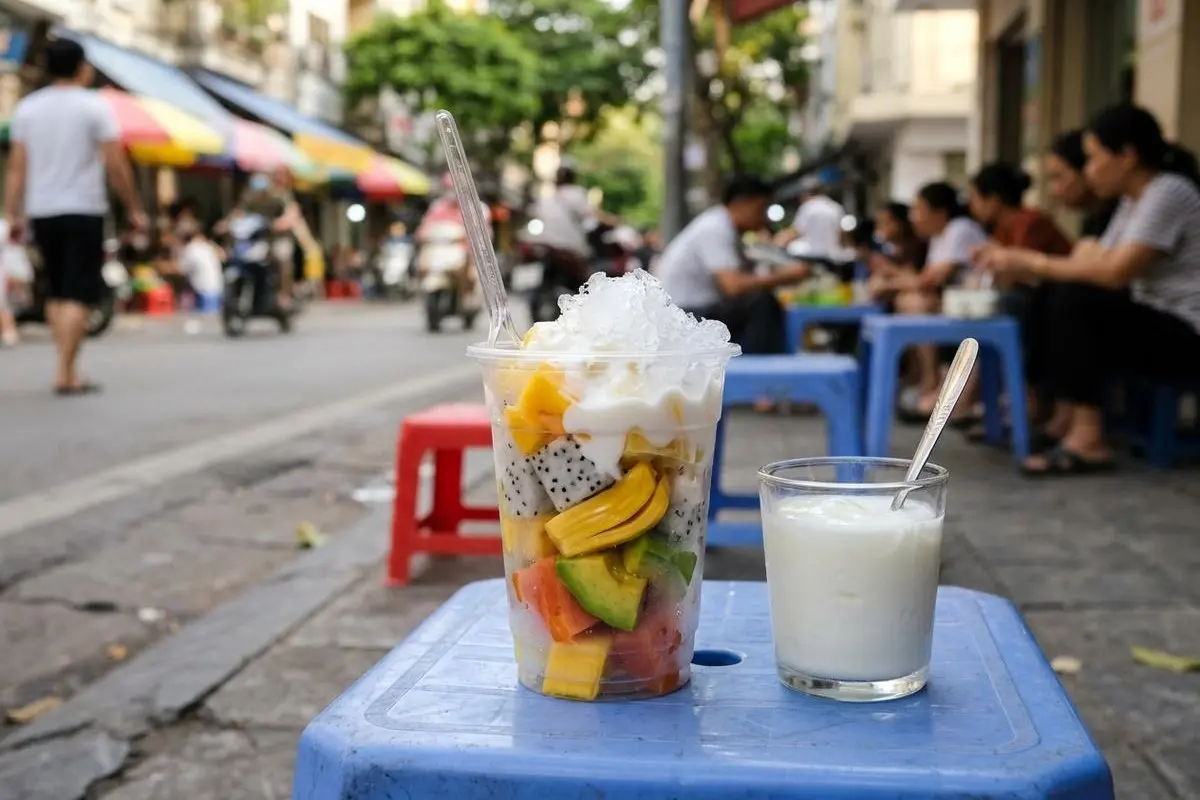
It is fresh, colorful and a little healthier than many desserts. Popular with young locals, it is often sold in the same shops as che and yogurt. Ask for khong sua dac if you want to skip the condensed milk.
Sua Chua and Caramen, Yogurt and Flan
Vietnamese homemade yogurt (sua chua) is thick, tangy and slightly sweet, usually sold in small cups or jars. It is eaten on its own, with jackfruit (sua chua mit), or with sticky black rice (sua chua nep cam).
Caramen, the Vietnamese version of crème caramel, is another popular sweet in the north. The smooth egg custard comes with a dark caramel sauce and is often served with crushed ice or a splash of black coffee. You will find both yogurt and caramen in che shops, dessert cafes and small family stalls.
>>> My Review Of The Best Haiphong Food Tour Spots
Sweet Drinks and Coffee Desserts
In Vietnam the line between dessert and drink is blurry. Many sweet stops are as much about what is in the glass as what is in the bowl.
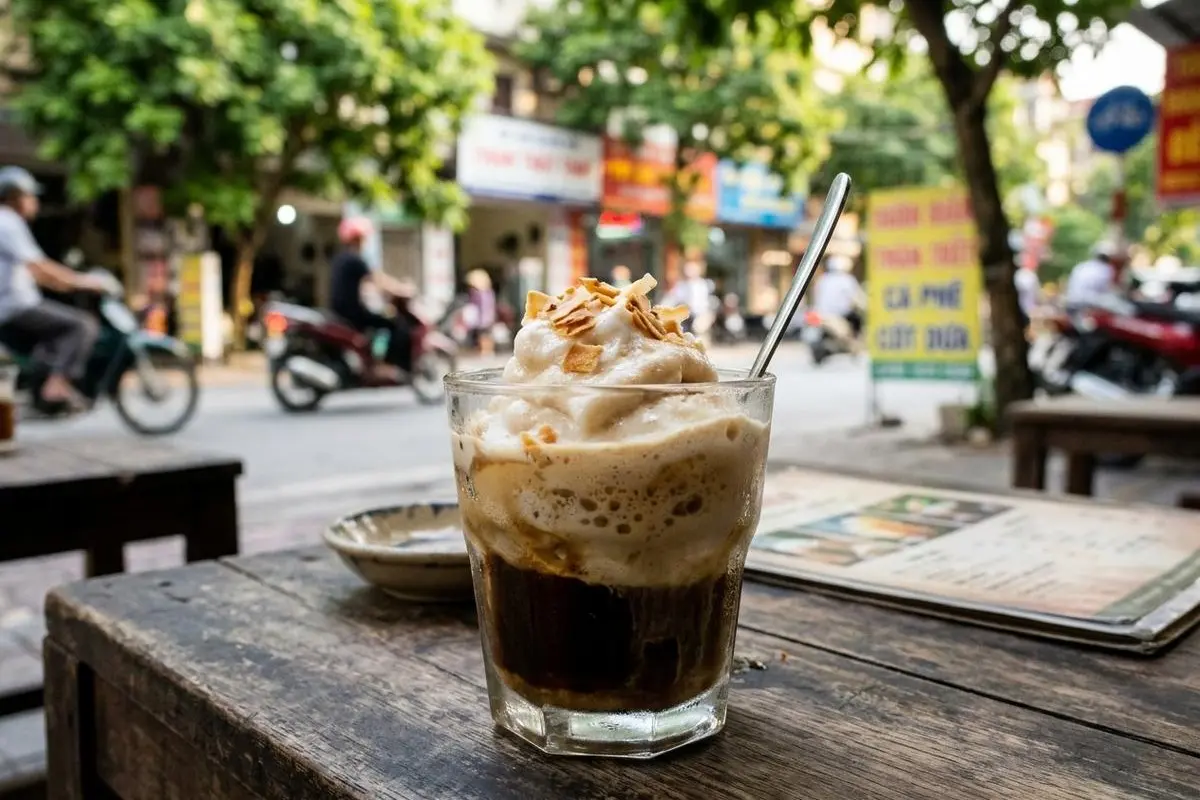
- Coconut coffee (ca phe cot dua): strong coffee blended with frozen coconut cream, like a coffee dessert in a glass.
- Egg coffee (ca phe trung): coffee topped with a thick, sweet whipped egg yolk cream, a northern specialty now found in many cafes.
- Sugarcane juice (nuoc mia): pressed fresh at street carts, sometimes with kumquat.
- Fruit smoothies (sinh to): avocado, mango or soursop blended with ice and condensed milk.
If you prefer a calmer setting to enjoy a sweet drink, browse our guide to quiet Haiphong coffee spots.
Where to Find Che and Desserts in Haiphong
You do not need a special address to find good desserts in Haiphong. Sweet shops are spread across the central districts, and the best ones are often small family businesses that have been serving the same neighborhood for years.
Che shops
Dedicated che shops are easy to spot: look for rows of glass jars, metal trays of colorful ingredients and plastic stools filled with students and young couples. They usually open from the afternoon until late evening.
Street carts and mobile vendors
Tao pho, sugarcane juice and some simple che are often sold from carts and bicycles. They move around, so they are more of a happy surprise than a planned stop.
Markets
Covered markets and neighborhood wet markets often have a small dessert corner with che, yogurt and seasonal sweets, plus plenty of fresh fruit you can take away.
Modern dessert cafes
Newer cafes serve che, yogurt and fruit desserts in a more comfortable, air-conditioned setting, often alongside coffee and tea. Prices are usually higher than at street stalls, but menus may include photos, which makes ordering easier.
To find a shop near you, search maps for che, quan che or hoa qua dam plus ‘Hai Phong’, then check recent reviews and opening hours. Busy places with local customers are almost always a good sign.
How to Plan a Sweet Food Tour in Haiphong
A sweet food tour works best in the late afternoon and evening, when che shops are busiest and the heat of the day has passed. Here is a simple plan you can follow on your own.
Step 1: Start with a savory snack
Desserts taste better after something salty. Begin with a light street snack, such as banh mi que or steamed rice cakes, so you are not eating sugar on an empty stomach.
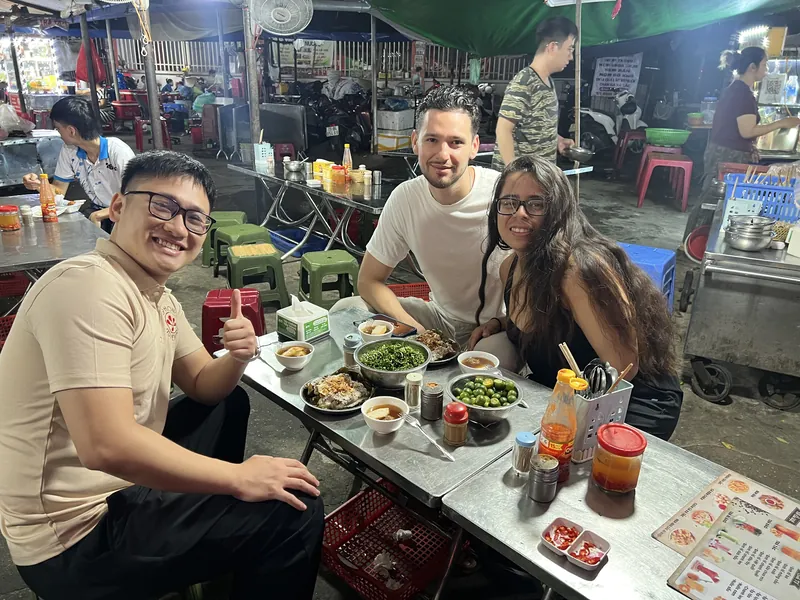
Step 2: Visit a che shop
Choose a busy che shop with plenty of local customers. Share two or three different glasses so you can taste more without getting too full.
Step 3: Walk and try something warm or fruity
Take a stroll, then stop for tao pho, a hoa qua dam or a yogurt. In winter, look for warm che troi nuoc instead.
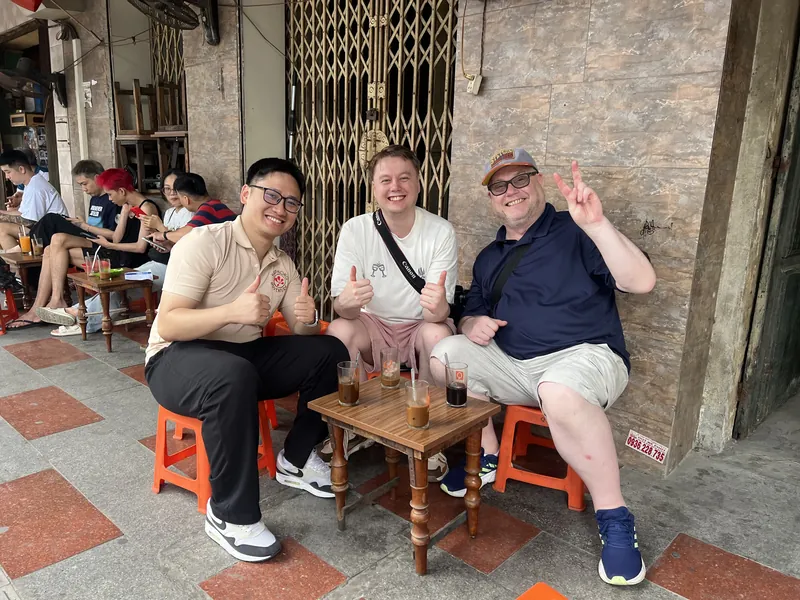
Step 4: Finish with coffee
End with coconut coffee or egg coffee at a cafe, or a simple sidewalk coffee if you want to watch the evening traffic.
>>> Food Tour Haiphong: 16 Best Must-Try Dishes & Local Eateries
Quick Guide to Haiphong Desserts
| Dessert | What it is | Best season |
|---|---|---|
| Che thap cam | Mixed beans, jellies, coconut milk and ice | All year, best in summer |
| Che dau den | Sweet black beans | Summer (cold) or winter (warm) |
| Che buoi | Chewy pomelo pith with mung bean and coconut | All year |
| Che troi nuoc | Rice balls in warm ginger syrup | Cool months |
| Tao pho | Silken tofu pudding with syrup | All year |
| Hoa qua dam | Tropical fruit with yogurt and ice | Summer |
| Sua chua and caramen | Homemade yogurt and crème caramel | All year |
Useful Phrases and Tips for Ordering Desserts
| Vietnamese | Meaning |
|---|---|
| Mot coc / mot bat | One glass / one bowl |
| It ngot | Less sweet |
| It da / khong da | Less ice / no ice |
| Nong / lanh | Hot / cold |
| Khong sua dac | No condensed milk |
| Bao nhieu tien? | How much is it? |
| Ngon qua! | Delicious! |
- Prices: desserts are usually inexpensive, but prices differ between street stalls and modern cafes. Check the menu or ask first (reference only, updated November 2026).
- Ice: busy shops use ice made for drinking. If you have a sensitive stomach, choose warm desserts or ask for no ice.
- Allergies: peanuts, sesame, milk and egg are common in desserts. Show a written note in Vietnamese if needed.
- Vegetarians: most che is plant-based, but caramen, egg coffee and some fruit cups contain egg or milk.
- Timing: many che shops are busiest from afternoon to late evening. Small stalls may close early or on some days.
Frequently Asked Questions
What is the most popular dessert in Haiphong?
Che is the most popular sweet, especially mixed che and black bean che. Fruit with yogurt (hoa qua dam) and homemade yogurt are also very popular with young locals.
Is che served hot or cold?
Both. Most che is served cold with crushed ice in summer, while warm versions such as che troi nuoc and warm black bean che are popular in the cooler months.
Is che vegan?
Many types are, because they are made from beans, jelly, fruit and coconut milk. Ask about condensed milk, and remember that caramen and egg coffee contain egg and milk.
When is the best time for a sweet food tour?
Late afternoon to evening is ideal. Che shops are lively, the weather is cooler and it is easy to combine desserts with a savory snack and coffee.
Can I join a guided food tour that includes desserts?
Yes. Haiphong Adventure can include che and other sweet stops in a street food walk or motorbike food tour. Tell us your preferences when you book.
Taste Haiphong’s Sweet Side with Us
From a tall glass of mixed che to warm rice balls in ginger syrup, Haiphong desserts are a delicious and easy way to meet the city’s everyday food culture. If you would like a local to take you to the best family-run che shops and order for you, contact Haiphong Adventure or explore our Haiphong tours, including street food tours on foot and by motorbike.
Contact Haiphong Adventure:
WhatsApp, Viber, WeChat: +84(0)934.555.001
KakaoTalk, Line ID: haiphongadventure