History Of Cannon Fort Cat Ba Defensive Site
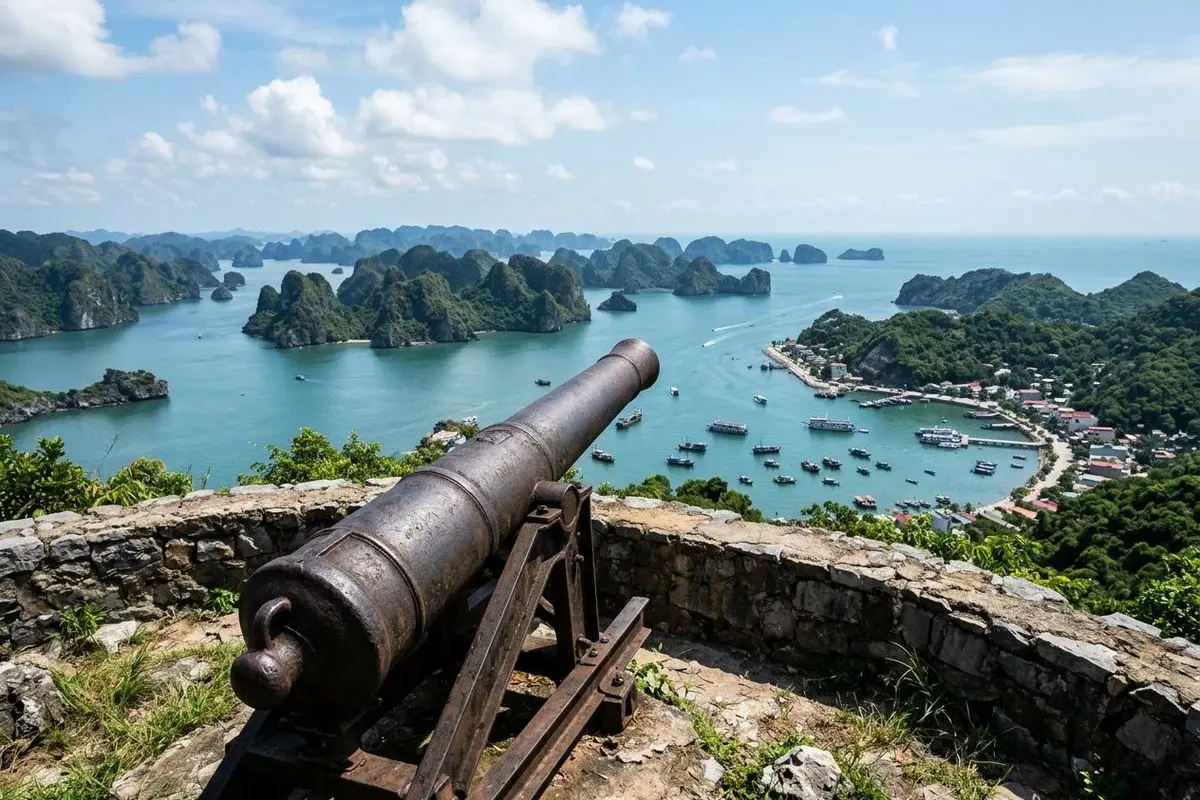
The history of Cannon Fort Cat Ba is the story of a single hilltop watched over by several armies. Rising above Cat Ba town and the entrance to Lan Ha Bay, this defensive site has guarded the island’s sea approaches through some of the most turbulent decades of Vietnam’s modern past. Today its old gun emplacements, trenches and tunnels are quiet, but they still tell a clear story about why this hill mattered.
In this guide the Haiphong Adventure team explains the history of Cannon Fort Cat Ba, what each part of the site was used for, how to read the remains when you visit and how to plan a respectful, interesting trip. Historical details below follow the information commonly given by local sources and on-site boards; dates and specifics are sometimes told differently, so treat them as an overview (updated October 2026).
Why This Hill Became A Defensive Site
Look at a map and the reason is obvious. Cat Ba sits at the southern edge of a vast maze of limestone islands, between the open Gulf of Tonkin and the approaches to Haiphong, one of northern Vietnam’s most important ports. Whoever controlled the high ground above Cat Ba town could watch ships moving in and out of the bay for many kilometres.
The hill behind town is one of the highest points close to the shore. From the top you see the harbour below, the channels between the islands and the open sea beyond. That combination of height, wide views and closeness to the water made it a natural place for artillery and lookouts.
- Commanding views over the sea lanes and the entrance to the bay.
- Natural protection from steep slopes and thick forest.
- Close to the harbour, so supplies could be brought up from town.
- Solid limestone into which tunnels and shelters could be dug.
A Timeline Of Cannon Fort Cat Ba
The fort was not built in one go. It changed hands and purposes several times. The outline below follows the version most often told on the island.
| Period | What happened at the fort |
|---|---|
| Early 1940s | During the Second World War, local accounts say Japanese forces fortified the hilltop and installed coastal guns to watch the sea approaches. |
| After 1945 | French forces returning to Indochina used the position during the First Indochina War. |
| 1960s to 1970s | The site was used by Vietnamese forces to help defend the island and coast during the American War, when Haiphong and its surroundings were frequent targets. |
| After the wars | The guns fell silent and the hill was gradually reclaimed by forest. |
| Recent decades | The site was cleared, marked and opened to visitors as a historic and scenic attraction. |
Each phase left its mark. Some structures are older and simpler, while others show later repairs or additions. Part of the fun of a visit is noticing these layers as you walk around.
>>> Cultural Insights From A Haiphong City Tour Day
What Remains At The Fort Today
Cannon Fort is not a museum full of glass cases. Instead you explore the real military structures in the open air, with information boards at key points.
The cannon emplacements
The highlight is a pair of large coastal guns sitting on round concrete platforms. Their size helps you imagine how far they were meant to reach out to sea. Stand behind them and follow the line of the barrels to see exactly which waters they were protecting.
Trenches and firing positions
Narrow trenches wind across the hilltop, linking gun positions and lookouts. They allowed soldiers to move around under cover. Walking through them gives a strong sense of how cramped and exposed life on the hill could be.
Tunnels and bunkers
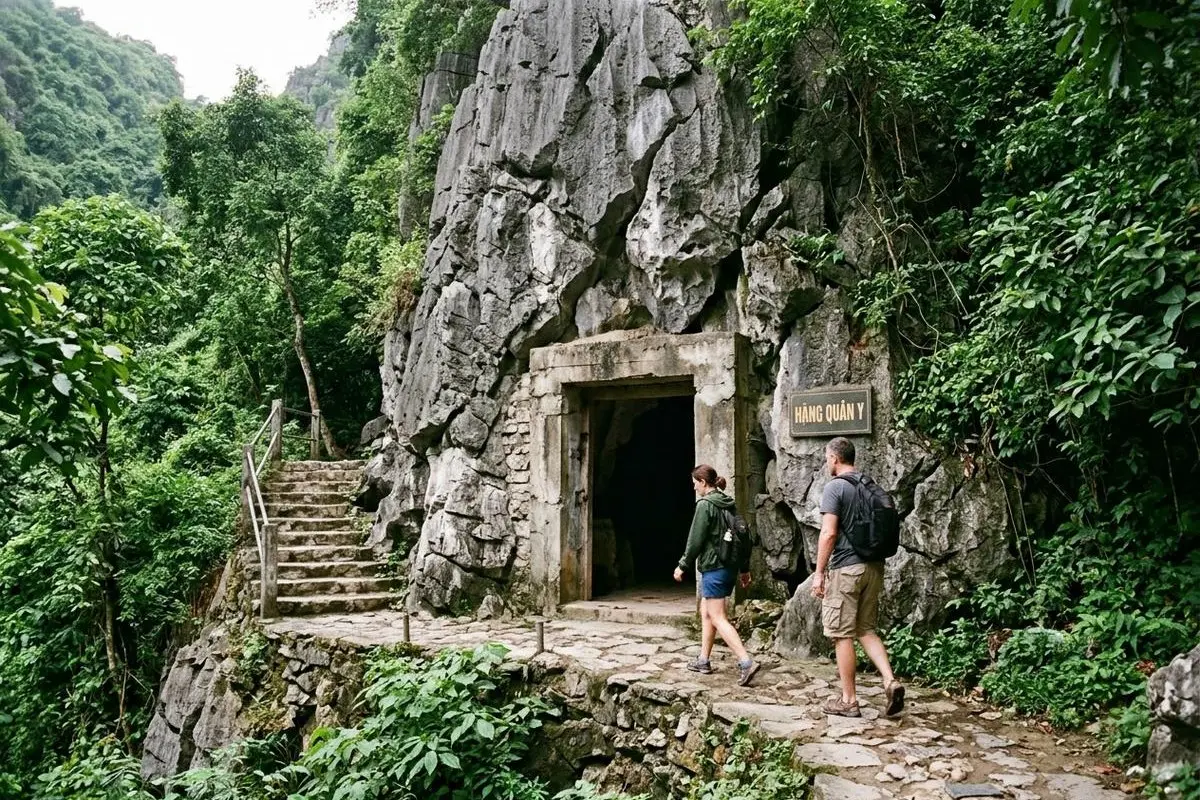
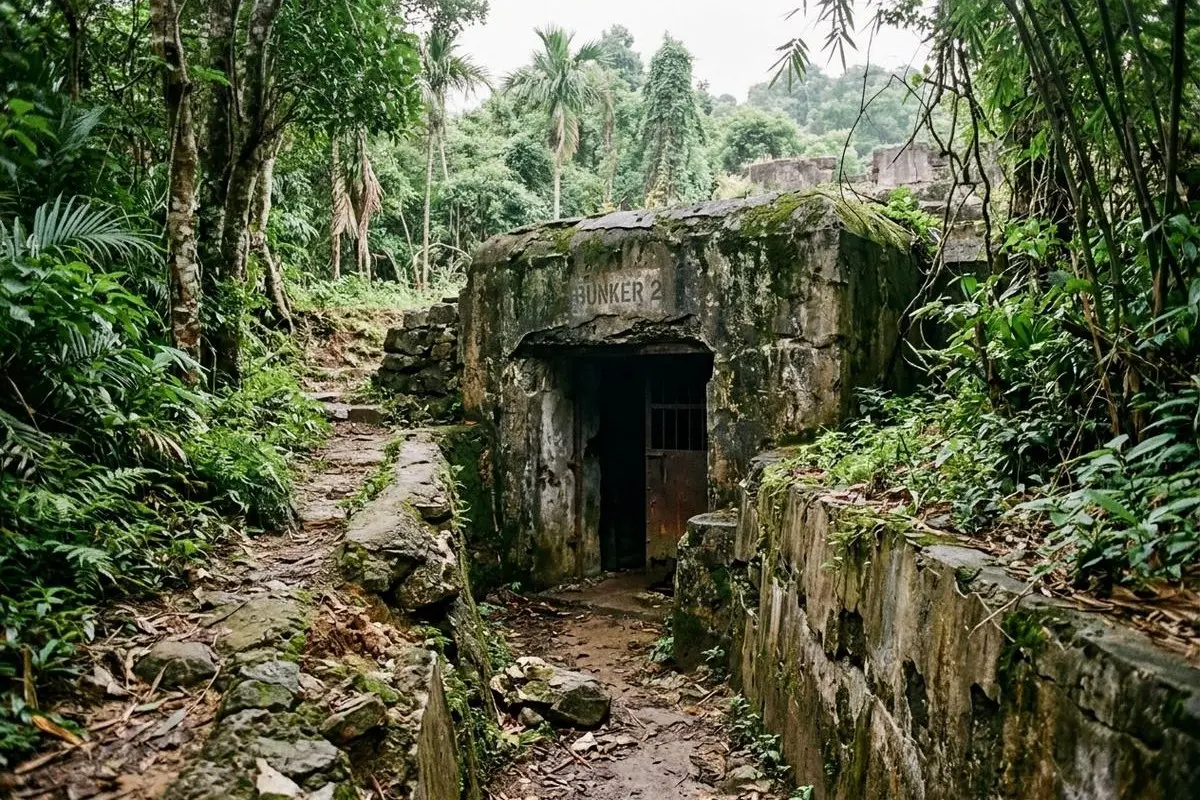
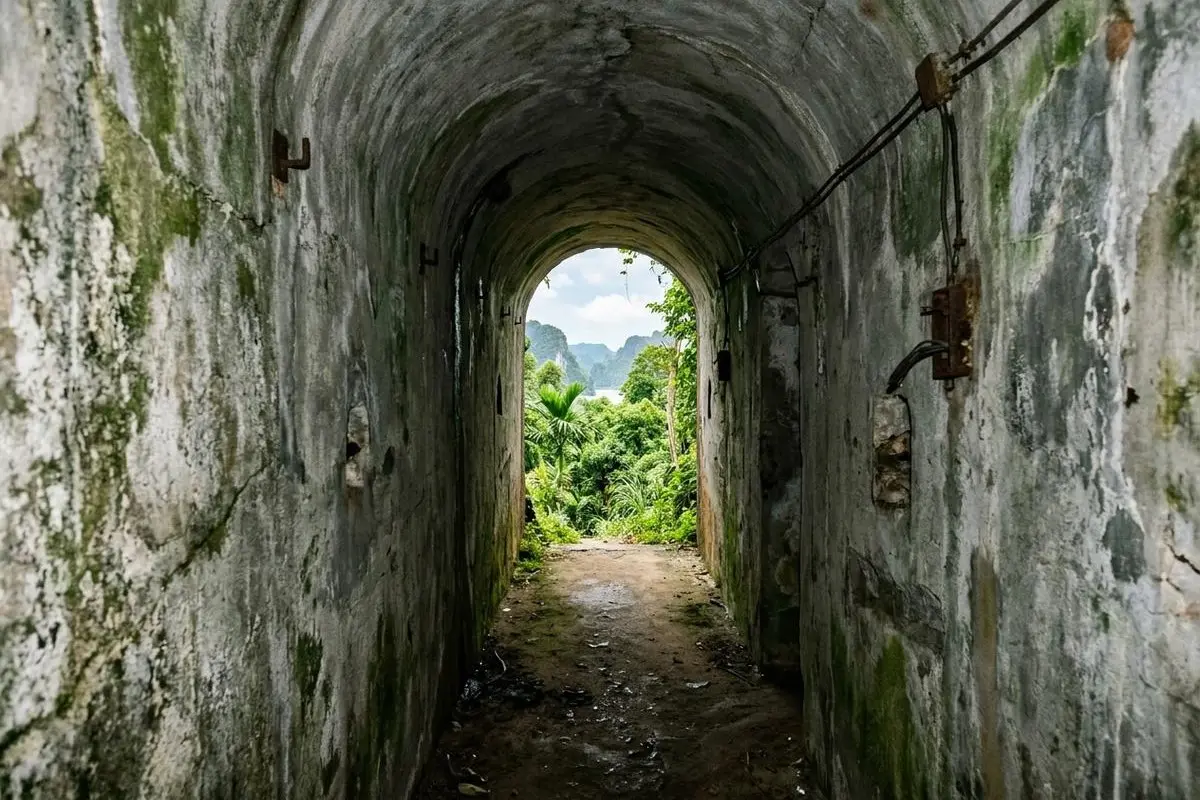
Tunnels cut into the hill once served as shelters, storage rooms and command spaces. Some sections are open to visitors. Inside it is cool and dim, with thick concrete walls designed to withstand bombardment.
Lookout points
Several high points offer wide views over the coast. These were the eyes of the fort. Today they are the favourite places for visitors to stop, rest and take photos of the bay.
Information boards and displays
Signs around the site explain the main structures and events. Wording, languages and displays can change over time, so a local guide is helpful if you want deeper context.
How To Read The Site As You Walk
A little background helps the remains come alive. Try these simple questions as you explore.
- Where does each gun point? Notice how the emplacements cover different sea channels.
- How would soldiers move? Follow the trenches between gun positions and tunnels.
- Where would you shelter? Look for thick walls, low entrances and underground rooms.
- What could they see? At each lookout, imagine ships approaching across the bay.
- What has nature taken back? Roots and moss show how long the site lay quiet.
These questions turn a short walk into a much richer visit, especially for families travelling with older children.
Recommended tour
The Luxury Halong Bay Tours

Want to see the waters the fort once guarded? Cruise among the limestone islands with an experienced crew, explore caves and kayak in calm lagoons.
From $109 per person
Cannon Fort And The Wider History Of Haiphong
Cannon Fort is one piece of a bigger story. Haiphong grew as a major port under French rule, and its harbour made the whole coastline strategically important. During the wars of the 20th century the city, its port and the islands around it, including Cat Ba, were repeatedly affected by conflict.
On Cat Ba you can connect several sites into a history themed day. Hospital Cave, a wartime hospital hidden inside a limestone hill in the island interior, shows how people protected the wounded. Cannon Fort shows how the coast was defended. Together they give a balanced picture of life on the island during difficult years.
Back on the mainland, a walk through central Haiphong reveals French era buildings, busy markets and quiet memorials. Many guests on our haiphong tours like to combine city history with island nature for a fuller view of the region.
If you are travelling between the city and the island, our guide to local transport from Haiphong to Cat Ba explains the options, and the Haiphong to Cat Ba travel time and schedule guide helps you plan the day.
Planning Your Visit To Cannon Fort Cat Ba
Getting there
The fort sits on the hill above Cat Ba town, near the road to the Cat Co beaches. You can walk up in around 20 to 30 minutes, or take a motorbike, taxi or electric car most of the way. The final road is steep, so wear good shoes.
Tickets and opening hours
There is an entrance fee paid at the gate. Prices and opening hours can change, so carry cash in Vietnamese dong and ask locally for the current times (reference only, updated October 2026).
How long to stay
Allow one to two hours to see the cannons, walk the trenches, peek into the tunnels and enjoy the views. History lovers who read every sign may want longer.
Best time of day
Morning is cooler and quieter, which suits a history focused visit. Late afternoon brings warm light and sunset views, but more visitors.
- Bring water, a hat and insect repellent.
- Use a phone torch inside tunnels.
- Watch your step on uneven ground and in trenches.
- Keep children close near edges and drop offs.
For more ideas on fitting the fort into your trip, see our solo Cat Ba Island tour guide and our list of Cat Ba caves and beaches worth visiting.
>>> Cat Ba Tour Itinerary For Nature Lovers Guide
Visiting With Respect
Cannon Fort is a place where people served and, in some periods, lost their lives. Most visitors come for the views, but it is good to remember the history beneath your feet.
- Do not climb on the cannons or fragile structures.
- Keep noise down in tunnels and memorial areas.
- Take your rubbish back down with you.
- Follow signs and stay out of closed areas.
A quiet moment at a lookout point, thinking about those who once stood watch there, is one of the most meaningful parts of a Haiphong adventure on Cat Ba.
Frequently Asked Questions About Cannon Fort Cat Ba History
Who built Cannon Fort Cat Ba?
Local accounts say the hilltop was first fortified by Japanese forces during the Second World War, then used by French forces and later by Vietnamese forces during the American War.
Are the cannons original?
The large guns on display are presented as historic coastal artillery from the fort’s military past. Ask a local guide or read the on-site boards for details about each piece.
Can I go inside the tunnels?
Some tunnel sections are usually open. They are dim and can be narrow, so bring a torch and watch your head.
Is Cannon Fort good for children?
Yes, for children who enjoy exploring. Keep them close near edges and in trenches, and explain the history in simple terms.
How does Cannon Fort compare with Hospital Cave?
Cannon Fort focuses on coastal defence and offers big views. Hospital Cave shows how the wounded were cared for in secret. Visiting both gives a fuller picture of Cat Ba’s wartime history.
Discover The Story Behind The View
Cannon Fort Cat Ba is much more than a viewpoint. Its guns, trenches and tunnels trace decades of history on a hill that once watched over one of northern Vietnam’s most important sea routes. Visit with curiosity and respect, and the views over Lan Ha Bay will mean even more.
If you would like a guided history day on Cat Ba, help with transfers from Haiphong or a wider trip across northern Vietnam, the Haiphong Adventure team is happy to help.
WhatsApp, Viber, WeChat: +84(0)934.555.001
KakaoTalk, Line ID: haiphongadventure