Haiphong City Tour Highlights History Architecture
A Haiphong city tour is the easiest way to read the story of northern Vietnam’s great port in a single morning. In a few square kilometres you can see a French opera house, a Gothic-style museum, colonial boulevards lined with flame trees, an old swing bridge, an eighteenth-century communal house and a pagoda that locals say is more than a thousand years old. Most travellers rush through on the way to Cat Ba, and they miss one of the most interesting historic cities in the country.
Our guides at Haiphong Adventure show these places to visitors every week, usually from the back of a motorbike, and we have learned which stops really tell the city’s story. This guide walks you through the highlights of history and architecture, explains what to look for at each one, and finishes with a simple route, photography tips and answers to the questions we hear most often.
Opening hours, ticket prices and event schedules change, so treat the practical details here as a friendly guide and check on the day. If you would like help, our contact details are at the end of the article.
Why Haiphong Is A City Built On Trade And Water
Before you look at any building, it helps to understand why it is there. Haiphong grew where several rivers meet the Gulf of Tonkin, and water has shaped every chapter of its history. Local legend traces the city back to Le Chan, a female general who fought alongside the Trung sisters against Chinese rule in the first century and is remembered as the founder of the early settlement of An Bien.
For many centuries the area was a cluster of fishing and farming villages around river mouths. That changed in the second half of the nineteenth century, when the French chose the site as the main port for northern Indochina. Haiphong was formally established as a city under French rule in 1888, and over the following decades engineers drained marshland, dug canals and laid out wide boulevards. Banks, trading houses, a post office, a cathedral and finally a grand opera house followed.
The result is a city with two personalities that sit side by side. On one street you find French facades in mustard yellow with tall green shutters. Around the corner, narrow tube houses, temples and communal houses carry on much older Vietnamese traditions. A good city tour moves between the two, and that contrast is what makes Haiphong so rewarding for anyone who enjoys history.
Haiphong Opera House, The Heart Of The City
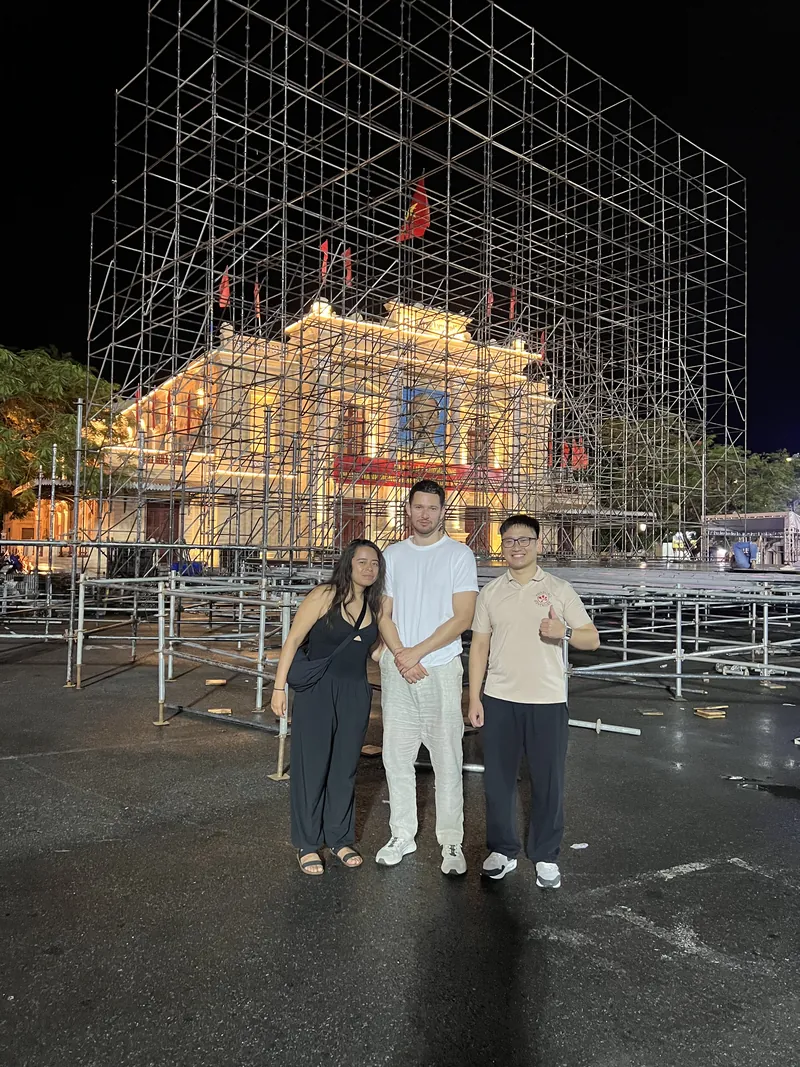
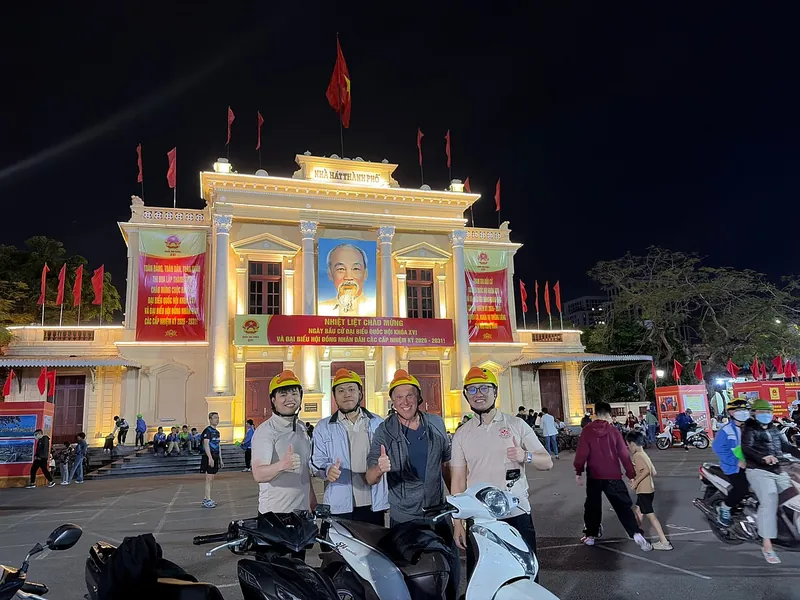
Every Haiphong city tour starts, or ends, at the Opera House, and for good reason. Built by the French in the early twentieth century and completed around 1912, it is one of the finest neoclassical buildings in Vietnam. The symmetrical facade, the columns, the triangular pediment and the elegant balcony were designed to give a colonial port the look of a provincial French city.
Look closely and you will notice how the building sits at the end of a long open square. This was deliberate. The square and the gardens in front create a grand approach, and they are still the city’s main stage for ceremonies, concerts and public celebrations. On national holidays the facade is decorated with red flags and flowers, and in the evening the whole building is lit up.
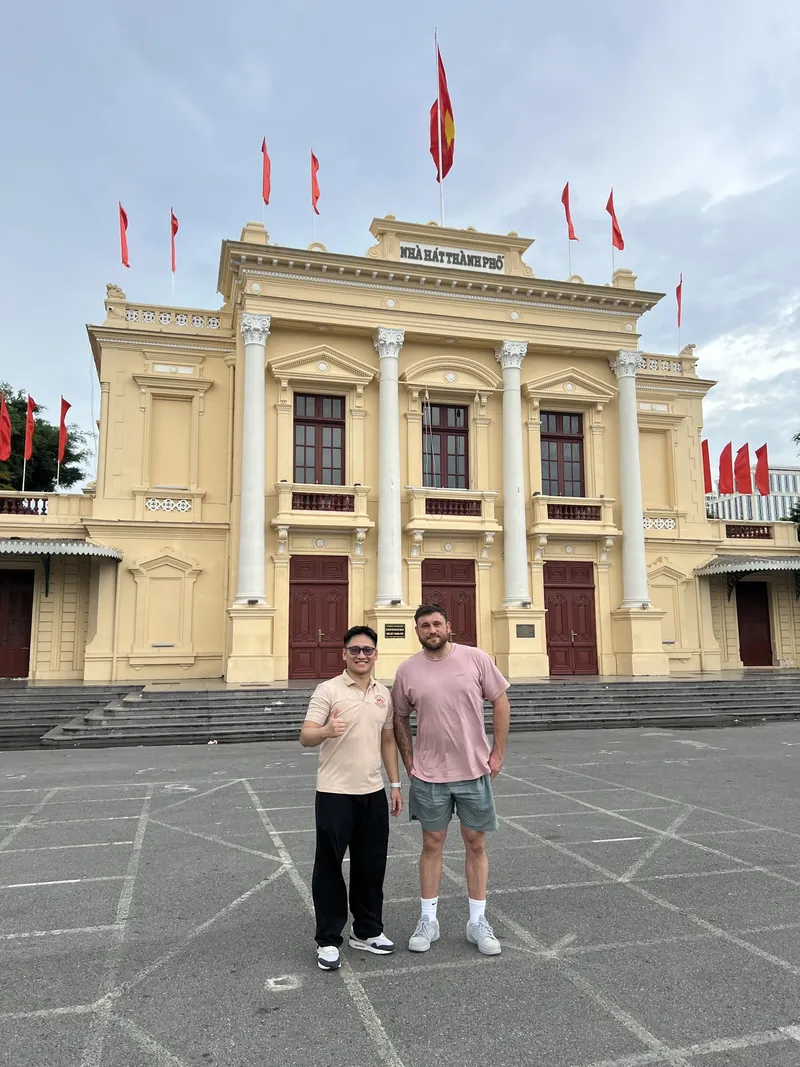
The interior is not always open to visitors. When there is a performance you may be able to buy a ticket, and occasionally the doors are open during events, but do not plan your day around going inside. The exterior is the real highlight. Walk around the side streets to see the details of the stucco work and the way the building lines up with the boulevards around it.
If you only have time for one photo, take it from the far end of the square in the morning, when the sun lights up the front of the building. We share more tips for evening visits in our guide to our favourite things to do in Haiphong on a weekend.
Haiphong Museum On Dien Bien Phu Street
A short walk from the Opera House, Dien Bien Phu Street was once one of the main boulevards of the French city. Its most striking building is the Haiphong Museum, a deep red colonial building with pointed arches, tall windows and decorative details that are often described as Gothic in style. It stands out immediately among the yellow facades around it.
Inside, the museum tells the story of the city from prehistoric finds and early river settlements to the naval battles on the Bach Dang River and the growth of the modern port. The displays are mostly in Vietnamese with some English labels, so a guide helps if you want the full story. Even if you do not go in, the building itself is worth a stop for anyone who loves architecture.
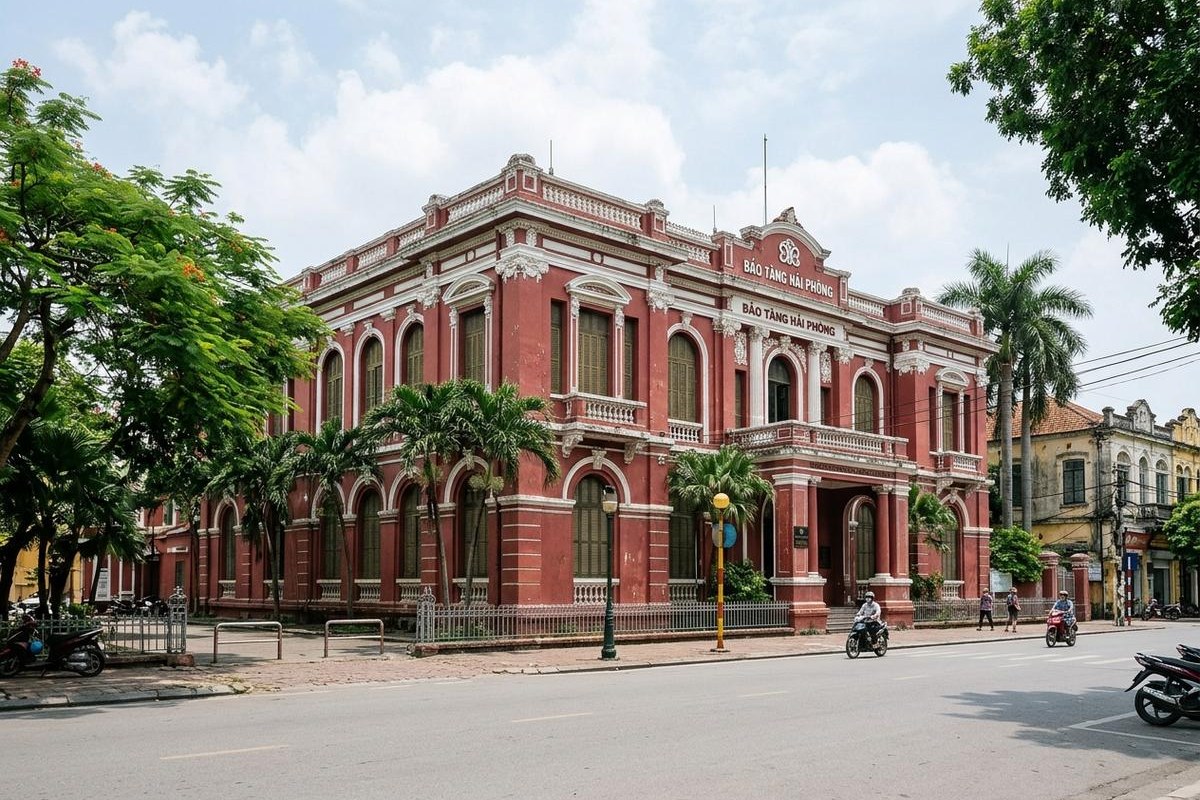
Dien Bien Phu Street is also a pleasant place to slow down. Look up at the upper floors of the old shophouses, where you can still see original iron balconies, shutters and decorative mouldings above modern shop signs. Many locals sit at the small cafes along this stretch in the morning, and it is a good place to try a glass of iced coffee before you continue.
>>> The Ultimate Haiphong Tour: Top 10 Must-Visit Spots in 2025
Haiphong City Post Office And The Colonial Boulevards
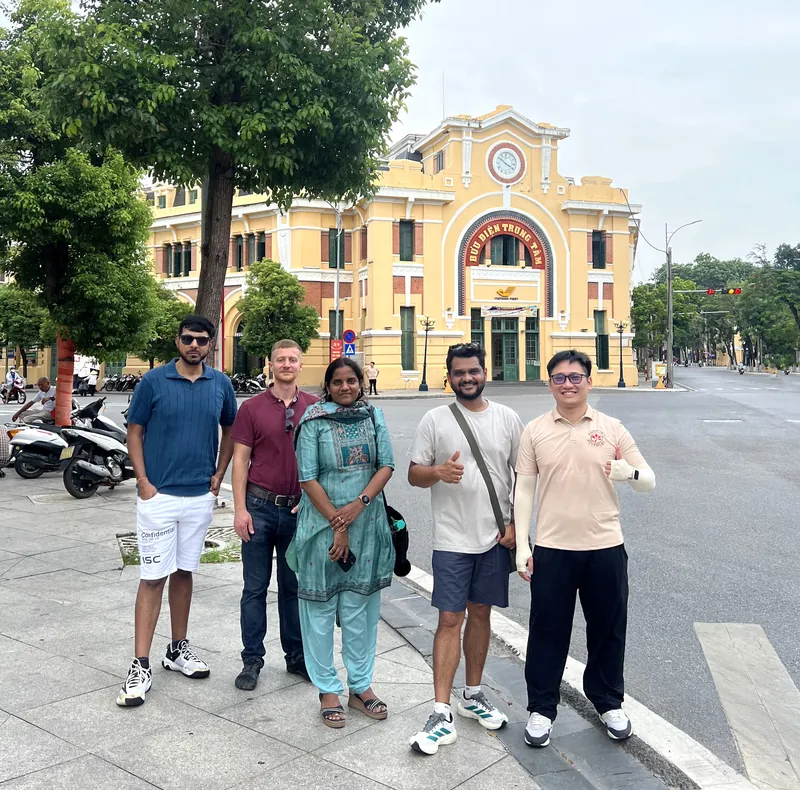
Close to the river, the Haiphong City Post Office is another reminder of how important communication and trade were to the colonial port. The building is still in use, which is part of its charm. You can step inside, buy a stamp and post a card home from a building that has handled mail for more than a century.
From the outside, notice the clock, the arched windows and the solid proportions typical of French public buildings of the period. The streets around it, including Hoang Van Thu and the riverfront area, still follow the grid that French planners laid out. Walking here is a good way to imagine the city as it looked when ships from Marseille and Hong Kong unloaded goods a few hundred metres away.
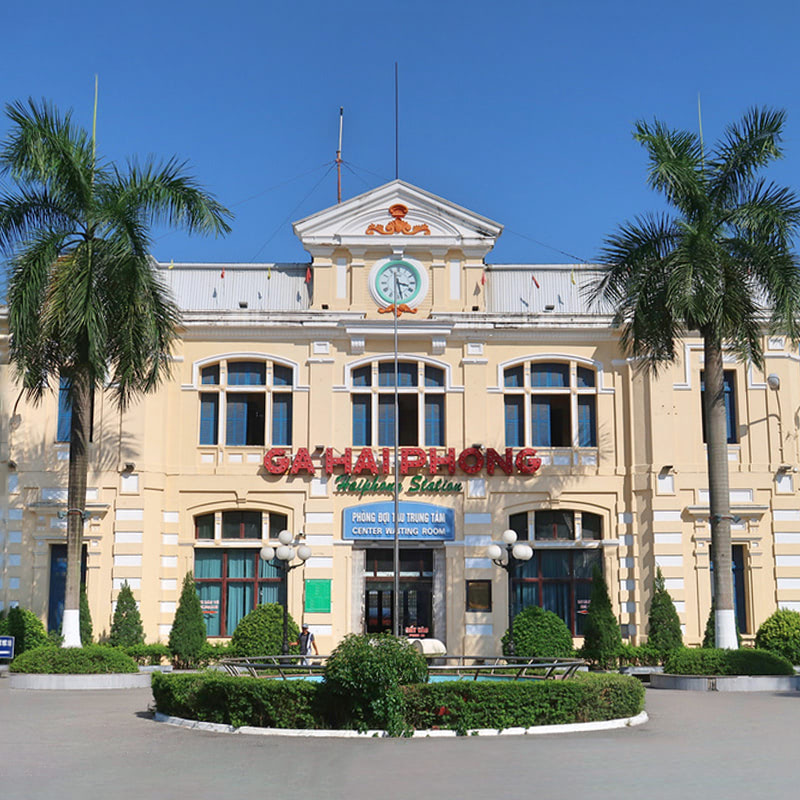
The Haiphong Cathedral, a few blocks away on Hoang Van Thu Street, completes the picture. Its stone bell tower and grey facade date from the colonial period, and it remains an active church. Visitors are welcome outside service times, but please dress modestly and keep your voice low if a mass is taking place.
Le Chan Statue Square And The Founding Legend
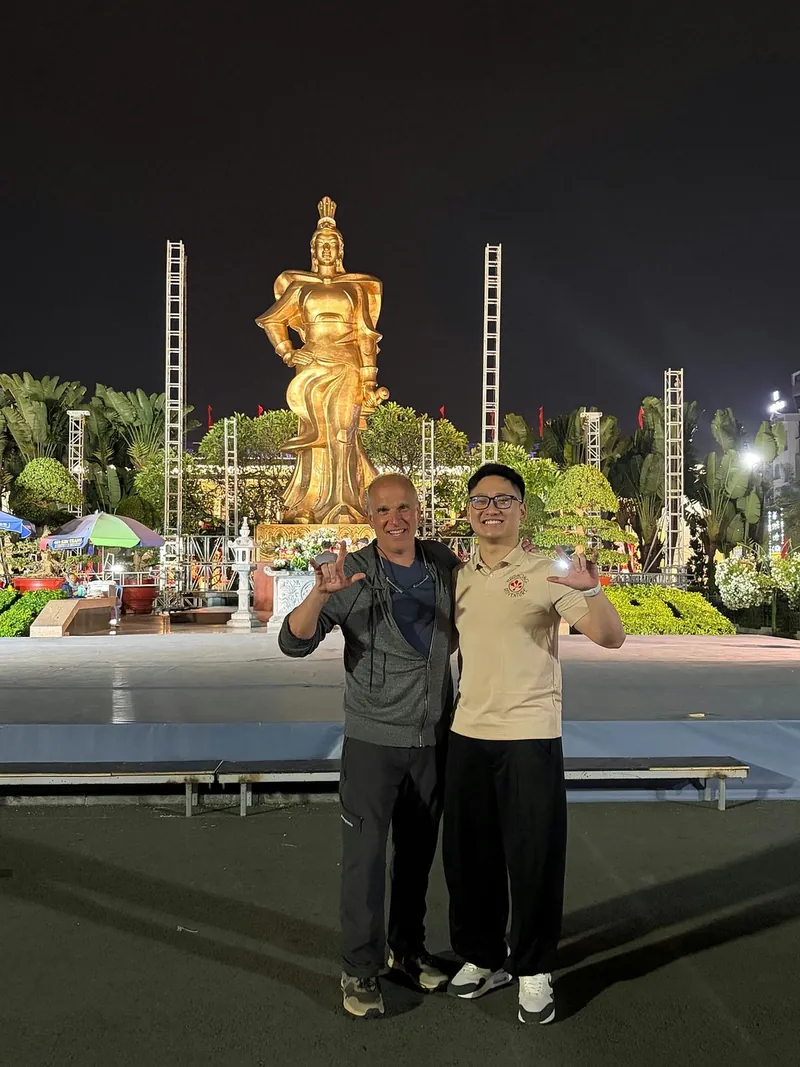
Not far from the Opera House, a golden statue of Le Chan stands on a square that has become one of the city’s favourite meeting places. The statue honours the general whom Haiphong people regard as the founder of their city. She is shown in full dress, looking out over the square, and the monument is a good place to hear the story of the uprising led by the Trung sisters nearly two thousand years ago.
The square is busy in the evening, when families come out to walk, children play and the statue is lit up. During the day it is quieter and easier for photos. Our guides like to stop here early in a tour, because once you know the legend of Le Chan, the rest of the city’s history makes more sense. Le Chan is also remembered at a temple dedicated to her in the old An Bien area, which you can visit if you want to go deeper.
Recommended tour
The Insider’s Haiphong
Ride through French-era boulevards, hidden alleys, local markets and sacred spaces on the back of a motorbike with a local guide.
From $79 per person
Cau Quay Swing Bridge And The Mural Street
Cau Quay is one of the most unusual pieces of engineering in the city. It is an old iron bridge built so that a section could swing open to let boats pass along the waterway below, a reminder of the days when barges and small cargo boats were the lifeblood of Haiphong. Railway tracks still cross the structure, and the rusty steel beams have become one of the most photographed backdrops in town.
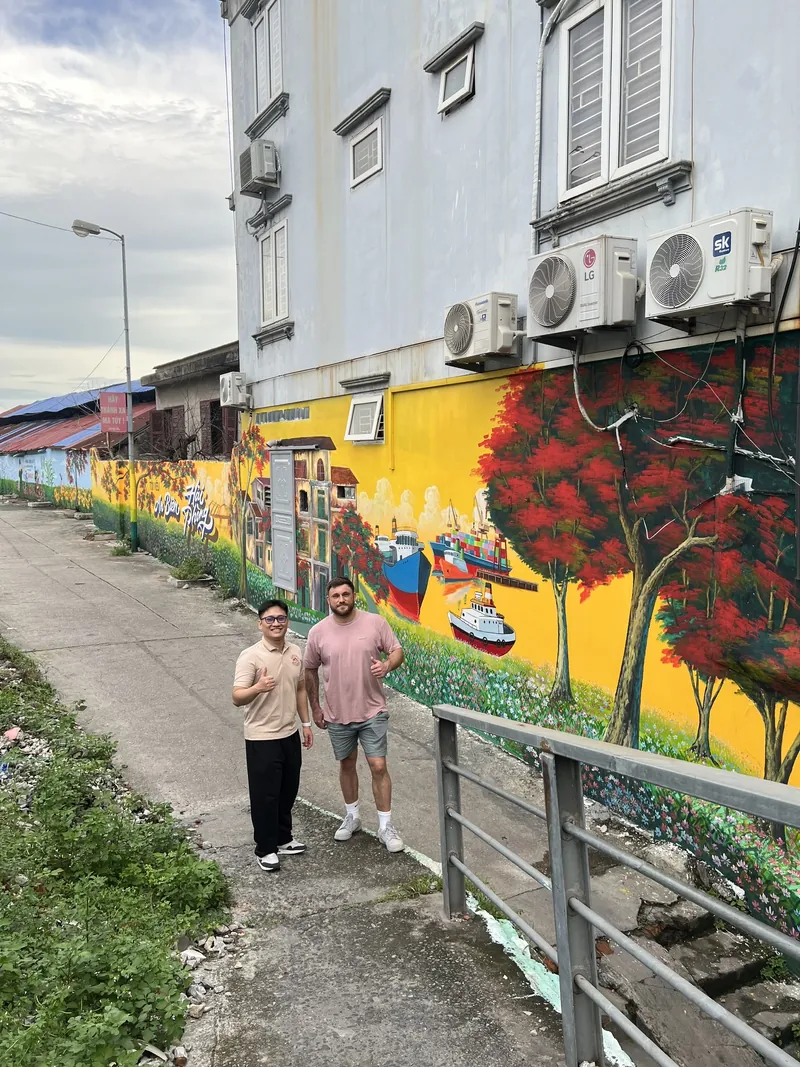
The streets at the foot of the bridge have also been brightened with murals, so this stop combines industrial history with a lively, modern feel. Come in the late afternoon for soft light, or after dark when the bridge area is quieter and the lights reflect on the water.
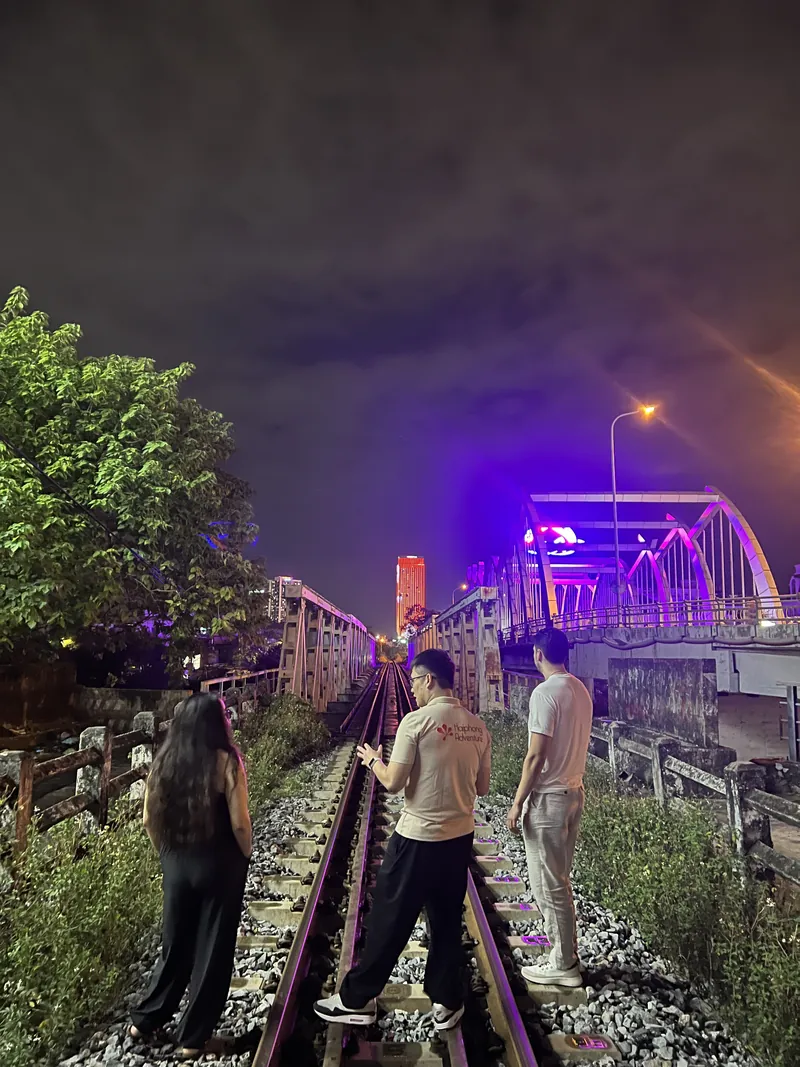
Please be careful and respectful here. The bridge is part of working infrastructure, so follow any signs, listen to local staff and never block the tracks for a photo. Our guides know the safer angles and check conditions every time we visit.
>>> Private Haiphong Tour: Why A Local Guide Changes Everything
Tam Bac Lake And The Old Merchant Streets
Tam Bac Lake and the Tam Bac River mark the edge of the old commercial heart of the city. In the colonial era this was where Vietnamese and Chinese merchants traded rice, cloth, fish and household goods, and the surrounding streets are still packed with small shops, wholesale stalls and tube houses only a few metres wide.
This is the place to see the everyday side of Haiphong’s architecture. Narrow facades, deep interiors, family altars visible from the street and goods piled to the ceiling show how people lived and worked above their shops for generations. The nearby flower market and riverside streets are especially photogenic in the weeks before Tet, the Lunar New Year, when the whole area fills with peach blossom and kumquat trees.
The lake itself is a pleasant place for a short break. Locals walk and exercise along the banks in the early morning and the evening, and the area becomes livelier at night when the lights come on.
Hang Kenh Communal House, Masterpiece Of Wood Carving
To see traditional Vietnamese architecture at its best, head south-west of the centre to the Hang Kenh communal house. Built in the early eighteenth century, the dinh served as the meeting hall and spiritual centre of the old Hang Kenh village, which was later absorbed into the growing city. Today it is surrounded by modern streets, which makes stepping through its gate feel like stepping back in time.
What makes Hang Kenh special is the wood carving. The heavy ironwood columns and roof beams are covered with hundreds of dragons, clouds, flowers and small scenes, carved with remarkable detail. Many visitors walk past the main hall without looking up, so take your time. The best carvings are often high above your head.
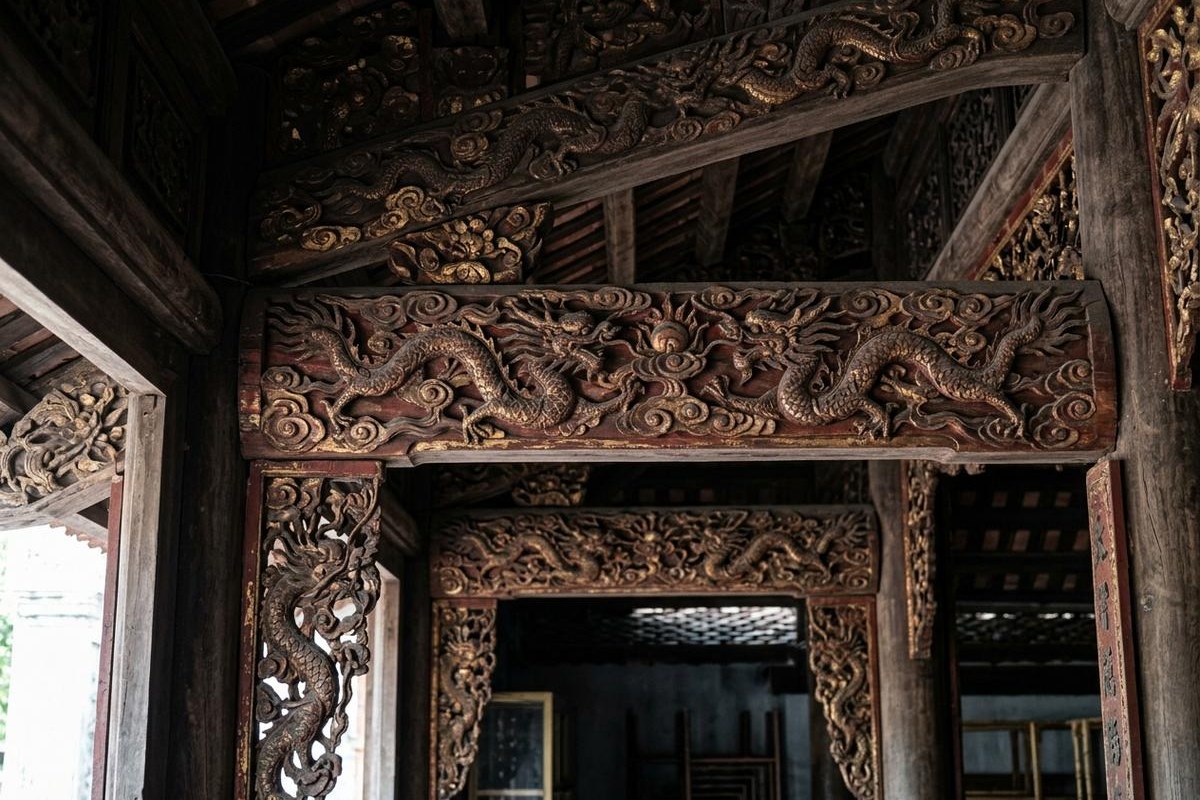
The communal house sits beside a pond, and the reflection of the curved roof in the water is lovely in the morning. Like all religious sites in Vietnam, it asks for modest clothing, so cover your shoulders and knees.
Du Hang Pagoda And Its Thousand Year Story
Not far from Hang Kenh, Du Hang Pagoda is one of the most important Buddhist sites in Haiphong. Local tradition says it was founded more than a thousand years ago, and it has been rebuilt and expanded many times since. What you see today is a harmonious complex of gates, courtyards, bell towers and halls, with curved tiled roofs, carved stone and quiet gardens full of bonsai.
The pagoda is a working place of worship, so the atmosphere is calm and personal. Walk slowly, leave your shoes outside where others do, and avoid photographing people while they pray. If you visit during the first or fifteenth day of the lunar month, you will see many locals bringing offerings, which is a wonderful way to understand how living traditions continue inside a modern city.
Together, Hang Kenh and Du Hang show the Vietnamese side of Haiphong’s architecture, and they make a perfect contrast to the French buildings in the centre. We cover more temples and traditions in our guide to cultural things to do in Haiphong.
>>> Unusual Things To Do In Haiphong Off Beaten Path
Linh Quang Pagoda And The Neighbourhood Temples
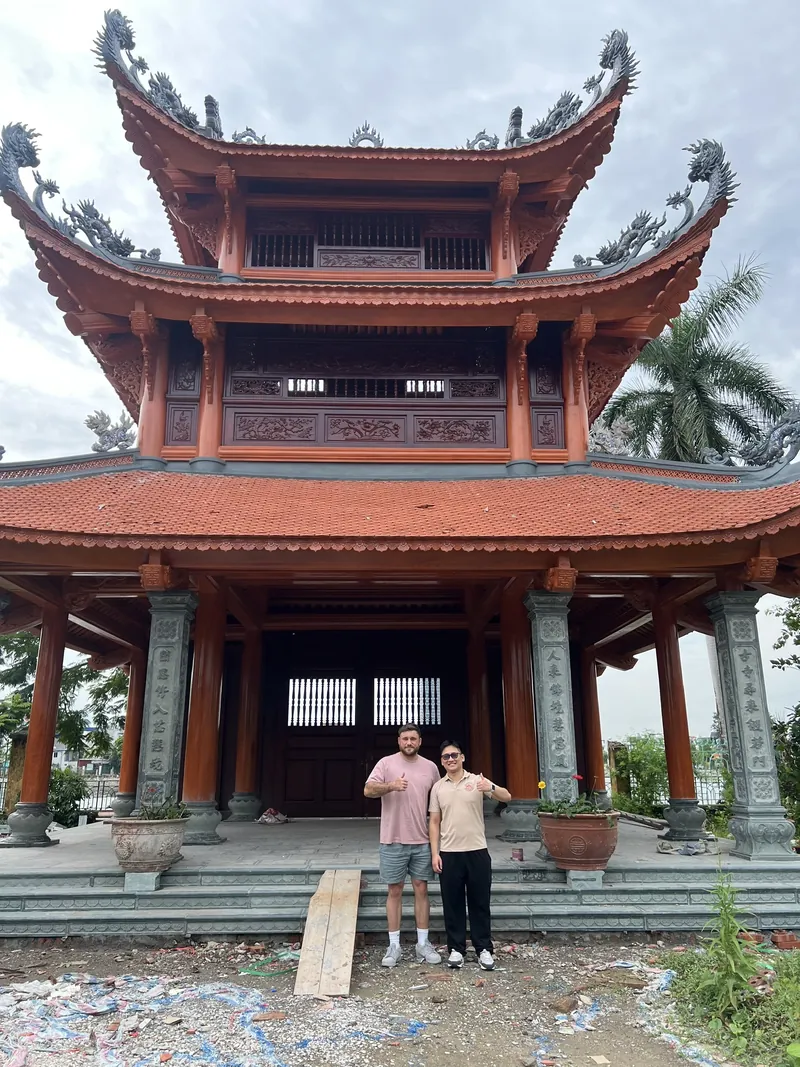
Haiphong has dozens of smaller pagodas, temples and shrines tucked between houses, and they are a big part of what makes the city feel lived in. Linh Quang Pagoda, with its red-roofed bell tower, is one of the places our guides like to show travellers who want a quieter stop between the busier sights.
These neighbourhood temples rarely appear in guidebooks, but they are where you will see older residents chatting in the courtyard, incense drifting through the air and the small rituals that structure daily life. Many visitors tell us that these quiet moments were their favourite part of the day.
Suggested Route For A Half Day Haiphong City Tour
You can combine most of these highlights in about four hours. Here is the order we usually recommend, which keeps the travel time short and saves the busiest areas for the cooler part of the day.
- Early morning: Coffee near the Opera House, then photos of the facade while the light is soft.
- Mid morning: Walk Dien Bien Phu Street, see the Haiphong Museum, the City Post Office and the Cathedral.
- Late morning: Ride to Hang Kenh communal house and Du Hang Pagoda before the midday heat.
- Lunch: A bowl of banh da cua or a local rice meal near Tam Bac.
- Late afternoon or evening: Cau Quay swing bridge, the mural street and the Le Chan statue square as the lights come on.
If you prefer a ready-made plan with exact timings, read our half-day Haiphong tour itinerary, which follows a similar loop.
>>> 24-Hour DIY Haiphong Tour: The Ultimate Guide
Tips For Enjoying History And Architecture In Haiphong
Time Your Visit Around The Light And Heat
From May to September the middle of the day is hot and humid. Plan outdoor walking for before 10:30 and after 16:00, and use the midday hours for lunch, a museum or a rest. In winter, from December to February, the light is softer and walking is comfortable all day, but bring a light jacket for the evening.
Look Up, Then Look Behind
Many of the best colonial details are on upper floors, above shop signs and electric cables. In alleys and courtyards, the most interesting old houses are often behind a modern front building. Ask your guide, or a friendly shopkeeper, before you step into a private courtyard.
Respect Religious Sites
Wear clothes that cover your shoulders and knees for pagodas, temples, communal houses and the Cathedral. Remove shoes where locals do, do not point your feet at altars, and ask before photographing people.
Carry Small Cash
Entrance donations, coffee, snacks and small souvenirs are usually paid in cash. Small notes make everything easier, especially at street stalls.
Consider Seeing It By Motorbike
The highlights are spread over a few kilometres. Walking between all of them is possible but tiring in the heat. Sitting on the back of a motorbike with a local rider lets you cover more ground, stop wherever you like and experience the traffic like a local, which is why it is the way most of our guests choose to explore.
Frequently Asked Questions About A Haiphong City Tour
How long does a Haiphong city tour take?
Around four hours is enough to see the main historic and architectural highlights at a comfortable pace. A full day lets you add museums, markets, a long lunch and an evening food stop.
Can I visit the Haiphong Opera House inside?
The interior is usually only open for performances and special events. The exterior and the square are always accessible and are the main reason to visit. Check local listings if you want to attend a show.
Is Haiphong worth visiting for architecture?
Yes. Haiphong has one of the best collections of French colonial buildings in northern Vietnam, alongside traditional communal houses and pagodas, and it is far less crowded than Hanoi.
Do I need a guide to see these places?
No, most sites can be visited on your own. A local guide mainly adds the stories behind the buildings, helps with transport between sites and finds hidden places you would not notice alone.
What should I wear on a city tour?
Light, breathable clothes that cover your shoulders and knees, comfortable shoes, sunscreen and a hat. In the rainy season, carry a light raincoat.
Explore Haiphong’s History With Haiphong Adventure
Haiphong rewards curious travellers who give it a little time. Between the grand French facades, the carved wooden halls and the busy merchant streets, you will find a city that tells its own story at every corner. If you would like local guides to show you around, Haiphong Adventure runs small-group and private haiphong tours by motorbike, from short city loops to full-day adventures in the countryside. Tell us your dates, your interests and your pace, and we will suggest the right route for you.
WhatsApp, Viber, WeChat: +84(0)934.555.001
KakaoTalk, Line ID: haiphongadventure